The double jump, a ubiquitous and cherished mechanic across the gaming landscape, has long been a cornerstone of platforming and action-adventure titles, offering players enhanced mobility and opening up intricate level designs. From the gothic corridors of Castlevania: Symphony of the Night to the vibrant worlds of Crash Bandicoot, the whimsical adventures of the Kirby series, and the expansive realms of Banjo-Kazooie, this fundamental ability has consistently enriched player experience and challenged creative developers. In a significant development for game creators, Unreal Engine 5 (UE5) has notably simplified the integration of this classic feature, making it remarkably easy to implement and refine, as demonstrated by a recent comprehensive guide detailing both the foundational setup and advanced animation improvements. This streamlined approach underscores Epic Games’ commitment to democratizing game development, enabling creators of all skill levels to craft more dynamic and engaging player experiences with unprecedented ease.
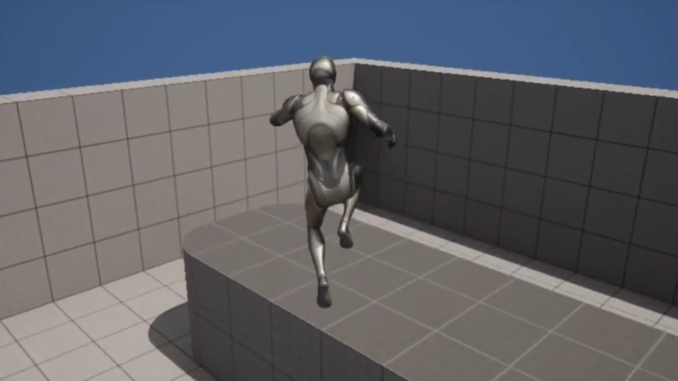
The enduring appeal of the double jump stems from its ability to provide players with an immediate sense of control and freedom, allowing for mid-air course corrections, reaching elevated platforms, or escaping precarious situations. Historically, implementing such a mechanic often involved intricate coding or complex state machine management within game engines. Developers had to meticulously track jump counts, manage airborne states, and ensure proper physics interactions, which could be a time-consuming process, particularly for those new to game development or working under tight deadlines. The advent of modern game engines like Unreal Engine 5, however, is gradually shifting this paradigm, offering high-level tools that abstract away much of the underlying complexity, thereby allowing developers to focus more on creative design and less on boilerplate programming.
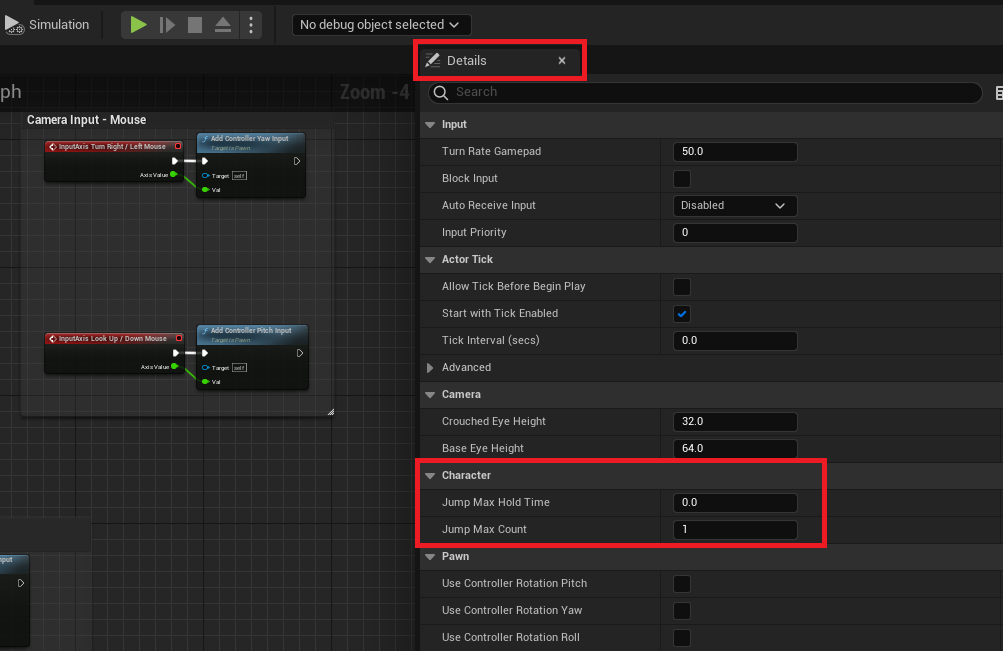
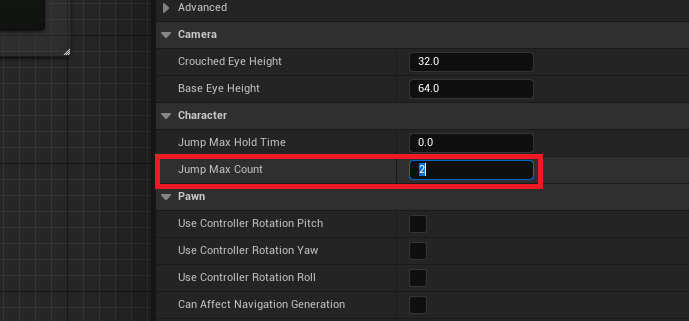
Unreal Engine 5, renowned for its cutting-edge graphics capabilities like Lumen and Nanite, also places a strong emphasis on developer-friendly workflows. Its Blueprint visual scripting system is a prime example of this philosophy, empowering artists and designers to implement game logic without writing a single line of C++ code. This approach is particularly evident in how effortlessly the double jump can now be integrated into a character’s movement set. The core functionality hinges on a straightforward modification within the Character blueprint, a foundational asset for any player-controlled entity in UE5. This blueprint exposes a critical parameter known as Jump Max Count, which, by default, is set to ‘1’, allowing for a single jump. By simply incrementing this value to ‘2’, a character immediately gains the ability to execute a double jump, a testament to the engine’s thoughtful design and robust underlying character movement component. This level of abstraction significantly reduces the barrier to entry for aspiring game developers and accelerates the prototyping phase for seasoned professionals.
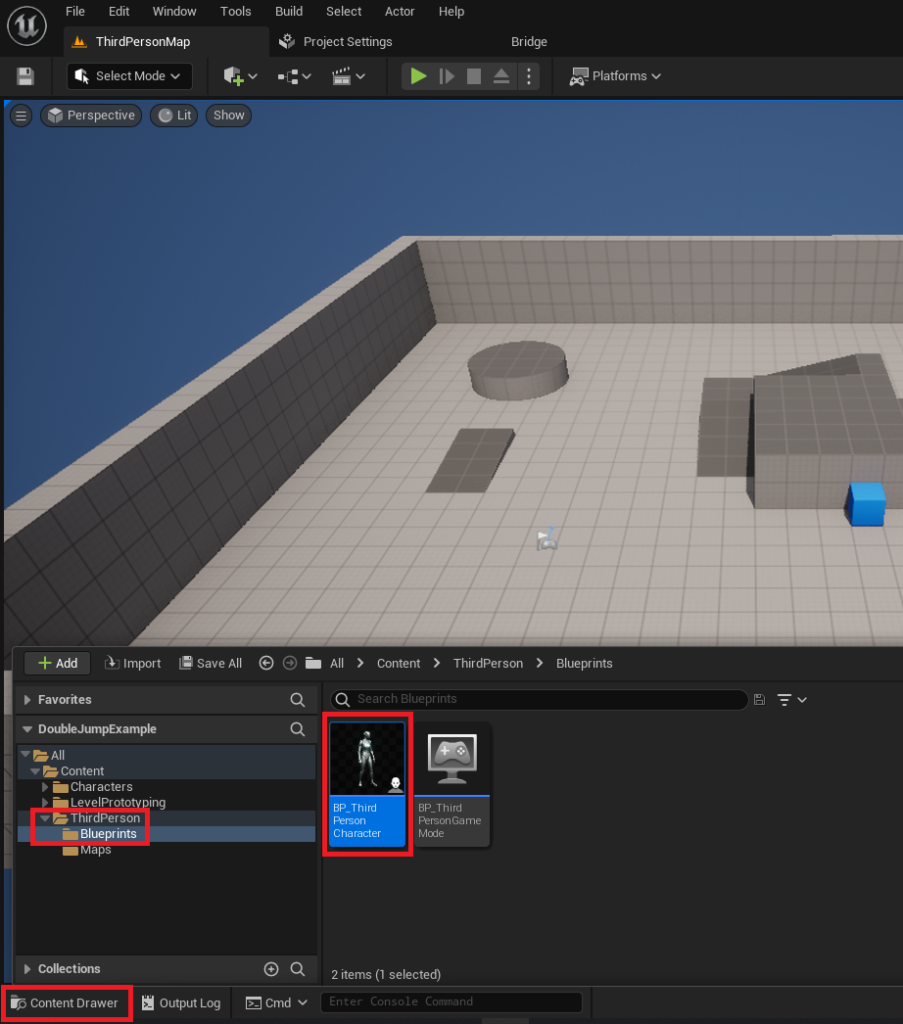
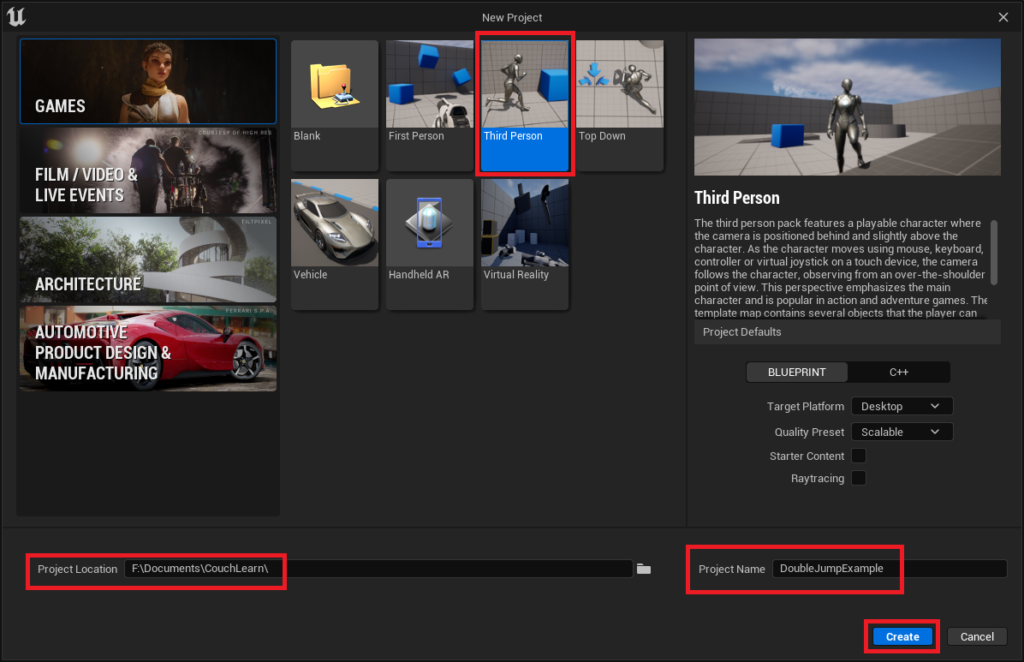
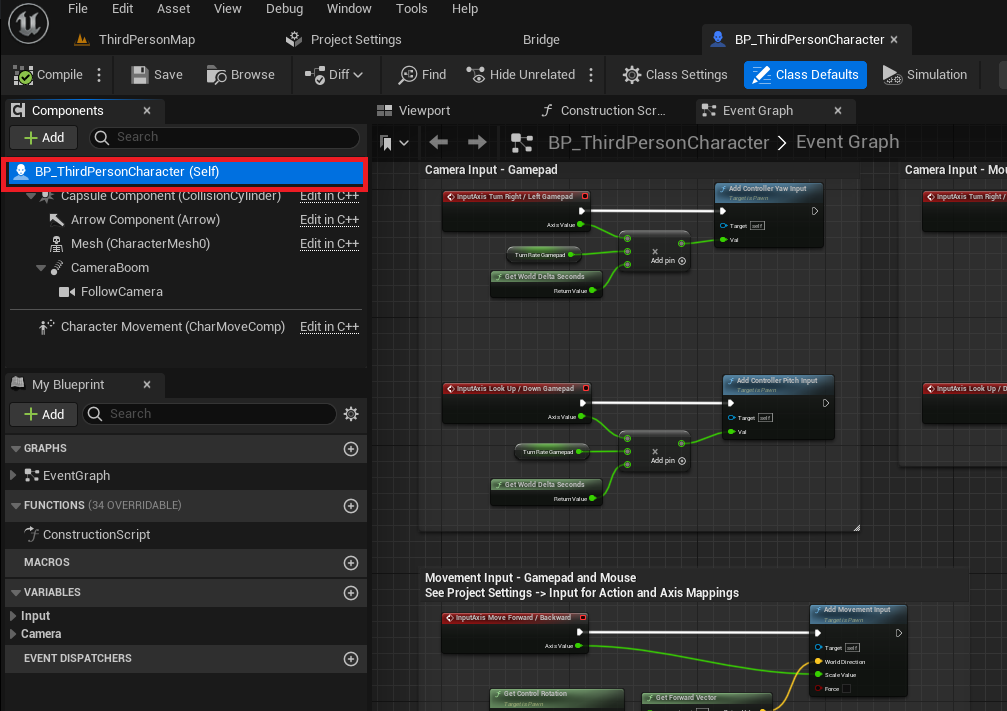
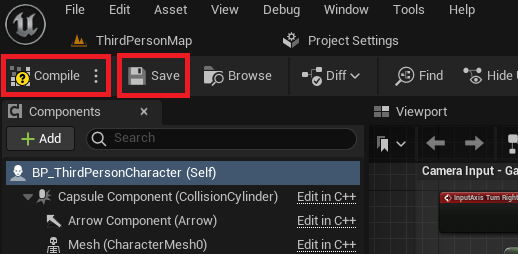
The process typically commences with the creation of a new project, often utilizing the Third Person template provided within Unreal Engine 5. This template offers a ready-to-use character blueprint (BP_ThirdPersonCharacter) and associated assets, serving as an ideal starting point for developers. Once the editor is launched, navigating to the BP_ThirdPersonCharacter object—typically found in the Content/ThirdPerson/Blueprints folder—is the next step. Upon opening this blueprint, developers select the main character component, represented as "BP_ThirdPersonCharacter (Self)," which then reveals a detailed panel of properties. Within this "Details" tab, under the "Character" category, lies the "Jump Max Count" parameter. The modification is as simple as changing this integer value from ‘1’ to ‘2’. For projects requiring more elaborate multi-jump mechanics, such as a triple jump or even more, this value can be adjusted accordingly, providing scalable flexibility with minimal effort. This single parameter adjustment, followed by a quick compile and save operation within the blueprint editor, instantly equips the character with the double jump capability, ready for immediate testing within the game environment.
While the fundamental double jump functionality is remarkably easy to achieve, a truly polished game experience demands attention to detail, particularly concerning character animations. An un-animated double jump, where the character merely repeats the initial jump animation or remains in a static pose during the second jump, can detract significantly from player immersion and feedback. Players rely on visual cues to understand the state of their character, and a responsive animation system is crucial for conveying the impact and nature of actions. Recognizing this, the guide extends beyond basic functionality to incorporate intermediate difficulty animation improvements, transforming a functional double jump into a visually satisfying and intuitive one. This aspect highlights a critical distinction between merely implementing a mechanic and truly integrating it into a cohesive gameplay system.
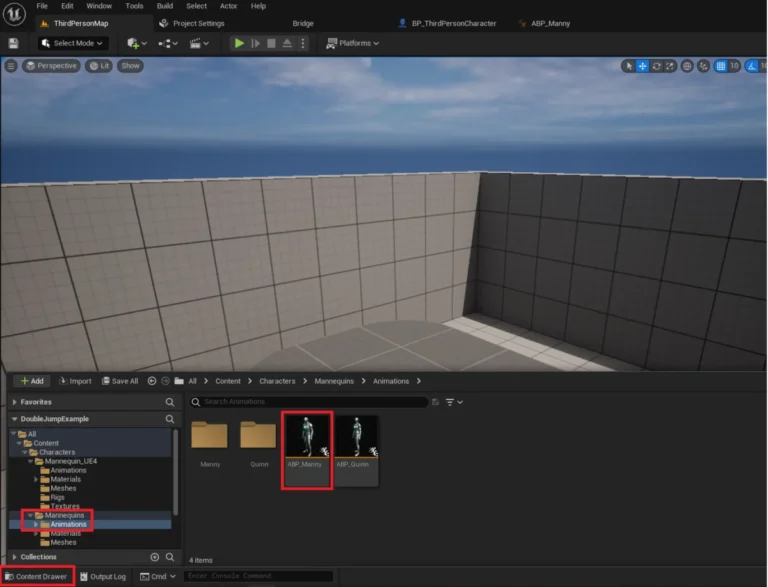
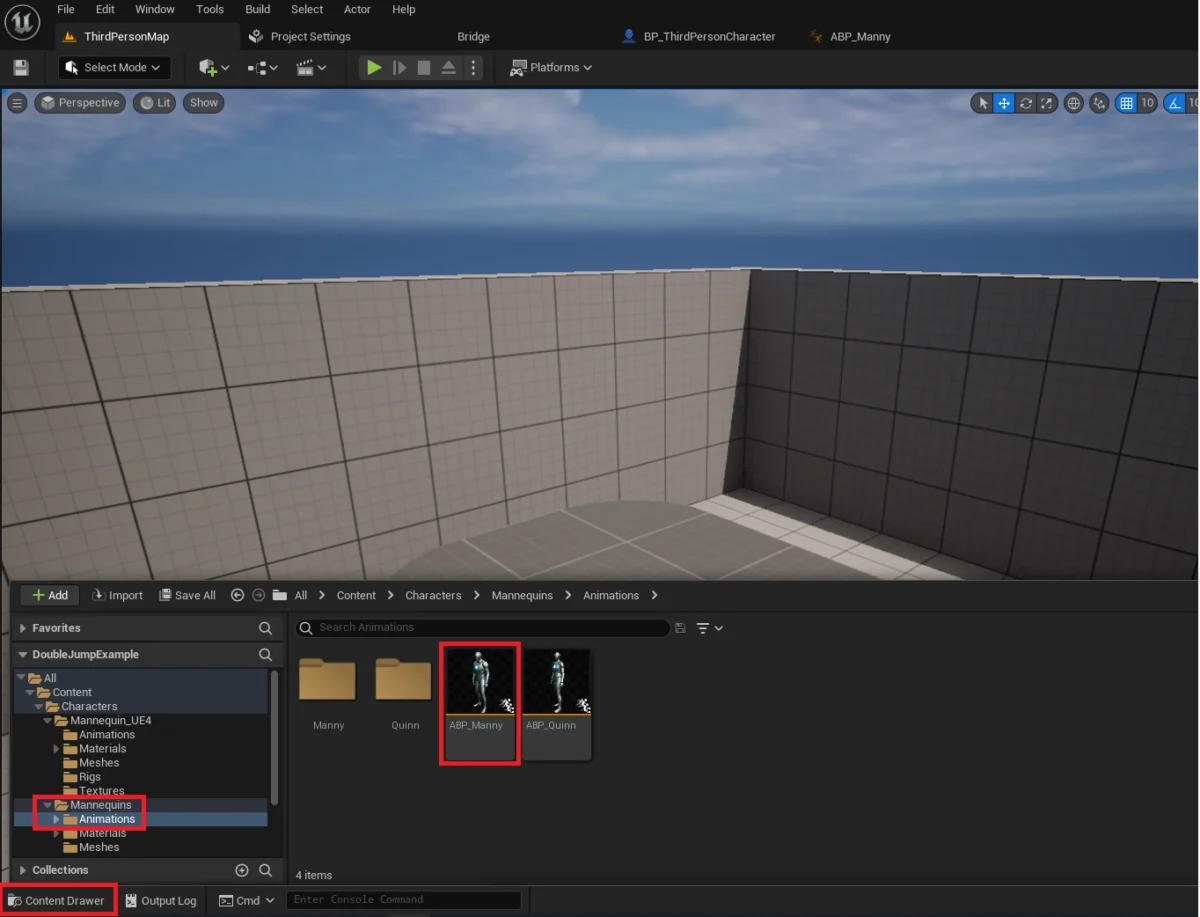
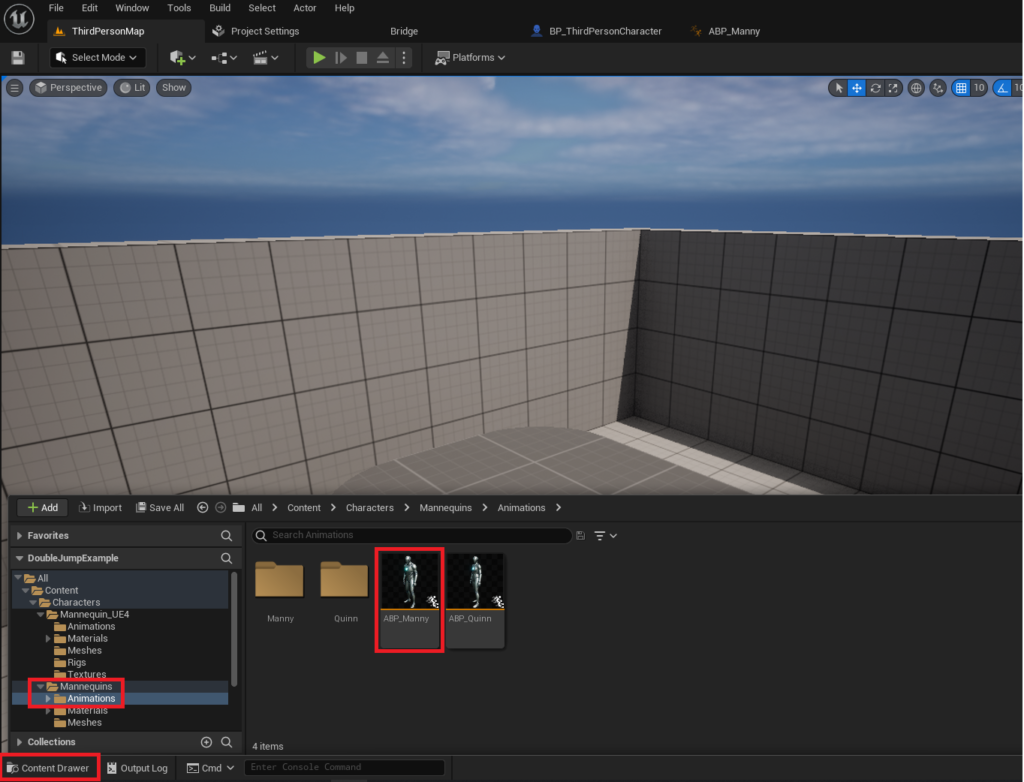
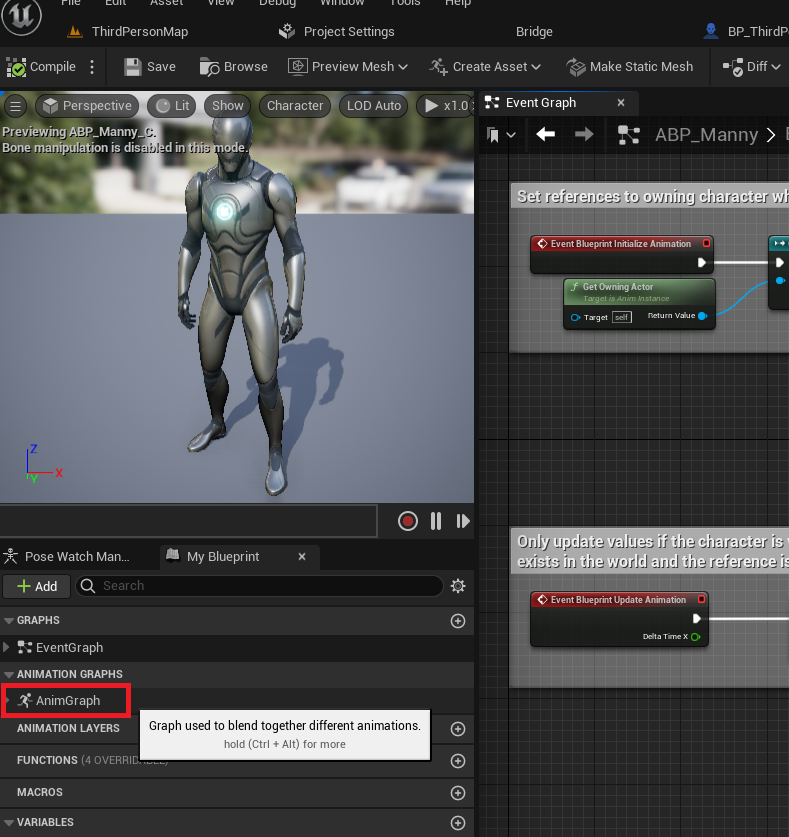
The animation refinement process in Unreal Engine 5 primarily involves modifying the character’s Animation Blueprint, specifically the ABP_Manny asset located within the Content/Characters/Mannequins/Animations folder for the default Third Person template. The Animation Blueprint is where the logic for blending and transitioning between various character animations is defined. Within this intricate network, the AnimGraph houses the state machines that dictate character movement animations. The Main States state machine, in particular, governs core movement animations such as idling, running, jumping, and falling.
To enhance the double jump animation, a new transition must be established within the Main States state machine. Specifically, a transition from the Fall Loop state back to the Jump state is required. This seemingly counter-intuitive transition is vital because when a character executes a double jump while already airborne (and thus likely in a Fall Loop state), the animation system needs to be instructed to re-trigger the jump animation rather than continuing the fall animation. This ensures that each jump input, whether the first or subsequent, is visually represented by the appropriate jumping motion. The technical logic for this transition involves a set of Blueprint nodes: Is Falling, Current Jump Count, and Jump Max Count. The transition condition is typically structured to allow a re-entry into the Jump state only if the character Is Falling AND their Current Jump Count is less than their Jump Max Count. This logic effectively checks if the character is airborne and has remaining jumps available, thus permitting the jump animation to play again upon a second jump input.
Industry analysts suggest that the simplification of such common mechanics within powerful engines like UE5 is not merely a convenience but a strategic move that significantly impacts the broader game development ecosystem. By abstracting away complex boilerplate, Epic Games empowers a wider range of creators, from solo indie developers to large studios, to allocate more resources to innovative gameplay, unique art direction, and compelling narratives. This accessibility fosters a more diverse and vibrant industry, as barriers to entry for aspiring developers are considerably lowered. Moreover, the ease of implementation contributes to faster prototyping cycles, allowing developers to iterate on ideas more quickly and refine mechanics based on early playtesting feedback. This agility is crucial in today’s fast-paced game market, where rapid development and responsiveness to player communities are highly valued.
The implications extend beyond just development efficiency. Players ultimately benefit from games that feel more polished and responsive. When developers can easily implement and visually fine-tune core mechanics, the resulting gameplay experience is more fluid, intuitive, and enjoyable. The visual feedback provided by a properly animated double jump, for instance, enhances player immersion and makes the game feel more tactile and reactive to their inputs. This attention to detail contributes to higher quality games overall, improving player satisfaction and fostering a more engaged community.
In conclusion, Unreal Engine 5’s streamlined approach to implementing the double jump mechanic exemplifies a broader trend towards more accessible and efficient game development tools. By offering a straightforward parameter adjustment for core functionality and a clear pathway for sophisticated animation integration, UE5 empowers developers to effortlessly incorporate a classic gameplay feature. This not only saves invaluable development time but also elevates the potential for creating visually compelling and highly responsive interactive experiences. The detailed guide, which covers both the foundational setup and the critical animation refinements, serves as an excellent resource for developers looking to leverage UE5’s capabilities. Such advancements underscore the engine’s role in shaping the future of game design, making it easier for creators to bring their imaginative worlds to life with professional-grade polish. For developers seeking further technical depth on character setup or advanced jump settings, official Unreal Engine documentation provides comprehensive resources, ensuring that the journey from concept to fully realized game remains well-supported.
About the Author