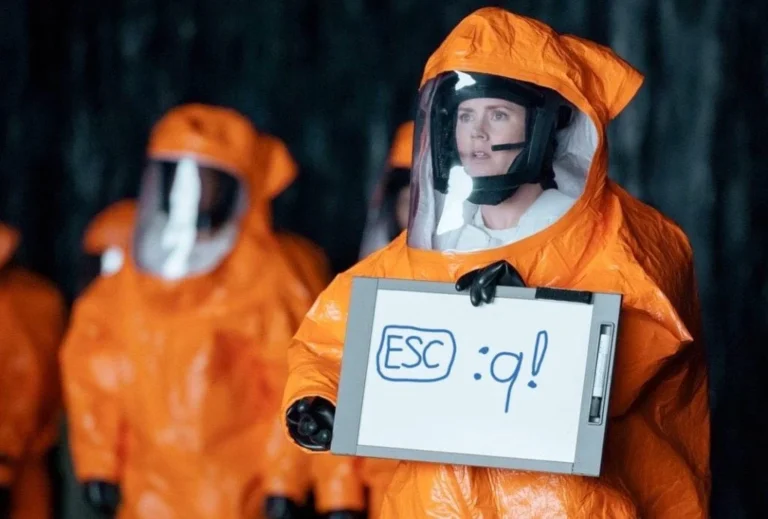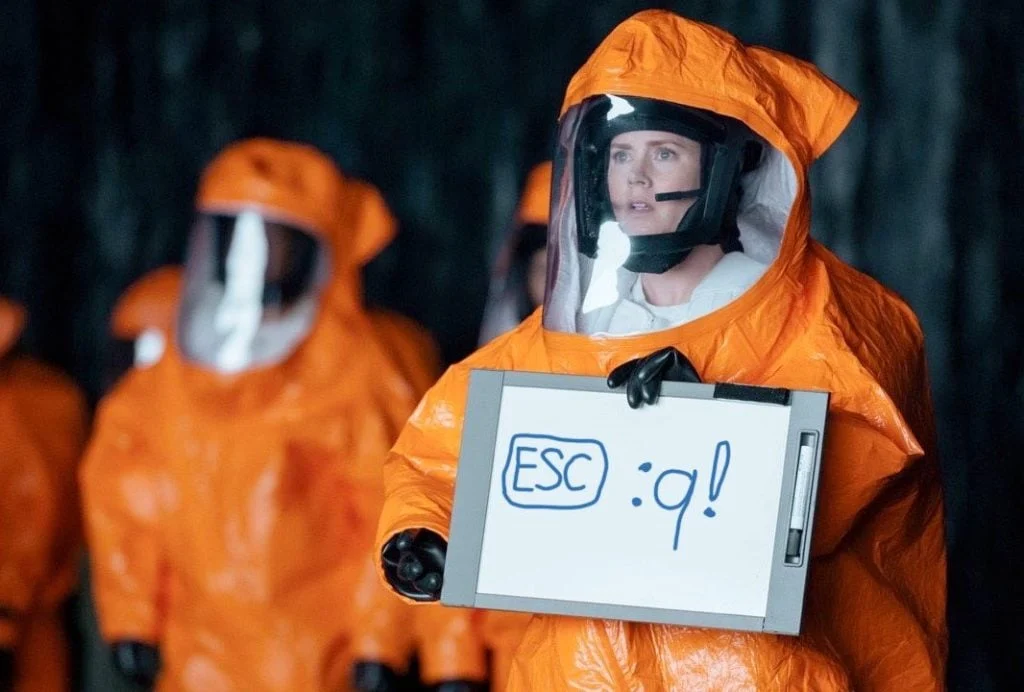
The profound question of why humanity appears alone in a universe estimated to have a 13-billion-year head start on cosmic evolution continues to perplex scientists and philosophers alike, forming the core of what is known as the Fermi Paradox. This perplexing contradiction highlights the stark absence of any verifiable evidence of extraterrestrial civilizations despite the high statistical probability of their existence. The concept gained widespread public attention through discussions in popular culture, notably through works like Ted Chiang’s novella "Story of Your Life" and its film adaptation "Arrival," which explore themes of alien communication and the potential nuances of encountering advanced life.
The Genesis of a Cosmic Conundrum
The Fermi Paradox originated from a casual lunch conversation in 1950 involving physicist Enrico Fermi. Reflecting on the vastness of the universe and the estimated age of the cosmos, Fermi famously posed the question, "Where is everybody?" His reasoning was straightforward: if the universe is ancient and teeming with billions of galaxies, each containing billions of stars, many of which are older than our Sun, then life—and eventually intelligent life—should have had ample time to evolve elsewhere. Given the immense timescales involved, even slow interstellar travel could have allowed a civilization to colonize an entire galaxy over millions of years, a mere blink in cosmic terms. The lack of any overt signs of such civilizations, whether radio signals, megastructures, or direct visitation, struck Fermi as deeply puzzling.
This paradox is often framed against the backdrop of the Drake Equation, formulated by astronomer Frank Drake in 1961. This probabilistic argument estimates the number of active, communicative extraterrestrial civilizations in the Milky Way galaxy. While the variables in the Drake Equation (such as the fraction of stars with planets, the fraction of planets that can support life, and the fraction of life-supporting planets where intelligent life emerges) are largely unknown and subject to immense speculation, even conservative estimates tend to yield a substantial number of potential civilizations. The dissonance between these high theoretical probabilities and the observational null result underscores the severity of the paradox.
The Vastness of Time and Space
To grasp the scale of the problem, consider that the universe is approximately 13.8 billion years old. Our solar system and Earth formed about 4.5 billion years ago, with complex multicellular life appearing roughly 600 million years ago, and anatomically modern humans only about 300,000 years ago. This timeline suggests that many planetary systems in our galaxy alone could be billions of years older than ours, offering vastly more time for life to evolve, develop intelligence, and achieve interstellar capabilities.
The Milky Way galaxy, our cosmic home, contains an estimated 100 to 400 billion stars. Recent exoplanet discoveries, particularly by missions like NASA’s Kepler Space Telescope, indicate that planets are not rare but are, in fact, ubiquitous. It is now understood that most stars host planets, and a significant fraction of these are rocky planets located within their star’s habitable zone—the region where temperatures are suitable for liquid water to exist on the surface. Given these statistics, the sheer number of potentially habitable worlds in the observable universe is staggering, estimated to be in the trillions. The silence from this cosmic multitude is therefore not just puzzling, but profoundly unsettling.

The Great Filter Hypothesis: A Wall in Evolution
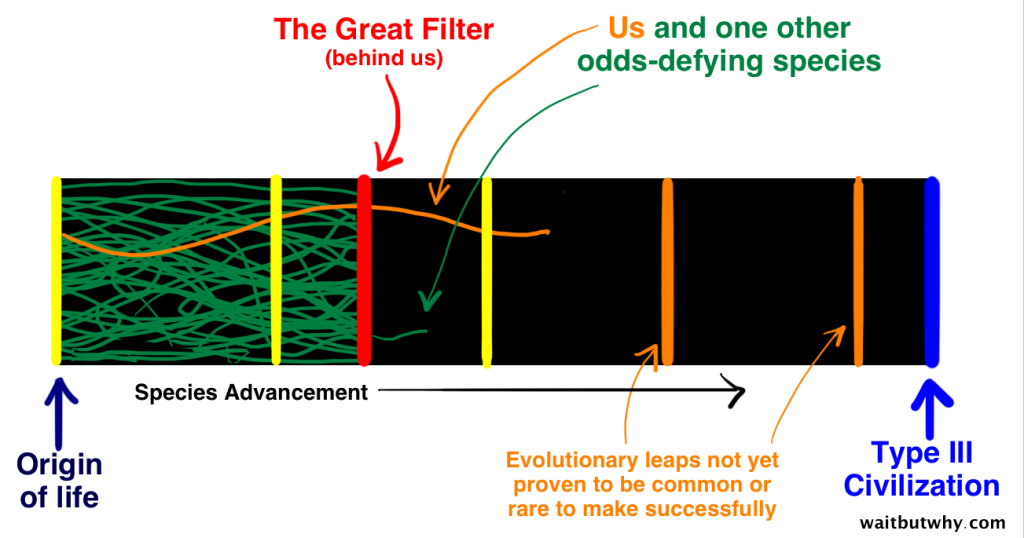
One of the most compelling explanations for the Fermi Paradox is the Great Filter hypothesis, proposed by economist Robin Hanson. This theory posits that at some critical stage in the long evolutionary journey from abiogenesis (the origin of life) to a Type III civilization (one capable of harnessing the energy of an entire galaxy), there exists an immensely improbable or impossible step—a "filter"—that nearly all life forms fail to pass. The location of this filter has profound implications for humanity’s future:
-
The Filter is in Our Past: If the Great Filter is behind us, it means humanity has already overcome an incredibly difficult hurdle that most other potential life forms fail to surmount. This scenario suggests that life, or complex life, or intelligent life, or technological life, is exceedingly rare. Examples of such filters could include the spontaneous emergence of life from non-living matter (abiogenesis), the transition from single-celled to multicellular organisms, or the development of complex brains capable of abstract thought and tool use. If this is the case, then humanity might be one of the very few, if not the only, advanced civilization in our galactic neighborhood, making us incredibly fortunate and perhaps unique.
-
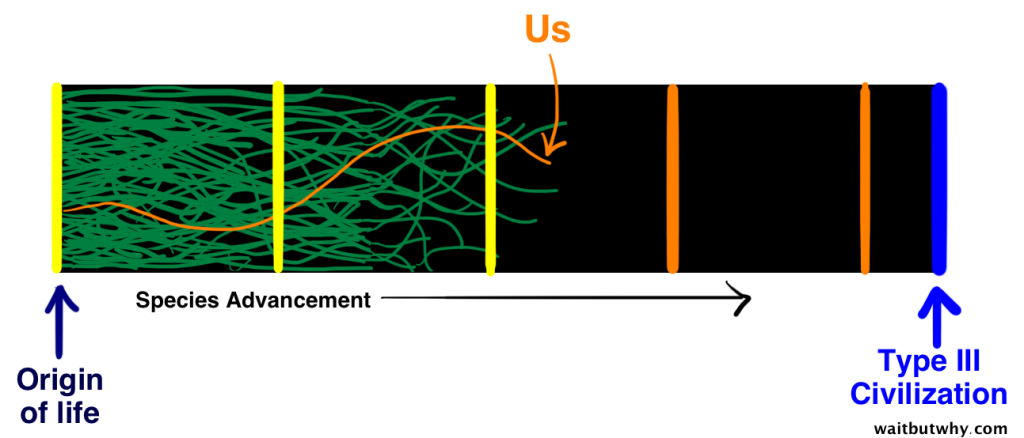
The Filter is in Our Future: This is a more ominous possibility. If the Great Filter lies ahead of us, it implies that most civilizations, once they reach a certain level of technological advancement, inevitably encounter a catastrophic event or challenge that leads to their demise or prevents further progress. Such future filters could include self-destruction through nuclear war, uncontrolled artificial intelligence, irreversible environmental collapse, resource depletion, or inability to overcome cosmic threats like asteroid impacts or stellar events. This scenario suggests that humanity’s current trajectory, if unchecked, might lead us to the very filter that has silenced countless other potential civilizations.
-
The Filter is Everywhere: This variant suggests that the conditions for life, intelligence, or civilization are so narrowly specific or unstable that they rarely persist long enough to make a galactic impact. It could involve a series of smaller, cumulative filters at various stages, making the overall probability of reaching Type III extremely low.
Other Proposed Solutions to the Fermi Paradox
Beyond the Great Filter, numerous other hypotheses attempt to explain the cosmic silence:
- Rare Earth Hypothesis: This theory argues that the specific conditions necessary for complex life to evolve and persist—such as a planet’s exact size, its distance from a stable star, the presence of a large moon, plate tectonics, and a planetary magnetic field—are exceptionally rare, making Earth a truly unique haven for advanced life.
- The Zoo Hypothesis: This intriguing idea suggests that extraterrestrial civilizations are aware of our existence but choose not to contact us, perhaps observing us as if we were animals in a cosmic zoo. This non-intervention policy could be part of a galactic ethical directive or a strategy to allow civilizations to develop naturally without external influence.
- The Dark Forest Theory: Popularized by author Liu Cixin, this theory posits that the universe is a "dark forest" where civilizations are predators. Any civilization that reveals its presence risks immediate destruction from others who perceive them as a potential threat. Therefore, all intelligent life chooses to remain silent to ensure its survival.
- Self-Destruction Hypothesis: Similar to the Great Filter being in our future, this idea emphasizes that technological civilizations inevitably develop the means of their own destruction, whether through advanced weaponry, environmental degradation, or unsustainable growth.
- Cosmic Isolation/Insufficient Reach: It could simply be that the distances between stars and galaxies are so immense that even highly advanced civilizations have not yet had the time or means to traverse them sufficiently to make contact. Our observable universe is vast, but it is only a fraction of the total universe, and our current detection methods are severely limited.
- Different Forms of Life/Communication: Perhaps alien life and intelligence are so fundamentally different from our own that we fail to recognize their presence or their attempts at communication. Their technology, biology, or even their perception of reality might be beyond our current comprehension.
The "Small and Fast" Theory: A Shift in Scale
An intriguing perspective, echoed by thinkers like Seth Shostak, posits that advanced civilizations might not necessarily manifest as large, planet-spanning empires or galaxy-rearranging megastructures. Instead, they might follow a trajectory of increasing efficiency, speed, and miniaturization, much like the evolution of human technology from massive mainframe computers to microscopic integrated circuits.
The argument suggests that for highly evolved intelligences, the "real action" might shift from the macroscopic to the microscopic realm. Large-scale construction is inefficient in terms of energy, resources, and the speed of light. Communication and computation are fundamentally limited by the speed of light, meaning smaller systems with shorter internal pathways can process information faster. An advanced civilization might therefore prioritize building nanobots, developing sophisticated artificial intelligence that exists in non-physical or quantum states, or even migrating their consciousness into vast, efficient computational networks.
As Seth Shostak has articulated, "Why build planet-size anything when the real action is in the small things? Small spaces, small units of time, everything gets smaller." If intelligence evolves to prioritize speed, efficiency, and information processing over physical expansion, then the ultimate form of advanced life might be virtually undetectable by our current methods. They might exist in incredibly compact forms, perhaps even at the quantum level, or as pure information, making their presence imperceptible to our telescopes and radio antennae designed to detect large-scale phenomena. This "post-physical" existence could mean they have transcended the need for traditional resource extraction or interstellar travel, finding infinite computational possibilities within incredibly small, energy-efficient domains, or even within the fabric of space-time itself.
Implications for Humanity and the Search for ET
The ongoing search for extraterrestrial intelligence (SETI) continues through various projects, including radio astronomy surveys and optical SETI. Organizations like the SETI Institute actively scan the cosmos for signals that might indicate intelligent origins. However, the lack of success so far only deepens the mystery of the Fermi Paradox.
The implications of the Fermi Paradox are profound. If the Great Filter is in our past, it elevates humanity to a potentially unique and precious position in the universe, placing a heavy responsibility on us to preserve life and intelligence. If the filter is in our future, it serves as a stark warning, urging us to address existential threats and ensure our long-term survival. If advanced life simply becomes undetectable, it challenges our very definition of what constitutes a "civilization" and forces us to reconsider the parameters of our search.
Ultimately, the Fermi Paradox remains one of science’s most enduring and thought-provoking mysteries. It forces us to confront our place in the cosmos, to question the assumptions we make about life and intelligence, and to ponder whether the silence we perceive is a testament to our rarity, a harbinger of our doom, or simply a reflection of our limited understanding of what advanced life might truly become. As our technological capabilities expand, so too might our ability to listen, to observe, and perhaps, one day, to understand the universe’s quietest secrets.
About the Author