The mobile gaming industry reached a historic milestone in 2025, characterized by the enduring dominance of legacy titles and a significant surge in total market valuation. According to the latest financial data and market research, the global games market generated an unprecedented $201.6 billion in 2025, marking a 9.1% increase over the previous year. Within this landscape, Niantic’s Pokémon Go has proven its remarkable longevity, securing over $1 billion in revenue during its tenth anniversary year alone. This performance coincides with a broader industry trend where revenue growth is increasingly driven by sophisticated monetization strategies rather than the expansion of the player base, as global download volumes show signs of stabilization and, in some sectors, decline.

The Decadel Long Legacy of Pokémon Go
Since its cultural phenomenon launch in July 2016, Pokémon Go has redefined the augmented reality (AR) sector. As it marks its tenth year of operation, Niantic confirmed that the title has inspired more than 800 million players to capture over one trillion Pokémon. Despite the age of the game, player engagement remains high, with users averaging 45 minutes of daily playtime. The game’s reach extends across more than 150 countries and regions, with Trainers collectively exploring over 100 billion kilometers in the real world.
Financial analysis from AppMagic indicates that Pokémon Go has earned approximately $6.37 billion in lifetime In-App Purchase (IAP) revenue. It is important to note that this figure excludes revenue generated through Niantic’s proprietary web shop, which has become an increasingly vital component of the game’s financial ecosystem as developers seek to bypass traditional app store commissions. Geographically, the United States remains the primary revenue driver, accounting for 39% of lifetime earnings, followed by Japan at 30%. Germany, the third-largest market, represents a significantly smaller share at 5%, while the United Kingdom, Canada, Taiwan, and Australia contribute between 2% and 3% each.

The operational structure of the game has also undergone significant changes. Following a $3.5 billion acquisition deal last year, Scopely took control of Niantic’s game teams, including companion services such as Campfire and Wayfarer. These teams have since been integrated and rebranded as Scopely Explore, signaling a new chapter in the management and expansion of the Pokémon Go intellectual property.
Global Market Dynamics and the Cost of Acquisition
The broader global games market’s ascent to $201.6 billion in 2025 highlights the resilience of the sector. Mobile gaming continues to be the primary engine of this growth, with revenues rising 10.7% year-over-year to reach $113.3 billion. However, analysts at Newzoo suggest that the industry is entering a phase of "deepening monetization." While revenue is climbing, the cost of acquiring new players has reached a critical threshold.

Data from Adjust reveals that the cost per install (CPI) rose by 30% year-over-year in 2025, reaching a global average of $0.56. Furthermore, the paid-to-organic install ratio increased by 61%, indicating that organic discovery on app stores is rapidly eroding. This shift forces developers to rely more heavily on expensive performance marketing to maintain their user bases.
Industry experts also point to a structural risk involving hardware costs. While free-to-play models offer some insulation from economic volatility, the rising prices of memory and components have led major Android manufacturers to increase device costs. This trend could potentially hinder player acquisition in emerging markets where affordable hardware has historically been the primary gateway to mobile gaming.

The Rise of MiHoYo and the Private Sector Elite
In the realm of corporate valuation, the Chinese developer MiHoYo has ascended to the upper echelons of the global economy. Best known for the massive success of Genshin Impact and Honkai: Star Rail, MiHoYo is currently valued at approximately $30 billion. According to research from The Hurun Research Institute, published by Niko Partners, this valuation places MiHoYo as the 25th most valuable private company in the world.
The scale of MiHoYo’s success is further highlighted when compared to its peers. Lilith Games, the studio responsible for Rise of Kingdoms and AFK Arena, is the next highest-ranked gaming company on the list, holding the 256th position with an estimated valuation of $4.4 billion. MiHoYo’s ability to maintain high-quality, cross-platform live-service games has set a new benchmark for the industry, particularly in how developers can leverage high-fidelity graphics and deep narrative content to drive consistent IAP revenue.

Evolution and Saturation in the Puzzle Genre
The puzzle genre, a cornerstone of the mobile gaming market, is currently experiencing a period of internal realignment. Recent data from AppMagic shows that Match-3, Merge, and Blast games collectively account for approximately 80% of all IAP revenue within the puzzle category. However, a decade-long trend suggests that the traditional "puzzle trio" is losing its grip on the market’s attention.
While these three subgenres accounted for over 75% of puzzle install volumes ten years ago, that figure has now plummeted to below 25%. Among them, "Merge" is the only subgenre currently expanding its market share. Analysts suggest that Match-3 and Blast titles have reached a point of extreme saturation, leading to a steady decline over the past three years. In response, developers are increasingly turning to "Market Match" mechanics and hybrid-casual elements to reinvigorate the genre.

A notable example of new investment in this space is the Istanbul-based studio Bold Games. The company recently secured $6 million in funding to scale its team and its debut title, Market Match. This investment reflects a continued interest in the Turkish gaming ecosystem, which has become a global hub for puzzle and casual game development.
Strategic Expansion: Supercell’s African Initiative
As established markets face rising acquisition costs, major publishers are looking toward untapped regions for future growth. Supercell, the Finnish giant behind Clash of Clans, has officially launched its Developer Grants Program specifically targeting the African continent. The program offers equity-free grants ranging from $20,000 to $200,000 to "exceptional game development studios" across Africa.

This initiative is seen as a strategic move to foster talent in a region with rapidly increasing smartphone penetration and a burgeoning youth population. By providing financial support without requiring equity, Supercell aims to lower the barriers to entry for African developers, potentially securing a foothold in a market that many analysts believe will be the next major frontier for mobile gaming expansion.
Monthly Performance Metrics: May 2025
The monthly performance data for May 2025 provides a snapshot of current consumer preferences. Total mobile game revenue for the month reached $4.5 billion, a 2% increase from April, though this represents a 4.6% decline when compared to the same period in 2024. Download numbers followed a similar pattern, increasing 5% month-on-month but remaining 11% lower than the previous year.

The revenue charts were once again led by Tencent’s Honor of Kings, which earned an estimated $135 million from IAPs in May. On the downloads front, Arrows Puzzle Escape emerged as the leader, recording 29.7 million downloads. Interestingly, 24% of these downloads originated from India, further underscoring the country’s status as a critical volume driver for the global mobile industry.
In the kids and family segment, Bluey: Let’s Play! has surpassed 75 million downloads. Developed by Budge Studios, the title has generated approximately $53 million in lifetime IAP earnings, with the United States accounting for 69% of that total. Similarly, CrazyLabs’ Acrylic Nails has reached a milestone of 200 million downloads since its 2020 debut, maintaining strong popularity in India, the U.S., and Brazil.

Anticipated Releases and Future Outlook
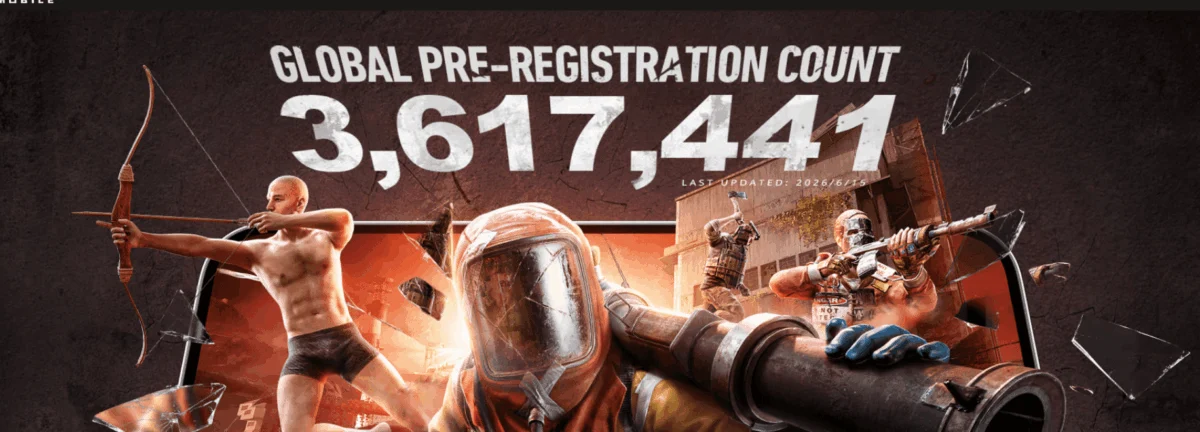
Looking ahead to the remainder of 2025 and into 2026, the industry is closely watching the transition of major PC and console franchises to mobile platforms. Facepunch Studios’ Rust Mobile has already secured over 3 million pre-registrations globally. The title is currently preparing for its second beta test in August, with high expectations that it will capture the survival-crafting audience on mobile in a way similar to how PUBG and Fortnite transitioned their respective genres.
The 2025 data suggests an industry that is both maturing and narrowing. While the total market value has crossed the $200 billion threshold, the concentration of wealth in top-tier titles like Pokémon Go and the high valuation of private entities like MiHoYo indicate a "winner-takes-most" dynamic. For smaller developers, the challenge remains navigating the rising costs of discovery and the shifting preferences within established genres. However, with new investment flowing into regions like Africa and the continued success of innovative puzzle mechanics, the mobile gaming sector remains a dynamic and vital component of the global entertainment economy.
About the Author