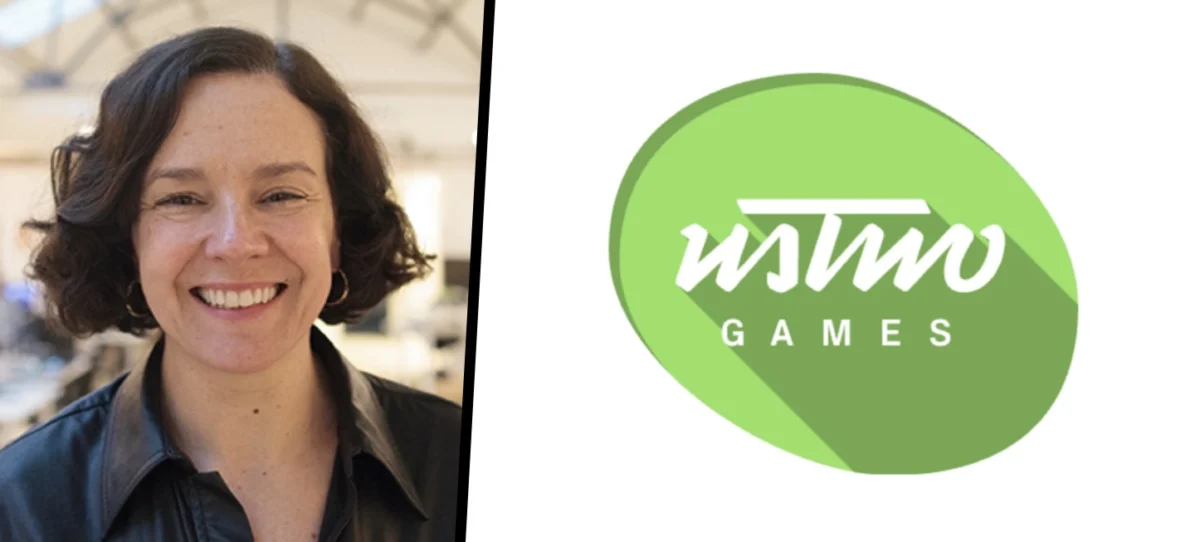
The digital storefront landscape is currently failing independent developers by neglecting the essential task of game discoverability, according to Maria Sayans, the Chief Executive Officer of Ustwo Games. Speaking during a keynote session at the Develop: Brighton conference, Sayans articulated a growing frustration within the development community regarding the value proposition offered by major platform holders. Her remarks centered on the disconnect between the substantial revenue cuts taken by platforms and the actual support provided to developers in reaching their target audiences. Sayans argued that while developers are mandated to surrender a standard 30% revenue share to storefronts like Apple, Google, and Steam, these platforms are increasingly falling short of their obligation to facilitate meaningful connections between creators and players in an oversaturated market.
This critique comes at a transformative juncture for Ustwo Games, the studio renowned for the critically acclaimed and commercially successful Monument Valley series. The studio is currently navigating a complex transition from its traditional roots in mobile gaming toward a more diversified presence on PC and console platforms. This shift is not merely a creative choice but a strategic necessity driven by the evolving economic realities of the mobile ecosystem, where premium, artistic experiences are increasingly overshadowed by high-retention, free-to-play models.
The Revenue Split and the Discoverability Crisis
The cornerstone of Sayans’ address at Develop: Brighton was the assertion that platform holders are "not doing their job." In the modern gaming industry, the 30% platform fee has become a contentious industry standard, popularized by the Apple App Store and subsequently adopted by Google Play and Steam. Historically, this fee was justified as a service charge covering hosting, payment processing, and, most importantly, curation and audience reach. However, Sayans contends that the "reach" aspect of this agreement has effectively collapsed.
In a market where thousands of new titles are uploaded to digital storefronts every month, the visibility of any single game has become a matter of algorithmic chance or massive marketing expenditure, rather than platform-led curation. For independent studios like Ustwo, which prioritize artistic integrity and unique mechanics over aggressive monetization, this lack of discoverability is an existential threat. Sayans noted that Ustwo is now forced to invest significant internal resources into community building and self-driven marketing efforts—tasks that were previously perceived as being supported by the platform’s own discovery mechanisms.
The "discoverability crisis" is not a new phenomenon, but Sayans’ bluntness highlights a deepening rift. Data from industry analysts suggests that the top 1% of games on mobile and PC account for more than 90% of total revenue, leaving tens of thousands of developers to compete for a fraction of the remaining market. When platforms fail to surface high-quality niche titles, the 30% commission begins to feel less like a service fee and more like a tax on entry.
The Strategic Retreat from Mobile Subscriptions
A significant portion of the keynote was dedicated to Ustwo’s relationship with subscription services, specifically Apple Arcade and Netflix Games. In recent years, these platforms emerged as "honeypots" for indie developers, offering upfront funding and a guaranteed audience in exchange for exclusivity. For a time, this model provided a safe harbor for premium mobile games that struggled to compete with the free-to-play giants.
However, Sayans revealed that this model is no longer sustainable for the types of games Ustwo wishes to create. She admitted that the studio may have relied on these "honeypots" for too long, delaying a necessary move into the PC market. The shift in strategy from Apple and Netflix has been a primary catalyst for this change. According to Sayans, these platforms have pivoted their acquisition strategies toward "forever games"—titles designed for long-term retention and regular player return.
"They wanted to make games that people came back to more regularly, that had more retention, that lasted a longer time," Sayans explained. This shift directly contradicts the "DNA" of Ustwo Games, which specializes in finite, emotionally resonant experiences like Assemble With Care and Alba: A Wildlife Adventure. Sayans was clear that the studio faced a binary choice: adapt to the free-to-play or high-retention model, or move to platforms where premium, "one-and-done" experiences are still valued by the consumer base. Choosing the latter, the studio has begun focusing heavily on PC and console development, though the transition has not been without significant difficulty.
The Human Cost of Industry Volatility
The move away from mobile-first development and the cooling of the subscription market led to one of the most difficult periods in the studio’s history. Sayans spoke candidly about the "painful" experience of undergoing the studio’s first round of layoffs. This admission mirrors a broader trend across the global games industry, which has seen tens of thousands of redundancies over the past 24 months as studios recalibrate after the post-pandemic boom and navigate a tightening venture capital and publishing environment.
The restructuring at Ustwo was a direct consequence of the shift in business models. As the studio "weaned itself off" the guaranteed income of subscription deals, it had to become leaner and more focused on the competitive PC and console space. This transition was further complicated by the studio’s ambitious production schedule. Between the release of Monument Valley 2 and the upcoming Monument Valley 3, the team developed three new IPs in entirely different genres. While Sayans believes this helped the team build the skill sets required for PC and console development, she acknowledged that it may have been "too much of a stretch" for the mid-sized studio.
Made by Humans: The Creative Philosophy and the Risk of Failure
Ustwo veteran Danny Gray joined Sayans during the session to discuss the studio’s internal philosophy, summarized by the mantra "Made by Humans." This approach prioritizes the personal interests and emotional experiences of the developers, allowing their hobbies and passions to dictate the themes of their games. For instance, the birdwatching mechanics in Alba: A Wildlife Adventure were born from a genuine love of nature within the team, while the repair mechanics in Assemble With Care were inspired by the sentimental value of physical objects.
However, Gray was equally transparent about the risks inherent in this creator-led approach. He cited Desta: The Memories Between as a primary example of a project that, despite its creative merits, failed to achieve commercial success. Desta, a tactical roguelike that explores themes of relationship trauma and personal growth, was initially a Netflix exclusive before moving to PC. Gray admitted that sales figures indicate the game "didn’t necessarily work out" in terms of finding a broad audience.
Despite the commercial underperformance of Desta, Gray emphasized the necessity of taking risks. "I think that we need to continue to take risks, and sometimes it’s going to hit big time, sometimes it’s not," he stated. He argued that the vulnerability of "getting it wrong" is a prerequisite for creating meaningful art. This sentiment underscores the central tension facing Ustwo and many other indie studios: the desire to create artistically significant work in an economic environment that increasingly demands predictable, metrics-driven outcomes.
Broader Implications for the Indie Ecosystem
The insights shared by Sayans and Gray at Develop: Brighton reflect a broader malaise within the independent development sector. The "Golden Age" of indie games—characterized by the early success of titles like Braid, Fez, and Ustwo’s own Monument Valley—was supported by a digital landscape that was still relatively navigable. Today, the sheer volume of content has created a "winner-takes-most" economy.
The criticism of the 30% platform fee is particularly relevant given the ongoing legal and regulatory battles worldwide. The European Union’s Digital Markets Act (DMA) and various lawsuits in the United States have begun to challenge the "walled garden" approach of Apple and Google, potentially opening the door for alternative stores and payment methods. However, as Sayans pointed out, a lower fee does not solve the discoverability problem. If a developer pays 12% to a store but still receives zero visibility, the fundamental issue remains.
Ustwo’s pivot to PC and console suggests a belief that these platforms, particularly Steam, offer a more meritocratic environment for premium games, despite their own crowding issues. Steam’s robust tagging system, user reviews, and seasonal festivals provide tools for discovery that are often lacking or purely algorithmic on mobile storefronts.
Chronology of Ustwo Games’ Strategic Evolution
To understand the weight of Sayans’ comments, it is necessary to look at the studio’s trajectory over the last decade:
- 2014: Release of Monument Valley on iOS. The game becomes a cultural phenomenon, proving that premium, artistic experiences can thrive on mobile.
- 2017: Monument Valley 2 is released, further cementing the studio’s reputation for high-quality mobile premiums.
- 2019: Assemble With Care launches as a flagship title for the newly debuted Apple Arcade. This marks the beginning of the studio’s reliance on subscription "honeypots."
- 2020: Alba: A Wildlife Adventure launches on Apple Arcade and PC, representing the studio’s first major step toward multi-platform development.
- 2022: Desta: The Memories Between launches on Netflix Games. The studio continues to experiment with genres, moving into strategy and roguelike mechanics.
- 2023-2024: The studio faces a strategic crossroads. Shifts in subscription platform requirements and a desire for creative independence lead to layoffs and a formal pivot toward a "PC-first" mentality for future IPs, while maintaining a partnership with Netflix for the upcoming Monument Valley 3.
Conclusion: The Path Forward for Premium Creators
The testimony from Ustwo Games at Develop: Brighton serves as a warning for the wider industry. If even established, award-winning studios struggle to find audiences on major platforms, the barrier for new entrants may become insurmountable. Sayans’ call for platform holders to "do their job" is a demand for a return to active curation and a more equitable relationship between the distributors who control the gates and the creators who provide the content.
As Ustwo Games moves forward, its success will likely depend on its ability to leverage its "Made by Humans" philosophy to build a direct, loyal community that exists independently of platform algorithms. The studio’s journey highlights a critical reality of the 2024 gaming market: being a great developer is no longer enough; one must also be a resilient navigator of an increasingly indifferent digital infrastructure. The industry will be watching closely as Monument Valley 3 nears release, seeing it as a litmus test for whether the premium mobile model—even with the backing of a giant like Netflix—can still hold its own in an era defined by the retention-driven "forever game."
About the Author