The technology sector is witnessing a significant realignment as Lenovo, one of the most prominent players in the extended reality (XR) space, has implemented layoffs within its United States-based XR business unit. This move signals a departure from the company’s long-standing enterprise-focused augmented reality (AR) and virtual reality (VR) strategy. Sources close to the matter indicate that while a small number of affected employees were offered alternative positions within the organization, the majority of the team dedicated to business-oriented XR development has been let go. This restructuring marks a pivotal moment for Lenovo’s ThinkReality brand and reflects a broader industry trend where major tech corporations are reassessing the viability of high-end VR hardware in favor of AI-integrated consumer wearables.
The Strategic Transition from B2B to B2C
For several years, Lenovo was regarded as a cornerstone of the B2B XR market. Its ThinkReality platform provided hardware and software solutions designed for industrial applications, remote assistance, and spatial computing in the workplace. However, the company has officially confirmed a shift in its roadmap. In a statement addressing the restructuring, a Lenovo spokesperson noted that the evolution of the XR market has shown stronger momentum and broader consumer adoption around AI-enabled wearables rather than traditional enterprise VR headsets.
As part of this transition, Lenovo is moving its XR focus from the business-first ThinkReality brand to a consumer-centric approach managed under the Motorola subsidiary. This reorganization aims to centralize the development of an ecosystem focused on AI-native consumer devices. The objective is to deliver a unified "Personal AI" experience that spans Lenovo’s entire product portfolio, including AI PCs, tablets, smartphones, and wearable technology. This move aligns with Lenovo’s overarching corporate vision, "Smarter AI for All," which prioritizes accessible and scalable AI applications over niche enterprise hardware.
Contextualizing the Pivot: The HorizonOS and Qualcomm Factor
To understand the suddenness of these layoffs, one must look at Lenovo’s recent high-profile partnerships and their subsequent outcomes. Earlier in 2024, Lenovo was announced as one of the primary hardware partners for Meta’s HorizonOS, an open operating system designed to power a new generation of third-party mixed reality headsets. Lenovo’s specific project was intended to be a high-end headset tailored for productivity, learning, and entertainment. However, recent industry reports suggest that Meta has scaled back or canceled certain hardware collaborations, leaving partners like Lenovo with significant research and development investments that have yet to yield a commercial return.

Furthermore, Lenovo was a lead partner for Qualcomm’s Snapdragon Spaces, an open XR developer ecosystem. Despite the technical prowess of the Snapdragon Spaces environment, the market’s lukewarm reception and the slow pace of enterprise adoption have made it difficult for hardware manufacturers to justify continued heavy investment in dedicated B2B AR/VR units. The combination of these stalled partnerships and a cooling venture capital environment for VR—often referred to as the "VR Winter"—likely accelerated Lenovo’s decision to cut its losses in the specialized XR sector.
A Chronology of Lenovo’s XR Involvement
Lenovo’s journey in the XR space has been characterized by both innovation and rapid adaptation.
- 2019–2021: Lenovo launched the ThinkReality A6 and later the A3 AR glasses. These devices were marketed as versatile tools for enterprise, capable of tethering to PCs and Motorola smartphones to provide virtual monitors and 3D visualization for engineers and office workers.
- 2022–2023: The company deepened its ties with Qualcomm and Meta, positioning itself as a leader in the "Spatial Computing" era, competing directly with high-end offerings from Microsoft (HoloLens) and later Apple (Vision Pro).
- Early 2024: Lenovo was featured prominently in Meta’s announcement regarding the opening of the Quest ecosystem to third-party manufacturers.
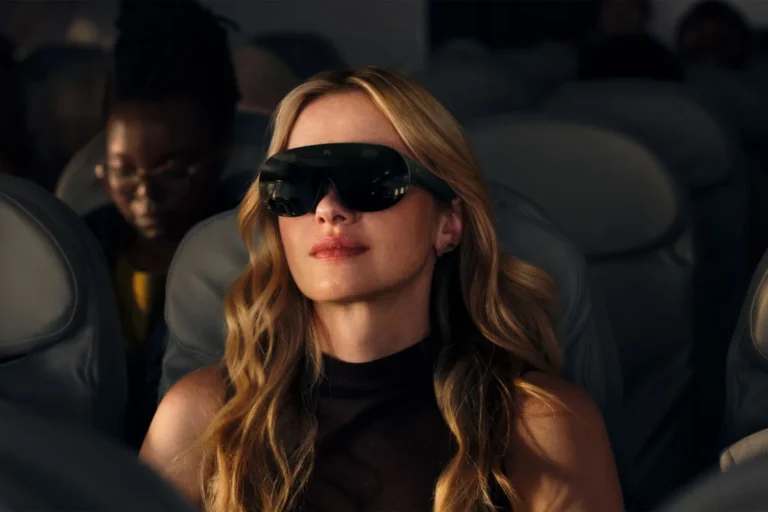
- CES 2026: In a major shift, Lenovo showcased its "AI Glasses Concept," a 45-gram wearable focused on AI assistance rather than immersive VR. This concept emphasized live translation, image recognition, and notification management.
- Mid-2026: The current restructuring confirms the dissolution of the US-based ThinkReality XR unit and the official pivot toward Motorola-branded AI wearables.
The Rise of AI-Enabled Smart Glasses
The decision to focus on Motorola-branded wearables is a strategic calculation based on the success of lightweight "smart glasses" compared to bulky VR headsets. Market data from the past 18 months suggests that consumers are more willing to adopt wearables that look like traditional eyewear and offer AI-driven utility, such as the Ray-Ban Meta smart glasses.
Lenovo’s AI Glasses Concept, powered by the "Lenovo Qira" AI, represents the blueprint for this new direction. These glasses are designed to be wirelessly tethered to a smartphone or PC, offering sub-millisecond live translation, voice-controlled multimedia, and a "Catch Me Up" feature that summarizes cross-device notifications. By prioritizing a weight of just 45 grams and an eight-hour battery life, Lenovo is targeting the "all-day wearability" segment that has eluded the VR industry for a decade. The integration with Motorola suggests that future glasses will likely be sold as an essential accessory to the smartphone, utilizing the phone’s processing power to deliver AI insights directly to the user’s field of vision.
Analysis of the "VR Winter" and Industry Implications
Lenovo’s retreat from the B2B XR market is symptomatic of a wider industry contraction. While the enterprise sector initially showed promise for training and remote collaboration, the high cost of deployment, hardware maintenance, and the lack of "killer apps" have led many corporations to pause their XR rollouts. At the same time, the meteoric rise of Generative AI has diverted corporate budgets away from spatial computing and toward LLM (Large Language Model) integration.

Industry analysts suggest that Lenovo is not the only company making this trade-off. Meta and HTC have also shifted significant resources toward AI integration and lightweight glasses. The "VR Winter" is characterized by a realization that full immersion is a niche use case, whereas AI assistance is a universal one. By moving the XR unit under Motorola, Lenovo is betting that the future of the technology lies in mobile-connected peripherals rather than standalone enterprise headsets.
For the enterprise AR market, Lenovo’s exit from its US-based B2B unit creates a vacuum. Companies that relied on ThinkReality for industrial solutions may now have to look toward specialized vendors or wait for the next iteration of consumer-grade glasses to reach enterprise-level security and durability.
Future Outlook for Lenovo and Motorola
The official response from Lenovo suggests that the company is not abandoning the concept of "wearable displays" but is fundamentally changing the "how" and "why" of the technology. The upcoming months are expected to see the official launch of Motorola-branded AI glasses, which will likely serve as the flagship for Lenovo’s "Smarter AI for All" campaign.
While the layoffs in the US represent a painful transition for the employees involved, they reflect a cold reality in the tech world: the vision of a VR-headset-in-every-office has been replaced by the vision of AI-glasses-on-every-face. Lenovo’s reorganization is a clear signal that the company believes the path to profitability and market dominance no longer runs through the virtual world, but through an AI-enhanced physical one. As the XR market continues to evolve, the success of this pivot will depend on whether Motorola can capture the consumer’s imagination in a way that the ThinkReality brand could not capture the corporate boardroom.
About the Author