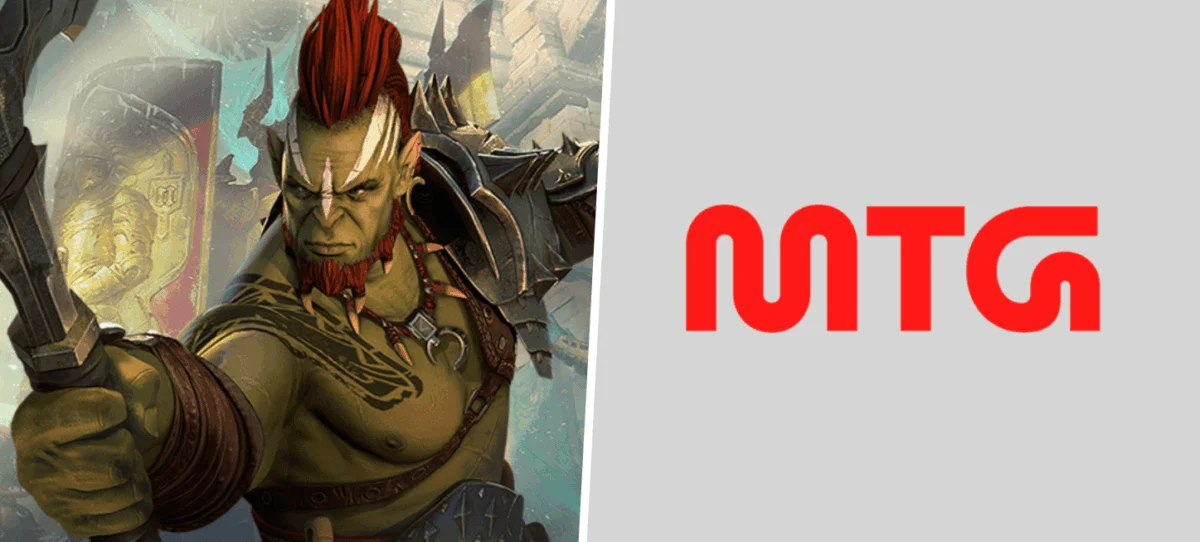
Modern Times Group (MTG) has reported its financial results for the second quarter of the year, marking the seventh consecutive quarter of sequential revenue growth for the international mobile gaming group. The performance was anchored by the continued dominance of its flagship title, Raid: Shadow Legends, a significant surge in the casual gaming segment led by PlaySimple, and a strategic pivot toward direct-to-consumer (D2C) sales channels that has allowed the company to bypass traditional mobile platform fees. The group’s ability to maintain momentum in a complex global gaming market underscores the efficacy of its "roll-up" strategy, which focuses on acquiring and scaling high-performing mobile studios while optimizing backend operations and distribution.
Financial Overview and Core Performance Metrics
For the second quarter, MTG reported total group revenue of $306 million (SEK 2,965 million). This steady climb in top-line performance was accompanied by robust profitability. The group’s adjusted EBITDA (Earnings Before Interest, Taxes, Depreciation, and Amortization) reached $73 million (SEK 707 million), representing a healthy adjusted EBITDA margin of 24%. These figures align with the company’s broader strategy of balancing aggressive growth with operational efficiency.
The consistency of this growth is particularly noteworthy given the broader volatility in the mobile gaming sector, which has faced headwinds ranging from changes in user privacy tracking (IDFA) to a general cooling of post-pandemic consumer spending. MTG’s management confirmed that full-year guidance remains unchanged, signaling confidence in the portfolio’s performance for the remainder of the fiscal year. The group’s diversified approach—spanning midcore RPGs, strategy games, and casual word puzzles—has provided a buffer against fluctuations in any single genre.
The Plarium Powerhouse: Raid Shadow Legends and Midcore Stability
Plarium, one of MTG’s most significant acquisitions, continues to be the primary engine of the group’s financial health. Its crown jewel, Raid: Shadow Legends, demonstrated remarkable resilience in Q2. The title generated $111 million (SEK 1,076 million) in revenue, representing a 9% year-over-year increase.
This growth occurred despite what management described as a "quieter content period." Following an exceptionally strong first quarter characterized by major anniversary events and high-profile collaborations, Q2 focused on sustaining the player base through incremental updates and live-ops optimization. The 9% rise suggests a high level of player retention and a successful monetization strategy that does not rely solely on constant massive content drops.
However, the midcore portfolio saw varied results outside of its top performer. Warhammer 40,000: Tacticus, developed by Snowprint Studios, continued its upward trajectory with a 5% year-over-year revenue increase, reaching $17 million (SEK 169 million). As a relatively newer addition to the MTG stable, Tacticus is viewed as a long-term growth vehicle with significant intellectual property (IP) leverage. Conversely, the legacy title Forge of Empires, managed by InnoGames, faced continued pressure. The game’s revenue declined by 22% year-over-year to $19 million (SEK 189 million). This decline reflects the natural lifecycle of long-standing strategy titles and highlights the necessity of MTG’s ongoing efforts to refresh its portfolio through both internal development and external acquisitions.
PlaySimple and the Casual Gaming Surge
The casual gaming arm of MTG, PlaySimple, emerged as a standout growth driver in the second quarter. Revenue for the subsidiary jumped 29% year-over-year, fueled by the success of its core word game portfolio and new hits such as Crossword Go, Cryptogram, and Tile Match. PlaySimple’s ability to scale quickly in the highly competitive casual space is a testament to its data-driven approach to user acquisition and ad-revenue optimization.
In a move that signals MTG’s long-term value-creation strategy, the group revealed that PlaySimple has filed a Draft Red Herring Prospectus (DRHP). This filing is a preliminary step toward a potential independent listing for the subsidiary, currently targeted for 2026. Such a move would allow MTG to crystallize the value of its casual gaming investments while providing PlaySimple with the capital structure necessary for its next phase of independent growth.
The Strategic Shift to Direct-to-Consumer (D2C) Sales
Perhaps the most significant strategic revelation in the Q2 report is the rapid acceleration of MTG’s direct-to-consumer (D2C) revenue. For years, mobile game developers have been beholden to the "platform tax"—the 30% commission taken by Apple’s App Store and the Google Play Store on all in-app purchases. MTG has aggressively countered this by building its own independent web shops and payment platforms.
The data shows that 38% of total group revenue now flows through MTG’s own D2C stores, a massive increase from the 24% reported just one year ago. This shift is even more pronounced in the midcore segment, where 51% of revenue is now generated via D2C channels. By moving more than half of its midcore transactions away from Apple and Google, MTG is significantly expanding its profit margins and gaining a more direct relationship with its most valuable "whale" players. This trend is reflective of a wider industry movement, catalyzed by regulatory changes like the Digital Markets Act in Europe, which are forcing platforms to allow alternative payment methods.
Historical Context: MTG’s Evolution into a Gaming Giant
To understand the significance of these Q2 results, one must look at the historical trajectory of Modern Times Group. Originally a traditional Swedish media conglomerate with vast holdings in television (Viasat) and radio, MTG began a radical transformation nearly a decade ago. Recognizing the shifting tides of media consumption, the company divested its traditional broadcasting assets to focus exclusively on the high-growth sectors of esports and gaming.
The company initially made waves with the acquisition of ESL and DreamHack, becoming the world’s largest esports company. However, as the economics of esports proved challenging, MTG pivoted again, selling its esports division (ESL Gaming) to the Savvy Games Group for $1.05 billion in 2022. This move provided MTG with a massive "war chest" of cash, which it has since used to double down on mobile gaming. The current Q2 results represent the fruit of that strategic pivot, showing a company that has successfully transitioned from a media legacy to a pure-play gaming powerhouse.
Chronology of Key Events Leading to Q2 Success
The path to the seventh sequential quarter of growth was paved by several key strategic milestones over the past 24 months:
- Early 2022: Completion of the ESL Gaming sale, providing the liquidity needed to pay down debt and fund a new era of gaming acquisitions.
- Mid-2022: Integration of PlaySimple and Snowprint Studios, diversifying the portfolio away from a heavy reliance on InnoGames’ strategy titles.
- Late 2022: Launch of the "MTG Flow" initiative, a centralized platform designed to share marketing data, ad-tech, and D2C infrastructure across all subsidiary studios.
- 2023: Massive scaling of Raid: Shadow Legends through cross-platform play (PC and mobile), which laid the groundwork for the D2C surge as PC players utilized web-based payment portals.
- Q1 2024: Record-breaking performance for Plarium driven by "Monster Hunter" collaborations and anniversary events, setting a high baseline for the year.
- Q2 2024: Formalization of the PlaySimple IPO roadmap and the crossing of the 50% D2C threshold for midcore games.
Market Implications and Future Outlook
The implications of MTG’s Q2 report extend beyond its own balance sheet. The company’s success with D2C channels provides a roadmap for other mid-sized gaming groups looking to protect their margins from platform fees. As MTG continues to refine its "Flow" platform, the group is essentially creating a private ecosystem where acquired studios can immediately benefit from superior distribution and monetization tools.
Analysts suggest that MTG’s unchanged full-year guidance is a conservative but realistic stance. While the growth of PlaySimple and the stability of Raid provide a strong floor, the group must still address the continuing decline of legacy titles like Forge of Empires. The market will be watching closely to see if MTG utilizes its remaining cash reserves for further acquisitions in the second half of the year, particularly in the "hybrid-casual" space which is currently seeing significant investor interest.
The potential 2026 listing of PlaySimple also raises questions about the future structure of MTG. Should the listing proceed, MTG could transform into a holding company for various specialized gaming entities, potentially leading to further spin-offs or a more concentrated focus on midcore RPG and strategy titles.
In conclusion, MTG’s second-quarter performance paints a picture of a resilient, evolving organization that has successfully navigated the transition from traditional media to the cutting edge of mobile gaming. By leveraging the enduring popularity of Raid: Shadow Legends, the rapid growth of casual titles, and a pioneering shift toward direct-to-consumer sales, the group has solidified its position as a major player in the global gaming landscape. As the company moves toward the latter half of the year, its focus will likely remain on sustaining this streak of sequential growth while preparing its subsidiaries for future independence.
About the Author