The Augmented World Expo (AWE) served as a critical platform for Google to demonstrate the latest advancements in its wearable technology ecosystem, specifically through a hands-on preview of its prototype Android XR smartglasses. First teased during the Google I/O keynote, these prototype devices represent a significant pivot in Google’s hardware strategy, moving away from the isolated virtual reality (VR) focus of the past toward a more integrated, AI-driven augmented reality (AR) future. Developed in close collaboration with Qualcomm and Samsung, the glasses utilize a specialized version of the Android operating system tailored for extended reality (XR) environments, signaling Google’s intent to challenge Meta’s current dominance in the smartglasses market.
The Evolution of the Android XR Platform
The emergence of Android XR is the culmination of a multi-year effort by Google to standardize the software layer for spatial computing. Following the sunsetting of projects like Google Glass and Daydream, the company has refocused on a platform-centric approach. Android XR is designed to provide a familiar environment for developers while introducing new APIs for head tracking, hand gestures, and environmental understanding.

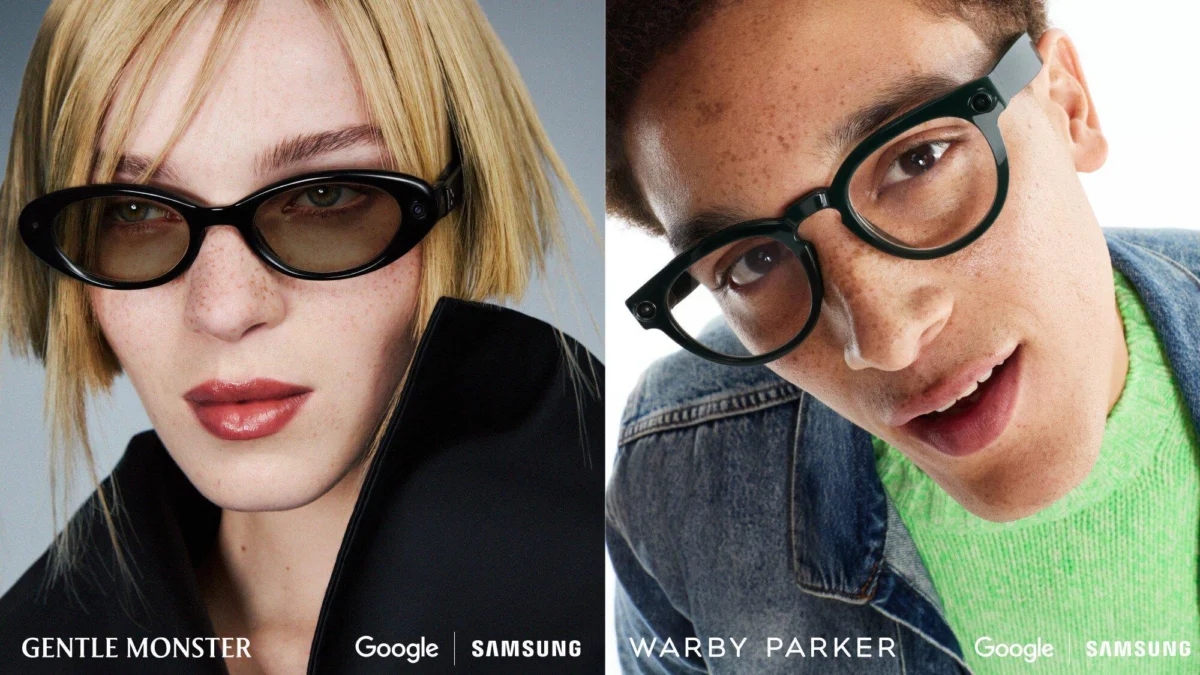
At the Qualcomm booth during AWE, the hardware on display served as a reference design rather than a final consumer product. Industry analysts note that while Google provides the software and AI stack, the final consumer hardware is expected to emerge from a partnership with Samsung and various high-end eyewear manufacturers. Brands such as Gentle Monster, Warby Parker, and Kering Eyewear have been linked to the project, suggesting a strategy that prioritizes aesthetics and fashion to ensure social acceptability—a lesson learned from the "Glasshole" era of 2013.
Technical Specifications and Hardware Observations
The prototypes demonstrated at AWE maintain a form factor closely resembling traditional thick-rimmed spectacles. While slightly heavier and bulkier than standard eyewear, the devices house a sophisticated array of sensors and output components. Key hardware features observed during the demonstration include:
- Monocular Display: The current prototype utilizes a single-eye (monocular) color display. While this limits the depth perception compared to binocular AR headsets like the Magic Leap 2 or Apple Vision Pro, it significantly reduces power consumption and heat—crucial factors for all-day wearable devices.
- Integrated Audio and Microphones: The frames include spatial audio speakers and a microphone array designed to isolate the wearer’s voice from ambient noise. Testing on the noisy AWE show floor indicated that the AI assistant remained audible and responsive despite high decibel levels.
- Privacy Indicators: A prominent LED indicator blinks when the onboard camera is active, addressing long-standing privacy concerns regarding "creepy" recording in public spaces.
- Interaction Sensors: The lateral frames of the glasses support capacitive touch, allowing users to navigate menus, control media, and trigger AI functions through swipes and taps.
Gemini AI Integration and Visual Intelligence
The core value proposition of the Android XR glasses lies in the deep integration of Gemini, Google’s multimodal large language model. Unlike previous iterations of voice assistants, Gemini on Android XR can "see" what the user sees via the integrated camera. During scripted demonstrations, the glasses were used to identify objects on a table, including books and restaurant menus.

In one instance, the AI was tasked with translating an Italian menu. The system demonstrated a high degree of contextual awareness; when asked to translate a menu that was already in Italian, the AI correctly identified the language and informed the user of the redundancy. However, the demonstration also highlighted the ongoing challenges of AI "hallucinations." When asked for vegetarian options from a specific menu, the system incorrectly suggested a beef-based dish (carpaccio di manzo), underscoring that while the technology is advanced, it still requires human oversight for accuracy.
The user interface (UX) for Gemini is designed to be non-intrusive. Text transcriptions and AI responses appear in the lower periphery of the display. This design choice prevents "visual clutter," ensuring that the wearer’s line of sight remains clear for navigating the physical world. The UI also features dynamic scaling; widgets for music or notifications expand when the user interacts with them and shrink into a compact, "glanceable" mode when idle.
Contextual Navigation and User Experience
One of the most innovative features showcased was the context-aware navigation system. Google’s UX research suggests that users require different types of information based on their physical posture. The Android XR prototype implements a dual-mode navigation interface:

- Forward-Facing Mode: When the user is looking straight ahead, the display shows simplified directional arrows and distance markers. This is intended for active walking, providing essential data without distracting the user.
- Down-Facing Mode: If the user tilts their head down—a gesture typically associated with looking at a smartphone—the glasses automatically switch to a top-down map view of the surrounding area.
This seamless transition between "guidance" and "exploration" modes occurs without manual input, representing a significant leap in intuitive AR design. The map remains oriented to the user’s real-world heading, facilitating easier orientation in complex urban environments.
The Triple Alliance: Google, Samsung, and Qualcomm
The development of these glasses is part of a broader strategic partnership often referred to in the industry as the "Triple Alliance." Announced in early 2023, this collaboration seeks to create a competitive ecosystem to rival Apple’s VisionOS and Meta’s Horizon OS.
- Google provides the Android XR operating system and the Gemini AI suite.
- Qualcomm supplies the silicon, likely the Snapdragon AR2 Gen 1 platform, which is designed specifically to distribute processing loads across the glasses and a tethered smartphone or host device.
- Samsung is expected to lead the manufacturing and hardware design, leveraging its global supply chain and retail presence.
Official responses from the companies have been guarded regarding a specific launch date, but industry insiders suggest a late 2024 or early 2025 release for the first consumer-facing Samsung-branded Android XR glasses.

Market Implications and Strategic Analysis
Google’s re-entry into the smartglasses market comes at a pivotal moment. Meta’s Ray-Ban smartglasses have proven that there is a consumer appetite for AI-integrated eyewear that lacks a full holographic display but offers high-utility audio and camera features. Google’s approach with Android XR appears to be a "middle ground" strategy—offering more visual feedback than Meta’s current glasses but remaining far more portable than the Apple Vision Pro.
The success of Android XR will largely depend on third-party developer adoption. By utilizing an Android-based kernel, Google makes it significantly easier for existing mobile app developers to port their services to a wearable format. If Google can successfully integrate its dominant services—Google Maps, Translate, and YouTube—into a seamless wearable experience, it could potentially displace Meta as the preferred AI assistant for the "face-worn" era.
However, challenges remain. The monocular display, while practical for battery life, may be viewed as a "lite" version of AR by tech enthusiasts who expect full stereoscopic overlays. Furthermore, the reliance on a connected smartphone for heavy processing (the "tethered" model) remains a hurdle for those seeking a truly independent wearable device.

Chronology of Development
- February 2023: Google, Samsung, and Qualcomm announce a partnership to build a new XR platform.
- May 2024: Google I/O features a video demonstration of "Project Astra" running on prototype glasses.
- June 2024: Live prototype demonstrations are held at AWE, showing functional Gemini integration and navigation UX.
- Late 2024 (Projected): Samsung is expected to unveil the first commercial hardware running the finalized Android XR software.
As the industry moves toward the commercialization of these devices, the focus will shift from technical proofs-of-concept to real-world utility. The AWE demonstration suggests that Google is prioritizing a refined, helpful user experience over flashy but impractical features, a move that may finally bring AR glasses into the mainstream consumer market.
About the Author