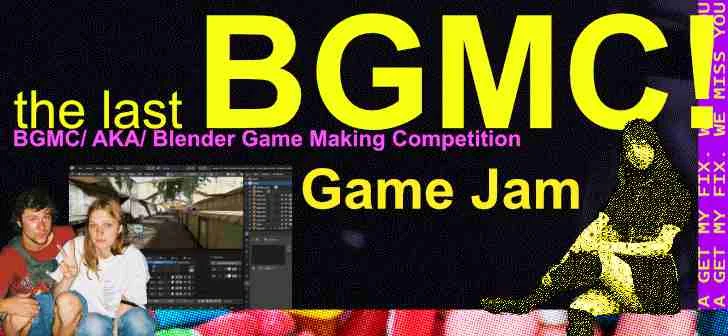
The imminent closure of the historic Blender Game Engine (BGE) category on BlenderArtists.org has prompted a community-driven initiative to honor its legacy. Andre Janse van Vuuren, a prominent member of the Blender community, is organizing a final Blender Game Making Competition (BGMC) to commemorate the BGE and its significant contributions to the world of game development within the open-source 3D creation suite. This event marks a poignant farewell to a feature that, for many years, empowered a generation of creators to bring their interactive visions to life directly within Blender.
The Rise and Reign of the Blender Game Engine
The Blender Game Engine, or BGE, was an integral, real-time rendering and interactive simulation system embedded within the Blender software. Its existence spanned a crucial period in Blender’s development, from its earlier iterations up to version 2.79, released in September 2018. The BGE’s innovative approach offered a unique pathway for developers and hobbyists to create games without requiring external game development platforms. Its primary tools, the logic bricks and Python scripting, provided a visually intuitive yet powerful system for defining game logic, physics, and interactivity.
Logic bricks, a visual scripting system, allowed users to construct complex game behaviors by connecting predefined blocks representing sensors, controllers, and actuators. This method democratized game development, making it accessible to individuals without extensive programming backgrounds. For those seeking greater control and customization, the integration with Python scripting offered a robust avenue for implementing advanced game mechanics, AI, and intricate gameplay systems. This dual approach fostered a diverse ecosystem of BGE projects, ranging from simple prototypes and educational tools to surprisingly sophisticated games.
The BlenderArtists.org forums served as the central hub for the BGE community. Within its dedicated category, a vibrant tapestry of discussions, tutorials, shared projects, and bug reports unfolded over years. This digital space became a sanctuary for developers to exchange ideas, troubleshoot challenges, and showcase their creations. It was a testament to the collaborative spirit of the open-source movement, where knowledge and passion fueled innovation.
The Genesis of BGMC: A Community’s Farewell
The Blender Game Making Competition (BGMC) emerged as a cornerstone event within this thriving community. Typically hosted as a one-week game jam on the BlenderArtists.org forums, BGMC challenged participants to develop complete BGE projects based on a given theme. These competitions were not merely about creating games; they were about fostering creativity under time constraints, pushing the boundaries of the BGE, and celebrating the ingenuity of its users.
Andre Janse van Vuuren, a long-time advocate for the BGE and a key organizer of these community events, recognized the profound significance of the upcoming removal of the BGE category. Rather than let this chapter close without due acknowledgment, he conceived of a final BGMC as a fitting tribute. This competition aims to provide a dignified send-off, allowing the community to revisit the nostalgia, share their enduring creations, and acknowledge the impact the BGE has had on their creative journeys.
"For those unfamiliar, BGE (Blender Game Engine) was the built-in, real-time game engine included in Blender until version 2.79, famous for allowing creators to build games directly inside Blender using Python and logic bricks," Andre explained in his announcement. "BGMC was the community’s signature game jam—a one-week challenge hosted on the Blender Artists forums where developers built complete BGE projects around a shared theme. For years, the forum category was home to endless logic brick solutions, obscure prototypes, custom setups, and a close-knit group of creators."
Van Vuuren’s initiative underscores the emotional and practical attachment many in the Blender community have to the BGE. It represents more than just a piece of software; it is a gateway to early game development experiences, a platform for learning, and a catalyst for creative expression.
Evolution Beyond BGE: Modern Derivatives
While the BGE itself is being retired from official Blender releases, its spirit and functionality have not entirely vanished. The open-source nature of Blender has allowed for the continuation and evolution of BGE-like technologies. Projects such as UPBGE (Uchronia Project Blender Game Engine), Range Engine, and Armory3D have emerged, building upon the foundations laid by the original BGE. These modern derivatives offer enhanced features, improved performance, and compatibility with newer Blender versions, ensuring that the legacy of integrated game development within Blender continues to thrive.
UPBGE, in particular, has gained significant traction as a direct successor, actively maintained and developed by a dedicated community. It aims to provide a seamless transition for existing BGE users while introducing modern game development paradigms. Similarly, Armory3D offers a powerful, cross-platform 3D game engine that integrates deeply with Blender, leveraging its modeling and rendering capabilities. These projects are crucial in demonstrating that the discontinuation of the BGE within the main Blender application does not signify the end of game development possibilities within the Blender ecosystem.
The Final Lap: A Call to Action
The upcoming BGMC is explicitly designed to be inclusive, welcoming all participants regardless of their current BGE usage. Whether they are seasoned BGE veterans, users of its modern derivatives, or simply individuals curious to experience the nostalgia by firing up Blender 2.79, everyone is encouraged to join. This inclusive approach aims to foster a sense of shared experience and collective remembrance.
"Whether you still use BGE or its modern derivatives (like UPBGE, Range Engine, or Armory3D), or you just want to fire up Blender 2.79 for old times’ sake, everyone is welcome to participate," Andre urged. "If you want to revisit the nostalgia, come join us for the final lap! Check out the Itch.io page for full details and rules, and let’s go out with a bang."
The Itch.io page, a popular platform for independent game developers, serves as the central hub for the competition. It hosts comprehensive details regarding the rules, submission guidelines, judging criteria, and the overall schedule for the final BGMC. This strategic placement ensures accessibility and broad reach for the event.
Historical Context and Data: The BGE’s Impact
The Blender Game Engine’s tenure coincided with a significant period of growth for Blender itself. From its early days as a niche 3D modeling tool, Blender evolved into a comprehensive open-source suite for animation, visual effects, and, crucially, interactive content creation. The BGE was a key differentiator during this evolution, attracting users who sought an all-in-one solution for prototyping and game development.
While precise global usage statistics for the BGE are difficult to ascertain due to its integrated nature and the open-source community’s decentralized tracking methods, anecdotal evidence and the sheer volume of projects shared on platforms like BlenderArtists.org and Itch.io point to its widespread adoption. Forums dedicated to the BGE consistently hosted thousands of active users, with countless threads detailing game development progress, technical challenges, and creative breakthroughs.
The impact can also be measured by the skill sets it helped cultivate. Many game developers and interactive designers today began their journeys with the BGE, learning fundamental concepts of game logic, physics simulation, and real-time rendering. These foundational skills, acquired through the BGE’s accessible interface, often served as a springboard to more advanced game engines and professional careers. The BGE’s retirement, therefore, represents the closing of a chapter that introduced many to the exciting world of game creation.
Analysis of Implications: A Shifting Landscape
The removal of the BGE category from BlenderArtists.org and the retirement of the engine from Blender 2.79 signify a strategic shift for the Blender project. Blender’s core development has increasingly focused on its prowess in film, VFX, and animation, areas where it has achieved significant global recognition and adoption. Integrating and maintaining a dedicated game engine within the main application demanded substantial development resources that could be allocated elsewhere.
However, this strategic decision also presents challenges and opportunities. For users who relied on the BGE for their workflow, the transition to newer engines or derivatives requires adaptation. This final BGMC, therefore, serves a dual purpose: a celebration of what was, and a gentle nudge towards what is to come. It encourages users to explore the contemporary alternatives that have emerged, such as UPBGE and Armory3D, which are built with modern development practices and can leverage the latest advancements in Blender’s core features.
The success of this final BGMC could also highlight the continued demand for integrated game development solutions within 3D creation software. It may inspire further community efforts or even signal potential future collaborations between Blender developers and independent game engine projects. The legacy of the BGE lies not just in the games created but in the community it fostered and the pathways it opened for countless individuals to explore interactive storytelling and game design.
The Community’s Voice: Inferred Reactions
While direct statements from Blender core developers regarding the BGE’s retirement are not included in the initial announcement, the decision was likely driven by a strategic assessment of development priorities. The Blender Foundation, the non-profit organization behind Blender, has historically focused on core functionalities that benefit the broadest spectrum of its user base, which leans heavily towards animation, VFX, and architectural visualization.
However, the community’s enthusiastic response to Andre Janse van Vuuren’s initiative speaks volumes. The eagerness to participate in a final BGMC underscores the deep affection and appreciation for the BGE. This sentiment is likely shared by many who learned the fundamentals of game development, experimented with interactive ideas, or even built small independent games using the engine. The proactive organization of this competition by a community member demonstrates the power of collective action in preserving and celebrating the history of open-source projects. The implied sentiment from the community is one of nostalgia, gratitude, and a desire to honor a beloved feature before it recedes further into the annals of software history.
Looking Ahead: A Legacy Endures
The final Blender Game Making Competition represents more than just a farewell to a software feature. It is a testament to the enduring spirit of the Blender community, its ability to adapt, and its commitment to celebrating its history. As the BGE category closes on BlenderArtists.org, the innovations and experiences it facilitated will continue to resonate through its modern derivatives and the countless developers who began their creative journeys within its accessible confines. The competition serves as a final, vibrant chapter in the story of an integrated game engine that empowered a generation of creators, leaving an indelible mark on the landscape of open-source game development. The call to participate is a call to remember, to innovate one last time, and to ensure that the legacy of the Blender Game Engine is not forgotten.
About the Author