The wearable technology landscape saw a significant expansion at the recent Augmented World Expo (AWE), where American startup Raven Resonance unveiled the Raven Prism, a new entry into the smart glasses market designed to challenge the status quo of data-driven wearable devices. Marketed not as traditional smart glasses but as an "ambient computer," the Raven Prism represents a shift toward localized processing, open-source architecture, and a modular hardware design. Founded by Tom Suarez, a veteran with over 12 years of experience in the augmented reality (AR) sector, Raven Resonance positions its first flagship product as a solution for users and enterprises seeking high-utility heads-up displays without the privacy compromises often associated with major tech conglomerates.
The Concept of Ambient Computing and Hardware Architecture
The core philosophy behind the Raven Prism is the transition from a device-centric interaction model to "ambient computing." This vision suggests a future where digital assistance is integrated seamlessly into the user’s environment, utilizing contextual data to perform tasks hands-free. Unlike many contemporary competitors that utilize modified versions of the Android Open Source Project (AOSP), the Raven Prism operates on RavenOS, a custom-built Linux distribution. This choice of operating system is a strategic move toward a desktop-class computing environment, offering greater flexibility for developers and a departure from the corporate-controlled ecosystems of Google or Meta.

Underpinning this software is an undisclosed 64-bit ARM-based chipset. While the company has not revealed the specific manufacturer, technical briefings indicate that the silicon is optimized for edge-computing tasks. Most notably, the hardware is capable of running local instances of AI models, specifically from the Gemma 3 family. By processing AI queries on-device rather than in the cloud, Raven Resonance addresses two primary concerns in the wearable space: latency and data sovereignty. This local execution ensures that sensitive user information never leaves the device, providing a secure environment for both personal and professional use cases.
Innovative Power Management: The Hot-Swappable Battery System
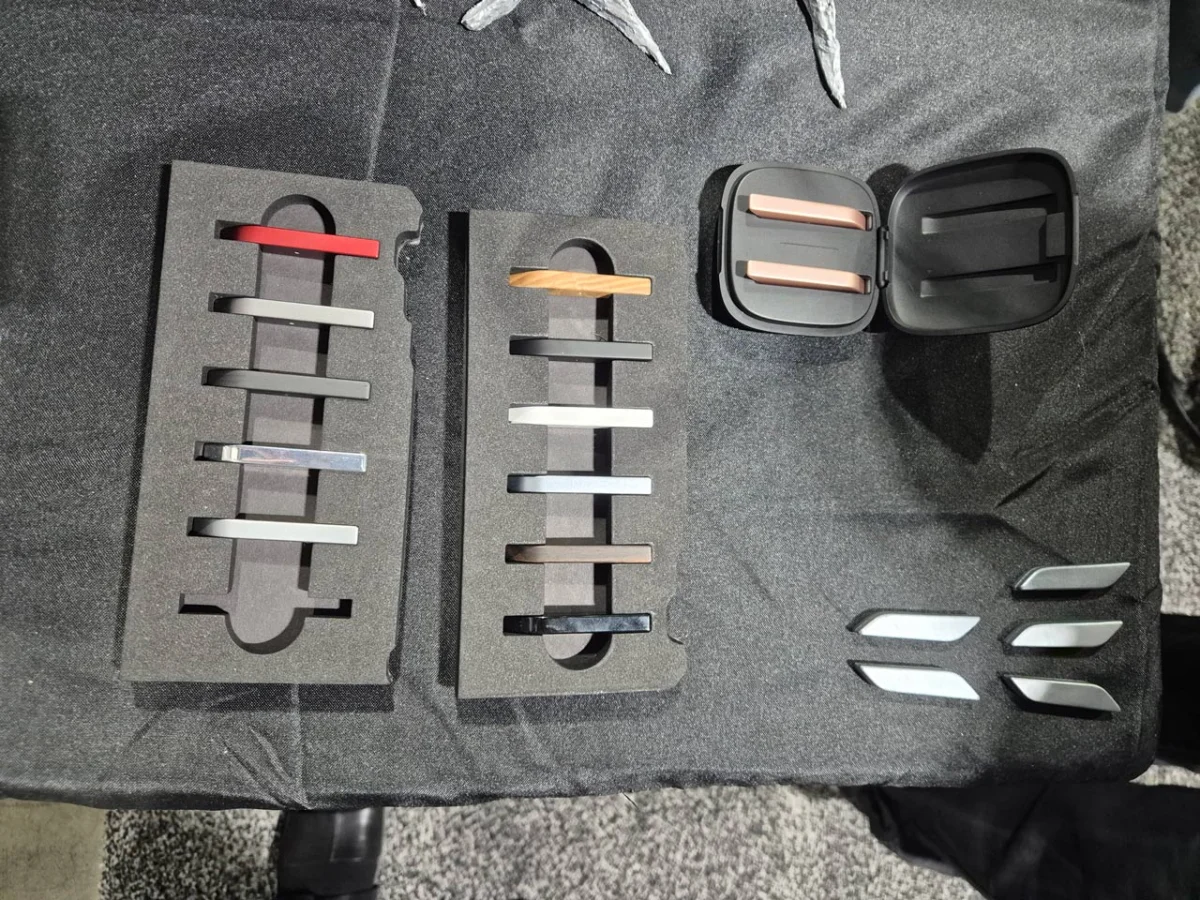
One of the most distinct mechanical features of the Raven Prism is its power delivery system, designed to facilitate continuous all-day operation. The frames feature a unique three-battery architecture. Two primary batteries are located at the tips of the glasses’ stems (temples). These units are hot-swappable, meaning they can be removed and replaced while the device remains active. To prevent the system from shutting down during a battery change, a third, smaller internal buffer battery is integrated into the frame itself.
This modular approach to energy management is a direct response to the limited battery life that has historically plagued the AR industry. By allowing users to cycle through a set of charged batteries, Raven Resonance effectively removes the downtime required for charging via cables. The batteries are also available in multiple color configurations, allowing for a degree of aesthetic customization that is rare in the enterprise-leaning smart glasses market.

Display Technology and User Interaction
The Raven Prism utilizes a monocular display system based on Liquid Crystal on Silicon (LCoS) and diffractive waveguide technology. The display provides a 30-degree field of view (FOV), which the company compares to the visual scale of a 13-inch laptop screen viewed at arm’s length. While the monocular design—projecting information to only one eye—is often a point of contention among AR enthusiasts, Raven Resonance maintains that this configuration is essential for maintaining a lightweight form factor, reducing heat dissipation, and lowering the overall price point while still providing necessary utility.
Interaction with the RavenOS interface is handled through a combination of voice commands and eye-tracking technology. While specific details regarding the eye-tracking sensor suite remain proprietary, the company has emphasized a "hands-free" user experience. This functionality is particularly targeted at industrial and technical sectors where workers require digital overlays, such as schematics or checklists, while their hands are occupied with tools or machinery.
A Rigorous Stance on Data Privacy and Surveillance
In an era where "surveillance capitalism" has become a central concern for privacy advocates, Raven Resonance has integrated several physical and digital safeguards into the Prism. The company’s CEO, Tom Suarez, has publicly stated that the firm’s mission is to provide an alternative to devices that monetize user data. Beyond the local AI processing, the glasses include a prominent privacy LED that indicates when the camera is active.

Taking physical privacy a step further, the Raven Prism includes a magnetic camera cover. This allows users to physically obstruct the lens, providing a visible and unfailing assurance to others that no recording is taking place. This feature addresses the "glasshole" social stigma that has hindered the public adoption of camera-equipped wearables since the debut of Google Glass. When not in use, the cover can be magnetically attached to the side of the frame, minimizing the risk of loss.
Developer Ecosystem and the Upcoming Hardware Development Kit (HDK)
Raven Resonance is positioning the Prism as an open platform, contrasting with the "walled garden" approach of many industry leaders. The company has already released a Python-based Software Development Kit (SDK) on GitHub, accompanied by a device emulator. This allows developers to begin building applications for RavenOS without requiring immediate access to the physical hardware.
Furthermore, the company has announced the impending release of a Hardware Development Kit (HDK). The battery connectors at the ends of the temples serve a dual purpose: they function as both power inputs and data ports for external accessories. This extensibility could allow third-party manufacturers to develop specialized sensors, expanded storage modules, or alternative input devices that snap directly onto the glasses. This modularity is expected to appeal to niche industrial markets that require bespoke hardware solutions.

Market Context and Industry Implications
The introduction of the Raven Prism comes at a pivotal moment for the XR (Extended Reality) industry. As major players like Meta and Apple dominate the high-end headset market, a gap has emerged for lightweight, privacy-centric smart glasses that prioritize utility over immersive gaming. The Raven Prism enters a competitive field that includes the Meta Ray-Ban glasses and offerings from Xreal and Vuzix. However, its reliance on a Linux-based OS and its commitment to local AI sets it apart as a tool for the "prosumer" and enterprise developer.
Industry analysts suggest that the success of the Raven Prism will depend largely on its final price point and the robustness of its local AI capabilities. While monocular displays are often seen as a transitional technology, the focus on "ambient computing" suggests that Raven Resonance is looking toward a future where the glasses serve as a subtle interface for the digital world rather than a fully immersive escape.
The Raven Prism is currently in its final stages of development, with engineering samples having been demonstrated to select industry professionals at AWE. The company intends to launch the product commercially before the end of the current calendar year. As the tech industry continues to grapple with the balance between AI utility and user privacy, the Raven Prism stands as a notable experiment in whether a startup can successfully offer a more transparent and open alternative to the products of the world’s largest technology firms.
About the Author