The advent of Unreal Engine 5 (UE5) has marked a significant paradigm shift in real-time 3D content creation, introducing groundbreaking technologies designed to empower developers and artists with unparalleled tools. Among these innovations, the MetaHuman character library stands out as a transformative offering, providing access to a collection of exceptionally high-fidelity digital humans. These meticulously crafted characters are not only free to utilize in various projects but also represent a leap forward in democratizing the creation of realistic human avatars, traditionally a resource-intensive and specialized domain. This guide meticulously outlines the streamlined process for integrating these advanced MetaHumans into an existing Unreal Engine 5 project, detailing each step from accessing the library to configuring the engine for optimal performance and delving into the broader implications of this technology.

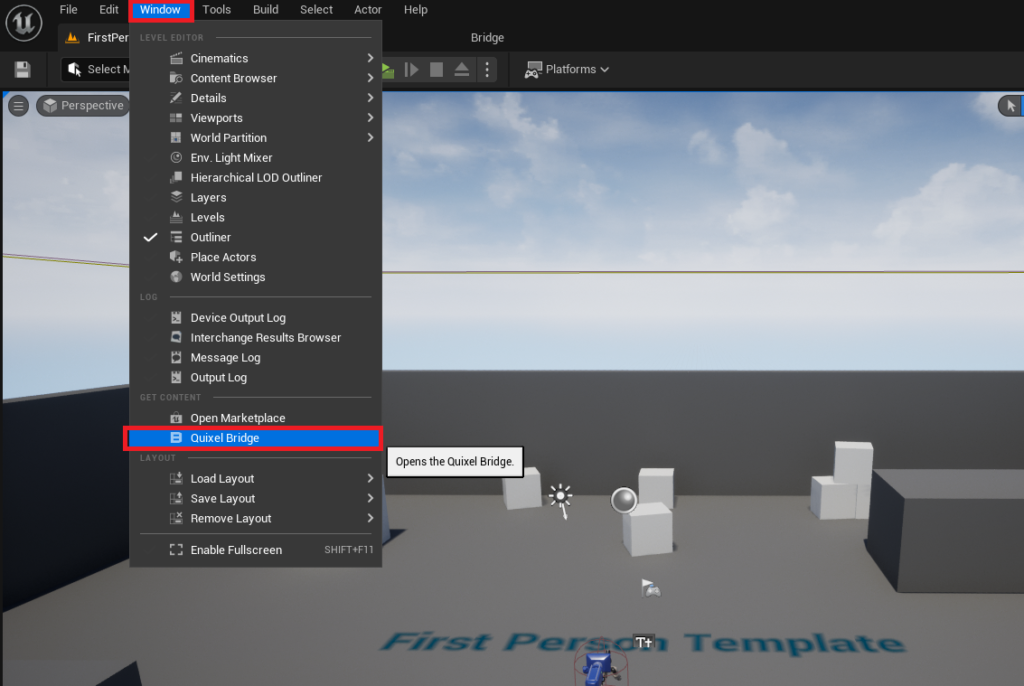
The journey into leveraging MetaHumans begins within the familiar confines of the Unreal Engine editor. The integration of the Quixel Bridge directly into UE5 signifies Epic Games’ strategic vision for a unified content ecosystem, making high-quality assets readily available. Quixel Bridge, formerly a standalone application, is now seamlessly embedded within the Unreal Engine environment, acting as a direct portal to an extensive library of photogrammetry assets and, crucially, the MetaHuman collection. To initiate the process, users must navigate to the "Window" tab located in the upper menu bar of the Unreal Engine editor. From the dropdown menu that appears, selecting "Quixel Bridge" will launch the integrated asset browser. This action opens a dedicated panel or window within the editor, providing direct access to a vast repository of photogrammetry assets from Quixel Megascans, alongside the burgeoning MetaHuman library. This direct integration eliminates the need for external applications, streamlining the workflow and enhancing accessibility for developers by consolidating asset management within the primary development environment.
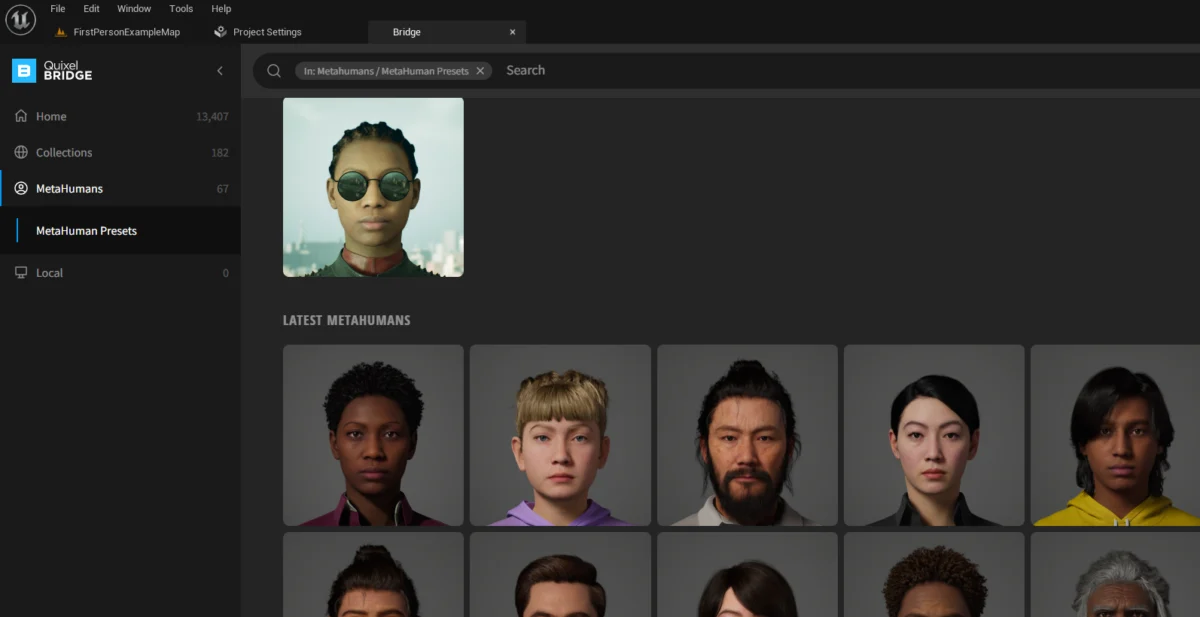
Upon the successful opening of the Quixel Bridge interface, the next crucial step involves locating the MetaHuman specific content. Within the Quixel Bridge window, users will observe several distinct tabs or categories, each dedicated to different types of assets, such as 3D Assets, Surfaces, Decals, and more. To access the digital human library, the "MetaHumans" tab must be clicked. This action filters the extensive Quixel Megascans collection, presenting exclusively the pre-configured MetaHuman characters available for download and integration. The MetaHuman library showcases a diverse array of digital humans, each meticulously designed with varying demographics, appearances, and styles, providing a rich selection suitable for a multitude of project requirements, from cinematic experiences to interactive simulations, and spanning a broad spectrum of age, ethnicity, and gender representations.
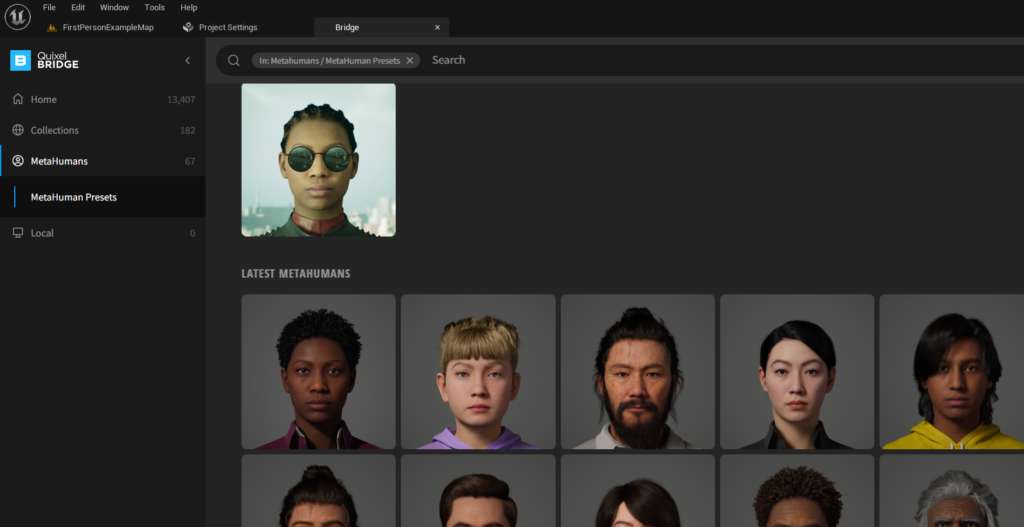
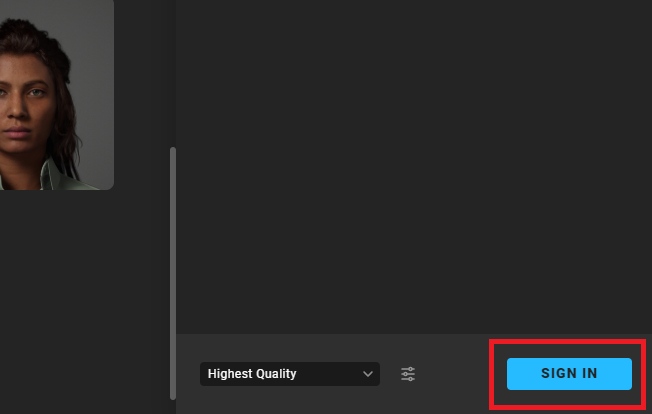
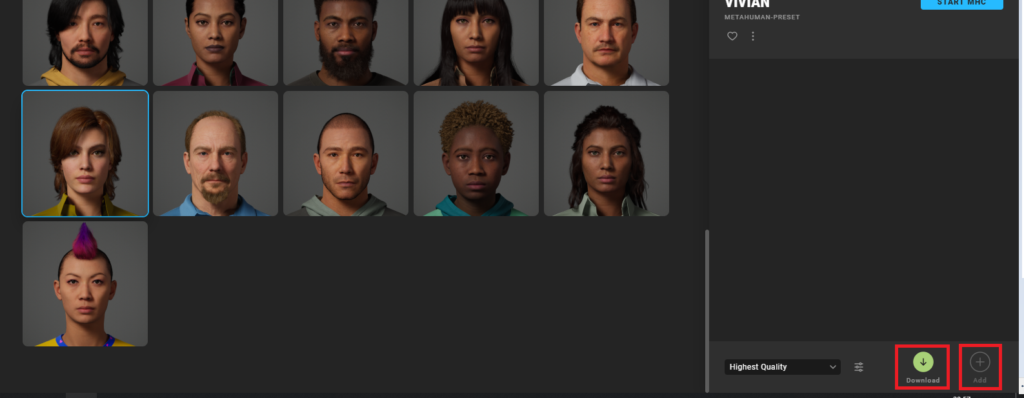
The visual display within the MetaHumans tab presents a grid of these pre-configured digital characters, each a testament to the cutting-edge photorealistic quality and intricate detail that defines the MetaHuman project. Before any of these high-fidelity assets can be downloaded and incorporated into an Unreal Engine project, an authentication step is required. Users must select one of the MetaHuman avatars from the displayed grid. This selection typically activates additional options, including a "Sign In" button, usually located in the bottom right corner of the Quixel Bridge window. Proceeding with this prompt requires users to log into their Epic Games account. This login is not merely a formality; it is essential for authenticating access to the full Quixel Megascans and MetaHuman library, which are part of Epic Games’ broader offerings and intellectual property. The Epic Games account serves as the central hub for licensing and managing content access within their ecosystem, ensuring compliance and providing developers with a legitimate pathway to utilize these advanced assets under the terms of service, which typically allow free use for projects developed in Unreal Engine.
The successful authentication via an Epic Games account unlocks the full potential of the Quixel Bridge, allowing developers to proceed with downloading their chosen MetaHuman. With the account logged in, users can once again select their desired MetaHuman avatar from the library. The interface will now display a "Download" button. Clicking this button initiates the download process, which, depending on internet speed and the specific MetaHuman’s complexity, may take some time due to the substantial file sizes associated with these highly detailed assets. MetaHumans are comprised of numerous high-resolution textures (often 8K), intricate mesh data, complex rigging systems, and strand-based hair assets, all contributing to their exceptional fidelity. For instance, a single MetaHuman character can easily exceed several gigabytes in data, necessitating efficient bandwidth for download. Once the download is complete, the "Download" button will transform into an "Add" button. Clicking "Add" is the final step in importing the selected MetaHuman directly into the currently open Unreal Engine project. This action triggers a series of background processes where Unreal Engine begins to integrate the MetaHuman’s assets, including its various meshes, materials, textures, and blueprints, into the project’s content structure.
During the import process, the Unreal Engine editor may present notifications, typically appearing in the bottom left corner of the interface. These notifications are critical as MetaHumans often rely on specific engine plugins and project settings to render correctly and function optimally. Users will likely encounter prompts to "Enable Missing" plugins or settings. It is imperative to accept these prompts. Enabling missing components allows the editor to automatically configure the project for MetaHumans, activating necessary plugins such as "MetaHuman" and "Alembic" (essential for importing and handling complex animated geometry and facial performance data), and adjusting critical project settings related to rendering (like enabling ray tracing or path tracing for advanced lighting), virtual textures (which efficiently stream large texture data), and high-quality hair rendering. These configurations are vital for ensuring that the MetaHuman assets display their intended visual quality, including realistic subsurface scattering for skin, accurate light interaction, realistic strand-based hair, and precise facial animation capabilities. Neglecting to enable these settings can result in visual glitches, missing elements, suboptimal performance, or a significant degradation of the character’s intended photorealism.
Following the enabling of any missing settings and plugins, the Unreal Engine editor will typically require a restart for these configuration changes to take full effect. A "Restart Now" button will appear, prompting the user to close and reopen the editor. This step is a standard and necessary procedure in Unreal Engine development when significant project settings or plugin changes are made, ensuring that all dependencies are correctly initialized and that the engine can properly compile and utilize the newly integrated MetaHuman assets within the updated environment. Once the editor has restarted, the project environment will be fully prepared to host and render the high-fidelity MetaHuman character, with all necessary systems in place.

With the engine restarted and configured, the newly imported MetaHuman asset can be located and utilized within the project. Users should open the "Content Drawer" (or Content Browser) within the Unreal Engine editor. Inside the Content Drawer, a new folder named "MetaHumans" will have been created. Navigating into this folder will reveal another subfolder, typically named after the specific MetaHuman character that was downloaded (e.g., "MetaHumans/Maeve"). Within this character-specific folder, developers will find a collection of assets, including various static meshes, materials, textures, and skeletal meshes. The primary asset representing the fully configured MetaHuman is typically a Blueprint, identifiable by its name starting with "BP_" (e.g., "BP_Maeve"). This Blueprint asset encapsulates all the necessary components of the MetaHuman: its various meshes (head, torso, legs, arms, and associated clothing), materials, high-resolution textures, a complex skeleton, and an animation blueprint that handles the sophisticated facial and body rigging. This comprehensive Blueprint structure makes the MetaHuman ready for immediate use, allowing developers to simply drag and drop it directly into their scene or integrate it into custom character controllers for interactive applications.
The significance of MetaHumans extends far beyond simple asset availability; it represents a democratizing force in game development and real-time content creation. Traditionally, creating a photorealistic digital human involved substantial artistic talent, technical expertise, and significant time investment in modeling, sculpting, texturing, rigging, and shading. This often placed such capabilities out of reach for independent developers or smaller studios with limited resources. Epic Games’ decision to offer the MetaHuman library for free, alongside the user-friendly integration process, significantly lowers these barriers. This initiative aligns with Epic’s broader strategy to empower creators, providing them with AAA-quality tools and assets to realize ambitious visions without prohibitive costs or development cycles. This strategic move, first unveiled in February 2021, immediately garnered widespread attention for its potential to revolutionize character pipelines.
The underlying technology powering MetaHumans is a testament to years of research and development, particularly following Epic Games’ acquisition of 3Lateral, a company renowned for its expertise in digital humans, in 2019. Each MetaHuman is constructed with an extraordinary level of detail, featuring 8K textures for skin and clothing, advanced subsurface scattering for realistic skin rendering, and highly detailed strand-based hair systems that react authentically to light and motion. The facial rigging is capable of expressing nuanced emotions and intricate speech patterns, making these characters suitable for close-up shots, dialogue-heavy scenes, and even realistic virtual performances. Furthermore, MetaHumans are designed with scalability in mind, offering multiple Levels of Detail (LODs) that automatically adjust based on distance from the camera. This ensures that projects can maintain high performance across various hardware specifications, from high-end PCs to mobile devices, while still delivering stunning visual fidelity where it matters most, optimizing rendering without sacrificing perceived quality.
The implications of MetaHumans are profound and span across multiple industries. In game development, they can drastically reduce the time and cost associated with creating compelling non-player characters (NPCs) or even primary player characters, allowing development teams to focus more on gameplay mechanics, narrative, and environmental design. For film and television, MetaHumans offer a robust solution for virtual production, pre-visualization, and even generating digital doubles, blurring the lines between live-action and computer-generated imagery (CGI) and enabling faster iteration in post-production. Architectural visualization (arch-viz) benefits immensely from the ability to populate scenes with realistic human figures, enhancing the sense of scale, human presence, and liveliness in rendered walkthroughs. In training simulations and educational content, MetaHumans can provide highly believable avatars for interactive learning experiences, patient simulations, or virtual instructors, increasing immersion and effectiveness. The technology also plays a crucial role in the emerging metaverse, where high-fidelity, customizable digital identities will be paramount.
The current library of pre-configured MetaHumans is just one facet of Epic Games’ ambitious vision for digital identity. The future promises even greater customization through the MetaHuman Creator tool, a cloud-based application designed to allow users to sculpt, blend, and create entirely bespoke digital humans from scratch. This tool leverages the same underlying technology and high-quality assets, enabling artists to craft unique characters by intuitively manipulating parameters, blending different MetaHuman identities, and adjusting features with unparalleled precision, all without the need for traditional 3D modeling expertise. This blend of a readily available library and a powerful customization tool ensures that MetaHumans will continue to evolve as a cornerstone of digital character creation, pushing the boundaries of what is possible in real-time graphics.
In conclusion, the integration of MetaHumans into Unreal Engine 5 projects is a straightforward yet immensely powerful process that unlocks access to cutting-edge digital human technology. By following the outlined steps—accessing Quixel Bridge, logging in with an Epic Games account, downloading, adding, and configuring necessary engine settings—developers can quickly introduce photorealistic, fully rigged characters into their creations. This accessibility, combined with the MetaHumans’ inherent fidelity, scalability, and the impending release of advanced customization tools, not only streamlines production workflows but also broadens the creative horizons for artists and developers worldwide. As Unreal Engine 5 continues to mature and the MetaHuman ecosystem expands, the potential for crafting immersive, believable digital worlds populated by stunningly realistic characters is greater than ever before. The future of digital identity and interactive storytelling is undoubtedly being shaped by these advancements, marking a pivotal moment in the evolution of real-time content creation.
About the Author