At the latest Augmented World Expo (AWE), the premier international event for augmented and virtual reality technologies, American startup Raven Resonance introduced the Raven Prism, a wearable device the company describes not as smart glasses, but as the world’s first "ambient computer." Led by founder Tom Suarez, a veteran with over 12 years of experience in the augmented reality (AR) sector, the company aims to redefine the wearable market by prioritizing user privacy, open-source flexibility, and a hardware architecture designed for continuous professional use. The unveiling comes at a pivotal moment in the industry, as consumers and enterprises alike express growing concerns over data security and the "surveillance capitalism" models employed by larger tech conglomerates.
Technical Architecture and the Shift to RavenOS
A significant departure from industry standards is found in the device’s software foundation. While the majority of contemporary smart glasses utilize modified versions of the Android Open Source Project (AOSP) to leverage existing mobile ecosystems, the Raven Prism operates on RavenOS, a custom-built Linux distribution. This strategic choice aligns with the company’s "ambient computer" branding, positioning the device more as a wearable workstation than a secondary smartphone peripheral. By utilizing Linux, Raven Resonance offers a level of transparency and modularity often restricted by corporate-controlled operating systems.

Under the hood, the Raven Prism is powered by an undisclosed 64-bit ARM chipset. Although the specific silicon remains under wraps, the company has confirmed the processor is optimized for heavy artificial intelligence (AI) computations. Notably, the hardware is capable of running local versions of the Gemma 3 family of large language models (LLMs). This capability allows the device to process contextual information from the user’s environment—such as recognizing objects or interpreting complex voice commands—entirely on-device, eliminating the latency and privacy risks associated with cloud-based AI processing.
Revolutionary Triple-Battery Power Management
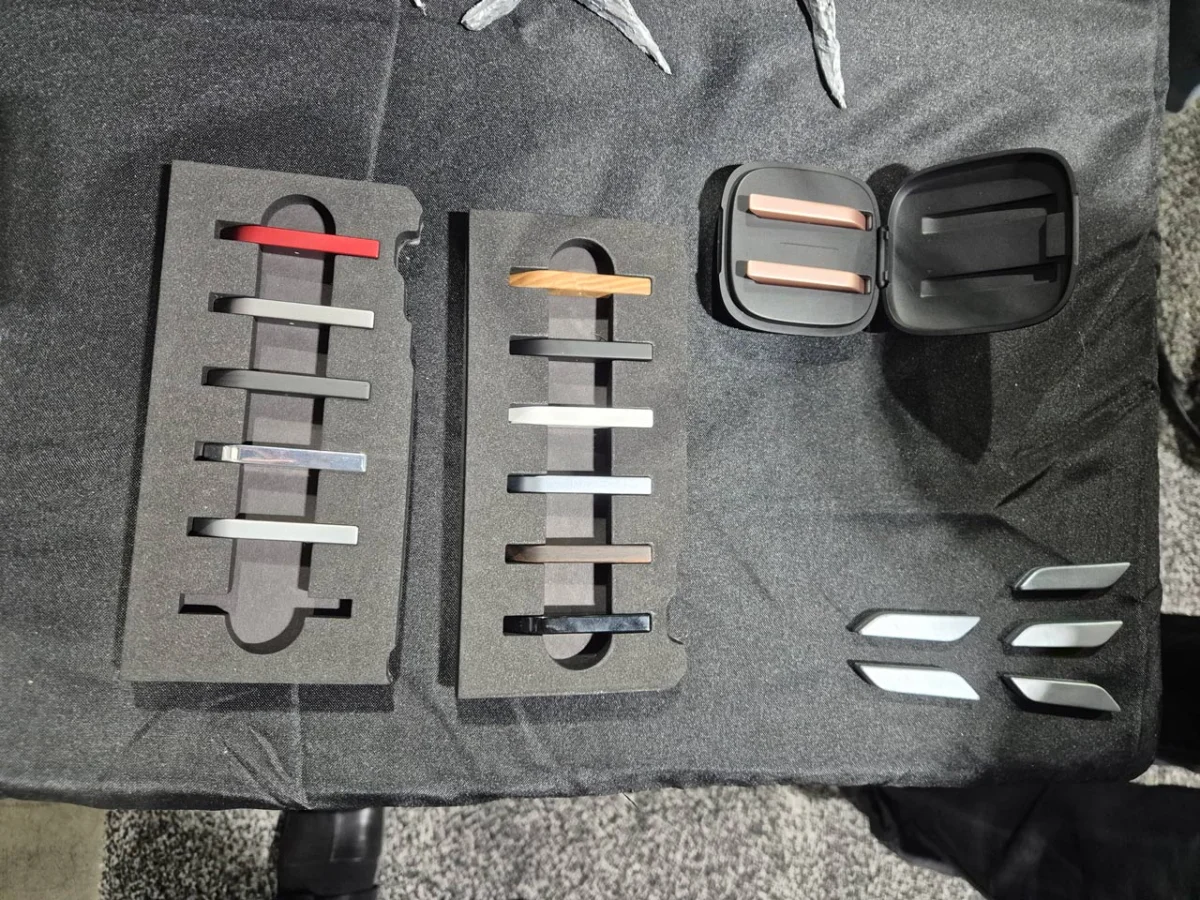
One of the most innovative features of the Raven Prism is its approach to power management, addressing the perennial issue of limited battery life in lightweight AR frames. The device utilizes a unique triple-battery system designed for "hot-swapping." The primary power is stored in two detachable battery units located at the tips of the frame’s temples (the "legs" of the glasses). These units can be removed and replaced one at a time without interrupting the device’s operation.
This continuous uptime is facilitated by a third, internal buffer battery embedded within the frame itself. This internal cell maintains system power during the seconds required to swap the external units. By offering sets of batteries in various colors and finishes, Raven Resonance provides both a functional solution for all-day professional use and a method for aesthetic customization. This design suggests a target market of "power users" and industrial workers who require uninterrupted digital overlays throughout a standard eight-hour shift.

Privacy Engineering and Physical Security Measures
In an era where "always-on" cameras are a point of public contention, Raven Resonance has integrated both digital and physical safeguards into the Prism. The company’s stance against surveillance capitalism is reflected in its data policy: no user data is shared with external services by default. All environmental mapping and AI interactions are encrypted and processed locally.
Beyond software encryption, the Raven Prism includes a physical solution for social privacy. The device features a magnetic camera cover that users can snap over the lens when the camera is not in use. This provides a clear, visible signal to bystanders that they are not being recorded, addressing the "glasshole" stigma that has plagued the industry since the debut of Google Glass. When the camera is active, a dedicated privacy LED serves as a secondary indicator. The magnetic cover can be stored on the side of the frame when the camera is in operation, though some early observers have noted that a sliding mechanism might be a future consideration to prevent the loss of the small component.
Optical Specifications and Interaction Modalities
The display technology of the Raven Prism utilizes a Liquid Crystal on Silicon (LCoS) system paired with a diffractive waveguide. The resulting visual output is a full-color display with a 30-degree field of view (FOV). Raven Resonance compares this FOV to the experience of viewing a MacBook Air at arm’s length.

In a move to prioritize weight reduction, battery efficiency, and style, the Prism employs a monocular display system, meaning the digital overlay is visible to only one eye. While monocular displays are often criticized for causing eye strain during long-term use, the company maintains that for "ambient" tasks—such as viewing notifications, following checklists, or monitoring data feeds—the benefits of reduced bulk and cost outweigh the immersive advantages of binocular systems.
Interaction with the RavenOS environment is handled through a combination of eye-tracking technology and voice commands. This hands-free approach is specifically designed to accommodate users whose hands may be occupied with tools or machinery. The company has indicated that more details regarding the specific user interface (UI) and eye-tracking capabilities will be released in the months leading up to the official launch.
Developer Ecosystem and Open-Source Integration
To foster a robust application library, Raven Resonance has released a Python-based Software Development Kit (SDK) on GitHub. By choosing Python, a language widely used in AI development and data science, the company is lowering the barrier to entry for developers who may not have experience with traditional AR development environments like Unity or Unreal Engine. An emulator is also available to allow for software testing without physical hardware.

Furthermore, the company has announced an upcoming Hardware Development Kit (HDK). The battery connectors at the ends of the frames are designed to serve as expansion ports. This allows third-party manufacturers or enterprise clients to develop custom hardware accessories—such as specialized sensors, medical monitors, or extended range antennas—that can be powered and integrated directly into the Raven Prism architecture.
Market Context and Industry Implications
The emergence of the Raven Prism signifies a growing trend toward "sovereign" technology—devices that allow users to maintain control over their hardware and data. As Meta continues to dominate the consumer smart glasses market with its Ray-Ban Meta glasses, and Apple targets the high-end spatial computing niche with the Vision Pro, Raven Resonance is carving out a middle ground. Their focus on a "Linux for the face" approach appeals to a demographic of developers, privacy advocates, and enterprise sectors (such as healthcare and defense) where data leakage to third-party servers is a non-starter.
Industry analysts suggest that the success of the Raven Prism will depend heavily on its final price point and the comfort of the frames during extended wear. While the "ambient computer" vision is compelling, the 30-degree monocular display may face stiff competition from upcoming binocular waveguide solutions from competitors like Xreal or Vuzix. However, the unique hot-swappable battery system and the commitment to local AI processing give Raven a distinct advantage in the industrial and "prosumer" markets.

Chronology and Availability
The development of the Raven Prism has been several years in the making, drawing on Tom Suarez’s extensive background in the AR field. Following the successful showcase of engineering samples at AWE, the company is currently in the final stages of hardware refinement. While the exact retail price has not yet been announced, Raven Resonance has confirmed that the glasses are scheduled for a commercial launch before the end of the current calendar year. Interested developers and early adopters can currently access the framework documentation to begin preparing applications for what the company hopes will be a new era of open, private wearable computing.
About the Author