The inherent social dimension of artistic creation, where the act of making art is inextricably linked to its reception and interaction with an audience, is undergoing a profound transformation. For many creators, the drive to share their work and receive feedback—a simple acknowledgment of resonance or understanding—serves as a fundamental validation and an essential component of the creative process. This dynamic mirrors basic human communication, where a speaker seeks not just to be heard, but to be understood, engaged with, and to have their words affirmed as valuable by a listener. Such engagement, whether affirming or constructively challenging, is vital for artistic growth and validation. However, the digital platforms that once promised to democratize this interaction have increasingly centralized discovery and engagement, presenting significant hurdles for emerging artists.
The Internet’s Promise and Its Evolution
The advent of the internet initially heralded an era of unprecedented connectivity and community building for artists. Around 2010, the digital landscape was characterized by a more open architecture that facilitated organic discovery and direct interaction between creators and their audiences. This period saw the flourishing of independent blogs, forums, and early social media platforms where content creators, regardless of their professional stature or marketing budget, could achieve significant reach. The emphasis was on user-generated content and peer-to-peer sharing, fostering a vibrant "blogosphere" and diverse online communities.
A notable example from this era is the indie game "100 Rogues," released in 2010. Despite being the developer’s first published game, launching with initial bugs, inconsistent artwork, and generally lower production values compared to established titles, it garnered substantial community engagement. Players actively created fan art, uploaded gameplay videos, and developers were frequently interviewed by independent gaming websites. This level of organic interaction was not a result of a massive marketing budget or unique promotional strategies but rather a reflection of the internet’s design at the time, which prioritized content visibility and direct community connection. This stands in stark contrast to the challenges faced by independent creators today.
The Shift to a "Top-Heavy" Digital Ecosystem
Over the past decade, the internet has undergone a fundamental structural change, transitioning into what many describe as a "top-heavy" ecosystem. This shift is largely attributed to a series of strategic actions by dominant technology companies and, crucially, a corresponding lack of regulatory intervention from governments worldwide. The consequence is a highly consolidated digital environment where a disproportionately small number of entities and individuals command the vast majority of online engagement and attention.
This concentration of influence is evident across various digital sectors. In the creator economy, for instance, data from analytics firms frequently indicates that the top 1% of creators on major platforms (e.g., YouTube, Twitch, TikTok, Instagram) often capture over 80% of total engagement and revenue. This phenomenon creates an increasingly competitive and often discouraging environment for the remaining 99% who struggle for visibility. The algorithmic systems designed by these large tech companies, initially intended to personalize user experience, have evolved to prioritize content that maximizes engagement metrics for advertisers, often at the expense of diverse content discovery and equitable reach for smaller creators.
The implications for artists are profound. To achieve visibility in 2025, creators are often compelled to invest significant capital in digital marketing campaigns. More critically, their content itself, and even their artistic process, must be radically optimized to appease these algorithms rather than to genuinely connect with human audiences. This leads to a homogenization of content, as creators chase trending formats and engagement loops, potentially stifling genuine artistic innovation and expression.
Corporate Consolidation Mirroring Digital Trends
The consolidation observed in the digital realm mirrors broader trends in the corporate landscape, particularly within industries heavily reliant on creative output, such as gaming. Over the past decade, the gaming industry has seen a wave of mergers and acquisitions, leading to fewer, larger corporations dominating the market. Companies like Activision Blizzard, Tencent, and Take-Two Interactive have absorbed numerous independent studios and publishers, centralizing control over intellectual property, distribution channels, and talent.
This corporate conglomeration has direct parallels with the "top-heavy" internet. Just as a few digital platforms control online discovery, a handful of mega-corporations now command a vast share of the gaming market. This increases the barriers to entry for independent game developers, who find it increasingly difficult to compete for player attention, marketing resources, and investment against the immense budgets and established franchises of these industry giants. The "bar for entry," in terms of financial investment and algorithmic hurdles, has escalated dramatically, making it exceedingly challenging for new or niche artistic endeavors to gain traction.
The Role of Government and Regulatory Lapses
A critical aspect of this digital transformation lies in the regulatory environment. Many critics argue that the internet’s current state—dominated by a few powerful platforms and characterized by centralized control—was not an inevitable outcome but rather a direct consequence of governmental inaction. Specifically, governments are cited for failing to rigorously enforce existing anti-trust laws (such as the Sherman Antitrust Act or the Clayton Act in the United States) that were designed to prevent monopolies and promote fair competition. These laws, if robustly applied, could have curtailed the unchecked growth and acquisition sprees of tech giants, which led to their current market dominance.
Furthermore, there has been a perceived failure to introduce new legislation specifically tailored to the digital age. Early visions of the internet championed decentralization, interoperability, and user control. However, the lack of proactive policy to safeguard these principles has allowed platforms to build walled gardens, restrict data portability, and implement opaque algorithmic systems that prioritize their own interests. Advocacy groups and policy experts have proposed various interventions, including mandating interoperability between platforms, strengthening data privacy rights, and implementing independent oversight of algorithmic decision-making. However, progress on these fronts has been slow, and the existing digital infrastructure remains largely shaped by corporate interests. Even if concerted efforts to "fix" the internet were to begin today, experts suggest that it would take years to dismantle existing structures and rebuild a more equitable digital landscape.
The Open Mic: A Model for Equitable Engagement
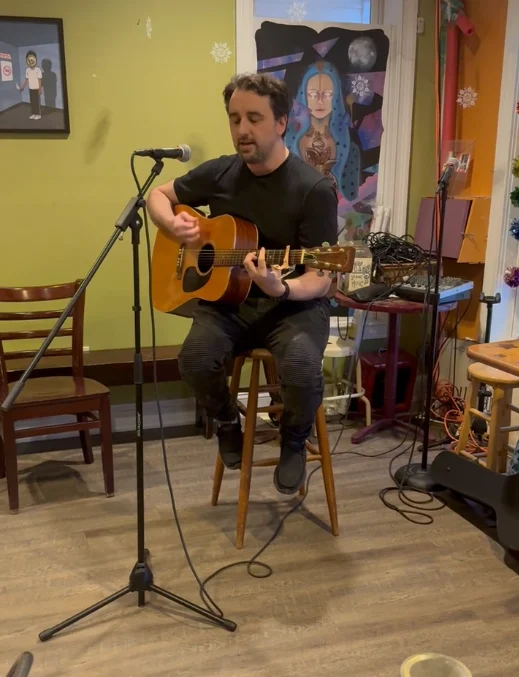
In stark contrast to the algorithm-driven, consolidated digital realm, physical spaces often offer an alternative model for artistic engagement and community building. The "open mic" event serves as a potent metaphor for a truly equitable and accessible platform for creative expression. In an open mic setting, the dynamics of corporate interference, algorithmic bias, and financial barriers are largely absent.
At an open mic, every participant is typically granted an equal opportunity—a set time, often 3-5 minutes—to share their art, be it poetry, music, comedy, or personal narrative. This platform welcomes individuals from all walks of life, regardless of age, background, socioeconomic status, or artistic skill level. The inherent fairness lies in its structure: a sign-up sheet, a stage, and an audience united by a shared curiosity and a spirit of mutual support. There are no algorithms to optimize for, no marketing budgets to contend with, and no corporate gatekeepers determining who gets seen or heard. The connection is direct, human, and immediate.
While it is important to acknowledge that the broader "IRL art world" is not entirely free from arbitrary barriers, biases, and the influence of money, the open mic represents a grassroots counter-narrative. Its power stems from its non-commercial nature; performers generally neither make nor spend money to participate, allowing the focus to remain purely on shared experience and artistic exchange. This model highlights the intrinsic value of physical presence and shared space in fostering genuine human connection and fostering a sense of community.
Broader Implications and the Path Forward
The divergence between the internet’s current state and the open mic model has significant societal implications. The algorithmic curation of online content can lead to echo chambers, limiting exposure to diverse viewpoints and potentially exacerbating social divisions. For creators, the constant pressure to optimize for engagement can take a toll on mental health and artistic integrity.
However, some digital platforms are attempting to recapture elements of equitable engagement. Discord, for example, is often cited as a more favorable online environment by its users, largely because it provides a relatively level playing field for chatters within a specific community. Messages from all participants generally receive equal attention and time within the chat flow, fostering a sense of direct interaction and community-driven discourse that resembles the peer-to-peer engagement of the early internet.
Beyond artistic expression, the increasing importance of physical community hubs and direct human interaction extends to broader civic engagement. In an era marked by escalating societal tensions and challenges, the act of "being there" in physical spaces takes on added significance. It signifies presence not only for potential artistic collaborations or inspirational encounters but also for fostering community resilience and collective action. Engaging in local communities, supporting local artists, and participating in local events can strengthen social bonds, diversify perspectives, and provide essential counterpoints to the isolating and algorithm-driven experiences of the digital world. The demand for an internet that moves towards the equitable, open model of the open mic is not just an artistic imperative but a societal one, advocating for digital spaces that genuinely serve human connection and creative freedom.
About the Author