
The core functionality, demonstrated in recent technical guides, revolves around a few key blueprint nodes that direct AI characters to track the player’s location dynamically. This capability is foundational for a myriad of in-game scenarios, ranging from relentless enemy pursuits to loyal companion AI and dynamic non-player characters (NPCs) that react realistically to player presence. The ease of integrating such a system underscores a broader industry trend towards democratizing advanced game development tools, allowing creators to focus more on innovative design and narrative rather than intricate low-level coding.
The Evolution of AI in Gaming and Pathfinding
The journey of AI in video games has been a long and complex one, evolving from simple, pre-scripted movements and finite state machines in early titles to today’s complex, adaptive behaviors. In the 1980s and 1990s, AI was largely limited by hardware constraints and programming paradigms, often relying on fixed patrol paths or basic line-of-sight detection. Characters would typically follow predetermined routes or react to players only when directly in their visual cone, leading to predictable and often exploitable behaviors.
The early 2000s saw the advent of more sophisticated pathfinding algorithms, such as A* (A-star), which allowed AI to navigate complex environments more intelligently. However, integrating these algorithms often required significant coding expertise. The concept of a "NavMesh" (Navigation Mesh) emerged as a critical innovation, providing a navigable surface for AI characters within a game world. Instead of calculating paths across every polygon in a level, AI could find routes across a simplified, pre-computed mesh representing walkable areas. This not only improved performance but also made pathfinding more robust and easier to manage for developers.
Game engines, acting as comprehensive development environments, began to encapsulate these complex AI systems into more user-friendly tools. Engines like Unreal Engine and Unity played a pivotal role in abstracting the underlying complexity, providing visual interfaces and pre-built components that accelerated development. Unreal Engine, in particular, has consistently pushed the boundaries of what is achievable in game AI, offering powerful C++ APIs alongside its intuitive Blueprint visual scripting system.
Unreal Engine 5’s Blueprint System: A Paradigm Shift
Unreal Engine 5 represents the latest iteration of Epic Games’ powerful development platform, introducing groundbreaking technologies like Nanite for virtualized geometry and Lumen for global illumination. Beyond these rendering advancements, UE5 continues to refine its visual scripting system, Blueprints, which has become a cornerstone for many developers. Blueprints allow designers and programmers to create complex gameplay systems without writing a single line of C++ code, linking nodes together in a graphical interface to define logic and behavior.
For AI pathfinding, UE5’s NavMesh system works in conjunction with dedicated AI controllers and behavior trees, enabling characters to perceive their environment, make decisions, and execute actions. The specific functionality for AI following the player, as outlined in recent technical breakdowns, leverages this robust framework. The core principle involves continuously updating the AI’s target destination to the player’s current location, ensuring a persistent pursuit.
Technical Implementation: A Step-by-Step Overview
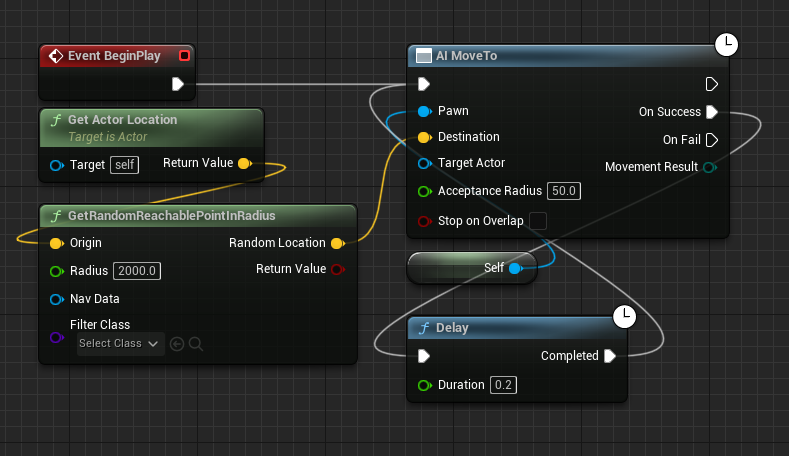
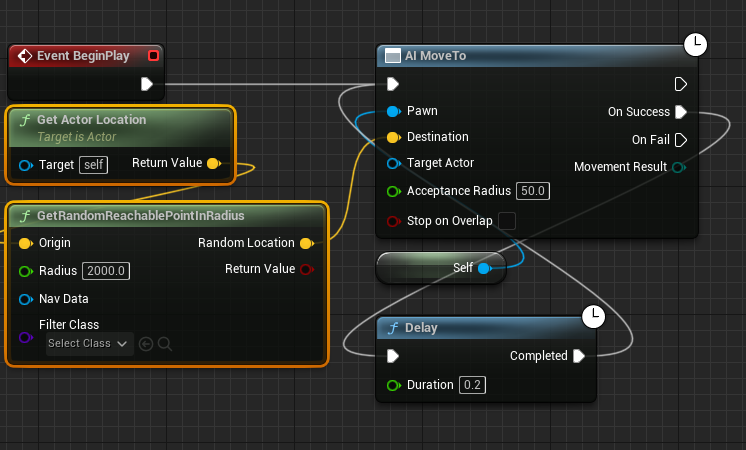
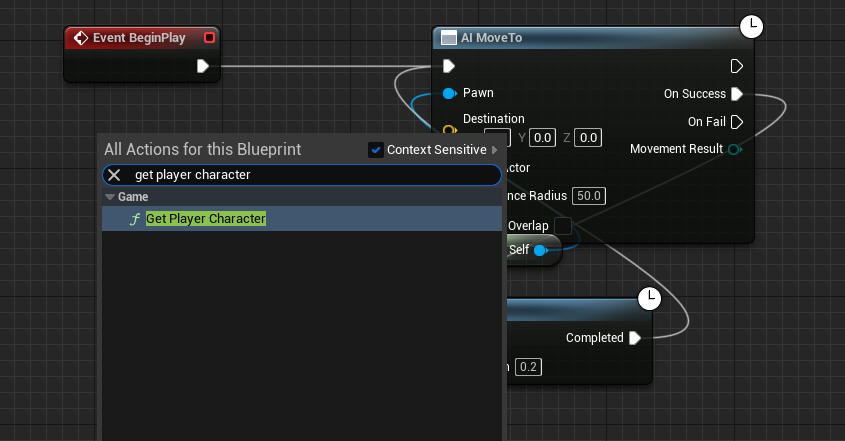
The implementation process within UE5’s Blueprint editor is remarkably straightforward, building upon existing NavMesh configurations. Developers typically start with a basic AI movement setup, which might initially direct the AI to random points within the level. To transition this into player-following behavior, two primary nodes from the initial setup—Get Actor Location and GetRandomReachablePointInRadius—are removed. These nodes, designed for random movement, are replaced with a mechanism to acquire the player’s precise coordinates.
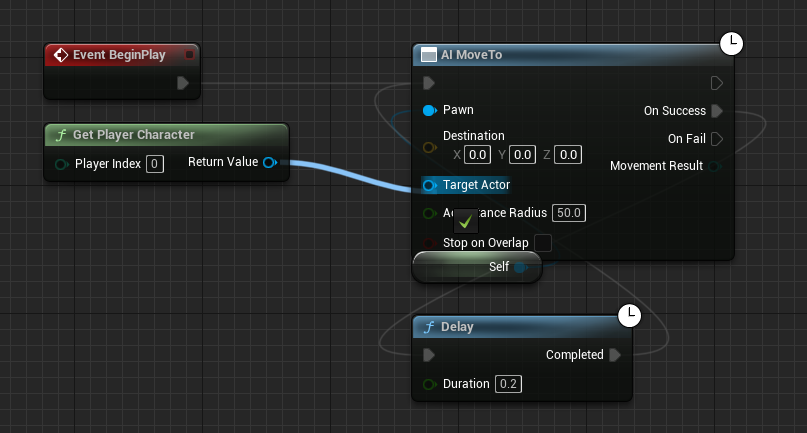
The crucial addition is the Get Player Character node. This node efficiently identifies the primary player character in the game world, providing a reference to its location. The "Return Value" pin of this node, which outputs a reference to the player character, is then connected to the "Target Actor" pin of the AI MoveTo node. The AI MoveTo node is a fundamental component for directing AI characters to specific locations or actors within the NavMesh. By linking Get Player Character to AI MoveTo, the AI is instructed to constantly calculate a path towards the player’s current position.
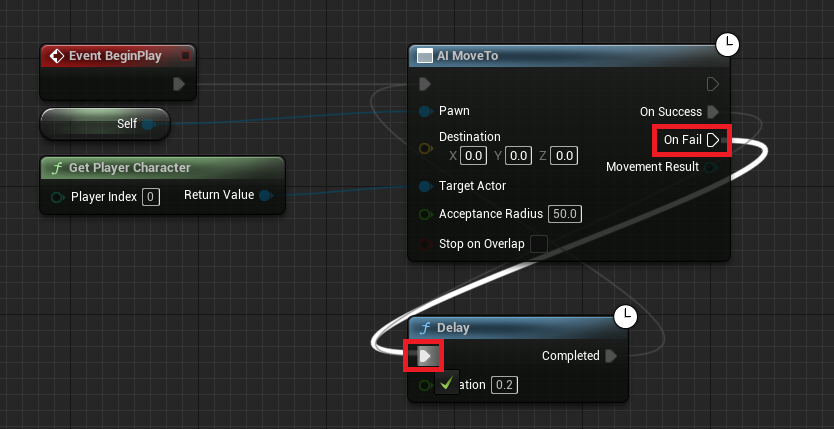
A critical aspect for ensuring continuous and resilient AI pursuit is the handling of potential failures. In complex game environments, an AI character might temporarily lose its path, encounter an unreachable area, or experience a momentary glitch in its NavMesh calculation. To mitigate these issues, the "On Fail" execution pin of the AI MoveTo node is connected to a Delay node. This setup ensures that if the AI fails to reach its target (the player) for any reason, it pauses for a brief moment (defined by the delay duration) before attempting the movement again. This retry mechanism is vital for maintaining persistent AI behavior, preventing characters from getting stuck or ceasing their pursuit prematurely, thus enhancing the overall robustness and reliability of the AI system.
Finally, compiling and saving the Blueprint ensures that these changes are integrated into the game project. This iterative process of modifying, compiling, and testing allows developers to rapidly prototype and refine AI behaviors, a testament to the efficiency offered by visual scripting.
Implications for Game Design and Player Experience
The ease of implementing player-following AI has profound implications across various genres and game design philosophies. This basic system serves as a foundation for incredibly diverse AI behaviors:
- Antagonistic AI: In horror games, a relentlessly pursuing enemy can significantly amplify tension and fear. For action games, dynamic enemies that actively hunt the player create more engaging combat scenarios and require strategic evasion. The predictability of older AI systems often led to players finding "safe spots"; modern AI, powered by efficient pathfinding, eliminates such exploits.
- Companion AI: Games featuring AI companions benefit immensely from this functionality. A loyal sidekick that accurately follows the player through complex terrain enhances immersion and provides a sense of camaraderie. This is crucial for cooperative gameplay experiences, even if the co-op partner is an AI.
- Quest-Giver and Escort AI: For missions requiring players to escort an NPC, the AI’s ability to seamlessly follow the player is paramount. This prevents frustrating situations where the NPC gets lost or stuck, allowing the narrative to flow uninterrupted.
- Environmental and Wildlife AI: Beyond direct interaction, environmental AI like wildlife or crowds can be programmed to react to the player’s presence, moving away or towards them, contributing to a more dynamic and believable game world.
- Stealth and Detection: In stealth games, enemy patrols can be dynamically altered based on player last-known positions, leading to more intelligent and challenging detection mechanics.
Industry analysts frequently highlight that sophisticated AI is no longer a luxury but an expectation in modern gaming. A recent report by gaming analytics firm Newzoo indicated that player engagement is significantly correlated with the perceived intelligence and responsiveness of in-game AI, driving demand for more advanced behavioral systems. The ability to quickly iterate on these systems in UE5 directly translates to higher quality games that meet player expectations.
Economic and Industry Impact
The simplification of complex AI features like player-following has tangible economic benefits for the game development industry. Firstly, it democratizes game creation, lowering the barrier to entry for smaller studios and individual developers who may not have extensive C++ programming expertise. This fosters innovation and diversity in the market, allowing more unique ideas to come to fruition.
Secondly, it significantly enhances development efficiency. By reducing the time and resources required to implement fundamental AI mechanics, developers can allocate more effort to refining game balance, designing intricate levels, or adding other innovative features. This efficiency can lead to shorter development cycles and more predictable project timelines, which are critical in the highly competitive gaming industry. Market data suggests that visual scripting environments like Blueprints can reduce prototyping time by up to 30-50% for certain game mechanics compared to traditional coding methods.
Epic Games, the creator of Unreal Engine, has consistently emphasized the importance of empowering creators through accessible tools. Their continuous investment in features like the Blueprint system and robust AI frameworks aligns with a broader strategy to make UE5 the engine of choice for a wide spectrum of projects, from AAA blockbusters to indie darlings and even applications beyond gaming, such as virtual production and architectural visualization. This accessibility contributes to Unreal Engine’s significant market share among professional game developers globally.
Future Outlook and Broader Implications
The current capabilities of AI following in Unreal Engine 5 are merely a stepping stone. The future of AI in gaming is poised for even greater advancements, particularly with the integration of machine learning and reinforcement learning. Imagine AI characters that not only follow the player but learn their tactics, adapt their pursuit strategies, and even anticipate player movements based on accumulated data. Such systems could lead to truly dynamic and unpredictable gameplay experiences, pushing the boundaries of player engagement.
Moreover, as virtual worlds and the metaverse continue to evolve, the demand for highly intelligent and autonomous AI will only intensify. AI characters will need to navigate vast, complex environments, interact with players and each other in believable ways, and contribute meaningfully to persistent digital ecosystems. The foundational work in streamlined AI pathfinding within engines like Unreal Engine 5 is crucial for building these future digital realities.
In conclusion, the simplified implementation of AI player-following mechanics in Unreal Engine 5, achieved through just a few blueprint nodes, represents more than a mere technical convenience. It is a strategic advancement that empowers game developers, accelerates innovation, and ultimately contributes to the creation of richer, more immersive, and more engaging interactive experiences for players worldwide. This continuous evolution of game engine capabilities ensures that the boundaries of what is possible in digital entertainment are constantly being pushed forward.
About the Author