The landscape of the video game industry has shifted once again as Alpha Dog Games, the developer behind the mobile hit Mighty Doom, has officially transitioned back to independent ownership. This development follows a tumultuous period for the Nova Scotia-based studio, which was shuttered by Microsoft in early 2024 as part of a broader restructuring effort within its Xbox Game Studios division. Studio founder Shawn Woods confirmed the news through a series of public updates and formal statements, signaling a new chapter for the developer that has spent the last several years under the umbrella of some of the world’s largest media conglomerates.
The return to independence marks a rare reversal in an industry currently defined by consolidation and large-scale layoffs. According to updated professional records and a statement provided to industry news outlets, the studio is now "independently owned, again," as of May 2025. This move allows the founding team to reclaim the brand they established over a decade ago, though it comes at a time of significant transition for both the staff and the studio’s technological infrastructure.
The Chronological Journey: From Startup to Acquisition and Back
To understand the significance of Alpha Dog Games’ return to independence, one must examine the studio’s decade-long trajectory. Founded in 2012 in Halifax, Nova Scotia, Alpha Dog Games initially carved out a niche in the competitive mobile gaming market. The studio focused on high-quality action titles for iOS and Android, gaining early recognition for games like Wraithborne and MonstroCity: Rampage. These titles demonstrated the team’s ability to translate complex gameplay mechanics into accessible mobile experiences, a talent that eventually caught the attention of major industry players.
In October 2019, Alpha Dog Games reached a major milestone when it was acquired by ZeniMax Media, the parent company of Bethesda Softworks. At the time, the acquisition was seen as a strategic move by Bethesda to bolster its presence in the mobile gaming sector, following the massive success of Fallout Shelter. By bringing Alpha Dog into the fold, Bethesda gained a dedicated mobile development arm capable of adapting its legendary intellectual properties for a handheld audience.
The studio’s corporate environment changed again less than two years later. In March 2021, Microsoft completed its landmark $7.5 billion acquisition of ZeniMax Media. This deal brought Alpha Dog Games, along with sister studios like id Software, Arkane, and Bethesda Game Studios, under the Xbox Game Studios banner. For a brief period, Alpha Dog was part of one of the most powerful first-party lineups in gaming history, enjoying the resources and backing of a trillion-dollar tech giant.
The Success and Shutdown of Mighty Doom
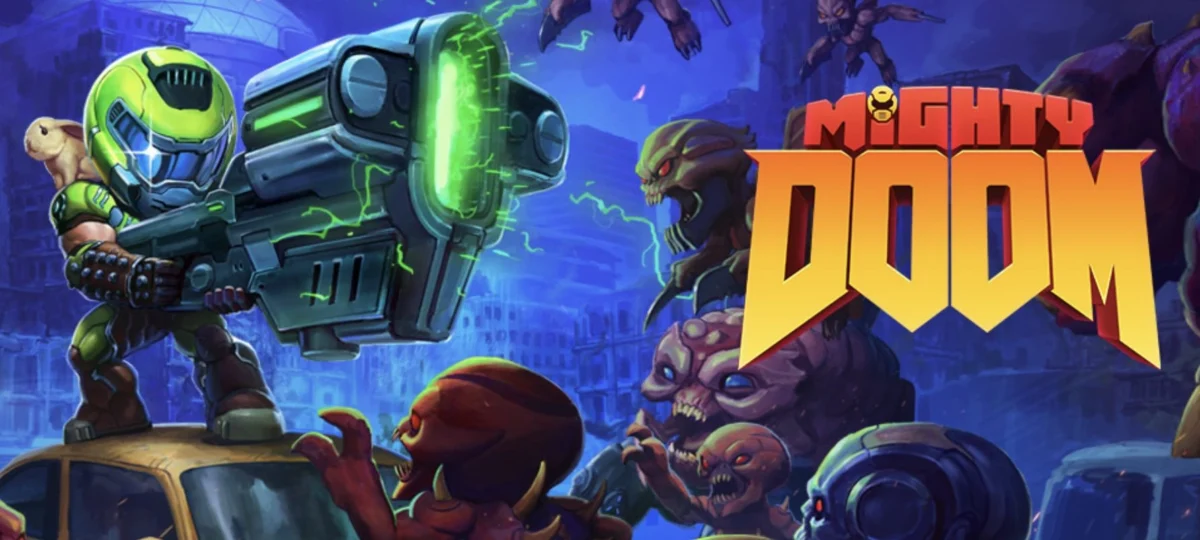
Under the ownership of Microsoft and Bethesda, Alpha Dog Games developed its most high-profile project to date: Mighty Doom. Launched in March 2023, the game was a top-down, "roguelite" shooter that reimagined the visceral combat of the Doom franchise through a stylized, "toy-like" aesthetic. The title was designed to appeal to both hardcore fans of the series and casual mobile players, featuring simplified controls and a deep progression system.
Data from market intelligence firm AppMagic provides a clear picture of the game’s commercial performance. Since its launch, Mighty Doom generated approximately $7 million in revenue and surpassed 7.4 million lifetime downloads. While these figures were respectable for a mid-sized mobile title, they were seemingly insufficient to insulate the studio from the massive cost-cutting measures implemented by Microsoft in 2024.
In May 2024, Microsoft announced the closure of several studios within the Bethesda family. The "sweeping cuts" resulted in the dissolution of Arkane Austin (the developers of Redfall) and the shuttering of Alpha Dog Games. Simultaneously, Tango Gameworks—the acclaimed studio behind Hi-Fi Rush—was also targeted for closure, though it was later acquired by the South Korean publisher Krafton. As a direct consequence of the Alpha Dog shutdown, Mighty Doom was removed from mobile storefronts, and active development on the title ceased, leaving the future of the studio’s staff and intellectual property in limbo.
Official Responses and the Path to Reacquisition
The re-emergence of Alpha Dog Games as an independent entity was first noticed when Shawn Woods, the studio’s founder, updated his LinkedIn profile to reflect the change in status. In a subsequent formal statement made to Kotaku, Woods expressed a mixture of gratitude and optimism regarding the studio’s revival.
"It’s true that Alpha Dog Games is once again independently owned by its founders," Woods stated. "We’re incredibly excited to have the name we put so much effort and pride into building back in our hands."
Woods also went out of his way to acknowledge the cooperation of his former parent company during the divestment process. "First and foremost, we’re grateful to Microsoft for working with us through the transition and enabling Alpha Dog Games to return to independent ownership. It means a great deal to have the opportunity to continue the studio’s legacy, which began in 2012."
While the specifics of the deal—including whether Alpha Dog retains any rights to the technology or assets developed during the Microsoft era—remain confidential, Woods indicated that the team has spent the recent months fortifying their technical foundation. He noted that the studio has "invested in the studio’s technology" to provide a "strong starting point" for future projects.
Industry Context: The Great Contraction of 2023-2024
The story of Alpha Dog Games is a microcosm of the broader trends currently affecting the global video game industry. Following a period of aggressive expansion and high-profile acquisitions during the COVID-19 pandemic, the industry has entered what many analysts call "The Great Contraction."
In 2023 and 2024, tens of thousands of workers across the gaming sector lost their jobs as companies like Sony, Electronic Arts, Riot Games, and Microsoft sought to streamline operations and appease shareholders in a post-pandemic economy. For Microsoft specifically, the pressure to demonstrate the return on investment for its $69 billion acquisition of Activision Blizzard and its $7.5 billion acquisition of ZeniMax led to a prioritization of "high-impact" titles and established franchises over smaller, experimental, or mobile-focused studios.
The closure of Alpha Dog Games was particularly notable because it occurred despite the studio having a live, profitable product on the market. This suggests that the decision was driven less by the studio’s individual performance and more by a top-down strategic shift toward consolidating resources into fewer, larger projects.
The Growing Trend of Studio "Decoupling"
Alpha Dog Games joins a growing list of studios that have managed to survive corporate closures by returning to their independent roots. Earlier in 2024, Toys for Bob, the developer of Crash Bandicoot 4 and Spyro Reignited Trilogy, reached an agreement with Activision (under Microsoft) to spin off as an independent studio. Similarly, the aforementioned Tango Gameworks was rescued from closure by Krafton, preserving the studio’s culture and its Hi-Fi Rush IP.
These instances highlight a potential new model for the industry: when a mega-publisher decides a studio no longer fits its corporate strategy, the founders or external partners may step in to "buy back" the studio’s independence. This allows the publisher to reduce its overhead while permitting the creative teams to continue their work under a different financial structure. For Alpha Dog Games, this decoupling offers the flexibility to seek work-for-hire contracts, collaborate with different publishers, or develop original IP without the constraints of a massive corporate hierarchy.
Implications for the Nova Scotia Gaming Sector
The survival of Alpha Dog Games is also a significant win for the regional tech economy in Nova Scotia. Halifax has gradually established itself as a hub for game development in Atlantic Canada, supported by provincial tax incentives and a growing pool of local talent. The loss of a major employer like Alpha Dog would have been a blow to the local ecosystem; its return as an independent entity ensures that specialized mobile development expertise remains in the region.
As an independent studio, Alpha Dog is now actively "open to opportunities from partners, publishers, and licensors." This indicates that the studio may return to its roots as a work-for-hire or co-development partner while it seeks funding for its next original project. The "humbling" support the studio has received from the community and industry peers suggests that there remains a strong appetite for the team’s specific brand of mobile action games.
Future Outlook and Strategic Analysis
While the return of Alpha Dog Games is a positive story in a year of difficult news, the studio faces a challenging road ahead. The mobile gaming market is more saturated and expensive to compete in than ever before. User acquisition costs have skyrocketed, and the "discovery" problem on the Apple App Store and Google Play Store remains a major hurdle for independent developers.
Furthermore, Alpha Dog will likely need to build a new portfolio from scratch. While they have regained their name and legacy, the Mighty Doom IP remains the property of Bethesda and Microsoft. The studio’s future success will depend on its ability to leverage its "invested technology" to create a new hit that can replicate the engagement levels of its previous work.
In conclusion, the re-independence of Alpha Dog Games serves as a testament to the resilience of mid-sized developers in an era of corporate volatility. By navigating the complex transition from a Microsoft-owned subsidiary back to a founder-led startup, Alpha Dog has preserved its decade-long history and positioned itself to navigate the next wave of industry changes on its own terms. As they look toward 2025 and beyond, the industry will be watching to see how this veteran team applies its experience within the walls of gaming’s giants to the newfound freedom of the independent market.
About the Author