The critically acclaimed mobile title Poinpy, developed by renowned indie creator Ojiro Fumoto and published by Devolver Digital, has officially transitioned to a standalone free-to-play model on the iOS App Store and Google Play Store. This move follows the game’s recent removal from the Netflix Games catalog, where it had previously existed as a platform exclusive since its debut in 2022. In a departure from standard mobile monetization strategies, the new version of Poinpy contains no mandatory in-app purchases, advertisements, or subscription requirements, opting instead for a voluntary "tipping" system that allows players to financially support the developer.
The Evolution of Poinpy and the Downwell Legacy
To understand the significance of Poinpy’s re-release, one must look at the pedigree of its creator, Ojiro Fumoto. Fumoto rose to international prominence in 2015 with the release of Downwell, a monochromatic, high-speed "downward-scroller" that became a benchmark for mobile game design. Downwell was praised for its tight controls, minimalist aesthetic, and the "gunboots" mechanic, which combined movement and combat into a single fluid action.
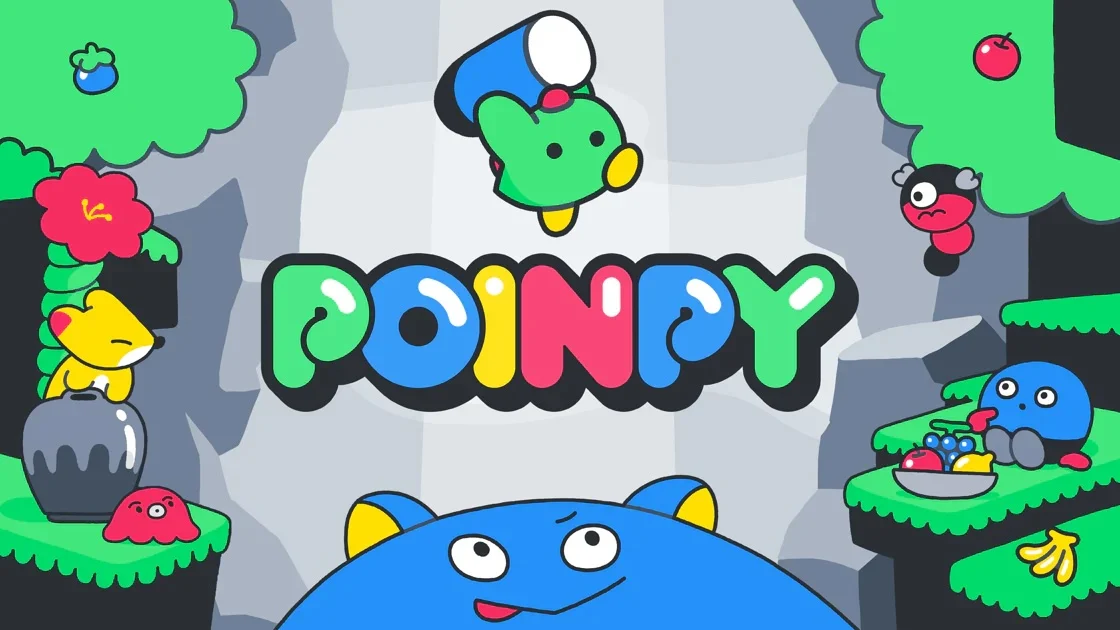
Following the success of Downwell, expectations for Fumoto’s next project were high within the indie development community. Poinpy was first introduced to the public during Netflix’s "Geeked Week" in June 2022, presented by industry figure Geoff Keighley. Unlike the dark, pixelated depths of Downwell, Poinpy offered a vibrant, colorful, and vertically oriented experience. Players control a small, bouncy creature tasked with climbing upward to collect fruit and mash them into juice for a giant, hungry "Blue Beast" chasing them from below.
The game was designed specifically for the mobile interface, utilizing a "slingshot" control scheme that allowed for precision movement on touchscreens. Upon its initial release, Poinpy received widespread critical acclaim, with reviewers highlighting its addictive "one-more-try" gameplay loop and its ability to translate complex physics-based movement into an accessible format.
The Netflix Games Strategy and Market Performance
Poinpy was a cornerstone of Netflix’s early efforts to build a prestige gaming library. By securing exclusives from established indie developers, Netflix sought to add value to its standard streaming subscriptions, offering games without ads or extra costs to its members. However, despite the critical success of Poinpy, the title struggled to gain significant traction within the broader Netflix ecosystem.
Market data as of March 2025 indicates a stark contrast between the performance of indie titles and major intellectual properties on the Netflix platform. While Netflix has seen massive success with licensed hits—most notably Grand Theft Auto: San Andreas, which has approached 40 million downloads—its original indie offerings have faced challenges in visibility. Poinpy, alongside other high-quality indie titles like Lucky Luna and Oxenfree II: Lost Signals, reportedly ranked in the bottom three of Netflix’s game library in terms of lifetime downloads.
Industry analysts suggest that the "subscription gap"—the difficulty in converting video streaming users into active gamers—is a primary factor in these figures. While Netflix boasts over 270 million subscribers worldwide, only a small percentage of that user base actively engages with the gaming tab. For a niche, skill-based title like Poinpy, the barrier to discovery within a movie-centric app proved to be a significant hurdle.
Chronology of the Transition
The lifecycle of Poinpy highlights the shifting dynamics of mobile game distribution and the temporary nature of many subscription-based exclusivity deals.
- June 2022: Poinpy is officially revealed and launched as a Netflix exclusive during Geeked Week. It is marketed as a major "made-for-mobile" original.
- 2022–2024: The game maintains a high critical rating but experiences slow download growth compared to Netflix’s larger licensed properties.
- Early 2025: Poinpy is removed from the Netflix Games catalog. This removal sparked concerns among fans regarding the preservation of the title, as it was previously unavailable on any other storefront.
- Late 2025: Devolver Digital and Ojiro Fumoto re-release the game on global app stores. The game is no longer tied to a Netflix subscription, marking its first appearance as a general-release title.
The transition from a subscription-gated model to a completely free model is a rare move in the industry. Typically, when games leave a subscription service, they are re-listed as premium (paid) titles. The decision to offer Poinpy for free suggests a priority on player accessibility and the long-term preservation of Fumoto’s work over immediate per-unit revenue.
A Unique Monetization Model: The Tipping System
The re-released version of Poinpy introduces a "tipping" mechanic, a feature that is becoming increasingly popular among independent creators who wish to avoid the intrusive nature of traditional mobile monetization. While the full game is accessible at no cost, players have the option to make one-time in-app purchases labeled as "tips." These range from $1.99 to $9.99.
This model serves several purposes:
- Maintaining Gameplay Integrity: By eschewing ads and "energy" mechanics, the game remains exactly as it was designed—a pure, uninterrupted skill-based experience.
- Direct Developer Support: The tipping system allows dedicated fans to contribute directly to Ojiro Fumoto, fostering a closer relationship between the creator and the audience.
- Lowering the Barrier to Entry: By removing the upfront cost, Devolver Digital is likely aiming to increase the game’s install base, potentially reaching the millions of players who missed it during its tenure on Netflix.
Implications for the Indie Mobile Landscape
The return of Poinpy to general app stores raises important questions about the future of indie games on subscription platforms. For many developers, a deal with a giant like Netflix or Apple Arcade provides the financial security necessary to complete a project without the pressure of designing predatory monetization schemes. However, the "hidden" nature of these libraries can lead to a lack of cultural footprint if the game fails to break through the platform’s algorithm.
The fact that Poinpy—a game with a 90+ Metacritic-style reception—struggled for downloads on Netflix suggests that quality alone is not enough to guarantee success in the subscription era. The move back to traditional storefronts may indicate a trend where developers use subscription services for initial funding and "timed exclusivity," before eventually moving to a wider release to capture a broader audience and ensure the game’s longevity.
Furthermore, the involvement of Devolver Digital is noteworthy. Devolver has built a reputation as a "curator" of high-quality indie experiences. By facilitating the free re-release of Poinpy, the publisher reinforces its brand as a developer-friendly entity that values the artistic merit of its portfolio over short-term profit margins.
Official Response and Community Reaction
While official statements from Netflix regarding the removal of Poinpy have been sparse, the streaming giant has previously indicated that it regularly evaluates its gaming library based on user engagement and licensing agreements. The removal of Poinpy, Lucky Luna, and Oxenfree II suggests a pivot toward higher-performing licensed content and internal IPs (such as games based on Stranger Things or Squid Game).
On social media and gaming forums, the reaction to Poinpy’s return has been overwhelmingly positive. Fans of Downwell who do not subscribe to Netflix have expressed relief at finally being able to access Fumoto’s second major work. The "free with tips" model has also been lauded as a "pro-consumer" move in an era of mobile gaming often criticized for aggressive microtransactions.
Conclusion and Future Outlook
Poinpy’s journey from a high-profile subscription exclusive to a free-to-play "tipping" title serves as a case study for the modern mobile gaming industry. It highlights the challenges of discoverability in a crowded digital marketplace and the evolving strategies of indie developers seeking to balance financial stability with creative freedom.
As the game begins its second life on the App Store and Google Play, its performance will be closely watched by other developers. If the tipping model proves successful, it could offer a new blueprint for how "prestige" mobile games are distributed after their initial exclusivity periods end. For now, the re-release ensures that one of the most inventive mobile games of the decade remains accessible to all, preserving Ojiro Fumoto’s legacy as a master of the mobile format.
The success of Poinpy’s new chapter may ultimately depend on whether the general mobile audience—unfiltered by subscription paywalls—is ready to embrace its challenging, colorful, and idiosyncratic gameplay. With the "Blue Beast" once again in pursuit, Poinpy’s climb continues, this time on its own terms.
About the Author