The landscape of extended reality (XR) is undergoing a significant strategic shift as major technology conglomerates accelerate their hardware roadmaps to integrate artificial intelligence (AI) with wearable displays. Industry reports indicate that Apple has moved forward the development timeline for its upcoming smartglasses, codenamed N50, with a projected production start in late 2026 and a commercial release slated for 2027. This acceleration reflects a broader industry trend where the focus is moving from bulky virtual reality (VR) headsets toward sleek, AI-driven eyewear capable of seamless augmented reality (AR) integration.
Apple’s Strategic Shift to AI-Centric Wearables
Apple’s N50 project represents a pivot toward lightweight wearables that prioritize utility and aesthetics over the high-immersion, high-weight profile of the Vision Pro. Unlike the current Vision Pro, which serves as a high-fidelity spatial computer, the upcoming smartglasses are expected to function as an accessory to the iPhone or a standalone AI interface. Preliminary specifications suggest the device will feature a dual-camera system designed for environmental sensing and visual AI processing.
Key use cases for the N50 device include real-time language translation, high-quality audio streaming, voice-activated telephony, and point-of-view photography. A defining characteristic of Apple’s strategy is its decision to forgo partnerships with established eyewear conglomerates like EssilorLuxottica. This contrasts sharply with Meta’s approach. Apple intends to leverage its existing global retail infrastructure and internal design expertise to position the glasses as a premium fashion accessory and status symbol, utilizing its brand equity to compete directly with traditional luxury eyewear.

Pico and Project Swan: High-End Competition for the Professional Market
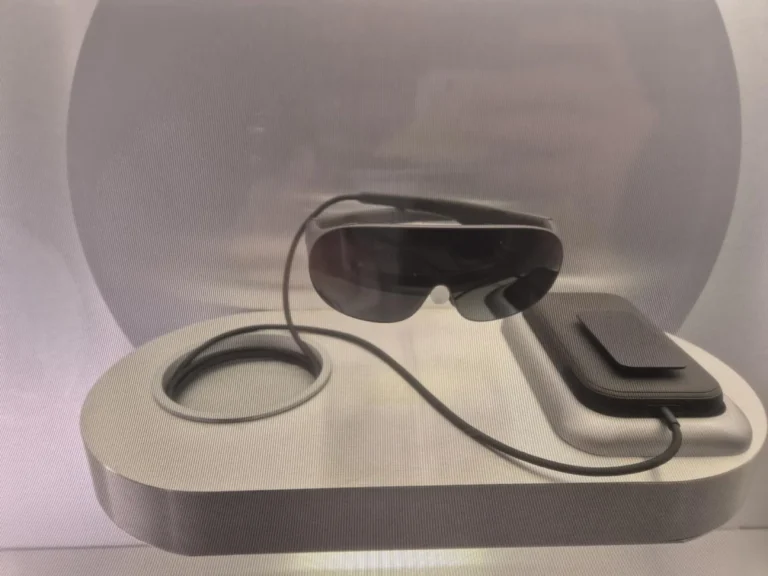
While Apple targets the consumer eyewear market, Pico—the XR subsidiary of ByteDance—is preparing to challenge the high-end spatial computing segment. At the upcoming Game Developers Conference (GDC), Pico is scheduled to provide an in-depth technical overview of "Project Swan," the codename for its next-generation flagship headset.
Project Swan is expected to run on the newly developed Pico OS 6 and will feature hardware specifications designed to rival the Apple Vision Pro and Samsung’s upcoming XR offerings. Internal data suggests the device will utilize a proprietary chipset paired with custom 4,000 PPI (pixels per inch) microOLED displays. The GDC presentation will reportedly focus on multimodal interaction systems, including advanced eye and hand tracking, and a developer toolchain designed to simplify the porting of existing spatial computing applications to the Pico ecosystem.
The timing of this announcement suggests that Pico is seeking to secure a robust content library ahead of a potential 2025 or 2026 launch. By engaging developers at GDC, Pico aims to demonstrate that its graphics performance and rendering pipelines are capable of supporting high-fidelity enterprise and gaming applications.
Meta’s Accelerated Display Roadmap and Ecosystem Pivot
Meta Platforms is also reportedly adjusting its hardware release schedule. Internal leaks suggest that "Hypernova 2," the successor to the current Ray-Ban Meta smartglasses, may debut as early as late 2025 or 2026, significantly ahead of previous 2027 estimates. The primary upgrade for the Hypernova 2 is expected to be the inclusion of a heads-up display (HUD), potentially a binocular system that would allow for more complex AR overlays than current monocular solutions.

However, Meta faces a logistical challenge: the current generation of Ray-Ban Meta glasses continues to face supply constraints due to unexpectedly high consumer demand. Analysts suggest that Meta’s rush to iterate is driven by the looming threat of Apple and Google entering the smartglasses market.
Simultaneously, Meta is executing a strategic pivot in its software ecosystem. Samantha Ryan, Vice President of Content at Meta Reality Labs, recently reiterated that the company is distancing its "Horizon" brand from being solely a first-party social platform. Instead, Meta is focusing on "Horizon OS" as an open framework for third-party developers. This shift indicates that Meta is prioritizing the growth of a diverse app ecosystem over the internal development of its "Horizon Worlds" metaverse platform, acknowledging that third-party innovation is critical for long-term hardware adoption.
Technical Innovations in Streaming and Tracking
The technical barriers to high-end XR are being addressed through new software optimizations. Apple recently introduced foveated streaming capabilities in the latest visionOS beta. Foveated streaming is a bandwidth-saving technique that renders the area of the display directly in the user’s line of sight at maximum resolution while compressing the peripheral areas. This technology, coupled with support for NVIDIA Cloud XR, suggests that Apple is positioning the Vision Pro as a viable terminal for high-end remote rendering, which is particularly relevant for industrial design and complex medical visualizations.
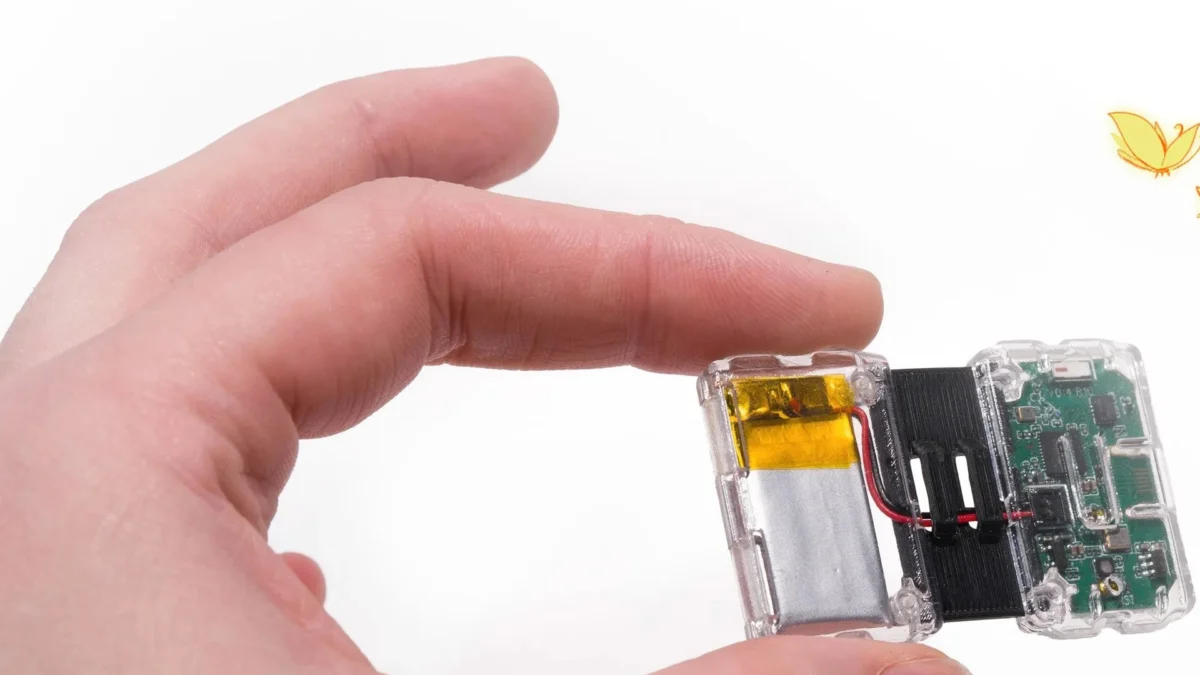
In the hardware peripheral market, SlimeVR’s "Butterfly Trackers" recently demonstrated the high demand for consumer-grade motion capture. The crowdfunding campaign for these trackers exceeded $400,000, highlighting a market preference for versatile, non-optical tracking solutions. The Butterfly Trackers utilize IMU (Inertial Measurement Unit) technology to provide full-body tracking without the need for external base stations, offering a 48-hour battery life and a compact form factor that appeals to the social VR community.

Market Performance and Industry Outlook
Despite a generally cautious economic climate for specialized hardware, recent data points to sustained growth in specific XR sectors. VRChat recently achieved a record-breaking milestone of over 100,000 concurrent users during a virtual concert event in Japan, signaling the continued vitality of social VR platforms. Furthermore, Meta’s "Horizon+" subscription service has reportedly surpassed one million active subscribers, indicating that a recurring revenue model for VR content is becoming viable.
The upcoming Samsung Unpacked event on February 25 is expected to focus primarily on the Galaxy S26 smartphone series. While many industry observers hoped for a reveal of the Samsung-Google-Qualcomm XR collaboration, current projections suggest the "Galaxy XR" device may not be ready for a full public unveiling until later in the year.
Chronology of Expected XR Developments (2025–2027)
- Q1 2025: Samsung Unpacked; potential updates on the Google/Samsung XR partnership.
- Q1 2025: GDC; Pico to reveal technical architecture for Project Swan and Pico OS 6.
- Late 2025/Early 2026: Potential launch of Meta’s Hypernova 2 (Ray-Ban Meta Display).
- Late 2026: Production begins for Apple’s N50 smartglasses.
- 2027: Commercial release of Apple’s AI-integrated smartglasses.
Broader Implications for the Tech Industry
The convergence of AI and XR represents the next phase of mobile computing. As Apple, Meta, and Pico move toward "smartglasses" as the primary form factor, the reliance on smartphones may begin to diminish. The integration of visual AI allows these devices to act as intelligent assistants that understand the user’s environment in real-time.
For developers, this transition requires a shift from traditional 2D UI design to spatial interfaces that respect the user’s physical surroundings. For the broader market, the success of these devices will likely depend on their ability to balance advanced functionality with social acceptability and battery efficiency. The next 24 months will be a critical period for establishing the hardware standards that will define the next decade of personal electronics.
About the Author