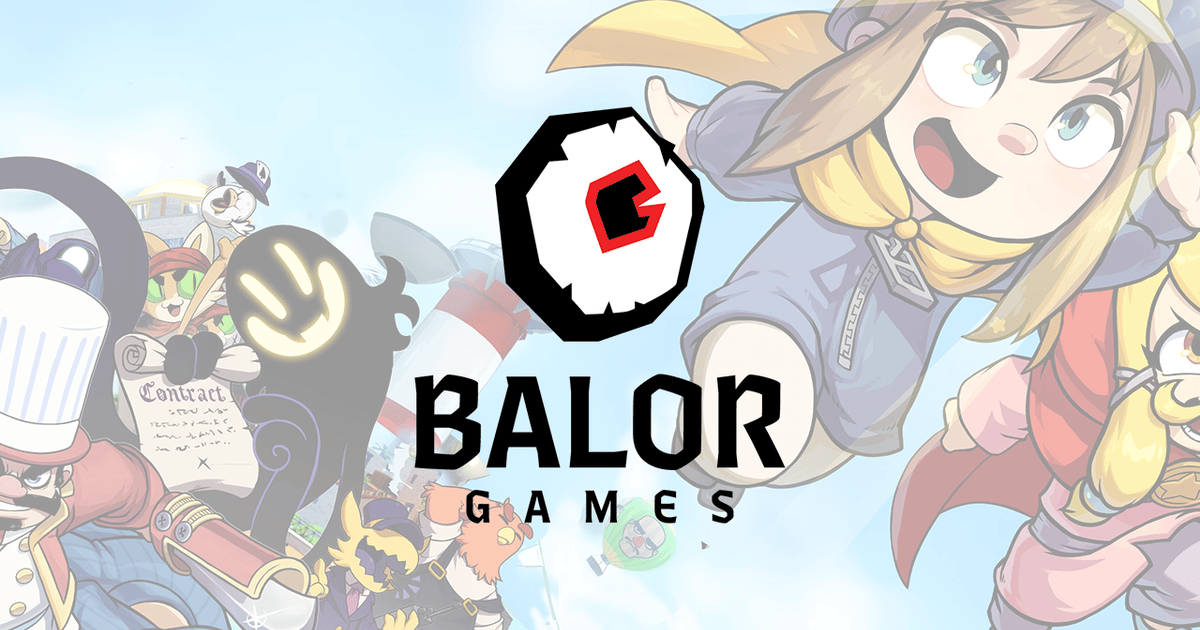
Good Games Group, a rising force in the video game publishing landscape, has officially launched its new publishing label, Balor Games, with an explicit mission to redefine the "long-term stewardship" of "triple-I" titles. This strategic move, announced on March 4, 2026, positions Balor Games as a significant new player focused on nurturing and extending the lifecycles of critically acclaimed and commercially successful independent games, aiming to provide stability and sustained growth for developers in an increasingly competitive market.
The inception of Balor Games is rooted in a series of ambitious acquisitions orchestrated by Good Games Group, a company co-founded in 2024 by former Humble Games leaders Alan Patmore and Mark Nash. This leadership brings with it a wealth of experience in the indie publishing space, having overseen the growth and distribution of numerous independent titles. To bolster its expansion and establish Balor Games with a substantial initial portfolio, Good Games Group completed a pivotal deal, acquiring Ziff Davis’ publishing business for an undisclosed fee. This acquisition is particularly noteworthy as it includes the extensive back catalog of titles previously published under the well-regarded Humble Games label, immediately granting Balor Games custodianship of a diverse and celebrated collection of independent works.
Further solidifying its foundational portfolio, Good Games Group also purchased the complete Firestoke Games catalog, along with the specific publishing rights to the critically acclaimed tactical roguelike, Fights in Tight Spaces. These strategic acquisitions collectively empower Balor Games to commence operations as the custodian of an impressive roster of over 60 indie titles. The catalog now boasts a remarkable array of games that have resonated deeply with players and critics alike, including perennial favorites such as Slay the Spire, A Hat in Time, SIGNALIS, Forager, Coral Island, Monaco, and Wizard of Legend. This robust initial offering immediately establishes Balor Games as a formidable entity in the independent publishing sector, tasked with preserving and enhancing the legacy of these beloved games while also seeking out future classics.
Defining the "Triple-I" Mandate and "Cultural Curator" Vision
At the core of Balor Games’ operational philosophy is the commitment to "long-term stewardship" for "triple-I" titles. The term "triple-I" typically refers to independent games that exhibit high production values, ambitious scope, and often innovative gameplay, often blurring the lines between traditional indie development and the polish associated with larger, "AAA" productions. These are games that, despite their independent origins, often achieve significant critical acclaim and commercial success, developing dedicated fan bases. Balor Games aims to be a "cultural curator" within this vibrant and expanding segment of the industry.
In practice, this means the label intends to offer the comprehensive resources, strategic expertise, and deep industry knowledge characteristic of an experienced publisher, but crucially, without compromising the creative autonomy and unique vision of its partner studios. This approach seeks to address a common tension in indie publishing, where developers often seek financial and logistical support but fear losing creative control or having their game’s identity diluted. Balor Games’ model suggests a collaborative partnership where the publisher acts as a supportive infrastructure, enabling developers to focus on their craft while ensuring their titles receive the sustained attention and strategic backing necessary for enduring success.
The gaming industry has witnessed an explosion in indie development over the past decade, fueled by accessible development tools, digital distribution platforms, and a global community of players hungry for fresh experiences. However, this growth has also led to market saturation, making it increasingly difficult for even high-quality independent titles to stand out and achieve their full potential. Effective post-launch support, community management, and strategic marketing across diverse platforms and regions have become paramount for a game’s longevity. Balor Games’ focus on "long-term stewardship" directly addresses these challenges, promising to provide ongoing lifecycle support, coordinated community building initiatives, and an expanded commercial strategy designed to maximize a game’s reach and profitability over many years, rather than just during its initial launch window.
A Strategic Timeline: From Humble Beginnings to Balor’s Launch
The journey to Balor Games’ establishment can be traced back to 2024, when Alan Patmore and Mark Nash, two veterans of the indie publishing scene, decided to form Good Games Group. Both individuals brought significant experience from their tenures at Humble Games, a subsidiary of Ziff Davis that gained prominence for its unique bundles and later for its dedicated publishing efforts supporting independent developers. Their departure and subsequent formation of Good Games Group signaled an intent to leverage their expertise in a new venture, likely driven by a specific vision for indie publishing that they felt could be more fully realized independently.
Humble Games, under Ziff Davis, had built a reputation for discovering and championing a diverse range of independent titles. The acquisition of Ziff Davis’ publishing business by Good Games Group therefore represents a significant transfer of intellectual property and legacy. This deal effectively consolidates a substantial portion of Humble Games’ historical catalog under the new Balor Games banner, ensuring continuity for many titles that might otherwise have faced an uncertain future as publishing priorities within Ziff Davis shifted. The integration of the Firestoke Games catalog further diversifies Balor’s offerings, bringing in additional titles that align with its "triple-I" focus. Firestoke Games, while a smaller entity, had also carved out a niche in the indie space, and their titles will now benefit from the broader reach and resources of Balor Games. The targeted acquisition of publishing rights for Fights in Tight Spaces underscores Balor’s selective approach, identifying individual games with proven quality and potential for sustained engagement.
This chronological sequence of events—the formation of Good Games Group, the strategic leadership from former Humble Games executives, and the targeted acquisitions—paints a clear picture of a deliberate and well-executed strategy to create a powerful new force in indie publishing. It’s not merely an aggregation of assets but a calculated move to build a publishing house specifically tailored to the unique needs and opportunities within the triple-I segment.
Industry Context and Broader Implications
The launch of Balor Games arrives at a pivotal moment for the video game industry, particularly within the independent sector. According to various market analyses, the indie games market has seen consistent growth, with projections suggesting continued expansion. However, this growth is accompanied by increased competition. A report by Statista indicates that the global video game market is expected to reach over $300 billion by 2027, with a significant portion attributed to PC and console gaming, where many triple-I titles thrive. Within this landscape, indie games, while harder to precisely quantify, represent a vital segment known for innovation and creative risk-taking.
Publishers like Balor Games play a critical role in this ecosystem. Beyond providing capital, they offer expertise in marketing, localization, quality assurance, platform relations, and community management—services that are often beyond the capabilities of small development teams. The concept of "long-term stewardship" is particularly resonant in an era where games-as-a-service models and continuous content updates have extended the commercial life of titles far beyond their initial launch. For indie games, which often rely on word-of-mouth and a dedicated community, sustained support can be the difference between fleeting success and an enduring legacy.
The consolidation of multiple established indie catalogs under Balor Games also presents interesting dynamics. It creates a unified platform for cross-promotion and shared community initiatives, potentially amplifying the reach of individual titles. For instance, players who enjoy Slay the Spire might be introduced to SIGNALIS through curated recommendations or bundled offers within the Balor ecosystem. This integrated approach can foster a stronger sense of identity for the Balor Games brand and create a loyal player base that trusts the label’s curation.
Furthermore, this development highlights a growing trend of specialization within the publishing industry. Rather than a "one-size-fits-all" approach, publishers are increasingly carving out niches—be it specific genres, platforms, or, in Balor’s case, a particular tier of independent development. This specialization allows for a deeper understanding of the target audience and the unique challenges faced by developers within that segment.
Leadership’s Vision: Sustainability and Responsible Growth
Mark Nash, co-founder of Good Games Group, articulated Balor Games’ forward-looking strategy in an interview with Game Developer, emphasizing a balanced approach between nurturing the acquired portfolio and selectively investing in new projects. "Bringing these catalogs together strengthens our ability to support studios, sustainably and responsibly," Nash stated, underscoring the core principle of their stewardship model.
He confirmed that Balor Games is actively "selectively investing" in new projects, citing the co-op tactical horror first-person shooter SCP: 5K as an example of the kind of ambitious, high-quality independent title they seek to partner with. This indicates that while the back catalog is a foundational asset, Balor is not merely a catalog manager but an active participant in the ongoing creation of new gaming experiences.
Nash extended an invitation to the developer community: "Yes, we are still accepting pitches and we would love to receive them over at www.balorgames.com. We are looking for ambitious independent developers who want a committed publishing partner, not just financing. Our goal is to build enduring relationships grounded in creative alignment, transparency, and long-term belief in the work." This statement is a direct appeal to developers seeking more than just a capital injection; it highlights Balor’s commitment to genuine partnership and shared vision, distinguishing itself from purely financial investors.
Crucially, Nash clarified that Balor Games is not chasing scale for its own sake, but rather is laser-focused on helping its partners achieve their full potential. "Our focus is on providing sustained lifecycle support, community building, and thoughtful commercial strategy across platforms and regions," he reiterated. "This doesn’t change our ambition, it sharpens it. We are not chasing scale for its own sake. We are focused on partnering with teams whose creative vision we believe in and helping them reach their full potential. If anything, bringing these catalogs together strengthens our ability to support studios, sustainably and responsibly." This ethos suggests a long-term perspective that values quality, sustainability, and developer well-being over rapid, unchecked expansion.
Potential Challenges and Opportunities Ahead
While Balor Games’ vision is compelling, the path ahead is not without potential challenges. Managing a diverse catalog of over 60 titles, each with its own community, technical requirements, and marketing needs, requires significant resources and strategic acumen. Maintaining the delicate balance between providing robust publishing support and respecting developer autonomy is a continuous effort. Furthermore, the "triple-I" space, while lucrative, is also dynamic, with player preferences and market trends constantly evolving. Balor Games will need to remain agile and adaptable to ensure its stewardship remains relevant and effective for years to come.
However, the opportunities are substantial. By focusing on quality and long-term relationships, Balor Games could establish itself as a trusted beacon for independent developers looking for a publishing partner that truly understands and champions their work. The unified catalog could become a powerful brand in itself, known for housing exceptional independent titles. The deep experience of Patmore and Nash in the indie space, combined with the substantial initial portfolio, gives Balor Games a strong foundation upon which to build a lasting legacy. If successful, Balor Games could indeed set a new standard for responsible and sustainable indie publishing, proving that commercial success and artistic integrity can not only coexist but thrive together.
About the Author