Hasbro Inc. has officially released its financial results for the third quarter of 2026, revealing a period of sustained strength within its digital gaming portfolio and a landmark achievement for its flagship trading card franchise. Central to the report is the continued performance of Monopoly Go, the mobile sensation developed by Scopely under license from Hasbro. The game contributed $41 million in royalty and licensing income to Hasbro during the third quarter, bringing the year-to-date total from this single title to $127 million. This steady stream of high-margin revenue underscores the success of Hasbro’s "Blueprint 2.0" strategy, which prioritizes digital expansion and high-value licensing partnerships over traditional toy manufacturing in isolation.
The Q3 2026 figures for Monopoly Go represent a consistent performance pattern throughout the fiscal year. The $41 million earned in the most recent quarter matches the $41 million reported in the first quarter of 2026, though it reflects a slight sequential softening from the $44 million generated during the second quarter. Despite this minor fluctuation, the nine-month total of $127 million is nearly identical to the $126 million recorded during the same period in 2025, suggesting that the game has reached a state of mature, stable monetization rather than experiencing the sharp decline often seen in mobile titles after their first year of release.
Strategic Content Cycles and the Crossover Economy
The third quarter was defined by aggressive content updates and cross-media integrations, a hallmark of Scopely’s operational strategy for Monopoly Go. From July 29 to September 23, the game featured a high-profile "Looney Tunes" takeover, following a previous successful collaboration with "The Simpsons." These events serve as critical engagement drivers, introducing limited-time stickers, tokens, and board aesthetics that incentivize daily active usage and in-app purchases.
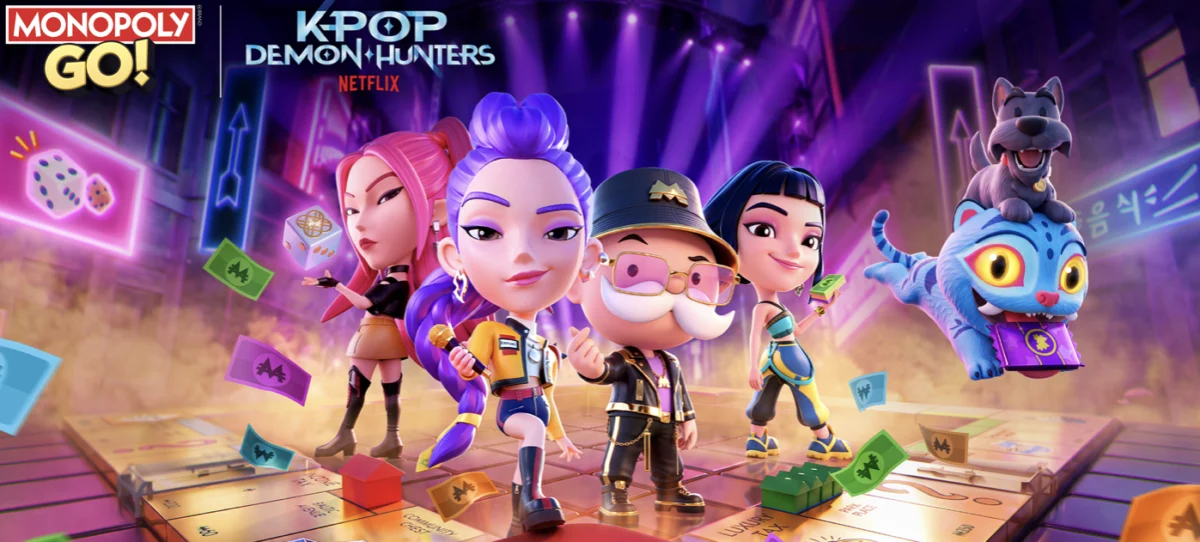
Immediately following the conclusion of the Looney Tunes event, Scopely launched the "Monster Mash" season on September 23. This current season, scheduled to run through November 25, represents one of the game’s most ambitious thematic pivots to date. It incorporates a diverse array of intellectual properties, including crossovers with the "Ghostbusters" franchise and "KPop Demon Hunters." The inclusion of KPop Demon Hunters is particularly notable, as Hasbro identified this IP as a leading brand within its Consumer Products business this quarter, signaling a deeper integration between Hasbro’s internal IP development and its external licensing partnerships.
The success of these content cycles is reflected in the game’s broader milestones. Scopely confirmed during the quarter that Monopoly Go has surpassed 300 million downloads globally. Furthermore, industry data from Sensor Tower highlighted that the title became the fastest mobile game in history to reach $6 billion in lifetime in-app purchase revenue, achieving this feat in early 2026. While Hasbro only receives a percentage of this revenue as a licensing fee, the sheer scale of the game’s economy provides a massive, low-risk profit center for the company.
Magic: The Gathering and the Wizards of the Coast Surge
While Monopoly Go provided a steady foundation for licensed income, Hasbro’s internal Wizards of the Coast (WotC) and Digital Gaming segment saw explosive growth. Revenue in this division rose 3% to $134.1 million for the third quarter, but the standout performer was Magic: The Gathering (MTG). For the first time in the brand’s thirty-plus-year history, MTG surpassed $600 million in quarterly revenue, reaching a record $616.1 million. This represents a 34% increase compared to the same period last year.
Analysts attribute this growth to the continued success of the "Universes Beyond" initiative, which brings external IPs into the Magic: The Gathering ecosystem, and a robust release schedule that appeals to both competitive players and collectors. The synergy between Hasbro’s digital and physical gaming arms is becoming increasingly apparent; the company is leveraging its expertise in tabletop gaming to fuel digital growth, while simultaneously using digital platforms to maintain the cultural relevance of its legacy brands. Year-to-date, Hasbro’s digital and licensed gaming revenue has grown 7%, totaling $390.9 million.
Consumer Products and Brand Portfolio Performance
Hasbro’s Consumer Products segment, which includes traditional toys, action figures, and licensed merchandise, also reported positive momentum. Revenue for this segment grew 4% to $827.9 mllion in Q3. This growth was driven by "leading brands" such as Transformers, Marvel, and the aforementioned KPop Demon Hunters.
The performance of the Consumer Products division suggests a stabilizing retail environment and a successful execution of Hasbro’s plan to lean into "fewer, bigger brands." By focusing marketing spend and development resources on high-affinity franchises like Marvel and Transformers, Hasbro has managed to grow its top line even as the broader toy industry faces headwinds from shifting consumer spending habits. The emergence of KPop Demon Hunters as a top-tier brand is a significant development, indicating that Hasbro’s efforts to incubate new, digitally-native IP are beginning to yield tangible financial results at retail.
Historical Context and Financial Trajectory
To understand the significance of the 2026 Q3 results, one must look at the trajectory of the Hasbro-Scopely partnership. When Monopoly Go launched in early 2023, it was viewed as a high-potential but unproven entry into the crowded "social casino" and casual board game market. However, by the end of its first year, it had shattered industry records for user acquisition and monetization.
The stability of the $127 million nine-month licensing revenue in 2026 compared to the $126 million in 2025 is a testament to the "live-ops" expertise of Scopely. In the mobile gaming industry, "decay" is a standard phenomenon where revenue drops significantly after the initial hype cycle. Monopoly Go has defied this trend by maintaining a consistent revenue floor, bolstered by a rotating door of pop-culture collaborations.
For Hasbro, this revenue is essentially "pure profit" as it requires minimal capital expenditure compared to manufacturing physical goods. This high-margin income has been vital in allowing Hasbro to de-lever its balance sheet and reinvest in its digital transformation, including the development of internal video game studios and the expansion of the Wizards of the Coast digital platform, Arena.
Industry Implications and Market Reaction
The broader implications of Hasbro’s Q3 report resonate throughout the gaming and toy industries. Hasbro’s success with Monopoly Go has validated the "IP-licensing" model for legacy toy companies. Competitors like Mattel have taken note, increasingly seeking to monetize their own portfolios through high-budget mobile adaptations and cinematic universes.
Market analysts have reacted favorably to the stability of the Monopoly Go revenue, noting that the game’s ability to sustain $40 million-plus per quarter for Hasbro provides a predictable cushion against the volatility of the traditional toy market, which is heavily reliant on the fourth-quarter holiday season. The 34% jump in Magic: The Gathering revenue was particularly surprising to some observers, who had questioned whether the brand could continue its growth streak after a massive 2025.
Future Outlook: The Monster Mash and Beyond
Looking ahead to the fourth quarter of 2026, Hasbro appears well-positioned to finish the year strongly. The "Monster Mash" season in Monopoly Go will cover the lucrative Halloween and early November period, featuring crossovers that appeal to both nostalgic audiences (Ghostbusters) and modern global fanbases (KPop).
Furthermore, the holiday season typically sees a spike in both digital engagement and physical toy sales. With Magic: The Gathering maintaining record-breaking momentum and the Consumer Products division returning to growth, Hasbro’s management expressed confidence in the company’s year-end targets.
"Our third-quarter results demonstrate the power of our premier brands and the effectiveness of our digital-first strategy," a company spokesperson indicated in the wake of the earnings release. "The continued success of Monopoly Go, combined with a historic quarter for Magic: The Gathering, proves that our fans are engaging with our franchises across multiple platforms and formats. We are excited to carry this momentum into the holiday season."
As the fourth quarter begins, the focus for Hasbro will remain on the sustainability of its digital ecosystem. While Monopoly Go has proven its longevity, the challenge will be to find the next "breakout" hit within its licensing pipeline to ensure that the $127 million nine-month benchmark becomes a floor rather than a ceiling for future growth. For now, the combination of a decades-old board game reimagined for mobile and a thirty-year-old card game reaching new heights has placed Hasbro in a formidable position within the global entertainment landscape.
About the Author