A recent comparative analysis by content creator JayAnAm has shed light on the evolving landscape of 3D modeling workflows, specifically pitting the industry-standard software Blender against the emerging specialized tool, HardCuts. The video meticulously dissects how traditional Blender methodologies for hard-surface modeling, particularly concerning deformations and complex boolean operations, hold up against the more streamlined, purpose-built approach offered by HardCuts. While Blender has long been recognized for its comprehensive feature set, vast ecosystem, and robust, production-tested workflows, JayAnAm’s exploration underscores a growing trend: newer tools are beginning to innovate by re-envisioning and optimizing specific segments of the 3D asset creation pipeline.
The Paradigm Shift in Hard-Surface Modeling
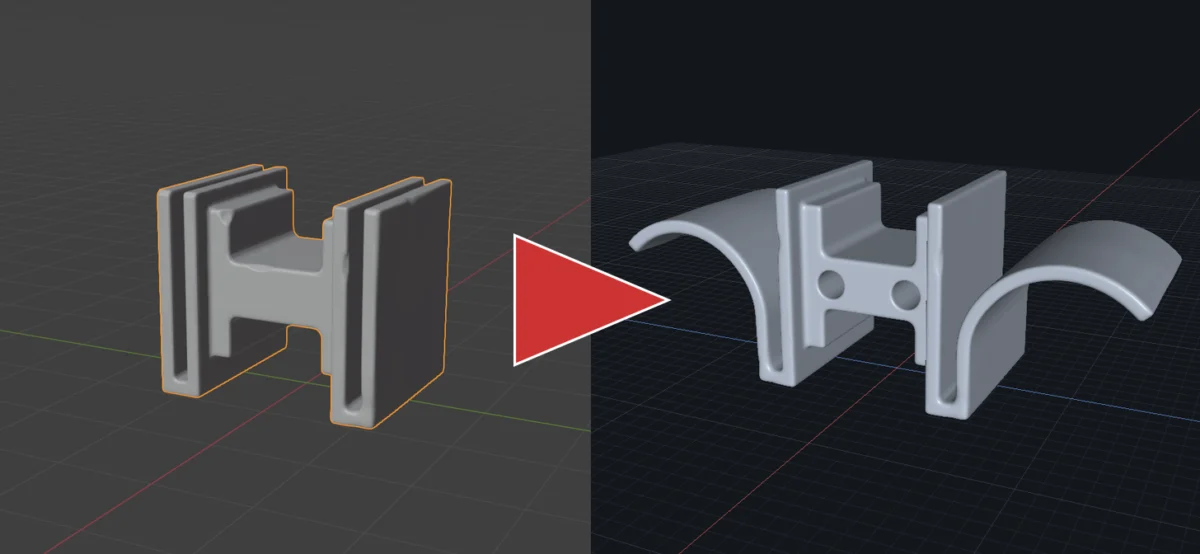
At the core of JayAnAm’s investigation lies a detailed examination of common hard-surface modeling tasks. These include the nuanced process of deforming high-polygon meshes and the often intricate application of boolean operations. Blender, renowned for its versatility, is demonstrably capable of handling these tasks. However, achieving clean, predictable results in Blender can frequently necessitate a multi-step approach, involving the judicious application of various modifiers, careful topological management, and precise setup. This can, at times, lead to a less immediate and more time-consuming workflow, especially for artists prioritizing rapid iteration and efficiency.
HardCuts, conversely, has been engineered with a distinctly focused objective: to facilitate swift, direct, and intuitive workflows specifically for the blockout and high-polygon modeling stages. Its design philosophy diverges from the reliance on extensive modifier stacks or inherently destructive operations that can characterize some Blender workflows. Instead, HardCuts prioritizes a more direct manipulation paradigm, aiming to simplify complex geometric alterations and boolean intersections. This streamlined approach is particularly beneficial in scenarios demanding rapid prototyping and the creation of intricate, hard-surface forms.
It is crucial to contextualize this comparison: JayAnAm’s video does not present HardCuts as a wholesale replacement for Blender. Instead, it positions the specialized tool as a potent complementary asset within a broader 3D workflow. This perspective is particularly relevant for artists and studios seeking to accelerate the initial stages of modeling, or for those who frequently engage with designs heavily reliant on complex boolean operations, where efficiency and precision are paramount.
Blender’s enduring strength lies in its all-encompassing nature, serving as a singular platform for modeling, sculpting, animation, rigging, texturing, and rendering. HardCuts, by contrast, carves out a more specialized niche. Its ambition is to render the process of hard-surface blockout and high-poly creation faster, more accessible, and less intimidating, especially for users who place a high premium on speed and a simplified user experience for these specific tasks.
Bridging the Workflow Divide: Integration and Synergy
A significant takeaway from JayAnAm’s analysis is the compelling potential of integrating both Blender and HardCuts into a cohesive workflow. The proposed synergy involves leveraging HardCuts for the rapid ideation and creation of complex geometric shapes and intricate boolean arrangements. Once these foundational assets are established in HardCuts, they can then be seamlessly imported into Blender. Within Blender, artists can undertake further refinement, detailed sculpting, UV unwrapping, texturing, rigging, and ultimately, rendering, or integrate these newly created assets into larger, more complex scenes.
This hybrid approach capitalizes on the strengths of each software. HardCuts excels at the initial, often repetitive, and geometrically challenging aspects of hard-surface design, while Blender provides the comprehensive toolkit for the subsequent stages of production. This can lead to substantial time savings and a more fluid creative process, mitigating the potential bottlenecks that might arise from attempting every operation solely within a single, albeit powerful, software environment.
A Practical Demonstration: The Comparison Video
The visual evidence presented in JayAnAm’s video offers a tangible demonstration of these workflow differences. By executing identical tasks side-by-side in both Blender and HardCuts, the video provides practical, real-world examples of how each tool handles the same challenges. This direct comparison allows viewers to discern the advantages and potential drawbacks of each approach in specific scenarios.
The video, titled "Blender vs Hardcuts : Deforms, Booleans & Blender Bridge," features the following embed:
For professionals and enthusiasts immersed in the world of hard-surface modeling, JayAnAm’s comparative study offers invaluable perspective. It illuminates how specialized, purpose-driven tools like HardCuts can effectively complement established, all-encompassing software like Blender, paving the way for more efficient and innovative 3D content creation pipelines.
Background and Chronology of Tool Development
The evolution of 3D modeling software is a continuous narrative of innovation driven by the demands of various industries, from game development and architectural visualization to film and product design. Blender, first released in 1994, has undergone a remarkable transformation from a proprietary internal tool to a powerful open-source powerhouse. Its development has been a community-driven effort, fostering an incredibly rich ecosystem of add-ons, tutorials, and production-proven workflows. Over the decades, Blender has consistently expanded its capabilities, solidifying its position as a cornerstone of the 3D industry. Its extensive feature set, including sophisticated modeling tools, a robust sculpting engine, a powerful animation system, and a cutting-edge rendering engine (Cycles and Eevee), makes it a versatile solution for nearly every aspect of 3D production.
In contrast, HardCuts represents a more recent entry into the market, emerging from a specific need identified within the hard-surface modeling community. The development of specialized tools often stems from artists encountering bottlenecks or inefficiencies in existing software for particular tasks. The rise of tools like HardCuts can be seen as a response to the desire for more streamlined, intuitive, and faster solutions for common, yet often complex, operations like boolean modeling and rapid mesh manipulation. The timeline for HardCuts’ emergence is more recent, likely gaining traction in the last few years as developers sought to address specific pain points in hard-surface workflows that even robust generalist software might not have optimized to the same degree. The emphasis on "direct and intuitive" workflows suggests a design philosophy focused on reducing the learning curve and the number of steps required for achieving desired results, a common characteristic of newer, specialized applications.
Supporting Data and Industry Trends
The demand for efficient hard-surface modeling techniques is consistently high across multiple sectors. In the video game industry, for instance, the creation of detailed environmental assets, vehicles, and character props often relies heavily on hard-surface modeling. The average AAA game development cycle can span several years, with asset creation forming a significant portion of the production timeline. Any tool that can demonstrably reduce the time spent on modeling, especially during the crucial early stages of asset development, can have a substantial impact on project timelines and budgets. For example, if a tool like HardCuts can reduce the time spent on boolean operations for a complex mechanical asset by 30-50%, this translates directly into saved man-hours.
Similarly, in the realm of product design and visualization, the ability to rapidly iterate on complex geometric forms and test various design iterations is critical. The speed at which designers can generate realistic 3D models for review and prototyping can significantly accelerate the product development cycle. While precise quantitative data on the adoption rate of specialized tools like HardCuts is not yet widely publicized, the growing discussion around such tools in online communities, forums, and content creation platforms like YouTube indicates a clear interest and perceived value. The increasing complexity of hard-surface assets in visual effects for film and television further amplifies the need for efficient and robust modeling solutions.
Inferred Statements and Reactions from Related Parties
While direct official statements from the developers of HardCuts or major figures within the Blender community regarding this specific comparison are not available in the provided text, we can infer likely sentiments. Developers of specialized tools like HardCuts typically aim to highlight how their software solves specific problems that generalist tools might not address as elegantly. Their messaging would likely focus on efficiency gains, ease of use for their target audience, and the benefits of a focused workflow.
From the perspective of the broader Blender community, the reaction is often one of curiosity and openness. Blender’s open-source nature fosters an environment where new tools and workflows are generally welcomed, especially when they can enhance the overall ecosystem. Many Blender users actively seek out complementary tools that can streamline specific parts of their workflow, and then integrate those assets back into their Blender projects. Therefore, the general sentiment is likely to be one of appreciation for comparative analyses that demonstrate how different tools can work together effectively. Content creators like JayAnAm play a vital role in this ecosystem by testing and showcasing these possibilities, empowering other artists to make informed decisions about their toolchains.
Broader Impact and Implications for the 3D Industry
The comparison between Blender and HardCuts, and the broader trend it represents, has several significant implications for the 3D industry.
1. The Rise of Specialized Workflows: This analysis underscores a growing trend towards specialization within the 3D software market. While all-in-one solutions like Blender remain indispensable, there is an increasing demand for tools that excel at specific tasks. This allows artists to build highly efficient, customized workflows by combining the strengths of various software packages. This specialization can lead to faster production cycles, higher quality assets, and more accessible entry points for new artists who may find a single, highly complex software package daunting.
2. Democratization of Advanced Techniques: Tools like HardCuts, designed for intuitive operation, can potentially democratize advanced hard-surface modeling techniques. By simplifying complex operations such as boolean modeling, these tools can empower a wider range of artists, including those who may not have the extensive experience or specialized training required to achieve similar results in more traditional, complex environments. This can lead to a more diverse talent pool and a broader range of creative output.
3. Increased Interoperability Demands: As artists increasingly adopt hybrid workflows, the demand for seamless interoperability between different software packages becomes paramount. The success of integrating HardCuts with Blender hinges on robust import/export capabilities and consistent file format support. This trend will likely drive further development in standardized file formats and improved bridging technologies between different 3D applications.
4. Impact on Education and Training: Educational institutions and online training platforms will need to adapt their curricula to reflect these evolving workflows. Instead of focusing solely on mastering a single software, training may shift towards teaching artists how to effectively combine multiple tools to achieve optimal results. This requires a broader understanding of different software strengths and a focus on problem-solving within a diverse toolset.
5. Economic Considerations for Studios: For studios, the adoption of specialized tools can lead to significant economic benefits. By optimizing specific parts of the pipeline, studios can reduce production times, lower labor costs, and potentially increase the volume or complexity of assets they can produce within a given budget. This may lead to a more dynamic competitive landscape, where agility and efficiency become key differentiators.
In conclusion, JayAnAm’s comparative video offers a valuable glimpse into the dynamic evolution of 3D modeling. It highlights not just the capabilities of individual software packages but also the emerging paradigm of synergistic workflows. As the industry continues to push the boundaries of visual fidelity and creative complexity, the ability to intelligently integrate specialized tools like HardCuts with established powerhouses like Blender will likely become an increasingly crucial skill for 3D artists worldwide.
About the Author