The contemporary smartphone serves as a multifaceted tool of unprecedented utility, providing 24-hour access to global news, vast digital libraries, and complex communication networks, yet it has simultaneously become a primary source of digital fatigue and "smartphone self-loathing" for millions of users. As global screen time averages continue to climb—with many users spending upwards of two to three hours daily on handheld devices—a significant shift is occurring in the mobile gaming landscape. Users are increasingly migrating away from high-intensity, "all-consuming" titles characterized by aggressive monetization and sensory-overload feedback loops, moving instead toward low-intensity, cognitively stimulating puzzles. At the forefront of this movement is the New York Times (NYT) Games suite, a digital compendium that has redefined the relationship between media consumption, daily rituals, and mobile technology.
The Evolution of the Daily Puzzle: From Print to Digital Ecosystems
The New York Times has a storied history with puzzles, beginning with the introduction of its crossword in 1942, a move originally intended to provide a distraction for readers during the dark days of World War II. However, the modern digital iteration of NYT Games represents a fundamental shift in corporate strategy. For decades, the crossword was a singular, prestigious entity. The current era of NYT Games was catalyzed by the 2014 launch of "The Mini," a smaller, faster version of the traditional crossword designed for the mobile-first user.
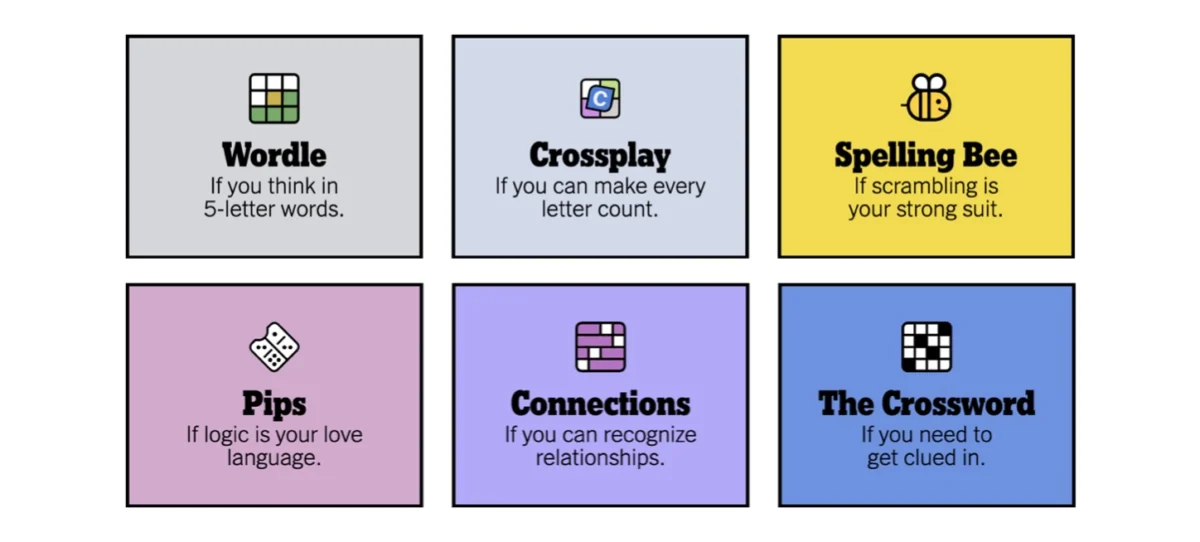
The trajectory of the platform changed permanently in January 2022, when the New York Times Company acquired Wordle, a simple five-letter word game created by software engineer Josh Wardle. At the time of the acquisition, Wordle had exploded from 90 daily players in November 2021 to millions of users just two months later. The acquisition, valued in the "low seven figures," signaled the NYT’s intention to transition from a news-primary organization to a multi-vertical lifestyle and utility brand. This strategy has since expanded to include Spelling Bee, a hexagonal word-association challenge; Connections, a categorical grouping puzzle; and most recently, Strands, a word-search variant.
Chronology of the NYT Games Expansion
The development of the NYT Games portfolio follows a precise timeline of strategic diversification:
- 1942: The New York Times Crossword is established to offer readers relief during WWII.
- 2014: The launch of "The Mini" Crossword, marking the beginning of the digital-first puzzle strategy.
- 2018: Spelling Bee is introduced as a digital game, quickly becoming a cult favorite for its "Genius" and "Queen Bee" ranking systems.
- January 2022: The acquisition of Wordle. This event served as the "top-of-funnel" driver, bringing millions of new users into the NYT ecosystem.
- June 2023: Connections is launched in beta. It quickly becomes the second-most played game in the suite, trailing only Wordle.
- 2024: Continued integration of Games with other NYT products like "Cooking," "Wirecutter," and "The Athletic," creating a bundled subscription value proposition.
The Economics of Engagement: Data and Market Performance
The success of the NYT Games suite is not merely a cultural phenomenon but a vital financial pillar for the New York Times Company. According to the company’s 2023 year-end financial reports, the New York Times reached a milestone of 10.36 million subscribers across its print and digital products. A significant portion of this growth is attributed to "bundle" subscribers—those who pay for access to News, Games, Cooking, and The Athletic simultaneously.
Internal data from the NYT indicates that users who engage with the Games app have significantly higher retention rates than those who only consume news. In a 2023 earnings call, NYT executives noted that the Games app was opened billions of times throughout the year. Wordle alone was played over 4.8 billion times in its first year under the NYT banner. This level of engagement is a critical metric in an era where traditional news organizations struggle with "news avoidance"—a trend where readers shy away from heavy or distressing headlines. Puzzles provide a "sticky" reason for users to open the app every morning, regardless of the news cycle.
A Contrast in Design: Mindfulness vs. Predatory Monetization
A primary driver for the migration toward NYT Games is the aesthetic and psychological contrast they provide compared to traditional mobile "Live Service" titles. Popular mobile games such as Candy Crush Saga, Pokémon Go, or various "gacha" style RPGs are built on "Variable Ratio Reinforcement" schedules—the same psychological mechanisms used in slot machines. These games often utilize "chiming cavalcades of sound," bright visual effects, and artificial scarcity to trigger dopamine releases and encourage in-app purchases.
In contrast, the NYT Games suite employs a philosophy of "neutral and soft" design. The animations are subtle—flipping tiles in Wordle or rotating hexagons in Spelling Bee. There are no timers, no "lives" to buy, and no aggressive push notifications urging the player to return for a limited-time event. This "disposable" nature of the games—the fact that they can be completed in five to ten minutes and then "forgotten" until the next day—is a deliberate design choice. It respects the user’s time, reducing the "pressure" to keep playing, which paradoxically fosters a more loyal, long-term habit.
Industry-Wide Implications and the "Puzzle Empire" Trend
The success of the NYT model has prompted a wave of imitation across the digital media landscape. Industry analysts have observed a "puzzle-fication" of news media as publishers seek to replicate the NYT’s retention success.
- The Atlantic: Recently expanded its puzzle section, aiming to create a "puzzle empire" that mirrors its high-brow editorial tone.
- LinkedIn: In 2024, the professional networking site introduced daily puzzles like Pinpoint, Queens, and Crossclimb, recognizing that professional users seek brief cognitive breaks during the workday.
- Vulture/New York Magazine: Introduced the "Telematrix" and "Cinematrix," targeting specific niches of pop-culture and film enthusiasts.
- Netflix: Though primarily a streaming service, Netflix has integrated mobile games into its subscription, including word and logic puzzles, to reduce churn.
This shift suggests that the future of digital subscriptions may rely less on exclusive "scoops" and more on providing daily utility and "low-intensity" entertainment that fits into a user’s morning or evening routine.
The Psychological Impact: Morning Stretches for the Brain
From a cognitive perspective, the appeal of word puzzles lies in their ability to provide a "controlled challenge." Psychologists suggest that the "daily jolt" provided by a puzzle like Spelling Bee or Connections helps users transition into a state of focus. Unlike the "infinite scroll" of social media platforms like TikTok or X (formerly Twitter), which often leaves users feeling drained or overstimulated, the "finite" nature of a daily puzzle provides a sense of closure and accomplishment.
The communal aspect of these games also plays a significant role. The ability to share Wordle scores or Connections grids via social media without spoiling the answer created a "digital watercooler" effect. This social validation, combined with the personal satisfaction of solving a "stinker" of a puzzle, reinforces the habit without the need for predatory monetization tactics.
Conclusion: The Future of the Digital Wrapper
As the New York Times Company moves toward its goal of 15 million subscribers by 2027, the Games division will remain a central component of its diversification strategy. The "wrapper" of the NYT Games app serves as a gateway to the broader brand. While critics argue that these games are a "time sink" designed to keep users tethered to a subscription, the user sentiment remains largely positive due to the perceived quality and "slower" pace of the experience.
The evolution of mobile gaming appears to be bifurcating: on one side, high-budget, high-engagement titles that demand hours of attention and financial investment; on the other, the "slight, straightforward" puzzles of the NYT variety that offer a brief, intellectual respite from the digital noise. For the modern consumer, the choice to replace a two-hour Candy Crush session with a ten-minute Spelling Bee challenge is more than just a change in gaming preference—it is an act of reclaiming digital agency in an increasingly all-consuming technological world. The New York Times has successfully positioned itself not just as a record of history, but as a necessary companion for the modern mind’s daily "morning stretches."
About the Author