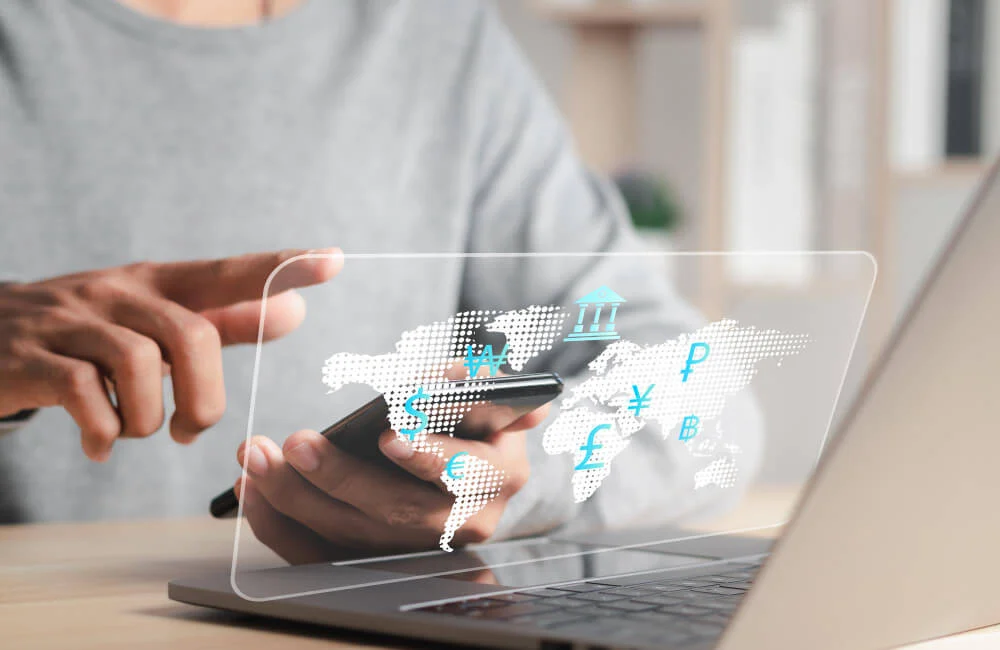
The digital age has granted video games unparalleled global reach, enabling a title to be distributed to 190 countries simultaneously with a single click. A player in Jakarta or Lagos can download the latest release at the exact moment a counterpart in Berlin does. Yet, this seamless digital distribution often masks a critical chasm: the ability to pay. When the default payment mechanism relies solely on credit or debit cards, a significant portion of the global player base, particularly in the most rapidly expanding markets, is effectively excluded from the purchasing ecosystem. This disconnect between content accessibility and transactional capability represents a substantial, yet often overlooked, barrier to revenue generation for game publishers worldwide.
The Unmet Potential: A Global Gaming Boom Constrained by Payment Gaps
The sheer scale of the global gaming market is staggering, with Newzoo projecting the worldwide player base to reach 3.6 billion by 2025. A dominant 3 billion of these players are on mobile platforms, underscoring mobile as the primary gateway for 83% of all gamers. Total industry revenue swelled to an impressive $188.8 billion. However, a critical analysis reveals a geographical imbalance in this spending. While North America and China collectively account for roughly half of all consumer expenditure on games, the remaining half is distributed across a myriad of markets where conventional payment infrastructure, primarily card-centric, is either nascent, less preferred, or non-existent.
This disparity is particularly acute in mobile-first regions—the very territories driving the fastest growth in player acquisition. Here, the traditional credit or debit card ownership is notably sparse. The players are present, their numbers are escalating at an unprecedented rate, yet the established payment pathways designed for Western markets fail to accommodate their local financial realities. The missing piece in this global puzzle is a localized payment layer that genuinely reflects how these diverse populations conduct their daily transactions.
The Limits of a Card-Only Checkout: An Outdated Assumption
A payment gateway that exclusively accepts credit or debit cards operates on a fundamental assumption: that every potential buyer possesses a card recognized and accepted by the game store. In vast swathes of the Asia-Pacific (APAC), Latin America (LATAM), Middle East, and Africa (MEA) regions, this assumption proves to be a critical flaw. Card penetration in these areas is often remarkably low, a legacy of historical banking infrastructure and cultural payment preferences. Furthermore, even where cards exist, cross-border transactions are frequently subjected to higher decline rates due to fraud prevention protocols, complex international banking regulations, or simply unfamiliarity with the issuing bank. Consequently, a player, regardless of their intense desire for a game, is rendered unable to complete a purchase if their payment method is not supported.
APAC alone is home to an astonishing 1.9 billion gamers, representing over half of the global player population. A publisher clinging to a card-only payment model inadvertently limits its addressable market to a mere fraction of this immense base—those few with an accepted card—and effectively surrenders the remainder to competitors who embrace a broader payment strategy. This isn’t merely a missed sale; it’s a forfeiture of substantial market share and future revenue potential.
The Evolution of Digital Payments: A Regional Chronology and Context
The landscape of digital payments has undergone a profound transformation, particularly in emerging economies, driven by the need for financial inclusion and convenience. This evolution has resulted in a diverse array of payment methods, each tailored to specific regional contexts and user behaviors.
-
Asia’s Wallet Revolution: China stands as a prime example of a "wallet-first" economy. Mobile wallets like Alipay and WeChat Pay are not just payment apps; they are integral to daily life, handling a dominant share of online and offline transactions, including a significant portion of game spending. Their rise began in the early 2010s, rapidly displacing cash and cards through aggressive user acquisition strategies and seamless integration into various services. Similarly, Southeast Asia has seen the ascendancy of local mobile wallets such as GCash in the Philippines, GrabPay across the region, and Touch ‘n Go in Malaysia. These platforms were meticulously designed for a demographic that largely bypassed traditional banking and credit card systems, building on the widespread adoption of smartphones. For publishers, supporting these entrenched methods means meeting players on their familiar financial ground, removing the friction that a foreign card checkout invariably introduces.
-
Latin America’s Instant Banking Leap: The Pix Phenomenon: Brazil’s Pix system, launched by the Central Bank of Brazil in November 2020, epitomizes a successful government-backed instant payment solution. This real-time bank transfer system allows money to move between accounts in seconds, 24/7, without transaction fees for individuals. Its adoption has been meteoric, quickly becoming a default payment method for Brazilians online and offline. Within two years of its launch, Pix surpassed credit and debit cards in transaction volume, demonstrating a powerful shift in consumer preference driven by speed, convenience, and cost-effectiveness. The system’s open API also facilitated rapid integration by businesses, making it ubiquitous.
-
India’s UPI: A Digital Public Good: India’s Unified Payments Interface (UPI), launched in 2016, is another groundbreaking real-time account-to-account network. Built as part of the "India Stack" initiative—a set of open APIs and digital public goods—UPI has democratized digital payments, enabling instant transfers via mobile apps linked to bank accounts. It handles an enormous volume of small-value transactions, reaching billions monthly, and has been instrumental in onboarding hundreds of millions of Indians into the digital economy. Its success lies in its simplicity, interoperability, and low transaction costs.
-
Africa’s Mobile Money Prowess: M-Pesa and Beyond: Across East Africa, services like M-Pesa (launched in Kenya in 2007) pioneered the concept of "mobile money." These platforms allow users to store, send, and receive money, and pay for goods and services directly from their phone balance, often without needing a traditional bank account. M-Pesa’s success story, built on a vast network of agents facilitating cash-in and cash-out, has inspired similar services across the continent, addressing the critical need for financial services in regions with low banking penetration. Mobile money accounts across Africa have expanded at double-digit annual rates, with global mobile money transaction value surpassing $1.40 trillion in early 2024.
-
Hybrid Models: Cash Vouchers and Local Direct Debits: Even in increasingly digital landscapes, cash retains its importance in certain regions. Parts of Latin America, for instance, still lean on cash vouchers (e.g., OXXO Pay in Mexico, Boleto Bancário in Brazil, although Pix is rapidly replacing Boleto). Here, a player can reserve an online purchase and complete the payment by presenting a barcode or reference number and paying with cash at a local convenience store or bank counter. This hybrid model bridges the digital divide for those without bank accounts or digital payment access. Similarly, localized direct debit systems, prevalent in parts of Europe and Asia, offer another non-card alternative for direct bank transfers.
A publisher that treats payment as a monolithic, global checkout solution fundamentally misunderstands and misses all of this regional nuance. The payment methods that drive conversion are invariably the ones players already use for their everyday needs—groceries, phone credit, utility bills—because they are familiar, trusted, and convenient.
Beyond the Method: The Crucial Role of Localized Pricing and Currency
While the payment method is paramount, two other variables significantly influence a purchase decision: price and currency. A game priced exclusively in US dollars and subjected to a foreign-exchange markup sends an implicit message to a player in Sao Paulo or Manila: "This store wasn’t designed for you." This friction can be a silent killer of sales.
The solution involves a multi-pronged approach:
- Displaying Local Currency: Presenting prices in the player’s native currency (e.g., Philippine Pesos, Brazilian Reais, Indian Rupees) immediately fosters a sense of trust and familiarity. It eliminates the mental calculation and uncertainty associated with foreign exchange rates.
- Regional Pricing Strategies: Beyond mere currency conversion, setting a price that aligns with local buying power is crucial. A $60 game, affordable in a high-income market, might be prohibitively expensive in an emerging economy. Regional pricing allows publishers to set competitive price points that resonate with local economic realities, often leading to higher sales volume and broader market penetration, even if per-unit revenue is lower.
- Local Charging: Processing the transaction through a local payment rail in the local currency avoids punitive foreign exchange fees and reduces the likelihood of transaction declines, further lowering friction.
These elements, when combined with a familiar payment method, collectively create a seamless and trustworthy checkout experience, significantly increasing the likelihood of a completed purchase.
Carrier Billing: Unlocking the Unbanked and Underbanked Opportunity
One specific payment solution, carrier billing (or direct carrier billing), addresses a unique and significant challenge: reaching the unbanked and underbanked populations. The World Bank estimates that 1.3 billion adults globally remain outside the formal banking system, lacking access to bank accounts, credit cards, or other traditional financial instruments. These individuals, however, almost universally possess mobile phones.
Carrier billing enables a player to authorize a purchase, with the charge subsequently appearing on their phone bill (for postpaid plans) or deducted directly from their prepaid mobile credit. This method requires no bank account, no credit card, and minimal personal data, making it incredibly accessible. It is particularly effective for microtransactions—common in free-to-play mobile games—where a $2 or $5 purchase might incur disproportionately high fees if processed via a credit card, eroding publisher margins.
The reach afforded by carrier billing is most impactful in regions where prepaid phone plans are ubiquitous and bank accounts are not, such as much of Southeast Asia, Africa, and parts of Latin America. For a free-to-play title heavily reliant on small, frequent in-app purchases, carrier billing transforms players who previously had no viable payment option into paying customers. Publishers who overlook carrier billing in these crucial markets are essentially leaving significant revenue on the table by failing to provide an accessible payment conduit.
Local Methods and the Conversion Curve: Quantifiable Impact
The integration of local payment methods isn’t just about expanding access; it demonstrably alters the conversion curve. When a checkout page presents a payment method that a player recognizes and trusts, displayed in their local currency, the rate of completed purchases dramatically increases. This phenomenon is rooted in psychological comfort and perceived security. Bank-transfer systems, cash vouchers paid at a neighborhood store, and direct account-to-account rails each remove common reasons for cart abandonment, such as distrust of foreign payment processors, fear of online card fraud, or simply the inconvenience of not having an accepted card readily available.
The compounding effect of this strategy is most pronounced in markets where card penetration is inherently low. In these regions, offering a local payment method isn’t merely an enhancement; it is the fundamental difference between a successful sale and no sale at all. A player encountering an unfamiliar, card-only checkout with no recognizable options is unlikely to seek out complex workarounds. More often than not, they will simply close the tab, and the publisher will remain unaware of the lost revenue opportunity.
The Fastest-Growing Markets: A Strategic Imperative
The trajectory of growth in the global gaming market has demonstrably shifted away from the historically saturated markets of North America, Western Europe, and developed East Asia. While Asia-Pacific continues to lead in absolute revenue at an estimated $87.6 billion, its pace of growth is moderating as key markets like China and Japan mature. In contrast, emerging regions are experiencing explosive expansion. Latin America recorded approximately 6% growth in 2025, while the Middle East and Africa surged by about 7% in the same period, significantly outpacing established territories.
This demographic and economic shift underscores the critical importance of localized payment strategies. The vast majority of new players joining the global gaming ecosystem are situated in precisely those markets where a card-only checkout model is least effective. Therefore, comprehensive payment coverage is no longer a peripheral consideration but a central pillar of any genuinely effective global reach strategy. The burgeoning mobile money accounts across Africa, expanding at a double-digit annual rate, and the trillions in transaction value processed by global mobile money services, provide tangible evidence of this fundamental shift.
Redefining "Reach": From Downloads to Revenue
Traditionally, "reach" in the digital content industry, including gaming, has often been quantified through marketing metrics such as downloads and installs. While these figures indicate potential audience size, they are ultimately insufficient. True reach, in the context of revenue generation, materializes only when players are not just able to access content but also possess the practical means to pay for it.
A publisher that exclusively offers card payments inherently caps its addressable market to the segment of players who own an accepted card. In the fastest-growing regions, this segment represents a minority, leaving the vast majority unable to transact. By diligently matching payment options to the unique financial ecosystem of each target market, publishers can dismantle this artificial cap. A game designed for global availability only achieves true global commercial success when every player, irrespective of their geographical location or banking status, is empowered with a convenient and trusted way to purchase content. The future of global gaming revenue hinges not just on innovative games, but on innovative payment solutions that bridge the divide between digital access and financial inclusion.
About the Author