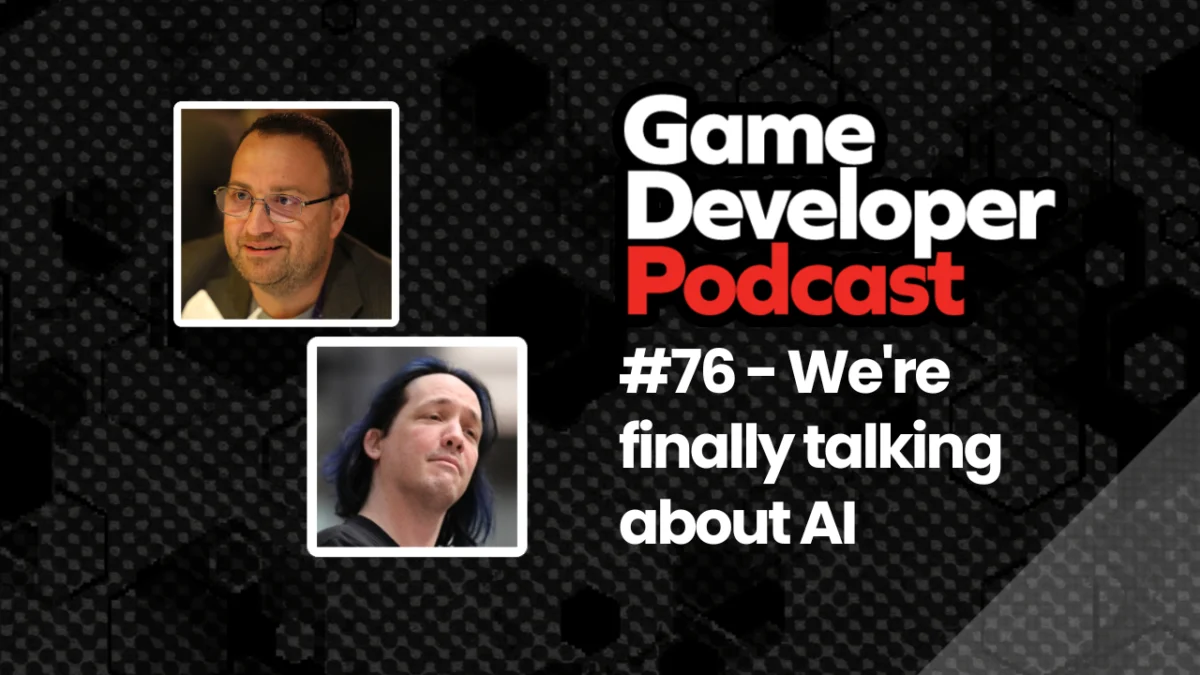
The burgeoning intersection of artificial intelligence and interactive entertainment presents a complex landscape, prompting critical discussions among industry veterans about the effective integration of cutting-edge AI into video game development. This pertinent question forms the bedrock of a recent episode of The Game Developer Podcast, featuring two prominent figures with deep expertise in the field: David "Rez" Graham, a former senior engineer at Maxis, and Dr. Luke Dicken, who previously served as the head of AI at Take-Two Interactive. While the broader tech world, particularly Silicon Valley, has only recently become captivated by the capabilities of large language models (LLMs), diffusion models, and other frontier AI technologies, Graham and Dicken have dedicated years to the practical application and theoretical underpinnings of AI within the unique ecosystem of game creation. Their conversation offers invaluable insights into discerning genuine value from ephemeral hype in the rapidly evolving AI space.
The Genesis of the Discussion: Bridging Decades of AI in Gaming with Current Trends
The Game Developer Podcast, known for its bi-weekly deep dives into the triumphs, catastrophes, and nuanced realities of game development, provided the ideal platform for this critical discourse. Hosted by senior editor Bryant Francis, with editing by Pierre Landriau and music by Mike Meehan, the podcast consistently aims to arm fellow developers with lessons and strategies to refine their craft. The episode featuring Graham and Dicken directly addresses the current fervor surrounding AI, juxtaposing it against their extensive careers spent building and refining intelligent systems for interactive experiences. Their discussion explores their personal journeys witnessing the evolution of AI, their enduring passion for its potential in video games, and crucially, how both AI enthusiasts and skeptics can anchor their understanding of AI’s utility without succumbing to the pervasive cycle of overblown expectations.
David "Rez" Graham’s tenure at Maxis, a studio synonymous with pioneering simulation games like SimCity and The Sims, positions him as a crucial voice in this conversation. Maxis games have historically relied on sophisticated AI to create believable, dynamic, and often emergent gameplay experiences. From managing complex city infrastructures in SimCity to guiding the intricate lives and social interactions of virtual characters in The Sims, AI has been the invisible engine driving the core gameplay loop. Graham’s experience spans eras where AI in games moved beyond simple state machines to encompass more nuanced decision-making, pathfinding, and behavioral simulations that contributed to the sandbox nature and replayability of these titles.
Similarly, Dr. Luke Dicken’s role as the head of AI at Take-Two Interactive places him at the forefront of developing artificial intelligence for some of the industry’s most graphically intensive and narratively rich AAA titles. Take-Two’s portfolio, which includes franchises like Grand Theft Auto, Red Dead Redemption, and BioShock, demands incredibly robust and immersive AI for non-player characters (NPCs), enemy behaviors, and dynamic world systems. Dicken’s work likely involved tackling challenges such as creating convincing crowd simulations, crafting intelligent adversaries that adapt to player strategies, and integrating AI into complex open-world environments where emergent interactions are paramount. Their combined experience offers a panoramic view of AI’s practical application, from the systemic complexities of simulation to the high-fidelity demands of cinematic action titles.
The "AI Boom" and Its Distinctions in Game Development
The recent "AI boom" that has captivated Silicon Valley is largely characterized by the rapid advancements and public availability of large language models (LLMs), diffusion models, and other "frontier models." LLMs, exemplified by technologies like OpenAI’s ChatGPT or Google’s Bard, are sophisticated neural networks trained on vast datasets of text, capable of generating human-like text, translating languages, writing different kinds of creative content, and answering questions in an informative way. Diffusion models, such as Midjourney or Stable Diffusion, specialize in generating high-quality images and other media from text prompts, revolutionizing areas like digital art and content creation. Frontier models represent the bleeding edge of AI research, often combining capabilities across different modalities (text, image, audio) and pushing towards more generalized artificial intelligence.
While these technologies have sparked widespread excitement and investment across various sectors, their immediate and effective integration into game development presents unique challenges and opportunities distinct from general-purpose applications. Game AI traditionally focuses on creating engaging, believable, and challenging interactive experiences within a constrained, real-time environment. This often involves techniques like finite state machines (FSMs), utility-based AI, goal-oriented action planning (GOAP), behavior trees, and machine learning algorithms specifically tailored for pathfinding, decision-making, and procedural content generation. The "AI boom" introduces powerful generative capabilities that could augment existing game AI, but also necessitates careful consideration of performance, control, and artistic integrity.
A Brief Chronology of AI in Gaming: From Ghosts to Generative Worlds
The history of artificial intelligence in video games is almost as old as the medium itself, evolving dramatically over decades.
- Early Beginnings (1970s-1980s): Initial game AI was rudimentary, often relying on simple rule-sets and pre-programmed patterns. Iconic examples include the ghost AI in Pac-Man (1980), where each ghost followed distinct, predictable patterns to chase or evade the player, or the enemy routines in Space Invaders (1978). These systems, while simple, provided foundational challenges and interaction.
- The Rise of Finite State Machines (1990s): As games grew more complex, so did their AI. Finite State Machines (FSMs) became a ubiquitous method for managing NPC behavior. An NPC might transition between states like "patrolling," "alert," "attacking," or "fleeing" based on environmental triggers or player actions. Games like Doom (1993) and Half-Life (1998) showcased increasingly complex FSMs that made enemies feel more responsive and dangerous.
- Emergent Behaviors and Utility AI (Late 1990s-Early 2000s): With games like The Sims (2000), AI took a leap into simulating complex social and daily life behaviors. Maxis, with figures like David Graham, pioneered systems where individual "Sims" had needs, desires, and personalities that drove emergent interactions. Utility AI, where agents evaluate various actions and choose the one with the highest "utility" score, became a powerful paradigm for creating more flexible and believable NPC decisions, seen in titles like F.E.A.R. (2005) with its acclaimed squad AI. Goal-Oriented Action Planning (GOAP) further allowed AI agents to plan sequences of actions to achieve specific goals.
- Sophisticated Pathfinding and Machine Learning (Mid-2000s-2010s): Open-world games and multiplayer experiences demanded more robust AI. Pathfinding algorithms, like A, became highly optimized to navigate complex 3D environments. Machine learning began to be explored for dynamic difficulty adjustment, player modeling, and even procedural content generation, though often in more subtle, behind-the-scenes capacities. Games like Grand Theft Auto V (2013) and Red Dead Redemption 2* (2018), under the guidance of experts like Dr. Luke Dicken, showcased highly realistic crowd simulations, adaptive enemy behaviors, and dynamic world interactions driven by sophisticated AI systems.
- The Generative AI Era (2020s and Beyond): The current "AI boom" marks a significant shift with the advent of large language models and diffusion models. These technologies promise to automate or assist in the creation of narrative content, dialogue, character backstories, quests, environmental assets, and even entire game prototypes. This new wave of AI aims not just to control existing game elements but to generate them, potentially democratizing content creation and enabling unprecedented levels of personalization and dynamism in games.
Distinguishing Value from Hype: A Critical Lens on New AI Technologies
A central theme of the podcast discussion revolves around the imperative for game developers to critically evaluate emerging AI technologies, separating genuinely valuable applications from mere hype. Graham and Dicken emphasize that while the capabilities of LLMs and diffusion models are undeniably impressive, their utility in game development must be assessed through a pragmatic lens.
-
Valuable Applications:
- Accelerated Content Creation: Generative AI can drastically reduce the time and resources required for creating assets like textures, concept art, 3D models (with further development), and placeholder content. This can free up artists and designers to focus on higher-level creative tasks.
- Dynamic Narrative and Dialogue: LLMs could power more reactive and personalized NPC dialogue, adapting to player choices and generating unique conversational branches, leading to more immersive storytelling. They could also assist writers in brainstorming plot points, character arcs, and quest descriptions.
- Procedural Level Design Augmentation: While procedural generation has existed for decades, generative AI could enhance it by creating more coherent, aesthetically pleasing, and play-tested levels or environments with less manual oversight.
- Enhanced Testing and QA: AI can be deployed to automatically playtest games, identify bugs, and analyze game balance more efficiently than human testers, simulating player behavior at scale.
- Personalized Player Experience: AI can analyze player behavior to dynamically adjust difficulty, recommend content, or even tailor game mechanics to individual playstyles, creating a uniquely personalized experience for each player.
- Tooling for Developers: AI-powered coding assistants, asset optimizers, and workflow automation tools can significantly boost developer productivity across various disciplines.
-
Empty Hype and Challenges:
- Computational Cost: Running complex LLMs or diffusion models in real-time within a game engine, especially on consumer hardware, can be prohibitively expensive in terms of processing power and memory.
- Lack of Control and Coherence: While generative AI can produce vast amounts of content, maintaining artistic vision, narrative consistency, and quality control can be challenging. AI-generated content can sometimes feel generic, nonsensical, or "off" without careful curation.
- Ethical and Legal Concerns: Issues surrounding intellectual property rights for AI-generated content, the ethical sourcing of training data, potential biases in AI outputs, and the impact on creative jobs are significant and unresolved.
- The "Uncanny Valley" Effect: For generative AI applied to characters or dialogue, there’s a risk of falling into the "uncanny valley," where content is almost human-like but subtly wrong, leading to player discomfort rather than immersion.
- Over-reliance and Loss of Creative Spark: A complete reliance on AI for content generation could stifle human creativity and lead to a homogenization of game experiences, making games feel less unique or handcrafted.
- The "Magic Bullet" Fallacy: The idea that AI can solve all development problems automatically is a dangerous oversimplification. AI is a tool, and like any tool, its effectiveness depends on the skill and intention of the user.
Statements and Reactions: An Industry in Flux
The broader game development community exhibits a mixed but generally optimistic outlook on the advent of generative AI, tempered by practical concerns. Many independent developers express excitement about the potential for AI to democratize content creation, allowing smaller teams to produce richer, more expansive games. Imagine a solo developer leveraging AI to generate hundreds of unique NPC dialogues or environmental textures, capabilities previously exclusive to large studios.
Conversely, established artists, writers, and animators often voice concerns about job security and the potential for AI to devalue human creative work. While few believe AI will fully replace human creativity, the shift in skillsets required and the potential for increased output with fewer personnel are real considerations. Developers are increasingly exploring how AI can serve as a co-creative partner or an efficiency tool rather than a replacement. Major studios are investing heavily in research and development, seeking to integrate AI into their pipelines for everything from automated testing to concept art generation, aiming to accelerate production cycles and reduce costs.
Academic researchers in AI, while impressed by recent advancements, often highlight the fundamental differences between research-grade AI and production-ready game AI. The need for real-time performance, determinism (in some cases), and tight control over artistic output presents a unique set of engineering challenges that require specialized solutions beyond off-the-shelf LLMs. Industry analysts, such as those at Newzoo or Statista, project significant growth in the AI in gaming market, citing increased investment in AI-driven tools and technologies, suggesting a long-term commitment from the industry to harness its potential.
Broader Impact and Implications for the Future of Gaming
The integration of advanced AI, particularly generative models, is poised to profoundly reshape the future of game development and the player experience.
- Shifting Development Paradigms: Game development teams may evolve, with new roles emerging for "AI prompt engineers," "AI content curators," and "AI ethics specialists." The emphasis could shift from manual content creation to designing systems that effectively leverage AI to generate and manage content. This could mean faster iteration cycles and the ability to experiment with more game mechanics.
- Revolutionized Player Experiences: Players could encounter games that are infinitely replayable, with dynamically generated narratives, procedurally evolving worlds, and NPCs that adapt to their specific playstyle in unprecedented ways. The dream of truly emergent gameplay, where every playthrough feels unique, could become a reality. Imagine an RPG where character quests and world events are tailored specifically to your actions and moral choices, generated on the fly.
- Democratization and Diversification: AI tools could lower the barrier to entry for aspiring game developers, enabling individuals or small teams to create ambitious projects that would previously require massive resources. This could lead to a greater diversity of games and innovative experiences from unexpected sources.
- Ethical and Regulatory Frameworks: The rapid adoption of AI will necessitate robust ethical guidelines and potentially new regulatory frameworks within the gaming industry. Questions surrounding data ownership, the responsible use of AI in content moderation, and the impact on the creative economy will require careful consideration and proactive solutions.
- New Gameplay Mechanics: AI itself could become a core gameplay mechanic, where players interact directly with generative AI systems within the game world, influencing its creation or evolution. This could open up entirely new genres and interactive possibilities.
The conversation between David "Rez" Graham and Dr. Luke Dicken on The Game Developer Podcast serves as a vital compass in navigating this complex landscape. Their shared wisdom underscores that while AI offers revolutionary potential, its true value in game development lies not in blindly adopting the latest trend, but in a deliberate, informed approach that prioritizes enhancing player experience, streamlining creative processes, and solving real development challenges with a clear understanding of both its capabilities and limitations. As the industry continues to grapple with the "AI boom," such seasoned perspectives are indispensable for guiding developers toward practical innovation and away from fleeting fads.
Game Developer and GDC Festival of Gaming are sibling organizations under Informa Festivals, further highlighting the podcast’s connection to broader industry events and its role in fostering professional dialogue within the game development community.
About the Author