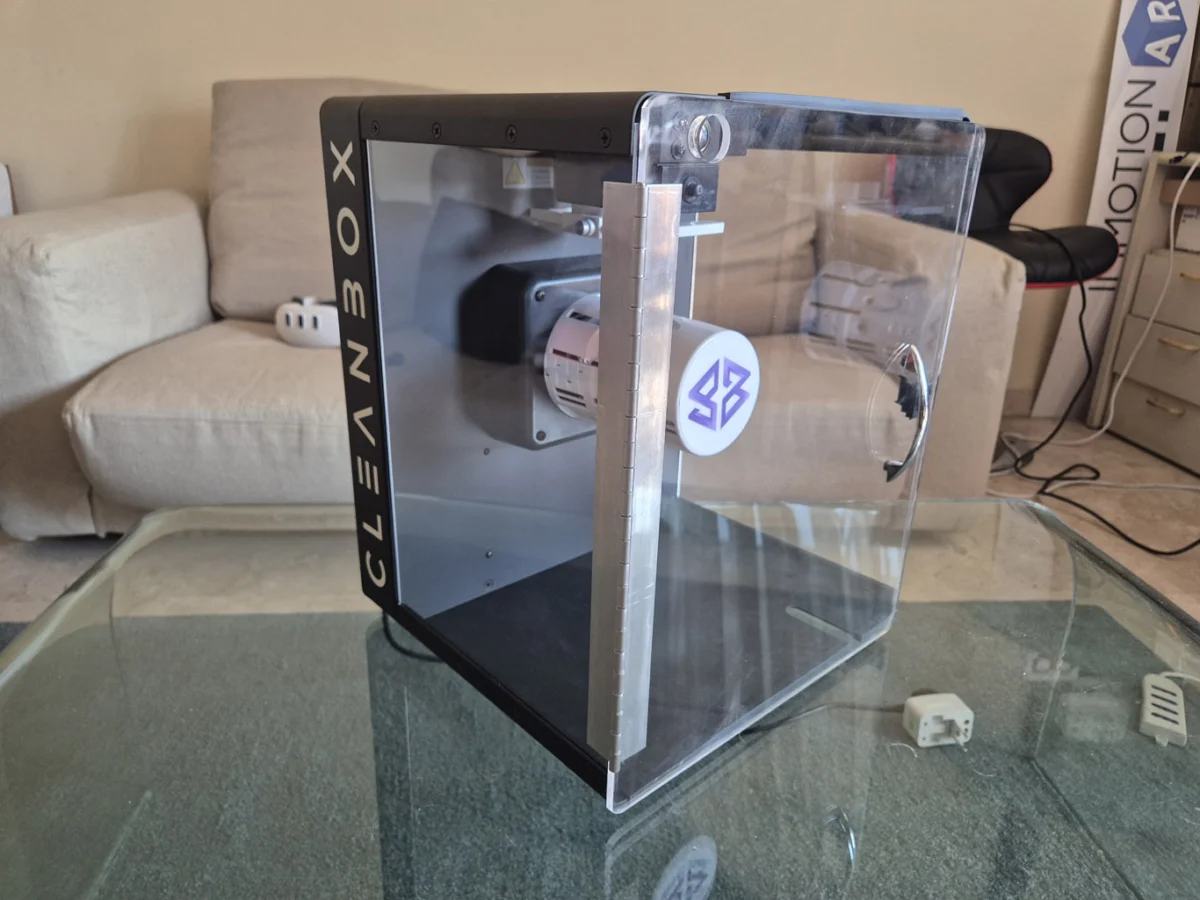
Meta Connect has traditionally served as the premier stage for unveiling the next generation of virtual and augmented reality hardware. However, as the industry moves toward wider enterprise adoption and more frequent public demonstrations, the logistical challenge of maintaining device hygiene has become a critical focal point for developers and exhibitors. Cleanbox Technology, a prominent American firm specializing in UVC-LED sanitization, utilized the recent Meta Connect event to introduce two new portable products: the Cleanbox Mini and the Cleanbox Nano. These devices represent a strategic shift for the company, expanding its portfolio from high-throughput industrial stations to compact, travel-ready solutions tailored for the evolving needs of the XR (Extended Reality) community.

The announcement, led by Cleanbox CEO Amy Hedrick, highlights a growing demand for sanitization tools that can be easily transported to client meetings, trade shows, and remote training sites. By miniaturizing their proprietary UVC-LED technology, Cleanbox aims to lower the barrier to entry for professional-grade hygiene, offering more affordable options without compromising the efficacy of the disinfection process.
The Evolution of XR Hygiene: From Industrial to Portable
Since its inception, Cleanbox has established itself as a market leader in the niche but vital sector of hardware sanitization. Its flagship product, the Cleanbox CX1, became the industry standard for high-traffic environments, such as location-based entertainment (LBE) centers and large-scale corporate training facilities. While the CX1 is lauded for its ability to process over 50 headsets per hour, its bulky form factor—often requiring dedicated transport solutions—limited its utility for independent developers and sales teams on the move.

The introduction of the Cleanbox Mini and Nano addresses this gap in the market. As XR hardware becomes more streamlined, the supporting infrastructure must follow suit. The new product line reflects a broader industry trend where portability is no longer an optional luxury but a functional requirement for professionals who operate outside of fixed laboratory or office environments.
Cleanbox Mini: High-Performance Sanitization for Standalone Headsets
The Cleanbox Mini is designed specifically for the current generation of standalone VR headsets, such as the Meta Quest 3 and Pico 4. Roughly the size of a standard headset carrying case, the Mini is engineered to fit within a traditional backpack, making it the most portable HMD (Head-Mounted Display) sanitization unit in the company’s history.

Despite its reduced footprint, the Mini maintains the core technical standards of the larger CX series. It utilizes medical-grade UVC-LEDs to achieve a 99.999% kill rate of viruses, bacteria, and fungi in a 60-second cycle. This rapid turnaround is essential for "demo-heavy" environments where a single headset may be shared among multiple stakeholders in a short period.
Technical Specifications and Pricing:

- Dimensions: Approximately the size of a standalone headset case.
- Weight: Optimized for backpack transport.
- Cycle Time: 60 seconds.
- Compatibility: Standard VR headsets and controllers.
- Power: Standard wall plug.
- Price: $799 USD.
- Availability: Pre-orders are currently open, with shipping scheduled for Q1 2027.
The $799 price point is particularly significant. At nearly one-third the cost of the CX1 (which retails for approximately $2,495), the Mini targets a broader demographic, including indie studios, educational institutions, and small-to-medium enterprises (SMEs) that require professional hygiene but lack the budget or space for industrial-grade equipment.
Cleanbox Nano: A Specialized Solution for the Smartglasses Era
While the Mini caters to the VR market, the Cleanbox Nano is a direct response to the surge in smartglasses and lightweight AR frames. With the recent success of the Ray-Ban Meta glasses and the unveiling of Meta’s "Orion" AR prototype, the industry is bracing for a future where wearable displays are as common as traditional eyewear.

The Cleanbox Nano is designed for ultra-portability; its form factor is small enough to be carried in a purse or a small laptop bag. Recognizing that smartglasses are often part of a larger wearable ecosystem, the Nano features dedicated internal holders for peripheral devices such as smart rings and smartwatches. This "all-in-one" approach allows users to sanitize their entire wearable suite simultaneously.
A standout feature of the Nano is its integrated battery system. Unlike previous models that required a constant tether to a power outlet, the Nano can perform at least 20 sanitization cycles on a single charge. This feature is specifically designed for field professionals and sales executives who may need to sanitize devices in environments where power outlets are not readily accessible.

Technical Specifications and Pricing:
- Form Factor: Ultra-compact (purse-sized).
- Cycle Time: 60 seconds.
- Integrated Battery: Supports 20+ cycles per charge.
- Internal Layout: Dedicated slots for glasses, a watch, and a ring.
- Price: $399 USD.
- Availability: Pre-orders are open, with shipping scheduled for Q1 2027.
Comparative Analysis: UVC-LED vs. Traditional Methods
The shift toward specialized UVC-LED sanitization boxes is driven by the limitations of traditional cleaning methods. For years, the standard procedure for cleaning XR hardware involved alcohol-based wipes. However, this method presents several risks:

- Lens Damage: Alcohol and other chemical agents can degrade the specialized coatings on VR/AR lenses over time, leading to blurriness or permanent scuffing.
- Incomplete Disinfection: Wipes are often unable to reach the porous surfaces of facial interfaces or the tight crevices around buttons and sensors.
- Environmental Waste: The high volume of disposable wipes used during trade shows contributes significantly to environmental waste.
UVC-LED technology, by contrast, is a non-contact method. It uses short-wavelength ultraviolet light to disrupt the DNA and RNA of microorganisms, rendering them unable to replicate. Because it does not involve liquids or friction, it is inherently safer for the sensitive optics and electronics found in modern XR hardware.
Market Implications and Enterprise Adoption
The launch of the Mini and Nano models arrives at a time when enterprise XR is maturing. In sectors such as healthcare, aviation, and manufacturing, hygiene is not merely a courtesy but a regulatory requirement. For example, in medical training simulations, the risk of cross-contamination is a primary concern for hospital administrators. The ability to provide a "clean-room" level of sanitization in a portable format could accelerate the deployment of XR training tools in these high-stakes environments.

Furthermore, the public’s sensitivity toward hygiene has remained elevated in the post-pandemic landscape. Trade show attendees are increasingly hesitant to wear hardware that has been handled by hundreds of previous users. By placing a visible, branded sanitization unit like the Cleanbox Mini at a demo station, exhibitors can instill confidence in their audience, potentially increasing the number of successful demonstrations performed during an event.
Chronology of Development and Future Outlook
The development of the Mini and Nano marks a new chapter in Cleanbox’s timeline. Following the release of the CX series in the late 2010s, the company focused on refining its "shadow-free" UVC delivery system, ensuring that light reaches every contoured surface of a headset. The transition to portable models began in earnest as the VR market moved away from tethered PC-VR systems toward the "all-in-one" mobile architecture popularized by the Quest series.

Looking ahead to the Q1 2027 shipping window, Cleanbox is positioning itself to be the primary hygiene partner for the next wave of AR hardware. As smartglasses become thinner and more integrated into daily life, the need for a "charging-style" sanitization box that sits on a nightstand or office desk becomes more apparent.
While the $399 and $799 price points remain higher than consumer-grade UV cleaners found on general e-commerce platforms, Cleanbox differentiates itself through lab-certified efficacy and a focus on the specific materials used in XR hardware. For the professional XR community, these new portable units offer a balance of logistical ease and medical-grade safety, ensuring that the "last mile" of hardware deployment remains as clean as the digital experiences themselves.
About the Author