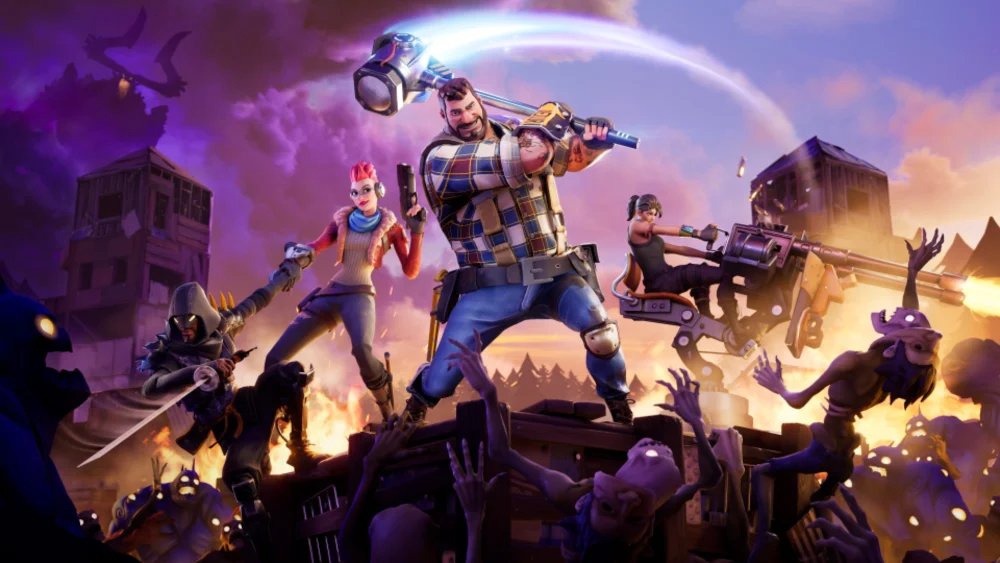
Epic Games has announced a significant shift for Fortnite’s original player-versus-environment (PvE) cooperative mode, Save the World, which is slated to become a free-to-play experience next month. This strategic move, which takes effect on April 16, marks a pivotal moment for the mode that predates the immensely popular Battle Royale and has historically remained a premium offering within the Fortnite ecosystem. The announcement arrives amidst a series of broader financial adjustments by Epic Games, including price increases for its in-game currencies, V-Bucks and Show-Bucks, across its major titles.
Save the World Embraces Free-to-Play Model
The transition of Save the World to a free-to-play model on April 16, 2024 (a date which, in some initial reports, notably from Epic’s own linked announcement, appeared as 2026, suggesting a potential typo now clarified by broader communications) will open up the game’s foundational experience to a vastly wider audience. This mode, where players team up to defend against waves of zombie-like creatures known as Husks, has been a paid experience since its initial launch. Epic Games is actively encouraging player engagement with this transition, offering in-game rewards for those who pre-register for the free-to-play launch. Furthermore, as a gesture of gratitude to its long-standing community, current players who have supported the mode, acknowledged for "the last nine years of holding back the horde," will receive an assortment of exclusive in-game items. This phrasing, while poetic, likely refers to the journey and development of the mode, which initially launched in July 2017.
This decision to make Save the World free comes after years of operating under a premium model, distinct from its free-to-play Battle Royale counterpart. For years, the mode subsisted on a commercial structure reliant on microtransactions, a common practice for paid games in the early access phase. In 2020, Epic Games officially concluded the early access period for Save the World, designating it a full release. However, unlike Battle Royale, which swiftly adopted a free-to-play model upon its standalone release and skyrocketed to global fame, Save the World continued to be a premium title, requiring an upfront purchase or inclusion in certain Fortnite bundles. This distinction created a segmented player base within the broader Fortnite universe, a barrier that the upcoming free-to-play conversion aims to dismantle.
A Decade of Horde-Holding: The Journey of Save the World
The history of Fortnite is deeply intertwined with Save the World. When Epic Games first unveiled Fortnite in 2011, it was envisioned as a cooperative survival game where players would construct forts and defend against monstrous hordes. After a prolonged development period, Save the World officially launched into paid early access on July 25, 2017, for PlayStation 4, Xbox One, macOS, and Windows. Players purchased "Founder’s Packs" to gain access, with the promise of eventually transitioning to a free-to-play model.
However, just two months later, in September 2017, Epic Games introduced Fortnite Battle Royale as a separate, free-to-play mode. This decision was largely influenced by the burgeoning popularity of the battle royale genre, spearheaded by titles like PlayerUnknown’s Battlegrounds. Battle Royale quickly overshadowed Save the World, attracting hundreds of millions of players worldwide and becoming a cultural phenomenon. Its accessible free-to-play model, combined with continuous updates, crossovers, and a highly engaging competitive scene, established Fortnite as a dominant force in the gaming industry.
Despite the immense success of Battle Royale, Save the World maintained a dedicated, albeit smaller, community. Its unique blend of tower defense, base building, and third-person shooter mechanics offered a distinct experience. When Epic officially ended Save the World‘s early access phase in June 2020, many expected it to finally embrace the free-to-play model as originally intended. Instead, Epic confirmed that the mode would remain a premium experience, available for purchase, citing that development for the core mode would continue at a slower pace than Battle Royale. This decision was met with mixed reactions, with some founders feeling a sense of betrayal given the initial promise of a free-to-play future. The upcoming change on April 16, 2024, finally fulfills that long-standing expectation, potentially breathing new life into the mode and its community.
Strategic Monetization Shifts: V-Bucks and Show-Bucks Price Increases
The decision to make Save the World free-to-play comes at a time when Epic Games is also implementing significant changes to its in-game economies. Just a day prior to the Save the World announcement, Epic revealed a price increase for V-Bucks, the primary in-game currency across the Fortnite ecosystem. Effective March 19, 2024, coinciding with the launch of the next Fortnite season, players will receive fewer V-Bucks for the same amount of real-world money.
Epic Games attributed these price adjustments to the need to "help pay the bills," a statement that has resonated across the gaming community amidst rising development costs, global inflation, and competitive market pressures. This sentiment reflects a broader trend in the video game industry, where studios are increasingly facing higher operational expenses. For Fortnite players, this means a tangible reduction in purchasing power for cosmetic items, Battle Passes, and other in-game content that V-Bucks unlock. The impact is particularly felt by players who regularly invest in the game, as their recurring spending will now yield less digital currency.
Beyond Fortnite, Epic Games is extending these price adjustments to other titles within its portfolio. Fall Guys, the popular battle royale-style party game developed by Tonic Games Group (which Epic acquired in March 2021), will also see a price increase for its in-game currency, Show-Bucks, starting April 8, 2024. These parallel adjustments underscore a company-wide strategy to recalibrate monetization in response to economic realities, impacting millions of players across multiple popular titles.
.png?disable=upscale&width=1200&height=630&fit=crop)
Mitigating Measures: The Epic Rewards Program and Founder Benefits
To soften the impact of these price increases and foster continued player loyalty, Epic Games has introduced several mitigating measures. The Epic Rewards program is a key initiative, offering players a 20 percent credit back on eligible V-Bucks purchases. This credit can then be utilized across the Epic Games ecosystem, including within Fortnite, other Epic Games titles, or on the Epic Games Store for various games and content. This program effectively provides a form of cashback, potentially encouraging players to keep their spending within Epic’s storefronts and titles, thereby creating a more closed and self-sustaining economic loop. While not a direct rollback of the price increase, it aims to provide added value for consistent spenders. Importantly, V-Bucks gift cards purchased prior to the price changes will still be honored at their original stated value, providing a grace period for those with existing balances.
Furthermore, Epic Games has provided crucial clarification regarding the Save the World Founders – those players who paid for early access or purchased the premium mode. These Founders will retain their ability to earn V-Bucks through various in-game activities, including daily quests, mission alerts, Storm Shield Defense missions, and existing challenges. This is a significant concession, as V-Bucks earning was a core benefit of Founder status and a point of contention when the mode remained paid in 2020. This ensures that the most dedicated and early supporters of Save the World are not penalized by the free-to-play transition and can continue to accumulate premium currency without additional real-world expenditure, maintaining a unique value proposition for their initial investment. This move is designed to acknowledge and reward the loyalty of the mode’s original player base.
The Broader Epic Games Ecosystem: Recent Developments and Legal Battles
These strategic shifts in Fortnite‘s monetization and accessibility occur within a dynamic period for Epic Games, marked by both innovation and ongoing legal challenges. The company is currently engaged in legal action against a former contractor, alleging the unauthorized leaking of unreleased Fortnite content across social media platforms. Such lawsuits underscore the intense scrutiny and value placed on intellectual property and proprietary information within the competitive gaming industry, particularly for a title as culturally significant as Fortnite.
Concurrently, Epic is actively expanding Fortnite‘s reach and commercial potential through new initiatives, such as the Fortnite Collab program. This program leverages the game’s immense "marketing power" to forge partnerships with major developers and publishers like Capcom and miHoYo, integrating their intellectual properties into the Fortnite universe. These collaborations, often featuring character skins, emotes, and themed events, serve to bolster store sales and attract diverse fan bases, reinforcing Fortnite as a premier platform for cultural convergence and brand promotion.
On the legal front, Epic Games continues its protracted antitrust battle with Google. A federal judge in California recently cast doubts on the proposed settlement terms in November of last year, indicating that the legal complexities surrounding app store policies and market dominance remain unresolved. This ongoing legal saga highlights Epic’s commitment to challenging established digital storefront practices, advocating for what it perceives as a more open and equitable ecosystem for developers. These various developments collectively paint a picture of an Epic Games that is simultaneously optimizing its internal economies, protecting its assets, expanding its collaborative reach, and fighting for its vision of the digital marketplace.
Implications for Players and the Industry
The decision to make Save the World free-to-play carries significant implications for both Fortnite players and the wider gaming industry. For Save the World itself, the move is expected to trigger a substantial influx of new players. Millions of Fortnite Battle Royale players who never ventured into the premium PvE mode now have free access, potentially revitalizing the game’s community, shortening queue times, and increasing overall engagement. This could also lead to renewed development focus on Save the World content, as a larger active player base might justify greater resource allocation from Epic. The mode could benefit from cross-promotion within the Fortnite launcher, allowing for seamless transitions between the two experiences and potentially converting Battle Royale players into long-term Save the World enthusiasts.
From a broader Fortnite ecosystem perspective, this move unifies the game’s core offerings under a singular, accessible banner. It eliminates the barrier to entry for the original Fortnite experience, creating a more cohesive brand identity. Strategically, it allows Epic Games to leverage the full breadth of the Fortnite intellectual property, potentially integrating elements or narratives from Save the World more deeply into the Battle Royale lore or future game modes.
Financially, the free-to-play model for Save the World, combined with increased V-Bucks prices, represents a delicate balancing act for Epic Games. By removing the upfront cost of Save the World, Epic aims to dramatically expand its player base, which could translate into increased microtransaction revenue as more players engage with the game and potentially purchase cosmetic items or other enhancements. Simultaneously, the price increases for V-Bucks and Show-Bucks are a direct measure to boost average revenue per user (ARPU) and address the "bills" Epic mentioned. The success of this strategy hinges on whether the expanded player base and the Epic Rewards program can offset any potential decrease in individual player spending due to higher currency costs, all while maintaining player satisfaction and loyalty.
For the gaming industry, Epic’s moves underscore the evolving landscape of live-service games and monetization. The enduring power of the free-to-play model, even for older titles, remains a strong growth driver. Epic’s willingness to adjust pricing and implement reward programs reflects the constant iteration required to sustain large-scale online games in a competitive market. As digital economies continue to mature, the interplay between accessibility, value, and revenue generation will remain a critical challenge for developers and publishers alike. The upcoming months will provide key insights into how these strategic adjustments impact Fortnite‘s trajectory and Epic Games’ broader financial health.
About the Author