The Game Developers Conference (GDC) has long served as the primary bellwether for the health, direction, and morale of the global interactive entertainment industry. As the 2026 iteration of the event unfolds at the Moscone Center in San Francisco, the physical and strategic shifts within the conference reflect a broader transformation in how software creators, hardware manufacturers, and service providers interact. This year’s event, officially rebranded as a "Festival of Gaming," highlights a significant departure from the sprawling, hardware-heavy trade shows of the previous decade. With a consolidated show floor and a notable shift toward satellite events and private networking, GDC 2026 illustrates an industry in a state of cautious recalibration following years of economic volatility and shifting corporate priorities.

The Physical Footprint and the "Festival" Pivot
The most immediate observation for long-term attendees of GDC 2026 is the reduction in the conference’s physical footprint within the Moscone Center. Traditionally, the event occupied both the North and South Halls, with the North Hall often serving as an overflow for massive booths from engine providers and platform holders. This year, the "Festival Hall"—the new designation for the exhibition space—is contained entirely within the South Hall. While the density of attendees remained stable during the initial days of the week, the opening of the show floor on Wednesday confirmed that the exhibition area is significantly smaller and less crowded than in years past.
This consolidation is not merely a logistical choice but a strategic one by the organizers. By adopting the "Festival of Gaming" moniker, GDC has expanded its reach into the surrounding Yerba Buena Gardens and the Yerba Buena Center for the Arts. These areas now host food stalls, outdoor entertainment, and satellite sessions, creating a more distributed experience. This shift mirrors a broader trend in the events industry where "fringe" activities and informal networking are increasingly prioritized over traditional booth-bound interactions.

The Absence of Engine Giants and the Rise of Service Providers
For the third consecutive year, the industry’s two dominant engine providers, Epic Games and Unity, have opted out of maintaining a major presence on the main show floor. While Epic Games continues to host "behind-closed-doors" meetings and private showcases in nearby venues, their absence from the South Hall signifies a shift in how these companies view the return on investment for massive, public-facing booths.
In the vacuum left by the engine giants, service-oriented companies and infrastructure providers have secured prime real estate. Servers.com has taken over the prestigious "front-and-center" position at the base of the South Hall escalators, a spot historically reserved for the industry’s most influential platform holders. Adjacent to them, Xsolla—a global video game commerce company—maintains a high-visibility presence, underscoring the industry’s current focus on monetization, backend stability, and cross-platform publishing solutions.

Corporate Strategy and Presence: Tencent, Meta, and Xbox
Despite the general trend toward smaller booths, several industry titans continue to invest heavily in a physical presence. Tencent currently occupies what appears to be the largest booth on the floor, signaling the Chinese conglomerate’s ongoing commitment to establishing a dominant footprint in Western development circles.
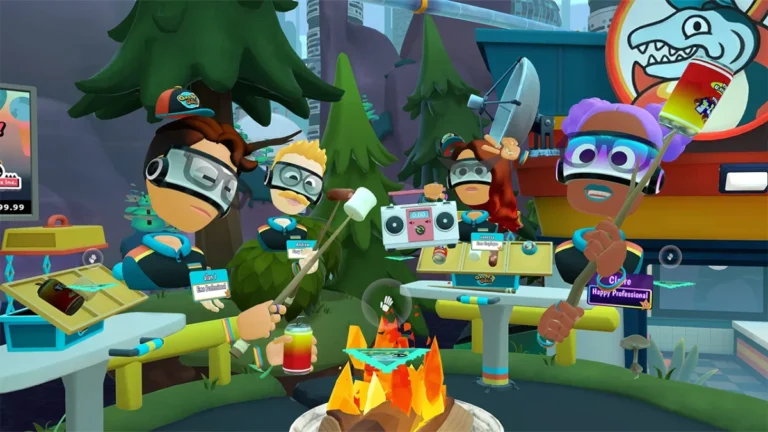
Meta also maintains a significant presence, specifically focusing on the Meta Quest ecosystem. This comes at a curious time for the company, following a series of high-profile layoffs within its Reality Labs division and a broader corporate pivot toward artificial intelligence. The decision to maintain a large GDC booth suggests that Meta remains committed to its VR/AR hardware roadmap, seeking to reassure the developer community of the long-term viability of the Quest platform.

Xbox has taken a multifaceted approach to GDC 2026. Rather than a traditional closed booth, the company sponsors a central "Xbox Cafe" area on the show floor, featuring demo stations for the ROG Ally and titles such as Gears of War Reloaded. This is supplemented by a dedicated business space on the upper levels of the South Hall. The branding for Xbox has also evolved; whereas 2025 focused on the "This is an Xbox" tagline—emphasizing its ecosystem across devices—the 2026 mantra is "Build for what’s next," a forward-looking appeal to developers navigating the transition to next-generation cloud and AI-integrated gaming.
The International Contingent and Economic Pressures
A recurring theme of GDC 2026 is the impact of global economic pressures and geopolitical concerns on international attendance. Prior to the event, industry analysts expressed concerns that high travel costs and safety fears regarding San Francisco would deter visitors from Europe and Asia. While the halls did not feel "drastically down" in terms of foot traffic during the early sessions, the reduced number of international booths suggests that many smaller studios and trade bodies have scaled back their delegations.

Despite these hurdles, several national trade bodies have maintained a strong presence. Brazil, Italy, Spain, and Pakistan have established some of the most notable pavilions on the floor, providing a centralized hub for independent developers from those regions to seek publishing and distribution partners. Germany and Wales also have a presence, though their booths are more scattered throughout the hall rather than concentrated in a single "international zone."
Specialized Technology: AI, Blockchain, and VR
The discrepancy between market valuation and show floor presence is perhaps most visible at the Nvidia booth. Despite Nvidia’s record-breaking share price and its role as the primary architect of the current AI revolution, the company maintains a relatively modest booth. This reflects a trend where hardware and chip manufacturers often prefer technical sessions and developer workshops over flashy exhibition displays.

In contrast, the blockchain gaming sector has seen a massive contraction. Nexus Cross stands as one of the few—if not the only—major blockchain-focused firms with a significant booth. Their flashy presence in a central area suggests a strategy of "last man standing," attempting to capture the remaining developer interest in Web3 technologies after the broader market cooled significantly over the last 24 months.
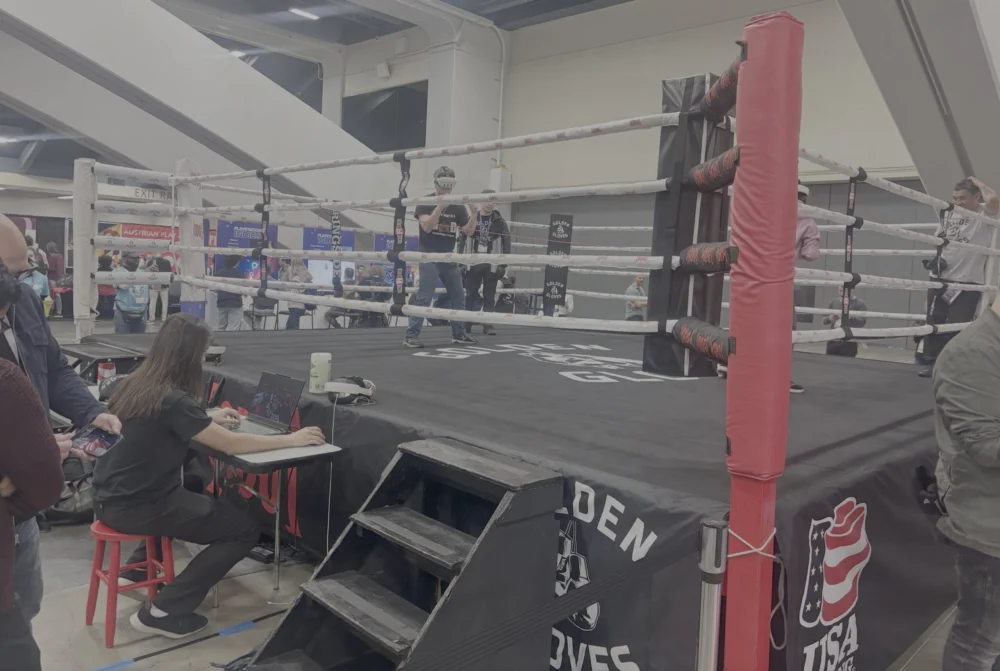
The creative heart of the conference remains the Independent Games Festival (IGF) and the various experimental controller areas. One of the most striking displays this year is Golden Gloves, a VR boxing title that utilizes a full-sized physical boxing ring to demonstrate its immersive capabilities. Other experimental entries include Patchwork, a medical-themed game, and a title controlled via a large inflatable ball, proving that the spirit of hardware and software innovation remains a core component of the GDC experience.

The "Badge-less" GDC and the Rise of the Metreon
A growing phenomenon at GDC 2026 is the "badge-less" attendee. A significant portion of the professionals in the Yerba Buena district this week are not registered for the conference itself. Instead, they are utilizing nearby hotels, cafes, and public spaces to conduct business. This "fringe" GDC has become so large that it arguably rivals the official event in terms of high-level deal-making.
Major players are also moving their operations off-site. Amazon Web Services (AWS), while absent from the show floor, has secured extensive space at the nearby Metreon complex. This mirrors a move made by Netflix in 2025, which used the same venue for media showcases. By moving off-site, companies can curate their environment and control their audience more effectively than they can within the crowded South Hall.

Implications for the Future of Game Development
The shift observed at GDC 2026 carries several implications for the future of the industry:
- Cost-Efficiency over Spectacle: The absence of massive booths from companies like Epic and Unity suggests that the era of "booth wars" is largely over. Companies are now prioritizing targeted networking and private meetings over general brand awareness.
- Focus on Sustainability: The "Build for what’s next" messaging from Microsoft and the presence of diverse international trade bodies highlight an industry looking for sustainable growth models following the post-pandemic market correction.
- The Decentralization of Professional Events: As more business moves to satellite locations and "badge-less" networking, the organizers of GDC face the challenge of proving the value of the expensive "All-Access" pass. The pivot to a "Festival" model is a direct response to this, attempting to turn the entire neighborhood into a value-add for attendees.
- Hardware Maturation: The modest presence of VR (outside of Meta) and the consolidation of blockchain suggests that the industry is entering a "show me" phase for new technologies, where practical application and developer revenue are prioritized over speculative hype.
As GDC 2026 concludes, the narrative is one of an industry that is maturing and becoming more pragmatic. While the show floor may be smaller, the level of professional activity in and around the Moscone Center remains high. The transition from a traditional trade show to a "Festival of Gaming" marks a new chapter for GDC—one that acknowledges that in 2026, the most important conversations often happen outside the exhibition hall.
About the Author