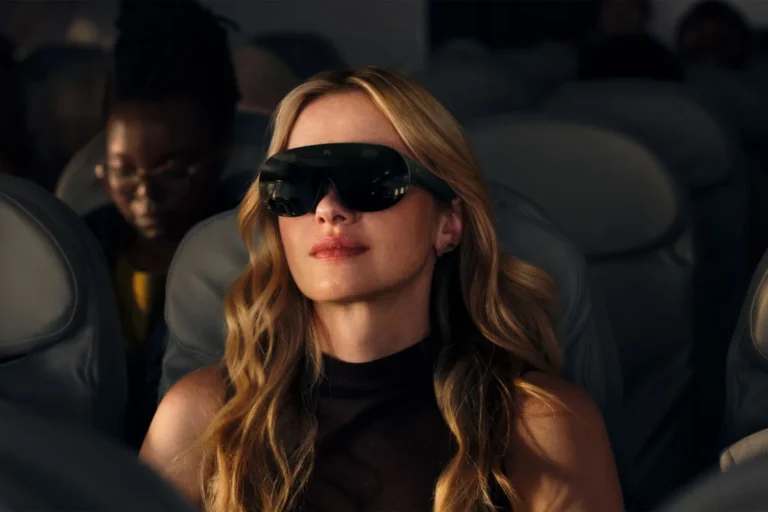
The landscape of wearable technology is undergoing a significant shift as Google and Samsung, in partnership with Qualcomm, move closer to the commercial release of their collaborative extended reality (XR) hardware. During the recent Augmented World Expo (AWE), technical demonstrations of prototype Android XR smartglasses provided the most detailed look yet at the software ecosystem and user experience (UX) intended to compete with Meta’s Ray-Ban smartglasses and Apple’s Vision Pro. These prototypes, which were previously teased during the Google I/O keynote, represent a strategic pivot for Google as it seeks to establish Android XR as the standard operating system for the next generation of spatial computing devices.
The Tripartite Strategic Partnership and Development Timeline
The development of these smartglasses is the result of a high-level collaboration first announced in February 2023. This "dream team" of industry leaders—Samsung providing the hardware manufacturing and display technology, Google developing the Android XR operating system and Gemini AI, and Qualcomm supplying the Snapdragon AR2 Gen 1 or similar specialized silicon—aims to create an ecosystem that rivals Meta’s Horizon OS.

The timeline of this project reflects a calculated approach to the market:
- February 2023: Samsung, Google, and Qualcomm officially announce a partnership to build an "XR ecosystem."
- Late 2023: Reports surface regarding "Project Moohan," the internal codename for the Samsung-led headset and glasses project.
- May 2024: Google I/O features a video demonstration of multimodal AI capabilities on a prototype glasses form factor.
- June 2024: Public hands-on demonstrations at AWE allow industry experts to verify the functionality of the Android XR interface on physical prototype hardware.
While the specific commercial release date remains unconfirmed, industry analysts suggest a late 2024 or early 2025 launch, potentially coinciding with Samsung’s "Unpacked" events.
Hardware Specifications and Prototype Design
The prototype units showcased at AWE are not intended for retail sale but serve as a reference design for developers and partner eyewear companies. Reports from the event describe the glasses as featuring a frame slightly thicker than traditional eyewear, housing a suite of sensors including a front-facing camera and a prominent privacy LED indicator that illuminates when the camera is active.

A critical hardware distinction in these prototypes is the use of a monocular display. Unlike binocular systems that project images to both eyes, this prototype utilizes a single-eye display system. While this design keeps the hardware lightweight and reduces power consumption, initial feedback from testers noted a "stereo mismatch" sensation, where the brain struggles to reconcile the digital overlay in one eye with the natural view in the other.
The audio system consists of integrated open-ear speakers. Testing in high-ambient-noise environments, such as a crowded convention floor, indicated that the directional audio is sufficiently calibrated for voice assistant interactions and music playback. The microphone array is similarly optimized for the "Always-on" Gemini AI, designed to isolate the wearer’s voice from background noise.
Android XR User Interface and Gemini AI Integration
The core value proposition of the Google-Samsung glasses lies in the software. Android XR introduces a specialized UX designed to minimize "visual clutter"—a common criticism of early AR devices.

Multimodal AI with Gemini
The integration of Gemini AI allows for multimodal interaction, meaning the glasses can "see" what the user sees and provide context-aware information. During demonstrations, the AI successfully identified objects on a table, such as books and restaurant menus.
- Contextual Reasoning: When asked to translate an Italian menu, the AI correctly identified that the text was already in the target language or provided real-time English overlays.
- Technical Limitations: The demonstration also highlighted the current state of Large Language Models (LLMs). In one instance, when asked for vegetarian options from a menu, the AI suggested a beef-based dish (carpaccio), illustrating that while the glasses are functional, "AI hallucinations" remain a factor in real-world applications.
Text Placement and Readability
Following Google’s recently published XR design guidelines, the text transcription for AI responses and translations is positioned in the lower third of the display. This ensures that the user’s central line of sight remains unobstructed, a safety and usability feature essential for outdoor use. The text, while small, is high-resolution and remains legible under various lighting conditions.
Innovative Navigation and Interaction Models
One of the most praised features of the Android XR prototype is its "context-aware" navigation system. The interface utilizes the glasses’ inertial measurement units (IMUs) to change the display based on head orientation:

- Forward-Looking Mode: When the user looks straight ahead, the display shows simplified directional arrows and distance markers.
- Down-Looking Mode: When the user tilts their head down—mimicking the natural gesture of checking a smartphone—the interface automatically transitions to a top-down 2D map of the surrounding area.
This transition occurs without manual input, representing a significant advancement in intuitive UX design for wearables. Interaction with the OS is primarily handled through a capacitive touch strip on the temple of the glasses, allowing for swipes and taps to control volume, playback, and menu navigation.
Market Implications and Competitive Analysis
The entry of Android XR into the smartglasses market sets the stage for a direct confrontation with Meta. Meta’s Ray-Ban smartglasses have seen unexpected commercial success, largely due to their stylish form factor and AI "Look and Tell" features, despite lacking a heads-up display (HUD).
Google and Samsung’s approach differs by including a display, positioning their product between Meta’s display-less glasses and high-end mixed reality headsets. By leveraging the existing Android ecosystem, Google can offer seamless integration with Google Maps, YouTube Music, and Google Translate, providing a utility-first experience that may appeal to professional and enterprise users.

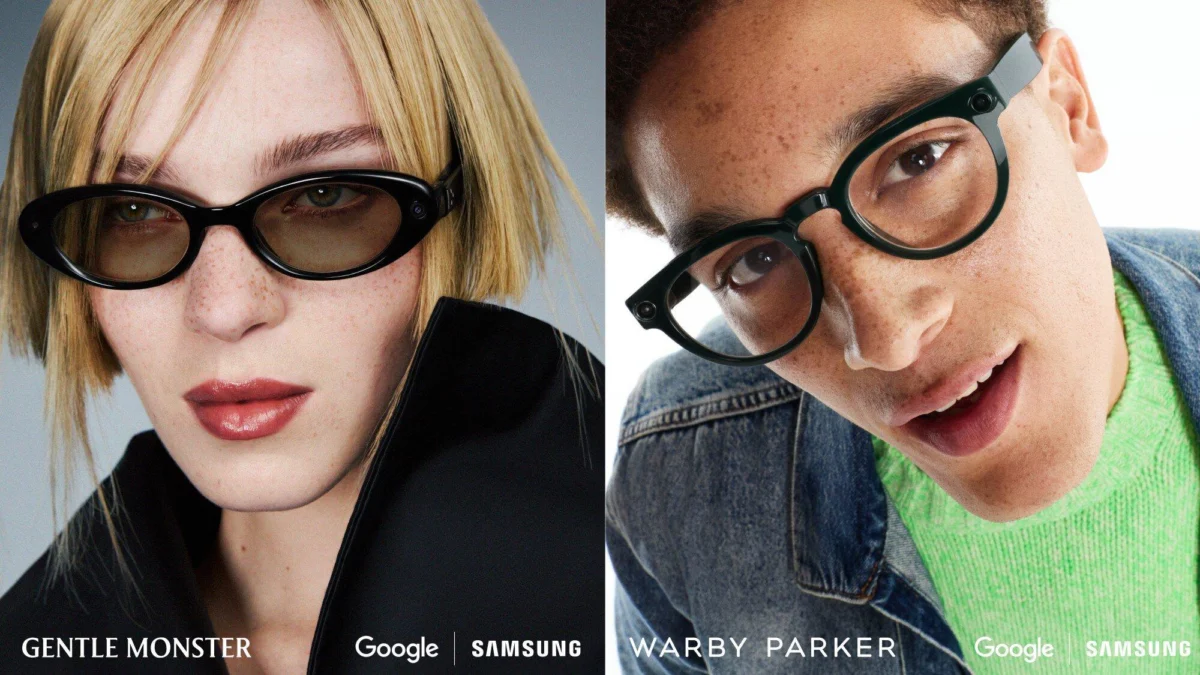
Furthermore, Google is reportedly in talks with major eyewear conglomerates, including Gentle Monster and Luxottica-competitors like Kering Eyewear and Warby Parker. This suggests a strategy to prioritize aesthetics and fashion, addressing the "social acceptability" hurdle that hampered the original Google Glass a decade ago.
Industry Outlook
While the AWE demonstrations were highly scripted, they confirm that the Android XR platform is mature enough for hardware integration. The success of the final product will likely depend on three factors: battery life, thermal management in the slim frames, and the price point relative to Meta’s $299 entry price.
As the industry moves toward a "post-smartphone" era, the Google-Samsung-Qualcomm alliance represents a formidable attempt to reclaim the lead in mobile innovation. The shift from bulky headsets to "thick" glasses suggests that the industry is converging on a form factor that consumers might finally be willing to wear throughout the day. Official announcements regarding consumer availability are expected in the coming months as Samsung prepares to finalize its hardware design for a global rollout.
About the Author