The Augmented World Expo (AWE) recently served as the staging ground for a significant milestone in the evolution of wearable technology, as Google showcased its latest prototype of Android XR-powered smartglasses. Developed in a high-profile partnership with Samsung and Qualcomm, these glasses represent Google’s renewed attempt to establish a dominant operating system for the next generation of spatial computing. While the devices displayed at the Qualcomm booth were internal prototypes rather than final consumer products, they provided the most comprehensive look yet at the user experience (UX) and artificial intelligence capabilities that Google intends to bring to the head-worn wearables market.
Strategic Context: The Google-Samsung-Qualcomm Alliance
The development of these smartglasses is part of a broader strategic initiative first announced at Google I/O. Following the industry-wide shift toward spatial computing—accelerated by the release of the Apple Vision Pro and the success of the Ray-Ban Meta glasses—Google has pivoted to create "Android XR," a dedicated version of its mobile operating system optimized for augmented and virtual reality.

This hardware-software trifecta involves Samsung handling the manufacturing and hardware design, Qualcomm providing the specialized silicon (likely the Snapdragon AR2 Gen 1 or a successor), and Google delivering the software ecosystem and AI backbone. The prototype revealed at AWE serves as a reference design, demonstrating how Android XR handles multimodal inputs, real-time data processing, and visual overlays in a form factor that closely resembles traditional eyewear.
Hardware Specifications and Design Philosophy
The prototype glasses exhibited at AWE maintain a design language focused on social acceptability, mimicking the appearance of thick-rimmed prescription glasses. Key hardware features observed during the demonstration included:
- Integrated Sensors: A front-facing camera is paired with a visible privacy LED that illuminates when the camera is active, addressing long-standing privacy concerns associated with wearable recording devices.
- Audio and Voice: The frames house integrated spatial speakers and a high-sensitivity microphone array designed to isolate the wearer’s voice from ambient noise, a necessity for the noisy environments common in urban navigation and trade shows.
- Monocular Display: Unlike high-end mixed reality headsets that use binocular displays for depth perception, this prototype utilizes a monocular color display. While this reduces the device’s weight and power consumption, observers noted that it requires a brief period of visual adjustment to avoid eye strain.
- Haptic Interface: The lateral stems of the frames feature touch-sensitive surfaces, allowing users to navigate menus through a series of swipes and taps.
Chronology of the Android XR Experience
The scripted demonstrations at AWE were designed to showcase the seamless integration of Google’s Gemini AI into daily tasks. The workflow of the demonstration followed a logical progression of utility:

1. Ambient Information and Media Control
Upon activation, the glasses display a minimalist "at-a-glance" widget in the lower periphery of the field of view, showing the time and local weather. When playing music, the UI expands dynamically during interaction—becoming larger and more legible when the user swipes the frame—and then shrinks into a non-intrusive icon once the interaction is complete. This "adaptive UI" is a core tenet of the Android XR design guidelines, intended to prevent "visual clutter" and ensure the user remains present in the physical world.
2. Multimodal AI with Gemini
The demonstration highlighted Gemini’s ability to "see" what the wearer sees. When prompted, the AI identified physical objects on a table, such as books and restaurant menus. In one instance, the AI was asked to translate an Italian menu and identify vegetarian options. While the AI successfully translated the text, it occasionally displayed the "hallucination" tendencies common in current Large Language Models (LLMs), such as suggesting a beef dish for a vegetarian query. Despite these minor errors, the speed of processing and the cheerful, natural tone of the Gemini voice assistant indicated significant progress in low-latency AI communication.
3. Real-Time Translation and Localization
A standout feature was the real-time transcription and translation service. During a conversation with a Chinese speaker, the glasses provided English subtitles in the lower third of the display. Notably, Gemini demonstrated "on-the-fly" language detection, automatically switching its processing parameters when it heard Chinese without requiring manual configuration by the user.

4. Context-Aware Navigation
The navigation demo revealed a sophisticated use of the device’s IMU (Inertial Measurement Unit) sensors. When a user looks straight ahead, the display shows simplified directional arrows. However, when the user tilts their head downward—mimicking the natural gesture of looking at a handheld map—the UI automatically transitions to a top-down 2D map of the surrounding area. This "posture-based" UI switching minimizes the need for manual input and leverages natural human behavior to deliver information.
Supporting Data and Market Analysis
The smartglasses market is currently undergoing a period of rapid expansion. According to market research data from IDC, the augmented reality headset market is expected to grow at a compound annual growth rate (CAGR) of 34.8% through 2028. Meta’s success with its Ray-Ban collaboration, which reportedly sold over one million units in its first year, has proven that consumers prefer "smart" features (AI and audio) over complex "AR" features if the latter requires bulky hardware.
Google’s strategy with Android XR appears to be a direct response to this trend. By focusing on a monocular display and lightweight AI integration, Google is positioning its glasses as a productivity tool rather than a gaming or immersive media device.

Industry Implications and Official Responses
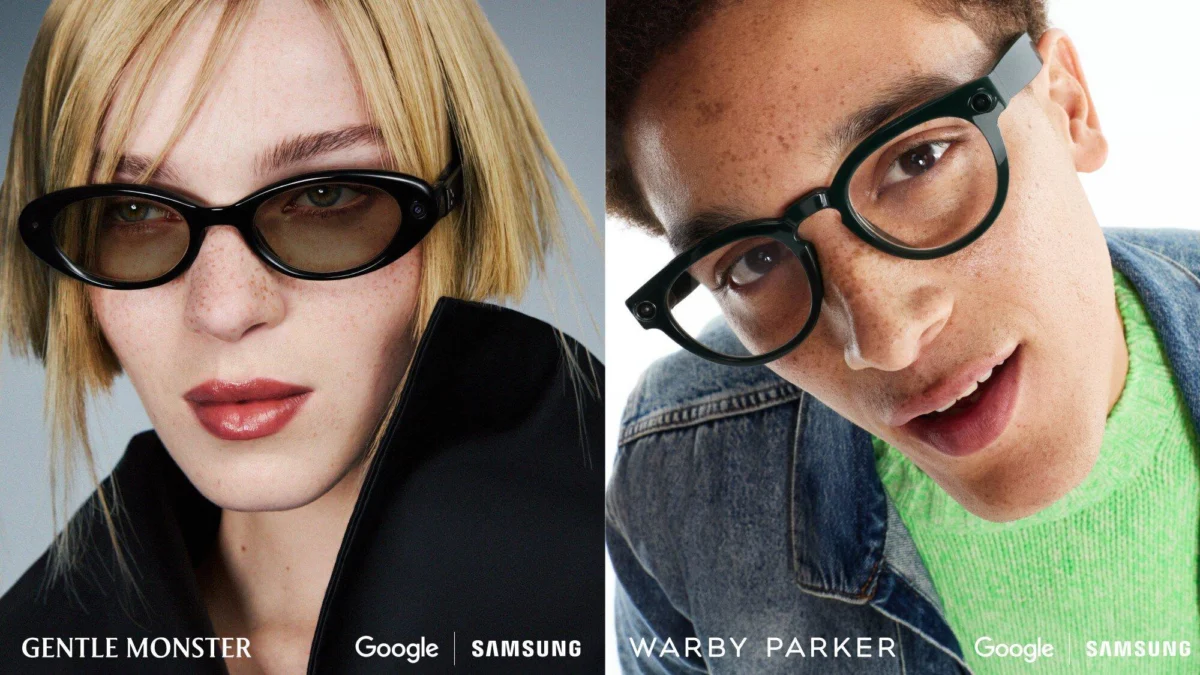
While Samsung and Google have remained tight-lipped regarding a specific release date, industry analysts suggest a consumer version could arrive as early as late 2025 or early 2026. The collaboration with fashion-forward eyewear brands like Gentle Monster and Warby Parker suggests that the final product will prioritize aesthetics to compete with Meta’s Ray-Ban partnership.
In a statement regarding the Android XR ecosystem, Google emphasized that the goal is to provide a "unified platform" for developers. By standardizing the UX—such as the placement of text in the lower periphery and the use of adaptive widgets—Google aims to avoid the fragmentation that plagued early versions of the Android mobile OS.
Future Outlook
The AWE prototype confirms that Google is leaning heavily into its strengths: search, navigation, and AI. While the hardware itself is still in the refinement stage, the software maturity of Android XR suggests that Google is ready to challenge Meta’s dominance in the smartglasses category. The success of the final product will likely depend on its ability to maintain battery life while running Gemini’s multimodal processes and whether the "monocular" display choice will be acceptable to a public increasingly accustomed to high-resolution smartphone screens.

As the industry moves toward "AI-first" wearables, the Google-Samsung-Qualcomm alliance represents a formidable bloc capable of defining the standards for how humans interact with digital information in the physical world. For now, the AWE prototype stands as a proof of concept for a future where the smartphone remains in the pocket, and the "screen" is an invisible layer over reality.
About the Author