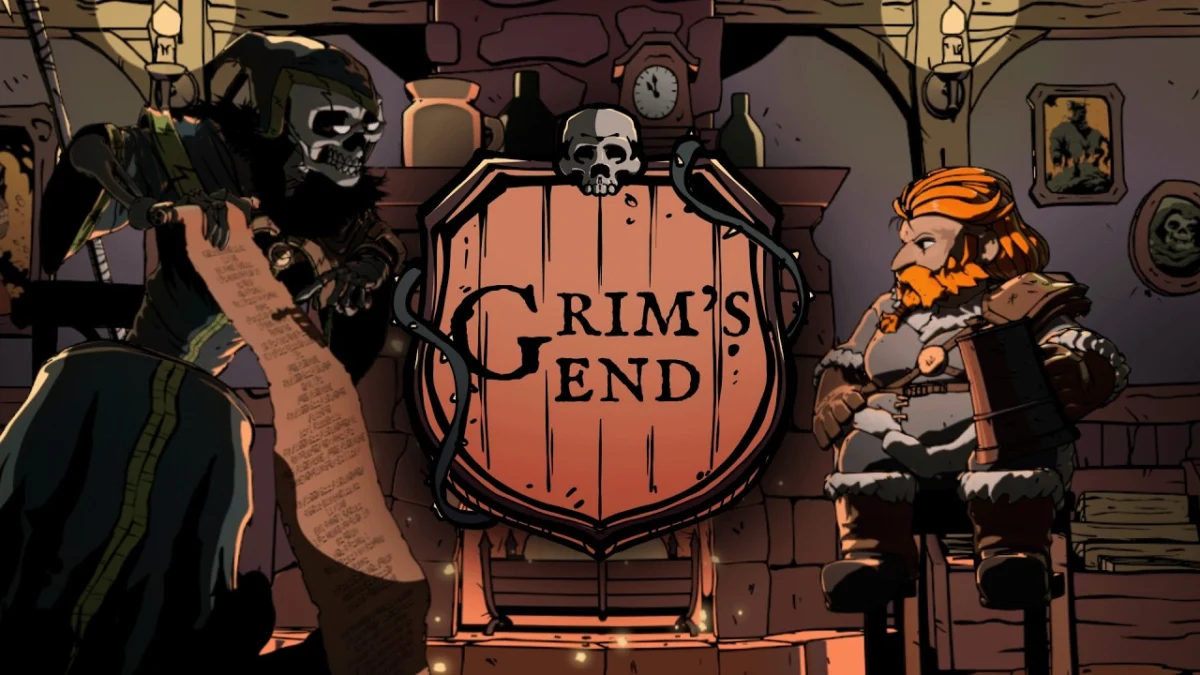
A remarkable new proof-of-concept video, titled "Grim’s End," has emerged, captivating the 3D animation community with its striking cell-shaded aesthetic and compelling narrative fragment. Created by Nixin, the short showcases the powerful capabilities of Blender, particularly its Grease Pencil and outline modifier tools, to achieve a distinctive visual style that blends traditional 2D artistic sensibilities with modern 3D rendering. The project, which features original character models designed and built entirely within Blender, has quickly garnered attention for its artistic merit and its demonstration of cutting-edge techniques.
The narrative, as presented in the video’s introductory text, plunges viewers into a dark and atmospheric setting. Deep within the desolate Howling Woods, a place perpetually shrouded in snow and buffeted by "wicked winds," lies an inn named Grim’s End. This establishment is described not as a haven, but as a deceptive lure for lost souls. Its promise of shelter is revealed to be a trap, a means to compel weary travelers into signing away their lives to an unspecified, invisible entity for unknown reasons. The central character, Hilde, is introduced as someone who finds the prospect of facing the Grim Reaper at this foreboding inn to be less dreadful than the bureaucratic entanglements she encounters there.
The technical foundation of "Grim’s End" is rooted in Blender’s versatile feature set. The project highlights the synergistic application of hand-drawn Grease Pencil lines, which imbue the characters and environment with a fluid, organic feel reminiscent of traditional animation, and the outline modifier. This latter tool is instrumental in achieving the crisp, defined silhouettes that are characteristic of cell shading, effectively separating the animated elements from their backgrounds and enhancing the visual impact. The integration of these techniques underscores a growing trend in 3D animation: the deliberate emulation of 2D art styles to achieve unique visual identities.
The Genesis of "Grim’s End": A Technical and Artistic Endeavor
The creation of "Grim’s End" represents a significant undertaking for Nixin, demonstrating a deep understanding of Blender’s evolving toolset. The project’s genesis can be traced to the desire to explore and push the boundaries of stylized 3D animation. While the exact timeline for the video’s production is not publicly detailed, its completion and release suggest a period of focused development and iterative refinement. The choice of Blender as the sole software solution for modeling, animation, and rendering is a testament to its maturation as a professional-grade 3D creation suite, capable of supporting ambitious artistic visions without the need for proprietary software.
The decision to focus on a "proof of concept" (PoC) format indicates a strategic approach. PoCs are typically created to demonstrate the feasibility of a particular idea, technology, or artistic style. In this instance, Nixin aimed to showcase the viability of achieving a high-quality, cell-shaded look within Blender, with the potential for future expansion into a larger project, such as a short film or even a feature. The success of such a PoC often hinges on its ability to generate interest and investment from studios or publishers, or to serve as a portfolio piece that attracts freelance opportunities.
Character Design and Modeling: A Blend of Styles
The character models for Hilde and the other principal figures in "Grim’s End" were meticulously crafted by Nixin. The process likely involved a combination of traditional sculpting techniques within Blender and the application of the aforementioned stylistic elements. The goal was to create characters that possessed a tangible three-dimensional form while simultaneously exhibiting the visual cues of 2D illustration. This requires a nuanced approach to texturing, lighting, and rendering, ensuring that the cel-shaded effect is applied consistently and effectively across all surfaces and forms.
The use of the outline modifier is particularly noteworthy. This feature allows for the generation of distinct outlines around rendered objects, mimicking the inked lines found in traditional animation. When combined with flat or gradient shading, it creates the characteristic "toon" or "cel-shaded" look that has seen a resurgence in popularity across various media, from video games to animated series. The challenge lies in achieving this effect without making the animation appear flat or simplistic. Nixin’s work suggests a sophisticated control over the modifier’s parameters, allowing for nuanced line weights and edge detection that contribute to the overall artistic integrity of the piece.
The Narrative Hook: A Glimpse into a Darker Realm
Beyond its technical achievements, "Grim’s End" also offers a compelling narrative premise. The description of Grim’s End as a "dark and lonely place reserved for the dead" and a place that "acts as bait luring in lost souls" immediately establishes a tone of gothic horror and existential dread. The concept of a supernatural entity demanding souls in exchange for temporary refuge is a classic trope, but the emphasis on the mundane, yet insidious, "paperwork" adds a layer of darkly comedic absurdity. This juxtaposition of the supernatural with bureaucratic drudgery suggests a unique approach to storytelling, one that could explore themes of fate, free will, and the oppressive nature of systems, even those of an otherworldly design.

The character of Hilde, who finds the administrative burdens of her predicament more irksome than the impending doom, offers a relatable, if cynical, perspective. Her presence grounds the fantastical elements in a semblance of everyday frustration, making the supernatural threat all the more unsettling by its intrusion into the mundane. This character-driven approach, even within a short PoC, is crucial for engaging an audience and hinting at the potential for deeper character development in a larger project.
Supporting Data and Industry Trends
The success of "Grim’s End" can be contextualized within broader trends in the animation and visual effects industry. The demand for stylized animation has been steadily increasing, driven by a desire for distinct visual identities and a departure from photorealism. Video games, in particular, have embraced cell shading and similar techniques to create visually unique and memorable experiences. Titles like "The Legend of Zelda: The Wind Waker," "Persona 5," and "Cuphead" have demonstrated the commercial and critical appeal of such aesthetics.
Blender’s role in this trend is significant. As an open-source software, it offers a powerful and accessible platform for independent animators and small studios to compete with larger, more established players. The continuous development and improvement of Blender’s features, including those relevant to stylized rendering and 2D-3D integration, empower creators to experiment and innovate. The growing number of professional productions utilizing Blender, from independent films to visual effects for mainstream media, further validates its position as a formidable tool in the industry.
The "proof of concept" model itself is a well-established practice. Studios and individual creators often produce short films or animated sequences to pitch ideas, attract talent, or secure funding. The viral spread of impressive PoCs on platforms like YouTube and Vimeo can significantly amplify their reach and impact. "Grim’s End," with its striking visuals and intriguing premise, is well-positioned to benefit from this model, potentially opening doors for Nixin to further develop this concept.
Potential Reactions and Industry Implications
While direct statements from external parties regarding "Grim’s End" are not available, the animation community’s reaction to such a visually distinctive and technically proficient piece is typically one of admiration and discussion. Industry professionals and fellow artists are likely to commend the innovative use of Blender’s tools and the successful realization of a challenging aesthetic.
The implications of "Grim’s End" extend beyond individual praise. For the broader Blender community, it serves as an inspiring example of what can be achieved with the software. It highlights the platform’s capacity for delivering high-quality, stylized animation that can compete with industry standards. For aspiring animators, it offers a tangible demonstration of how specific tools and techniques can be combined to create unique visual outcomes.
Furthermore, the success of such a PoC could influence studios and production houses to explore similar artistic directions. If "Grim’s End" garners sufficient attention and positive reception, it might encourage investment in projects that embrace cell shading and stylized 3D animation, thereby creating new opportunities for artists skilled in these areas. The narrative’s intriguing blend of dark fantasy and mundane absurdity also suggests a market for more unconventional storytelling approaches within animation.
A Glimpse into the Future of Stylized Animation
"Grim’s End" stands as a compelling testament to the evolving capabilities of 3D animation software and the creative vision of its artists. Nixin’s work not only showcases a remarkable mastery of Blender’s tools, particularly the Grease Pencil and outline modifier for achieving a distinct cell-shaded aesthetic, but also presents a narrative fragment that hints at a rich and potentially dark world.
The project’s proof-of-concept nature underscores the strategic use of short, impactful demonstrations to gauge interest and explore creative avenues. As the demand for visually diverse and stylized animation continues to grow across various media, "Grim’s End" serves as a powerful example of how artists can leverage accessible, yet sophisticated, tools like Blender to bring unique artistic visions to life. The future of stylized animation appears bright, with projects like this paving the way for innovative storytelling and breathtaking visual artistry. The continued exploration of such techniques within the professional animation landscape promises to offer audiences a wider spectrum of engaging and visually captivating content.
About the Author