The fiercely competitive and increasingly saturated independent game development sector continues to present significant challenges for creators without substantial financial backing, a reality acutely felt by veteran developer Keith, who has openly shared his recent struggles with demotivation and commercial disappointment. Despite a nearly two-decade career in indie development, which began in the mid-2000s, Keith has found himself at an unprecedented low point, grappling with the commercial reception of his latest projects, "Spellstorm" and "Scary World." This period of introspection has catalyzed a profound shift in his creative philosophy, moving towards art as a means of self-expression and healing, rather than solely a commercial endeavor.
The Evolving Landscape of Independent Game Development
The narrative of the "indie dev apocalypse" has circulated within the gaming community for over a decade, reflecting a continuous tightening of the market. What was once considered a niche or burgeoning sector has matured into a colossal industry, yet the distribution of success remains highly uneven. Industry analysts consistently point to the exponential increase in game releases across platforms like Steam, which sees tens of thousands of new titles annually, making discoverability an immense hurdle for smaller studios. This deluge of content, coupled with sophisticated marketing algorithms that often favor established entities or those with significant promotional budgets, leaves many "actual indies"—developers operating without multi-million dollar investments from publishers—struggling to gain visibility.
This phenomenon is not isolated to video games but extends to board games and other creative arts. While the global gaming market generates billions of dollars, only a tiny fraction of creators manage to capture significant attention or financial returns. This dynamic mirrors broader economic trends where wealth and resources become increasingly concentrated, leaving a vast majority vying for limited opportunities. For developers like Keith, who have honed their craft over many years, this translates into a disheartening paradox: improving game development skills does not necessarily correlate with improved commercial outcomes.
‘Scary World’: A Rapid Creation’s Fading Impact
One of Keith’s recent releases, "Scary World," exemplifies the challenges of launching a game with limited resources. Developed over an intensive six-week period, akin to an extended game jam, the project was envisioned as a more accessible and fun experience compared to some of his previous, perhaps more niche, creations. The developer expressed genuine pride in the game’s quality and its potential for a wider audience, believing it to be a strong product.
However, "Scary World" ultimately "disappeared into the void," failing to garner significant traction. Keith attributes this outcome partly to the game’s visual assets, which he acknowledges "look a little on the rush-y side," a natural consequence of its rapid development cycle. More critically, the absence of any dedicated marketing effort proved to be a decisive factor. In today’s crowded market, even well-received games struggle without strategic promotion. Industry estimates suggest that even modest indie game launches often require a marketing budget ranging from a few thousand to tens of thousands of dollars to achieve basic visibility, a resource often unavailable to truly independent creators. The experience with "Scary World" highlighted the stark reality that creative merit alone is often insufficient to cut through the noise.
The ‘Oof’ of ‘Spellstorm’: A Three-Year Endeavor’s Financial and Logistical Hurdles
The commercial performance of "Spellstorm," a card game developed over three arduous years, presented an even more significant blow to Keith’s morale. This project represented a substantial investment of time, creative energy, and financial capital. The development process itself was reportedly complex, requiring considerable "heavy lifting." A notable aspect of its creation was the significant expenditure on high-quality art, which Keith describes as "beautiful" and a source of immense pride in the final product.
To bring "Spellstorm" to fruition and secure funding, Keith pursued a Kickstarter campaign. He invested a considerable sum – "more than most indies would, for sure!" – in pre-launch promotion and community building, including mailing list development, working with experienced crowdfunding consultants who had successfully managed numerous board game Kickstarters. Initial planning revolved around a target goal of $20,000, which consultants felt was easily achievable given the pre-campaign benchmarks. The expectation was to reach between $30,000 and $50,000, with $20,000 considered the "bare minimum."
However, drawing on his extensive experience in the industry, Keith harbored a premonition that the $20,000 target might be too ambitious. In a last-minute decision, driven by a deep desire for "Spellstorm" to exist regardless of the financial cost, he reduced the Kickstarter goal to $10,000. While the campaign technically "succeeded" by narrowly surpassing this revised target, the reality was a significant financial shortfall. After accounting for Kickstarter fees (typically 5% of funds raised, plus payment processing fees) and other associated costs, the net funds received were substantially less than what was genuinely required to cover development and production expenses.
This underfunding created a cascade of logistical difficulties. The limited print run (approximately 250 copies) for the game proved challenging, as many printing companies have minimum order quantities significantly higher than this, leading to higher per-unit costs and limited options. Similar issues arose with shipping companies, further driving the project deeper into negative financial territory.
Despite these setbacks, Keith maintains a strong belief in the quality of "Spellstorm," describing it as "strong, interesting, original, fun." He sees it as a successful game idea in terms of design and execution. As of the latest update, approximately 170 copies have been shipped to backers. However, the post-release engagement has been minimal. While the game holds mostly positive ratings on BoardGameGeek (BGG), the premier platform for board game enthusiasts, it has not accumulated enough ratings to even qualify for a formal average rating, indicating a critical lack of community interaction and visibility. This silence from the player base, despite the game’s inherent quality and the developer’s dedication, has been profoundly disheartening.
The Paradox of Experience: ‘Dragon Bridge’ as a Counterpoint
Adding to the complexity of his current feelings, Keith draws a comparison to an earlier game, "Dragon Bridge." Developed in less than a year with significantly lower production values – including self-made art and no external artist – "Dragon Bridge" achieved considerably more player interaction and satisfaction over the years. This stark contrast highlights a recurring paradox for the developer: "the better I get the worse I do." It underscores a fundamental shift in the industry where refined skill and higher production values no longer guarantee market penetration or audience engagement for independent creators. The psychological toll of investing years and significant personal resources into projects that then fail to resonate with an audience, especially when earlier, less polished efforts found more success, is a significant factor in the current wave of demotivation among indie developers.
A New Artistic Imperative: ‘Through Broken Land’ and Art as Self-Healing
Amidst these professional setbacks, Keith is undergoing a significant philosophical reorientation, pivoting towards a more personal and expressive form of creation. His upcoming project, "Through Broken Land," represents a deeply personal artistic and creative endeavor. For Keith, the importance of this project transcends commercial viability; he feels an intrinsic need for it to simply "exist," irrespective of audience size.
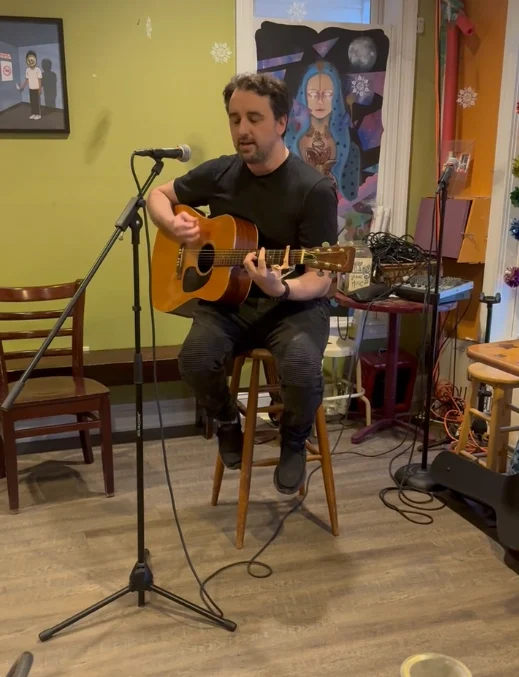
This shift is closely tied to his recent engagement with songwriting, which he describes as a form of therapy. Through writing songs, he has found a powerful avenue for self-discovery, crafting lyrics that resonate with profound personal truth. These songs, he states, are among the most "true" and representative expressions of himself he has ever created. This process of artistic creation as a means of deeper self-knowledge is becoming central to his approach.
Keith articulates a broader philosophy connecting self-awareness through art to humanization. By understanding oneself on a deeper level, individuals are better equipped to humanize themselves, which in turn fosters the ability to see humanity in others. He contends that many societal problems stem from a fundamental failure to recognize and acknowledge the shared humanity in ourselves and others. This failure often manifests in the creation of arbitrary hierarchies based on superficial traits (e.g., attractiveness, intelligence), which he connects to broader systemic issues such as economic inequality (e.g., the existence of billionaires alongside homelessness) and severe human rights abuses, citing examples like "concentration camps" in the US.
In this context, Keith views healing, particularly self-healing, as a revolutionary act. He believes that even minor personal healing creates a "tiny beacon" that positively influences one’s immediate environment and interactions. This concept reverses the notion that "hurt people hurt people," proposing instead that "healed people heal people."
"Through Broken Land" is envisioned as a narrative embodying this philosophy, aiming to express profound personal truths in a way none of his previous games have achieved. Keith has been developing the script for over a year, experiencing emotional resonance (crying during reads) not because of perceived perfection, but due to the deep personal truth embedded in the writing. The hope is that this authenticity will similarly impact some members of its future audience.
While Keith has been immersed in daily songwriting and local open mic performances, he anticipates a renewed focus on "Through Broken Land" in the fall, aided by collaborator Blake, who is working on inspirational elements for the project.
Looking Ahead: Resilience and Continued Creation
Despite the recent demotivation, Keith remains resolute in his commitment to game development. He firmly states his intention to complete "Through Broken Land" and to continue creating other games, including a small card game prototype for which he plans to initiate playtests soon. His journey reflects the persistent spirit of independent creators who, even when facing formidable industry headwinds and personal setbacks, find new ways to engage with their craft and define success on their own terms, often prioritizing artistic integrity and personal expression over commercial outcomes. The developer concludes by inviting feedback on "Spellstorm," signaling an ongoing desire for community engagement despite past disappointments.
About the Author