A powerful new interactive website, DreamAgainUSA.org, has launched, offering an unvarnished and visceral portrayal of wealth inequality in the United States. Spearheaded by tech luminary Jeff Atwood, co-founder of Stack Overflow, and developed in collaboration with Geoff Dalgas, the platform challenges users to confront the profound disparities by endlessly scrolling through a linear representation of American wealth distribution. The initiative is designed not just to inform but to provoke a deep, experiential understanding of a crisis that, according to its creators, is "almost impossible to explain" without direct engagement.
An Unflinching Glimpse into Economic Disparity
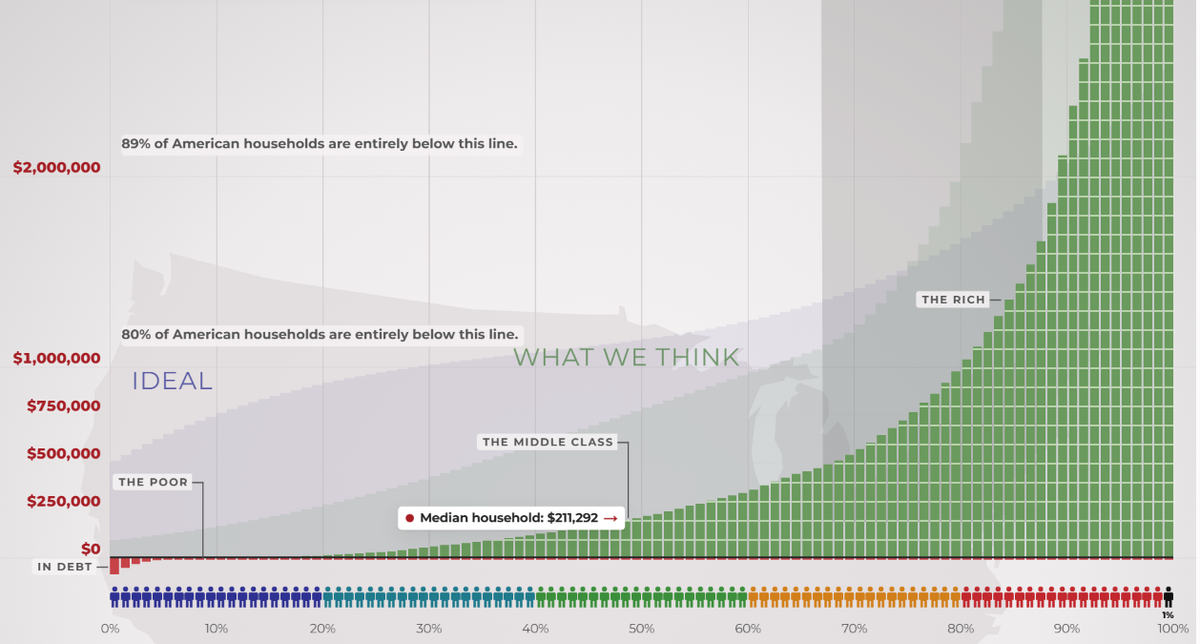
The core of DreamAgainUSA.org is a colossal, interactive graph that meticulously plots the wealth of Americans on a linear scale. Unlike conventional charts that compress data into digestible segments, this digital experience demands active participation from the user, requiring them to scroll for minutes – sometimes exceeding ten or twelve minutes, as Atwood recounts – to traverse the vast economic chasm between the nation’s wealthiest and its most impoverished. This deliberate design choice aims to replicate, however briefly, the relentless struggle faced by millions living at the economic bottom.
The platform employs a striking visual language, featuring a stark, scrollable timeline of wealth. Users begin at the lowest economic strata, gradually ascending through various income brackets, with each scroll revealing the immense scale of wealth concentration at the top. The experience is punctuated by a stark "I quit" button, a symbolic escape route for the user, yet one that serves to highlight the lack of such an option for the millions of Americans trapped in cycles of poverty. "We get a button on the screen that lets us punch out any time we want: I quit," Atwood states. "But do other Americans get an easy way out of the most extreme wealth concentration in history, piled up together all the way down there at the bottom of this graph? No. They don’t."
The Genesis of a Provocative Initiative

The concept for DreamAgainUSA.org was inspired by a viral phenomenon from over a decade ago: the "Wealth Inequality in America" video series by Politizane. First released around 2012, the original video garnered tens of millions of views, profoundly influencing public perception of economic stratification. Atwood describes how this video "changed how I thought about the world" and "shows something we feel, but rarely see so clearly — the obscene concentration of wealth and power in this country."
Building on this legacy, the DreamAgainUSA initiative includes an updated 2026 wealth inequality video series, produced by Politizane in collaboration with satirical news outlet The Onion and newsletter Garbage Day. Atwood emphasizes his role as a facilitator rather than a director, granting the content creators full artistic control. His motivation was purely public-oriented: "I told everyone involved the same thing I’m telling you right now — this is not for me, or any organization. It is for the public. It is for We, The People." This collaborative approach underscores a commitment to delivering facts and visual evidence with robust sourcing and methodology.
"Suffering as a Feature": A Deliberate Design Philosophy
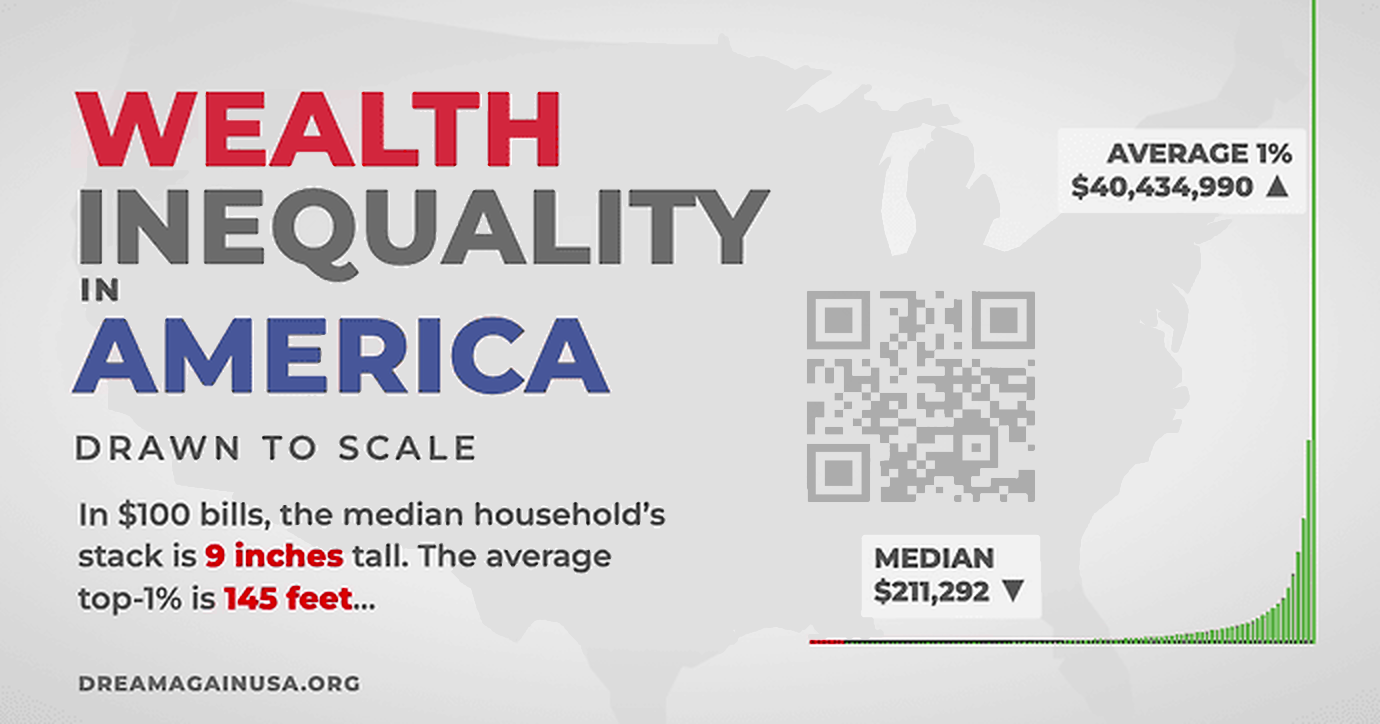
Central to DreamAgainUSA.org’s impact is its unconventional approach to user experience, which Atwood paradoxically describes as "suffering as a feature." As a veteran of software usability, Atwood notes his initial resistance to designing software that "actively punishes the user." However, he came to realize that "the data itself is the pain." The decision to eschew automatic scrolling or rapid jumps forces users into a physical act of endurance, making them "do the work" to grasp the scale of the problem.
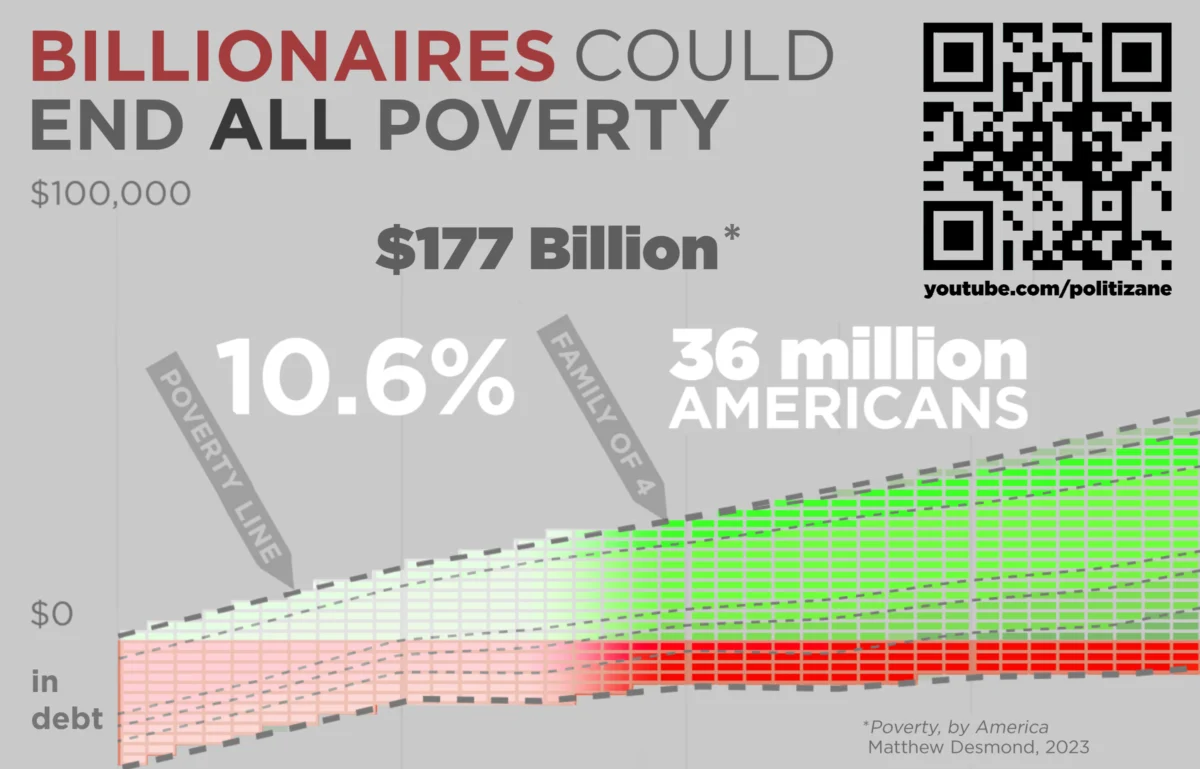
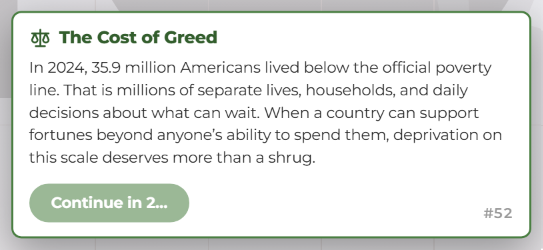
The platform even incorporates forced stops at critical milestones, preventing users from mindlessly scrolling past alarming statistics. One such pause highlights the plight of 36 million Americans living in poverty. This stop is paired with a stark revelation: "we could eliminate all poverty in this country for $177 billion." This figure, often cited in economic analyses, represents a fraction of the total wealth held by the nation’s billionaires, underscoring a societal choice to allow widespread suffering amidst unprecedented affluence. This design choice transforms a mere data presentation into an empathetic exercise, requiring a degree of personal effort to truly internalize the gravity of the situation. "In order to understand the suffering of others, you must be willing to endure and suffer a little bit yourself," Atwood reflects.
The Economic Reality: Deconstructing the Data
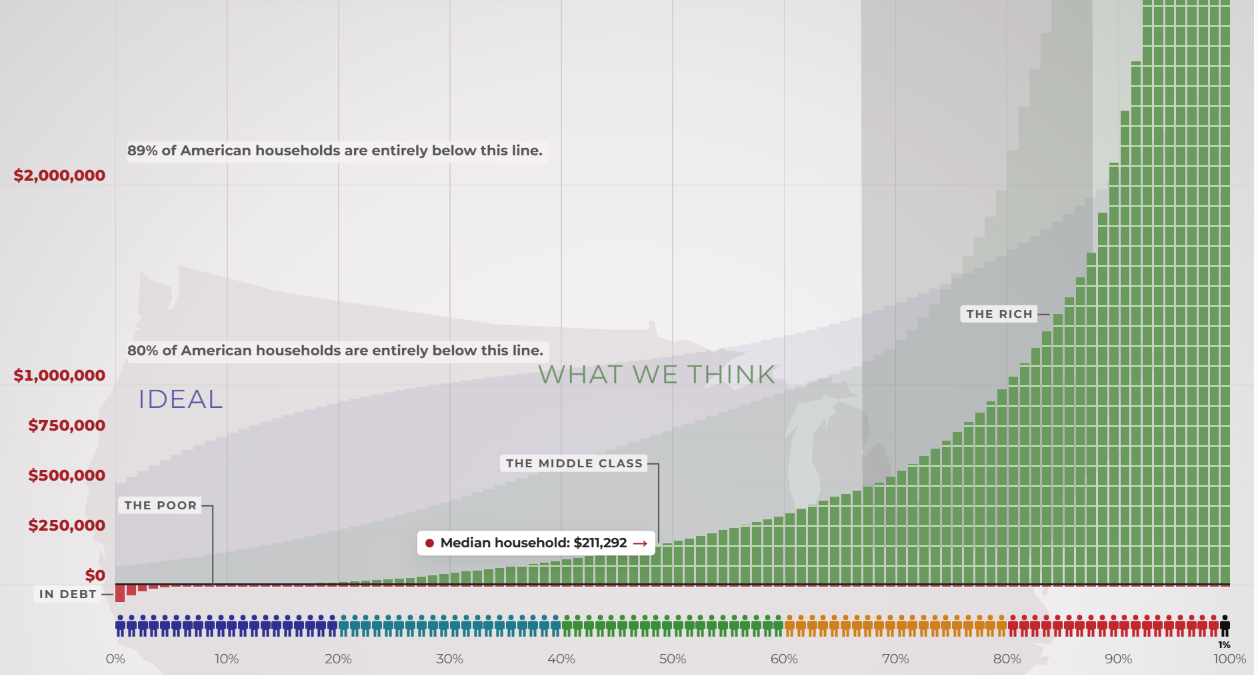
The staggering wealth disparities visualized on DreamAgainUSA.org are not merely abstract figures but reflect concrete economic realities. According to data from the Federal Reserve, the wealthiest 1% of Americans held approximately 30-35% of the nation’s total wealth in recent years, while the bottom 50% collectively possessed a mere 2-3%. This represents a stark concentration of resources, where a tiny fraction of the population controls a disproportionate share of economic power.
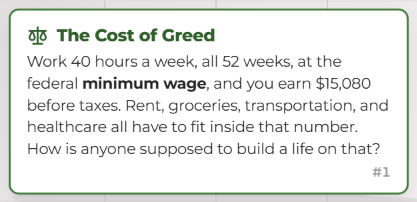
The website also draws attention to the struggle of minimum wage earners. A person working 40 hours a week, 52 weeks a year, at the current federal minimum wage of $7.25 per hour, earns just $15,080 annually before taxes. This income level falls significantly below the poverty line for many households and is far from a living wage in most parts of the country. For instance, the National Low Income Housing Coalition reported that in no state can a full-time minimum wage worker afford a modest two-bedroom rental home. This gap between earnings and the cost of basic necessities—rent, groceries, transportation, healthcare—forces millions into precarious living situations, constantly teetering on the edge of financial collapse.
The figure of $177 billion required to eliminate poverty, highlighted by the platform, is consistent with estimates from various economic research institutions that analyze the income gap necessary to lift all Americans above the poverty line through direct transfers. For context, this amount represents only a small percentage of the collective net worth of the wealthiest individuals in the U.S., illustrating that the resources to address this fundamental societal challenge exist but are simply not being allocated.

Broader Context and Implications
The launch of DreamAgainUSA.org comes at a time of heightened public awareness and concern over economic inequality, particularly in the wake of global crises that have exacerbated existing disparities. The COVID-19 pandemic, for example, saw billionaires’ wealth surge while millions faced job losses and economic hardship, further spotlighting the structural issues contributing to the wealth gap. Debates around progressive taxation, universal basic income, and social safety nets have gained traction as policymakers and advocates search for solutions.
Economists and social justice advocates have long pointed to wealth inequality as a threat to social cohesion, democratic stability, and long-term economic growth. High levels of inequality can lead to reduced opportunities for upward mobility, increased social unrest, and a concentration of political influence among the wealthy. By creating an immersive, albeit challenging, user experience, DreamAgainUSA.org seeks to move beyond abstract statistics and foster a deeper, more personal connection to these systemic issues.
The analogy of a "walking simulator" — a genre of video game where the primary interaction is exploration rather than complex gameplay — is invoked by Atwood. He notes that while "walking simulators" are often dismissed for lacking "real choice," the DreamAgainUSA experience is different. "This graph isn’t a game — these are people’s actual lives. No one is forcing you to visit this website, no one is making you scroll up endlessly," he explains. Instead, the experience simulates "endurance in the face of the relentless task of simply living your daily life with almost nothing."
A Call to Action and Reflection
Beyond the digital experience, the initiative encourages users to download an eight-page foldable version of the graph, designed to be a relatable 6 feet, 6 inches tall — the average height of an NBA player. This tangible representation allows individuals to physically confront "the most obscene centerfold of all time," sharing its stark message with others.
By challenging users to "climb the graph" as far as they dare, DreamAgainUSA.org implicitly asks them to confront not only the scale of wealth but also their own position within it and their responsibility to address the systemic issues it exposes. The concluding question posed by Atwood — "Was it worth it?" — serves as a potent invitation for introspection, urging individuals to consider the ethical and societal costs of allowing such extreme wealth concentration to persist while millions struggle for basic survival.
The platform stands as a powerful testament to the potential of digital media to translate complex socio-economic data into a compelling and deeply personal experience, fostering a renewed sense of urgency and inspiring dialogue around one of the most defining challenges of our time.
About the Author