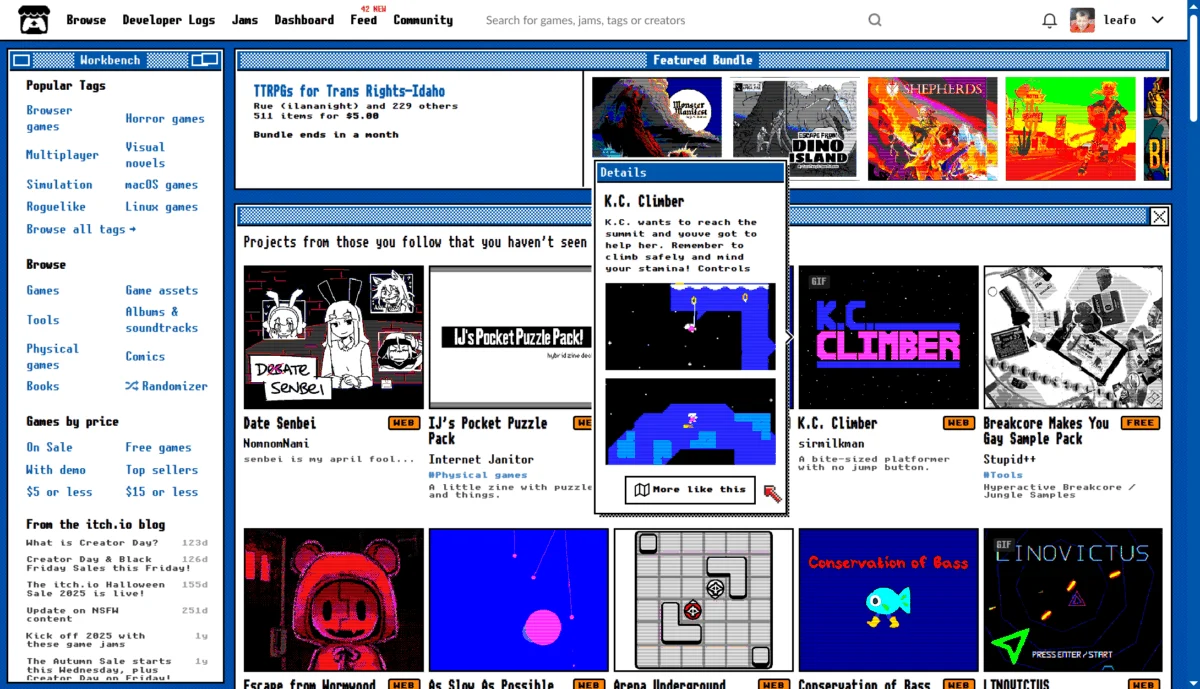
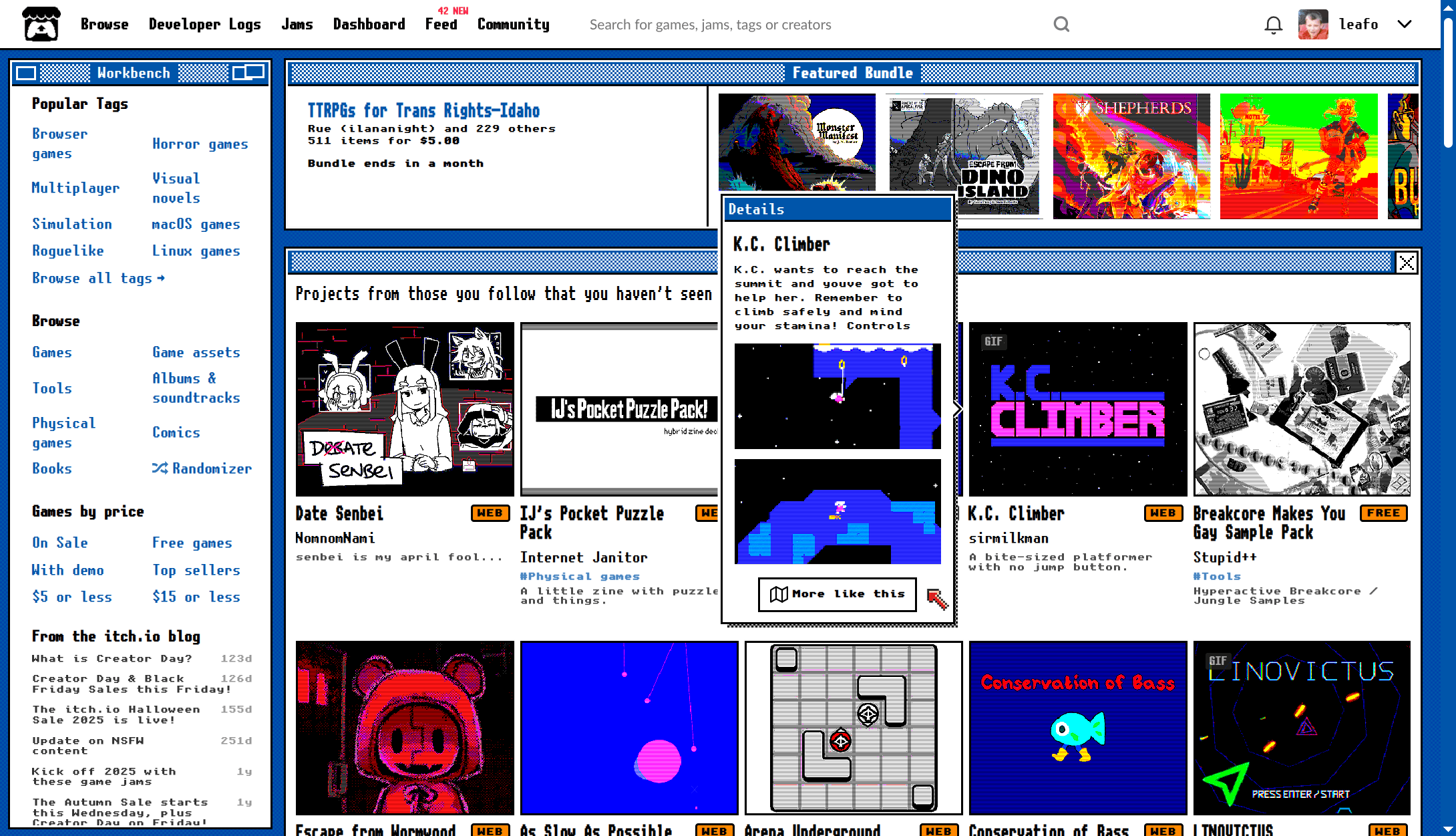
Independent game marketplace itch.io has officially concluded its "Ameyega mode," a temporary, retro-themed homepage interface launched as an April Fools’ Day initiative. The experimental aesthetic, characterized by an ASCII art presentation reminiscent of early computing and demoscene culture, ran slightly longer than initially planned, extending beyond April 1st due to a delayed rollout. While the novelty mode has now ended for general access, itch.io has indicated it will remain viewable for logged-in users via a specific URL (https://itch.io/?ameyega) until significant changes are made to the homepage, preserving a vestige of the brief but impactful experiment. The unique visual style was explicitly credited to the "unscii" fonts provided by viznut.fi, acknowledging the foundational work that enabled the retro transformation.
The Genesis of Ameyega Mode: A Dive into Digital Nostalgia
Ameyega mode was a deliberate and playful departure from itch.io’s standard contemporary web interface. Launched on April 1st, 2024, it transformed the platform’s homepage into a landscape of blocky characters and monochromatic palettes, a stark homage to the aesthetics of 8-bit and 16-bit computing eras, particularly evoking the visual style of platforms like the Commodore Amiga or early DOS environments. This artistic choice tapped into a vein of nostalgia prevalent among a segment of the gaming and tech community, many of whom grew up with or appreciate the foundational aesthetics of digital art and computing.
Itch.io, known as a prominent open marketplace for independent digital creators, primarily focused on indie video games, software, and assets, has cultivated a reputation for fostering a vibrant and experimental community. The platform, which hosts hundreds of thousands of games and projects, serves millions of users globally. Its commitment to supporting diverse creators and often unconventional projects makes it a fertile ground for such lighthearted, community-centric experiments. The decision to implement an April Fools’ prank of this nature aligns with a broader trend in the tech industry, where companies frequently engage in temporary, often humorous, alterations to their services to mark the occasion. These stunts, while primarily for entertainment, often serve to highlight a company’s brand personality, engage its user base in a unique way, and sometimes even test the waters for new features or design philosophies.
The inspiration drawn from "unscii" fonts by viznut.fi underscores the technical and artistic underpinnings of Ameyega mode. ASCII art, a graphic design technique that uses computers for presentation and consists of pictures assembled from the 95 printable characters defined by the ASCII standard, has a rich history dating back to the earliest days of computing. From text-based adventure games to elaborate digital artworks and even early web design, ASCII art has been a creative staple. Its resurgence in forms like Ameyega mode serves as a reminder of computing’s artistic roots and the enduring appeal of minimalist, character-based graphics.
Chronology of the Ameyega Experiment
The timeline of Ameyega mode was concise yet extended:
- April 1, 2024: Ameyega mode officially launched, transforming the itch.io homepage. It was announced as an April Fools’ Day prank. The initial announcement noted a slight delay in its rollout.
- April 1-Early April: The mode remained active, exceeding the typical single-day duration of most April Fools’ pranks, fulfilling the promise to "run this one a bit longer because I got it out late."
- Post-Early April: Itch.io announced the conclusion of Ameyega mode for general browsing. However, a special persistent URL (
https://itch.io/?ameyega) was provided, allowing logged-in users to revisit the retro interface. This decision offered a compromise, acknowledging both the temporary nature of the prank and the interest from users who enjoyed the aesthetic. The availability of this URL is set to last until the next substantial changes to the itch.io homepage are implemented.
The extension of the prank’s availability, albeit through a direct link, indicates itch.io’s responsiveness to user engagement and a willingness to accommodate those who appreciated the temporary change, even if it wasn’t universally loved.
Community Reactions and User Sentiment
The introduction and subsequent conclusion of Ameyega mode generated a wide spectrum of reactions from the itch.io community, as evidenced by numerous comments and social media discussions. User feedback highlighted the diverse preferences and priorities within the platform’s vast audience, ranging from enthusiastic appreciation to significant frustration.
Positive Reception and Nostalgia: A notable segment of the community expressed strong approval for Ameyega mode. Users lauded the creative effort and the nostalgic value of the ASCII art aesthetic. Comments like "The ASCII art homepage was a delightful throwback – it actually made browsing feel nostalgic and charming. Kudos to the team for the creativity, and props for keeping it available a little longer. Would love to see it return as an optional theme someday!" from ‘windflash’ captured this sentiment. Another user, ‘mauisland,’ expressed disappointment at its temporary nature, stating, "I would like for itch.io to change to it permanently. I was sad to find out it was a joke." The idea of making such a theme optional or permanent was a recurring suggestion, indicating a desire for more customization options on the platform. User ‘katt-kirsch’ specifically noted the unexpected accessibility benefits: "Please please please make an option to keep this, it’s SO much easier to read for me wow I love love love it," highlighting how unconventional design choices can inadvertently serve niche user needs.
Accessibility Concerns and Usability Challenges: Conversely, a significant portion of the feedback revolved around issues of accessibility and usability. For many, the retro aesthetic, while charming in concept, proved challenging to navigate and read. Users reported eye strain, difficulty distinguishing elements, and a general degradation of the browsing experience. User ‘ulysseandcharybde’ emphatically stated, "Oh so cool, i’m disabled and I CAN’T WATCH THIS! How do you get this crap off?!" This critical feedback underscores the importance of inclusive design and how aesthetic choices, even temporary ones, can inadvertently create barriers for users with specific visual or cognitive requirements. ‘Boveedevin’ echoed these concerns, lamenting, "omg please change it back this is so hard to navigate and there is no option in my feed to see new updates I follow. I hate thisssss." These comments highlight that while a prank can be fun, its impact on core functionality and user experience needs careful consideration.
Technical Glitches: The Dark Mode Dilemma: A recurring technical issue reported by multiple users was the incompatibility of Ameyega mode with the platform’s ‘Dark mode’ setting. Users like ‘raidenslayer’ voiced frustration: "Yeah, and never do it again, please. Because you messed up, Dark mode and I can’t get it to work. And it looks like I’m not the only one who’s having that problem." ‘Emanoelmelo’ similarly noted, "it’s over but dark mode is not working now…" This suggests that the custom styling of Ameyega mode might have overridden or interfered with the site’s standard theme settings, creating a less than optimal experience for those who prefer dark mode for comfort or accessibility reasons. Interestingly, user ‘clypsiphaya’ provided an update: "EDIT: four hours after posting this, the front page is showing Dark mode correctly. Apparently they’re paying attention!" This swift resolution indicates itch.io’s active monitoring of user feedback and rapid response to critical technical issues, even during a temporary event.
Broader Community Issues: Amidst the discussion about Ameyega mode, a separate, more fundamental concern about platform functionality was raised by user ‘dabbit-the-rabbit’: "when are you guys going to fix the problem where a huge portion of the community cannot post anything on anyones game pages? ive been asked multiple time to play and review games and leave links but you have locked people out of forming community and engagement around the games people release here? that was kind of the WHOLE point of this site." While unrelated to Ameyega mode itself, this comment highlights ongoing community challenges and the expectation that platform updates, even humorous ones, do not overshadow core functionality issues that impact user engagement and content creators. It serves as a reminder that temporary diversions, while engaging, must exist within a robust and functional primary service.
Implications for User Experience and Platform Identity
The Ameyega mode experiment, despite its brief tenure, offers several insights into user experience design and platform identity. Firstly, it demonstrated the power of nostalgia in UI/UX. For a significant portion of the user base, the retro aesthetic was a delightful throwback, fostering a sense of warmth and appreciation for computing history. This suggests that incorporating optional, themed interfaces could be a valuable feature for platforms looking to enhance user engagement and cater to diverse aesthetic preferences.
Secondly, the negative feedback, particularly concerning accessibility and usability, underscored the critical importance of universal design principles. While a temporary prank might be perceived as harmless, any alteration to a widely used interface can significantly impact users with varying needs. Ensuring that even experimental features are designed with accessibility in mind, or at least offer an immediate opt-out, is paramount to maintaining a positive user experience for all. The reported issues with Dark mode compatibility also highlight the complexities of integrating custom styling into existing, robust design systems.
Thirdly, itch.io’s response to the feedback—extending the mode’s availability for interested users and swiftly addressing the Dark mode issue—demonstrates a commitment to community responsiveness. This agile approach can mitigate potential user frustration and reinforce a positive relationship between the platform and its users. The ability to quickly rectify technical glitches and acknowledge user sentiment is crucial for maintaining trust and satisfaction, especially for a platform that thrives on community interaction.
Finally, the Ameyega mode contributes to itch.io’s brand identity as an innovative, community-focused platform that isn’t afraid to experiment and engage in playful interactions. While large-scale changes to core UI typically undergo extensive testing, a temporary, lighthearted prank allows a platform to showcase its personality and connect with its audience on a more informal level. This kind of interaction can strengthen brand loyalty and foster a sense of shared community experience. The event reinforces itch.io’s position not just as a marketplace, but as a dynamic hub for digital creativity and culture.
The Broader Context of April Fools’ in the Tech Industry
Itch.io’s Ameyega mode is part of a long-standing tradition of April Fools’ Day pranks within the technology sector. Companies ranging from Google to Microsoft, and numerous smaller startups, routinely engage in elaborate hoaxes, temporary product features, and humorous announcements on April 1st. These stunts often serve multiple purposes:
- Brand Personality: They allow companies to demonstrate a lighter, more human side, contrasting with their often serious and technical image.
- Engagement: They generate buzz, media coverage, and social media discussion, increasing brand visibility and user interaction.
- Innovation Showcase (sometimes): Occasionally, a prank might playfully hint at future technologies or concepts, or even inadvertently reveal a genuinely desired feature, as seen with the calls for Ameyega mode to become a permanent option.
- Community Building: They create shared experiences and inside jokes within a user base, fostering a sense of community.
However, the mixed reception of Ameyega mode also serves as a reminder that these pranks are not without risks. They can sometimes alienate users, cause confusion, or, in rare cases, even lead to real-world disruptions if not carefully managed. The balance between humor and functionality is delicate, and companies must be prepared to address any unintended negative consequences swiftly.
Future Outlook and Potential for Themed Interfaces
With Ameyega mode now officially concluded for general viewing, the conversation shifts to what this experiment might signify for the future of itch.io’s interface and user experience. The strong positive reactions and requests for a permanent "Ameyega" theme, or similar optional themes, could prompt itch.io to explore further customization options for its users. Offering different visual modes, perhaps through a dedicated theme selector, could empower users to personalize their browsing experience, catering to both aesthetic preferences and accessibility needs.
The platform’s decision to maintain a persistent URL for the Ameyega mode, even after its general removal, suggests an understanding of its appeal and a willingness to preserve interesting historical moments for its community. This gesture also provides an opportunity for internal reflection on the impact of UI changes and the value of engaging with the platform’s rich history of digital aesthetics. As itch.io continues to evolve, experiments like Ameyega mode will likely remain a part of its identity, balancing innovation with a playful nod to the roots of digital creativity.
About the Author