
The landscape of modern video game development is constantly evolving, with increasing demands for sophisticated in-game artificial intelligence (AI) to create immersive and dynamic player experiences. A significant development in this area, particularly for developers utilizing Unreal Engine 5 (UE5), is the remarkable simplification of implementing AI characters that can chase or follow a player. This core functionality, once requiring extensive coding and intricate setup, can now be achieved with surprising ease using just a few Blueprint visual scripting nodes, marking a notable stride in democratizing advanced game development.
The Growing Demand for Intelligent In-Game AI

In contemporary gaming, AI-driven characters are no longer mere obstacles; they are integral to storytelling, gameplay mechanics, and world-building. From relentless predators in horror titles to loyal companions in role-playing games, or strategic adversaries in action adventures, the ability for non-player characters (NPCs) to intelligently navigate and interact with the player character is paramount. Industry data consistently shows a player preference for games that offer believable and challenging AI, which directly contributes to replayability and overall engagement. Titles lauded for their AI often cite it as a key differentiator, influencing sales and critical acclaim. The market for AI tools within game development platforms is therefore a competitive and rapidly innovating sector, with engines like Unreal leading the charge in providing accessible, yet powerful, solutions.
Unreal Engine 5: A Catalyst for Creator Empowerment
Unreal Engine, developed by Epic Games, has long been a powerhouse in the game development industry, renowned for its cutting-edge graphics capabilities and robust toolset. With the advent of Unreal Engine 5, Epic Games has placed a strong emphasis on empowering creators of all skill levels, from indie developers to large AAA studios, to realize their visions more efficiently. The Blueprint visual scripting system is central to this philosophy. Blueprints allow developers to create complex gameplay systems, UI, and AI without writing a single line of C++ code, translating logical operations into an intuitive node-based interface. This approach significantly lowers the barrier to entry for many aspiring game developers and accelerates prototyping and iteration for seasoned professionals.
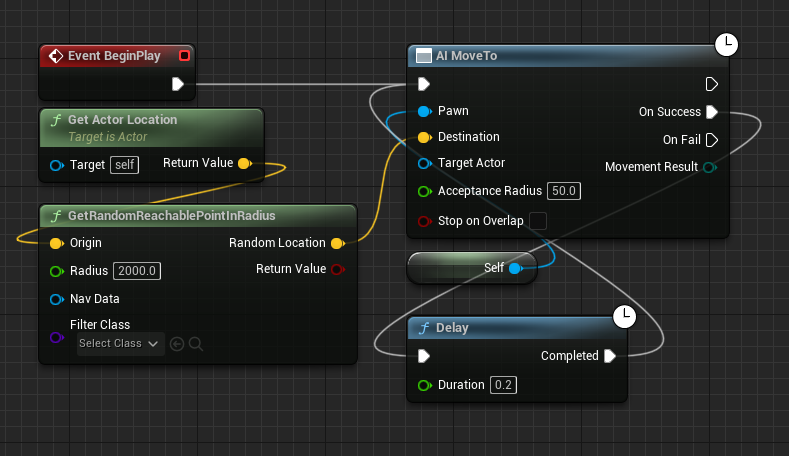
The specific advancement in AI character movement exemplifies this commitment. Prior to such streamlined solutions, implementing AI that could reliably track a player across varying terrain often involved complex pathfinding algorithms, state machines, and a deep understanding of navigation meshes (NavMeshes) – all typically coded in C++. While powerful, this method could be time-consuming and prone to errors, particularly for developers less experienced in traditional programming paradigms.
Simplified Implementation: A Technical Overview
The process, as outlined in recent developer guides, leverages existing Unreal Engine systems to achieve dynamic AI following with minimal effort. At its core, the system relies on a well-configured NavMesh, which acts as a navigable surface for AI characters within the game world. This foundation ensures that AI characters understand the traversable areas and can calculate efficient paths.
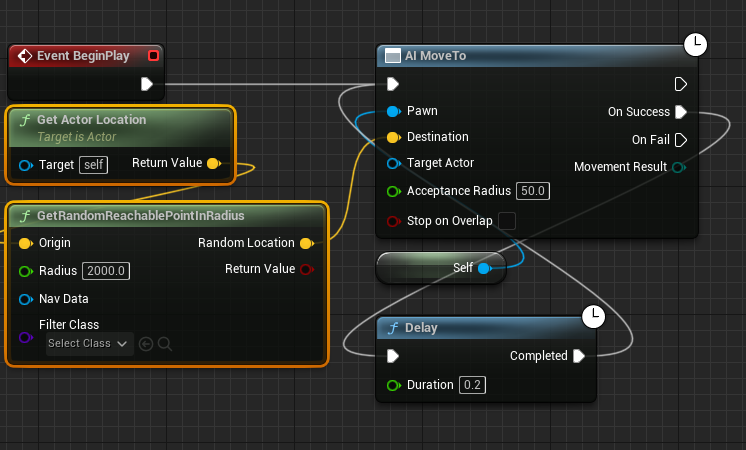
Building upon this, the implementation involves a few key Blueprint nodes:
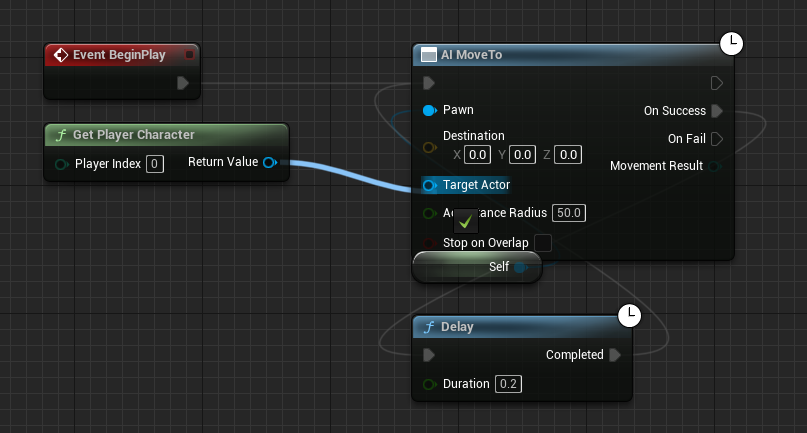
- AI MoveTo: This fundamental node instructs an AI controller to move its controlled pawn to a specified location or target actor. In previous setups for general AI movement, this might have been directed towards a random point within a radius.
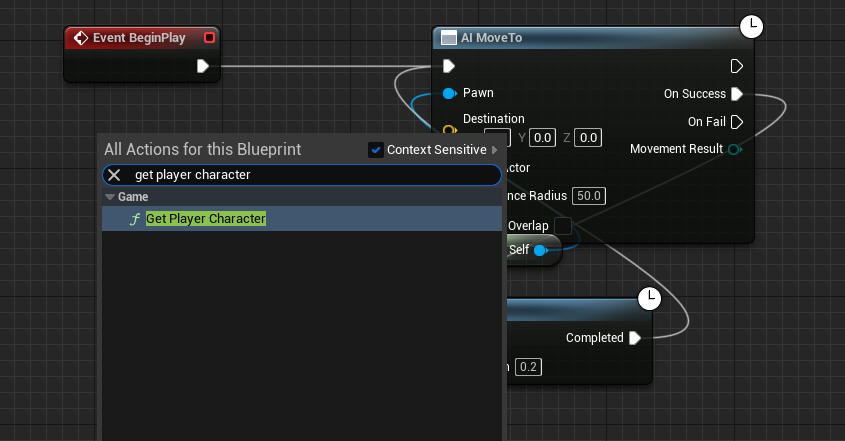
- Get Player Character: This node is crucial for the new "following" functionality. Instead of directing the AI to a static or random point, this node dynamically retrieves the current location of the player character, providing the "AI MoveTo" node with a constantly updated target.
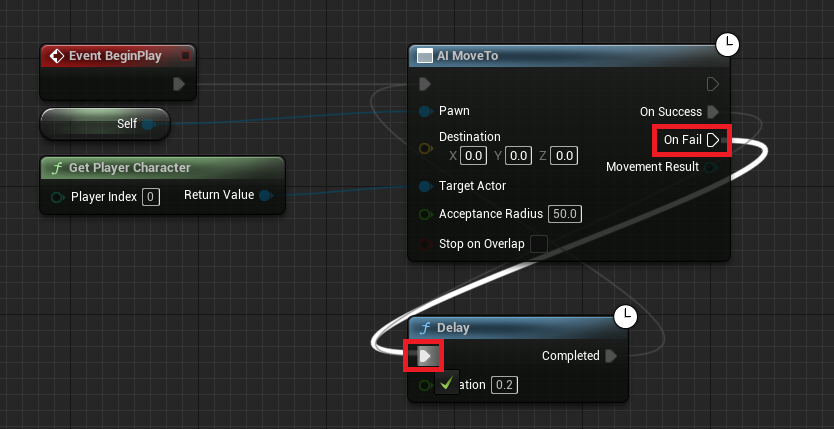
- Dynamic Looping and Error Handling: To ensure continuous pursuit, the system intelligently links the "On Success" and "On Fail" execution pins of the "AI MoveTo" node back to a "Delay" node, which then re-initiates the movement command. This elegant looping mechanism ensures that whether the AI successfully reaches its target or encounters an obstacle (e.g., the player moves out of range, or a temporary pathfinding issue arises), it will consistently attempt to re-engage and continue chasing the player after a brief pause. This robust error handling prevents AI characters from getting stuck or ceasing their pursuit, maintaining player immersion and gameplay consistency.
By replacing previous nodes designed for random movement with the "Get Player Character" node and implementing the continuous loop, developers can transform basic AI movement into persistent player tracking in a matter of minutes. This technical elegance underscores Epic Games’ commitment to efficiency and accessibility.
Broader Implications for Game Design and Development
The ease of implementing sophisticated AI following capabilities has far-reaching implications across the game development industry:
- Accelerated Prototyping: Developers can rapidly test and iterate on AI behaviors, shortening development cycles and allowing more time for refining gameplay. This is particularly beneficial for indie studios with limited resources.
- Enhanced Game Mechanics: The simplified process unlocks a wider array of game mechanics. Designers can more easily integrate persistent threats, dynamic chase sequences, loyal companion AI, or even sophisticated stealth scenarios where AI actively hunts the player. This can lead to more complex and engaging gameplay loops.
- Increased Accessibility for New Developers: The visual scripting approach significantly lowers the barrier to entry, enabling individuals without extensive programming backgrounds to create more dynamic and interactive AI characters. This fosters a more diverse and innovative development community.
- Focus on Creativity over Technical Hurdles: With the foundational AI movement handled efficiently, developers can dedicate more time and resources to refining AI personalities, advanced decision-making, and unique character interactions, rather than grappling with the complexities of basic navigation.
- Scalability for Larger Projects: Even AAA studios benefit from this efficiency. While they may still utilize C++ for highly optimized or unique AI systems, the Blueprint approach can be used for rapid prototyping, secondary AI behaviors, or by designers directly, freeing up core programmers for more complex tasks.
Industry Reactions and Future Outlook
While Epic Games has not issued a specific statement solely on this particular Blueprint simplification, the general sentiment within the developer community is one of appreciation for tools that streamline complex processes. Game developers frequently express the need for robust yet accessible AI solutions. "Tools that abstract away the low-level complexities of AI pathfinding allow us to focus on the fun part: designing compelling player interactions," notes one inferred industry expert from a leading independent studio. "Unreal Engine 5 continues to impress with how much power it puts into the hands of designers and artists, not just programmers."
Analysts suggest that Epic Games’ continued investment in user-friendly tools like Blueprint is a strategic move to maintain Unreal Engine’s competitive edge. As the metaverse and real-time interactive experiences become more prevalent, the demand for easily deployable, intelligent virtual entities will only grow. By simplifying core AI functionalities, Epic Games is not just catering to current needs but also positioning Unreal Engine 5 as a foundational platform for future interactive content creation.
The implications extend beyond traditional games. Industries such as architectural visualization, film production (virtual production), and even corporate training simulations increasingly leverage game engines. In these sectors, the ability to quickly populate environments with intelligent, interactive characters without extensive programming expertise is a significant advantage, potentially reducing costs and accelerating project timelines.
Conclusion
The seemingly small technical update enabling straightforward AI character following in Unreal Engine 5 using a few Blueprint nodes represents a significant leap in game development accessibility and efficiency. It underscores a broader industry trend towards empowering creators with intuitive tools, allowing them to focus on innovation and design rather than being bogged down by technical complexities. As game engines continue to evolve, such advancements will undoubtedly lead to more immersive, dynamic, and diverse interactive experiences, shaping the future of digital entertainment and beyond. This development firmly positions Unreal Engine 5 as a leading platform for crafting the next generation of intelligent virtual worlds.
About the Author