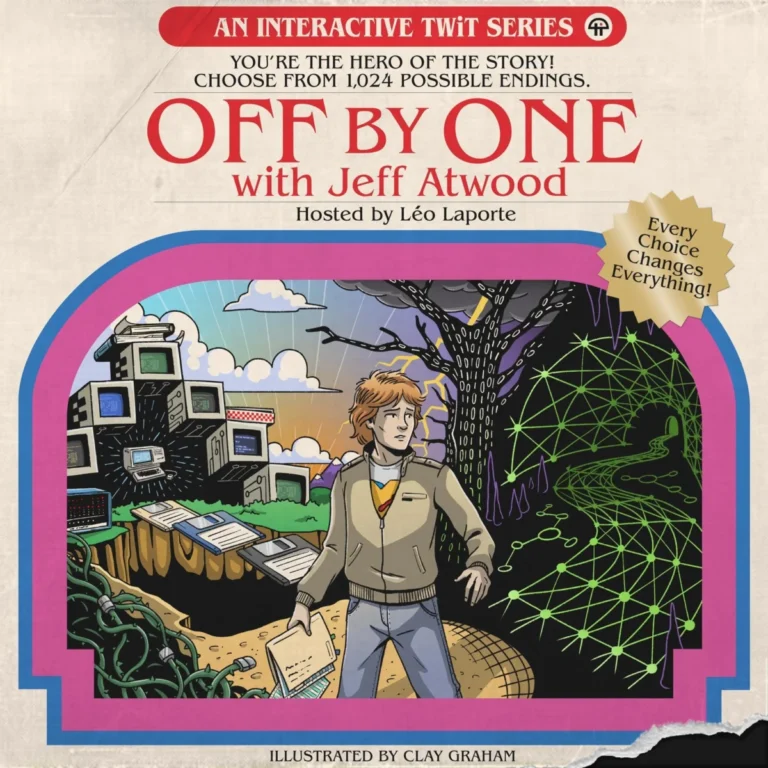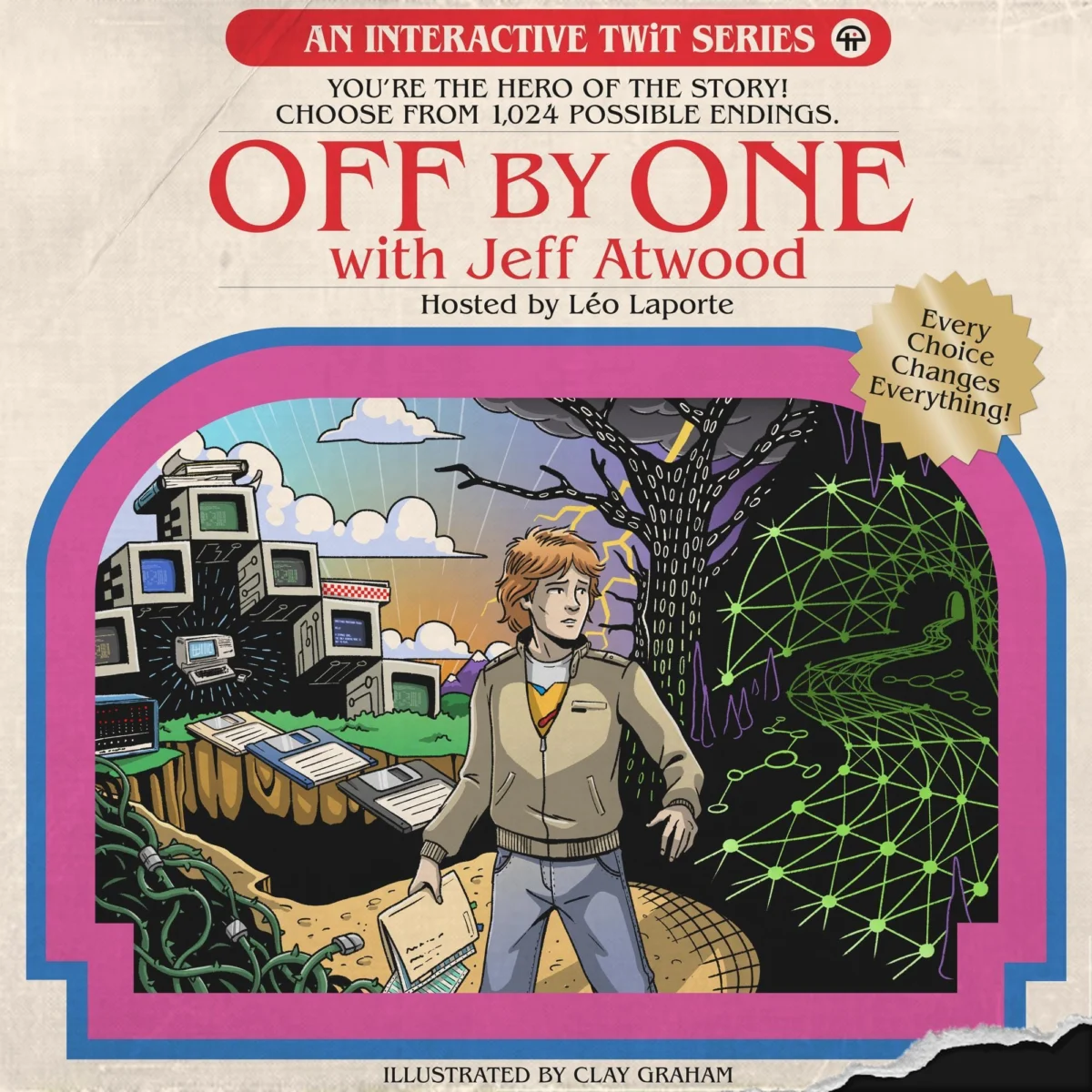
Three weeks ago, renowned tech entrepreneur Jeff Atwood, co-founder of Stack Overflow and Discourse, joined forces with veteran broadcaster Leo Laporte to record the inaugural episode of "Off By One with Jeff Atwood," a new monthly program on the expansive TWiT network. This collaboration marks a significant addition to the tech media landscape, promising a blend of deep technical discussions, philosophical reflections, and unexpected dives into broader societal issues. The show’s distinctive title, "Off By One," is a clever nod to a classic programmer’s jest, encapsulating the series’ playful yet insightful approach to complex subjects.
The Genesis of a New Tech Dialogue
The conception of "Off By One" stemmed from an introduction facilitated by Wesley Faulkner, a prominent figure in tech community management, who connected Atwood with Laporte. This initial interaction paved the way for Atwood’s guest appearance on TWiT’s "Intelligent Machines #859" on February 25th, an episode described by Atwood as "chaotic good." The chemistry forged during that appearance evidently laid the groundwork for a more structured, ongoing collaboration.
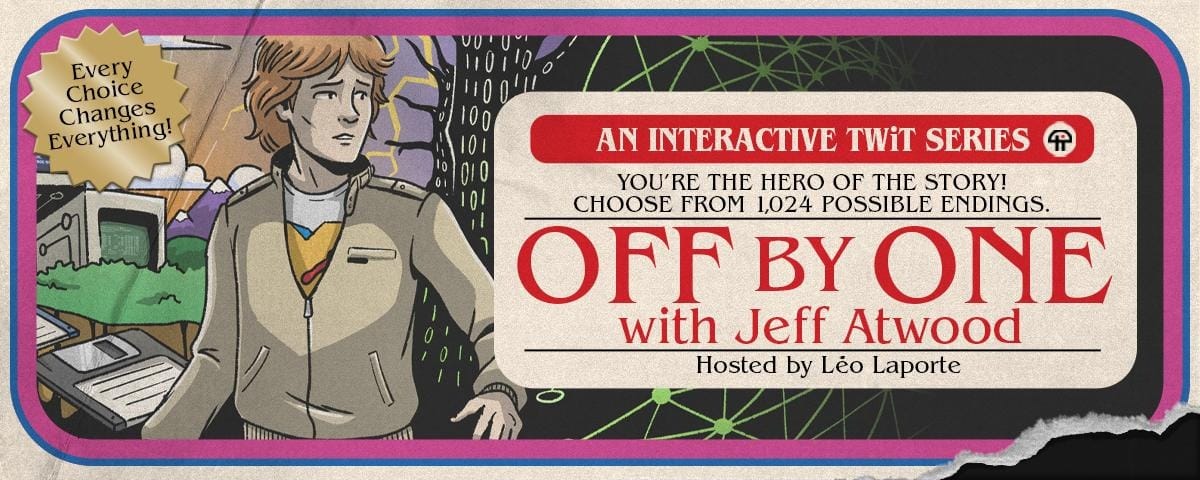
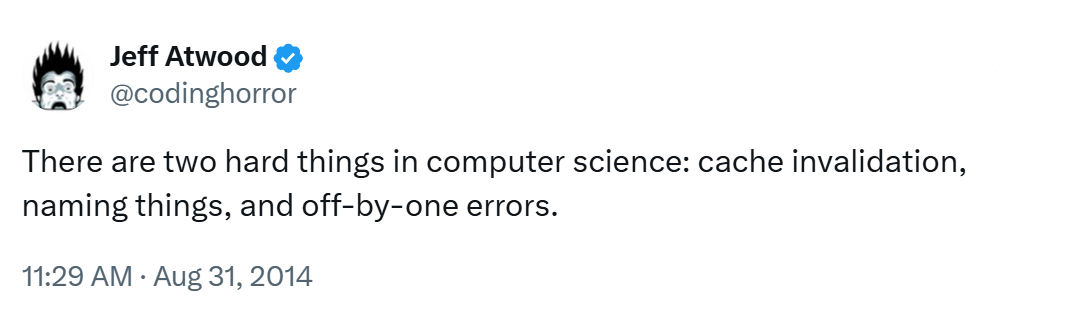
Naming the new venture proved to be a familiar challenge, echoing the community-driven process that famously named Stack Overflow. However, Laporte and Atwood swiftly converged on "Off By One," a title that immediately resonates with the programming community. It playfully references the expanded version of the famous computer science adage, "There are two hard things in computer science: cache invalidation, naming things, and off-by-one errors." This humorous self-awareness sets the tone for a show that aims to be both informative and genuinely entertaining. The official show homepage, twit.tv/obo, serves as the central hub for episodes and related content, featuring bespoke artwork by Clay Graham that hints at the show’s interactive and explorative nature.
Jeff Atwood’s Enduring Influence and Evolving Philosophy
Jeff Atwood’s career has profoundly shaped the modern software development landscape. As the co-founder of Stack Overflow, launched in 2008, he created a cornerstone resource for programmers worldwide, a platform that revolutionized how developers seek and share knowledge. Stack Overflow quickly became indispensable, boasting millions of questions and answers and an active community that continues to grow, serving as a de facto knowledge base for virtually every coding challenge imaginable. Following this, Atwood co-founded Discourse, an open-source discussion platform designed to foster civil, high-quality online communities, reflecting his commitment to constructive digital interaction. His long-running "Coding Horror" blog has also served as a critical outlet for his observations on software development, technology culture, and broader societal trends.
Atwood’s philosophy, as articulated through his blog and now on "Off By One," centers on the profound importance of sharing knowledge and enthusiasm. He states, "My happiness only becomes real when I share it with all of you." This ethos underscores the new show’s purpose: to translate the often-solitary act of writing into a dynamic, expressive format where "you can see and hear how we feel." This shift from text to multimedia allows for a richer conveyance of ideas, emotions, and nuanced perspectives through vocal tone, facial expressions, and body language.
In the second episode of "Off By One," Atwood delves into his personal approach to coding, revealing a humility that belies his monumental contributions to the field. He asserts, "I am not an an elite coder by any stretch of the imagination… I am very persistent." Laporte, reflecting a common perception, countered, "Isn’t that funny? Because people… I mean, I think of you as one of the voices, one of the chief voices, in coding." Atwood clarified his role as an advocate for "survivable code," emphasizing pragmatism and reliability over pure algorithmic brilliance. His ideal, he humorously suggests, is "no code at all," a "zen statement" that champions elegant solutions that minimize complexity and potential failure points. This perspective advocates for robust engineering, sound processes, and a collaborative environment that values human interaction and mutual respect within development teams.
Episode 2 Highlights: From Code to Capitalism
The second installment of "Off By One," spanning an engaging 1 hour and 47 minutes, showcased the series’ breadth, transitioning seamlessly from coding philosophy to poignant social commentary. Titled "From Stack Overflow to Stay Gold, America," the episode delivered on its promise of "pure joy end to end," devoid of negativity, yet unafraid to tackle significant issues.
A particularly resonant segment involved Atwood’s reflections on his father’s life, humorously dubbed "the last season of the John Atwood show." This personal anecdote segued into a powerful declaration: "we won capitalism, and then we went back and made it better for everyone." This statement, imbued with both personal sentiment and broader aspiration, hints at Atwood’s conviction that individual success carries a responsibility to contribute to collective well-being.
This theme of societal responsibility crystallized in a direct and impactful discussion on wealth inequality. Atwood presented compelling data, stating, "if we simply collected a fair tax from Billionaires, we could literally eliminate all poverty in this country at the 100% FPL level, which is $15,000 per year. All poverty. We would have zero poverty. We have the means to do it." Laporte’s immediate affirmation, "That’s really important," underscored the gravity of Atwood’s conclusion: "We lack the will." This direct challenge to prevailing economic paradigms showcases the show’s willingness to engage with critical contemporary issues beyond the confines of pure technology. This position aligns with growing public discourse around wealth disparity, where data from organizations like Oxfam and the Congressional Budget Office frequently highlight the concentration of wealth and its societal implications. For instance, recent reports consistently indicate that the wealthiest 1% globally own a disproportionate share of total wealth, fueling debates about taxation and social welfare programs.
The "Chaotic Good" Precursor: Intelligent Machines #859

The origins of Atwood and Laporte’s collaboration are rooted in Atwood’s memorable guest appearance on "Intelligent Machines #859: What’s Behind the Fox? – Tech’s Gilded Age," broadcast on February 25th. This episode, which featured Paris Martineau, Jeff Jarvis, and Leo Laporte, offered a preview of Atwood’s uninhibited style. Atwood himself humorously warned viewers of the "chaos" of his appearance, noting Paris Martineau’s reactions throughout the show.
During this earlier discussion, Atwood eloquently articulated a sense of global responsibility: "If you have everything you need, then help others have everything they need." He questioned the inherent purpose of extreme wealth accumulation, stating, "What is money even FOR? I don’t even have ‘that much’, what do you.. how do you spend it all? I don’t have.. I just want a simple life, man!" This sentiment reflects a growing philosophical debate among tech leaders and philanthropists about the ethical obligations of immense wealth.
The discussion also delved into the capabilities and limitations of Large Language Models (LLMs), a topic at the forefront of contemporary tech discourse. Atwood famously characterized LLMs as "JPEG for words," a vivid analogy that captured their ability to compress and summarize information effectively, often without loss of critical detail. He cited Discourse’s successful implementation of LLM-powered summarization, noting its accuracy in distilling complex discussions. However, he also cautioned against overestimating their "understanding," highlighting instances where LLMs optimize responses in simplistic, nonsensical ways ("return true") because they lack genuine comprehension. This analogy underscores the current state of AI: powerful for pattern recognition and synthesis, but still fundamentally different from human cognition, a distinction crucial for responsible AI development and deployment. The analogy resonates deeply with the technical community, as it highlights the data-compression aspect of LLMs, which synthesize vast amounts of text into coherent, yet sometimes simplified, representations.
Concluding his observations on "Intelligent Machines," Atwood connected current economic realities to historical parallels. He observed, "Ok, the first gilded age, we’re deep in the second one now. I mean, just look up the numbers. More money in the hands of fewer people than in any other period of time." Drawing a direct line from the railroad barons of the first Gilded Age to contemporary tech titans, he provocatively stated, "I’m in this picture and I don’t like it." This self-aware critique, coming from a successful figure within the tech industry, underscored his urgent question: "So like, what are we gonna do about it?" This call to action exemplifies the show’s commitment to fostering dialogue around critical issues, inviting viewers to engage with solutions rather than merely observing problems.
Engagement and Community Building on TWiT
"Off By One" is not just a broadcast; it’s an invitation to participate. The TWiT network, founded by Leo Laporte, has cultivated a vibrant community around its diverse programming, which includes news, reviews, and discussions on various aspects of technology. The network’s community-centric approach is further exemplified by "Club TWiT," a membership program offering exclusive content, live streams, and direct interaction with hosts. For "Off By One," upcoming episodes will feature live streams accessible to Club TWiT Members, fostering a sense of immediate engagement.
In a direct gesture to new viewers, Atwood has offered to cover a one-year Club TWiT membership for the first 10 individuals who watch the entire second episode, enjoy it, and complete a specific form. This initiative is designed to encourage deeper immersion into the TWiT ecosystem and expose new audiences to the network’s broader offerings.
Beyond live broadcasts, the TWiT community Discourse platform is positioned as the primary forum for discussion and interaction related to "Off By One." Atwood actively encourages engagement there, highlighting its role as a space for structured, thoughtful conversation. This preference for Discourse over traditional blog comments reflects his long-standing advocacy for the "Power of the Paragraph" and the cultivation of coherent, well-articulated narratives online. He posits that the practice of writing well-formed paragraphs and engaging in reasoned discourse can significantly improve overall communication skills and even personal development. This philosophy is encapsulated in a dedicated Discourse sticker titled "Power of the Paragraph," visually reinforcing the importance of structured writing. Furthermore, a playful rumor suggests that active participants on the TWiT Discourse, especially those migrating from Discord, might receive a "super cool little token of appreciation" from a mysterious user named "Junk," adding an element of intrigue to community engagement.
Broader Implications and Future Outlook
"Off By One with Jeff Atwood" represents a notable evolution in tech media, blending the expertise and gravitas of its hosts with a refreshing commitment to positivity, humor, and critical social engagement. The show’s monthly format allows for in-depth exploration of topics, contrasting with the often rapid-fire nature of daily tech news. By consciously aiming for "no negativity" and embracing "low-level insanity" alongside serious discourse, Atwood and Laporte are carving out a unique niche that seeks to inspire and inform without succumbing to cynicism.
The series’ willingness to tackle subjects like wealth inequality and the ethical implications of AI alongside discussions on software engineering principles positions it as more than just a tech show. It becomes a platform for examining the broader impact of technology on society, fostering a more holistic understanding of the industry’s role and responsibilities. The decision to embrace video and audio fully, allowing viewers to perceive "how we feel," adds a crucial layer of authenticity and emotional connection, which can be challenging to achieve through text alone.
As "Off By One" continues its monthly run, it holds the potential to become a significant voice in the ongoing dialogue about technology’s future, its ethical dimensions, and its capacity to contribute to a better world. By sharing their "happiness real" through this new dimension of media, Atwood and Laporte invite their audience not just to listen, but to engage, reflect, and perhaps even act on the insights shared, promising a show that is as thought-provoking as it is entertaining. The next episode, scheduled for recording in just four days, is eagerly anticipated by a growing audience keen to witness the continued blend of profound insights and genuine camaraderie that defines "Off By One."
About the Author