The landscape of digital content creation is undergoing a profound transformation, driven by the rapid advancements in artificial intelligence. Amidst this evolution, a familiar name from the early 2000s, LimeWire, has resurfaced, not as a file-sharing platform, but as a pioneering force in the realm of generative AI and decentralized content ownership. This reimagined LimeWire is actively empowering creators to not only generate AI-driven art, music, and video but also to share, monetize, and retain ownership of their digital creations through a unique integration of NFTs and cryptocurrency.
From File-Sharing Infamy to AI Innovation: A Strategic Pivot
LimeWire, once a ubiquitous name synonymous with peer-to-peer file sharing, faced a precipitous decline and eventual shutdown in 2010 due to widespread copyright infringement lawsuits. However, the brand’s legacy has been resurrected with a completely new business model, pivoting aggressively into the burgeoning field of AI technology. The current iteration of LimeWire, launched as an AI content publishing platform, aims to leverage the power of generative AI to democratize content creation and provide artists with novel avenues for engagement and revenue.
This strategic rebirth positions LimeWire as a direct competitor to other AI art generators and NFT marketplaces, but with a distinctive integrated approach. By combining powerful AI creation tools with a built-in mechanism for minting and trading NFTs, the platform offers a streamlined workflow for creators looking to capitalize on the digital economy. The reintroduction of the LimeWire brand into the digital space has garnered attention, not only from aspiring creators but also from established figures in the entertainment industry.
Empowering Creators: The LimeWire Studio Ecosystem
At the heart of the new LimeWire is the LimeWire Studio, a comprehensive platform designed to facilitate the entire creative process from conception to monetization. The studio currently excels in AI image generation, offering users access to sophisticated AI models and an intuitive interface. However, the platform has signaled ambitious future plans to expand its generative capabilities to include AI music and video creation tools, promising a more holistic creative environment.
The platform’s approach to AI image generation is built upon robust and adaptable technologies. LimeWire currently supports advanced models such as Stable Diffusion 2.1, Stable Diffusion XL, and DALL-E 2. This allows users to engage with a spectrum of AI art generation possibilities, from simple text prompts to highly detailed instructions. The flexibility in prompt complexity caters to both novice users looking to experiment with AI art and experienced creators seeking precise control over their outputs.
A key differentiator for LimeWire Studio is its seamless integration of diverse AI models and aesthetic styles. Users can effortlessly transition between different AI engines and explore a wide array of artistic styles, including cinematic, digital art, pixel art, anime, analog film, and more. This variety ensures that creators can imbue their AI-generated art with unique visual identities, fostering a broad range of creative exploration. The platform further enhances user control with features like samplers for fine-tuning output quality and detail, along with customization options and prompt guidance designed to simplify the creative journey.
In a significant move toward future-proofing its offerings, LimeWire is actively developing its own proprietary AI model. This initiative underscores the company’s commitment to continuous innovation and promises to further expand the creative horizons for its user base, solidifying its position as a dynamic and evolving player in the AI-driven art and image creation sector.
Beyond Creation: The Power of NFTs and Decentralized Ownership
LimeWire distinguishes itself by seamlessly integrating content creation with decentralized ownership through Non-Fungible Tokens (NFTs). Upon completing a creative piece within the LimeWire Studio, users have the option to publish their work. This publication process automatically initiates the minting of the creation as an NFT on either the Polygon or Algorand blockchain. This transformative step imbues each piece of digital content with a unique digital signature, verifying its authenticity and establishing ownership in the decentralized realm.
The platform offers creators significant control over the accessibility and distribution of their NFT creations. They can opt for a public release, making their content discoverable by a wider audience and fostering engagement. This public accessibility also opens up opportunities for enthusiasts to trade these NFTs, cultivating a vibrant community around digital art. Alternatively, creators can choose to share their posts exclusively with their premium subscribers. This exclusivity fosters a more intimate and personalized experience for dedicated fans, creating a sense of community and rewarding loyal supporters. This nuanced approach to sharing options highlights LimeWire’s dedication to empowering creators with a range of choices in how they connect with their audience and distribute their digital assets.
Monetization Strategies: Earning from Digital Creations
LimeWire has implemented a multifaceted monetization strategy designed to reward creators for their contributions to the platform. Beyond the potential for NFT sales, creators can also earn revenue through ad revenue sharing. When content is published on LimeWire, creators receive 70% of the ad revenue generated from users who view their images, music, and videos. This model is particularly beneficial for designers and artists who can experiment with AI generation tools and share their creations while generating a supplementary income.
The revenue earned by creators is distributed in the form of LMWR tokens, LimeWire’s native cryptocurrency. These earnings are paid out monthly in LMWR, which can then be traded on various prominent cryptocurrency exchanges such as Kraken, ByBit, and UniSwap. Furthermore, creators can utilize their LMWR tokens to pay for prompts when using LimeWire’s generative AI tools, creating a self-sustaining ecosystem within the platform.
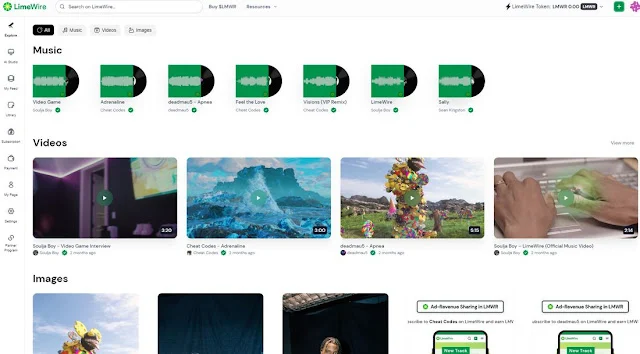
The involvement of established artists like Deadmau5, Soulja Boy, and Sean Kingston in publishing their content as NFT music, videos, and images signals a growing acceptance of this model within the mainstream entertainment industry. Their participation lends credibility to LimeWire’s vision and can attract a wider audience of both creators and collectors.
Pricing and Accessibility: A Freemium Model with Enhanced Tiers
LimeWire embraces a freemium model, making its AI tools accessible to a broad audience. Users can sign up for free and receive 10 credits, enabling them to generate up to 20 AI images per day. Free users also benefit from a 50% ad revenue share. This entry-level offering allows individuals to experiment with AI art generation without financial commitment.
For users seeking more advanced features and higher usage limits, LimeWire offers several premium subscription plans:
- $9.99 per month: Includes 1,000 credits per month (up to 2,000 image generations), early access to new AI models, and a 50% ad revenue share.
- $29 per month: Offers 3,750 credits per month (up to 7,500 image generations), early access to new AI models, and a 60% ad revenue share.
- $49 per month: Provides 5,000 credits per month (up to 10,000 image generations), early access to new AI models, and a 70% ad revenue share.
- $99 per month: Grants 11,250 credits per month (up to 22,500 image generations), early access to new AI models, and a 70% ad revenue share.
All premium plans come with additional benefits, including a Pro profile badge, access to full creation history, faster image generation speeds, and an ad-free experience. This tiered pricing structure caters to varying user needs and budgets, encouraging users to upgrade as their creative output and monetization goals grow.
Broader Implications: The Democratization of Creativity and Digital Economics
LimeWire’s resurgence and its innovative approach to AI content creation and monetization carry significant implications for the broader digital economy and the creative landscape. By lowering the barriers to entry for sophisticated AI tools and integrating them with a robust NFT framework, LimeWire is effectively democratizing the ability to create and profit from digital art. This empowers individuals who may not have traditional artistic training or access to expensive software to participate in the digital art market.
The platform’s emphasis on creator royalties, where artists earn a percentage on every resale of their NFTs, addresses a long-standing issue in the art world where creators often see little to no residual income from secondary market sales. This mechanism could foster a more equitable distribution of wealth within the digital art ecosystem.
Furthermore, the platform’s planned expansion into AI music and video generation suggests a future where a single platform can cater to a wide range of creative needs, from visual art to audio and video production. This integrated approach could simplify workflows for multimedia artists and foster new forms of creative collaboration.
The success of LimeWire’s transformation could also serve as a case study for other legacy brands looking to reinvent themselves in the digital age. By identifying emerging technological trends and adapting their core principles to new paradigms, brands can find new life and relevance.
Conclusion: A Glimpse into the Future of Digital Art and Ownership
In conclusion, the reimagined LimeWire stands as a compelling example of how technology can reshape creative industries. It offers an accessible and empowering ecosystem for creators to explore the frontiers of AI-generated content, gain ownership of their digital assets through NFTs, and participate in a new wave of digital economics. The platform’s commitment to continuous innovation, with its proprietary AI model development and planned expansion into music and video, suggests that LimeWire is poised to remain a significant force in the evolving landscape of digital creativity. As the platform continues to mature, its impact on how art is created, shared, and valued is likely to be profound, offering a glimpse into a future where the lines between creator, collector, and innovator are increasingly blurred.
About the Author