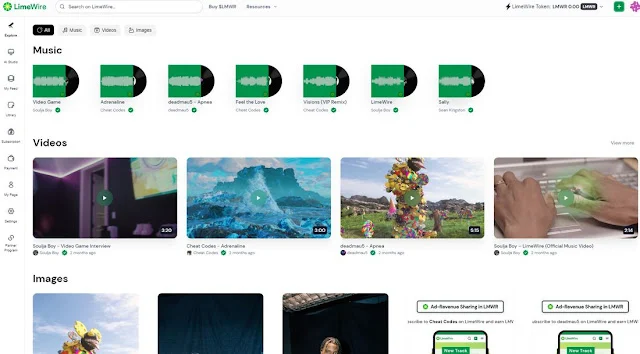
In a significant pivot that blurs the lines between digital creation and blockchain technology, the once-infamous file-sharing platform LimeWire has relaunched as a cutting-edge AI content publishing hub. This transformation positions the revived brand at the forefront of the generative AI revolution, offering creators a unique ecosystem to not only produce AI-driven art, music, and potentially video but also to share, monetize, and even own their digital output as Non-Fungible Tokens (NFTs). The platform aims to democratize AI content creation, making advanced tools accessible and providing new revenue streams for artists and musicians.
The evolution of LimeWire marks a stark departure from its controversial past. Originally launched in 2003, LimeWire became synonymous with peer-to-peer file sharing, particularly for music, and was eventually shut down in 2010 following legal challenges over copyright infringement. This new iteration, however, operates under a completely different paradigm, focusing on empowering creators rather than facilitating unauthorized distribution. The re-emergence of the LimeWire brand in this innovative space has generated considerable interest, drawing parallels to the broader trend of established digital entities seeking relevance in emerging technological landscapes.
LimeWire’s core offering revolves around its AI Studio, which currently prioritizes AI image generation. This feature allows users to leverage advanced models such as Stable Diffusion 2.1, Stable Diffusion XL, and DALL-E 2 to bring their imaginative concepts to life. Users can begin with simple text prompts or construct more elaborate descriptions to guide the AI in creating visual content. The platform’s emphasis on user-friendliness is evident in its intuitive interface, which supports a wide array of artistic styles, including cinematic, digital art, pixel art, anime, and analog film aesthetics. This versatility enables creators to explore diverse visual expressions and fine-tune their output through features like samplers and prompt guidance.
Beyond its current image generation capabilities, LimeWire has ambitious plans for expansion. The company has publicly stated its intention to introduce AI music and video generation tools in the near future. This strategic roadmap suggests a commitment to becoming a comprehensive creative suite for AI-powered content, catering to a broader spectrum of artistic needs and offering a more integrated workflow for digital artists.
One of the most distinctive aspects of LimeWire’s new model is its deep integration with blockchain technology, specifically through NFTs. Upon creating content, users have the option to automatically mint their work as an NFT on either the Polygon or Algorand blockchain. This process imbues each creation with a unique digital signature, establishing verifiable ownership and authenticity in the decentralized web. This feature directly addresses the growing demand for digital ownership and provenance in the art and collectibles market.
Creators on LimeWire can choose how their NFT content is distributed. Options include making it publicly discoverable, allowing for broader engagement and potential trading within the LimeWire community, or offering it exclusively to premium subscribers. This dual approach caters to different creator strategies, from building a wide audience to fostering a dedicated fan base. Importantly, creators also stand to earn a 2.5% royalty on secondary sales of their minted NFTs, a mechanism designed to provide ongoing revenue and incentivize continued creation. This model is a significant draw for artists seeking sustainable income streams in the digital realm.
Monetization on LimeWire extends beyond NFT royalties. The platform incorporates an ad revenue sharing model, where creators receive 70% of the ad revenue generated from users viewing their content. This revenue is paid out monthly in LMWR tokens, LimeWire’s native cryptocurrency. LMWR tokens can be traded on major cryptocurrency exchanges such as Kraken, ByBit, and UniSwap, or used by creators to pay for prompts within the LimeWire generative AI tools, creating a self-sustaining ecosystem. This integration of a proprietary token further embeds users within the LimeWire economy and offers a tangible reward for content creation and engagement.
The pricing structure of LimeWire offers a tiered approach to access its services. A free tier provides users with 10 credits, enabling the generation of up to 20 AI images per day and a 50% ad revenue share. Paid subscription plans offer progressively more credits, faster image generation, early access to new AI models, and higher ad revenue share percentages. For example, a $9.99 per month plan includes 1,000 credits, while a $99 per month plan offers 11,250 credits. All premium plans also include benefits such as a Pro profile badge, full creation history access, and an ad-free experience. This tiered system aims to accommodate a wide range of user needs, from casual experimenters to professional creators.
The platform’s adoption by notable artists and musicians such as Deadmau5, Soulja Boy, and Sean Kingston underscores its potential to attract established figures in the creative industries. Their involvement signals a broader acceptance of AI-generated content and blockchain-based monetization within mainstream entertainment. For these artists, LimeWire offers a new avenue to connect with fans, distribute digital collectibles, and explore innovative revenue models that were previously unavailable.
The implications of LimeWire’s reinvention are far-reaching. It represents a significant step in the ongoing narrative of Web3 and the creator economy, demonstrating how established brands can successfully pivot to embrace new technologies. By merging generative AI with NFTs and cryptocurrency, LimeWire is attempting to create a more equitable and artist-centric digital landscape. The platform’s focus on making AI tools accessible and providing clear pathways to monetization could empower a new generation of creators and redefine how digital art and media are produced and consumed.
Furthermore, the move by LimeWire highlights the evolving nature of digital platforms and the continuous search for sustainable business models in the online space. The company’s ability to leverage its brand recognition, albeit from a different era, while forging a new identity in the burgeoning AI and blockchain sectors, serves as a case study in digital adaptation. The success of this new venture will likely depend on its capacity to innovate, attract and retain a diverse creator base, and navigate the complexities of the rapidly evolving AI and cryptocurrency markets.
As LimeWire continues to develop its AI music and video generation tools, the platform is poised to become an even more compelling destination for creators seeking to explore the full spectrum of AI-powered content creation. The ongoing commitment to innovation and its focus on empowering creators with ownership and monetization opportunities suggest a future where generative AI is not just a tool for creation but a fundamental component of a new digital economy. For artists and enthusiasts alike, LimeWire’s renewed presence offers a glimpse into the future of creative expression and digital ownership.
About the Author