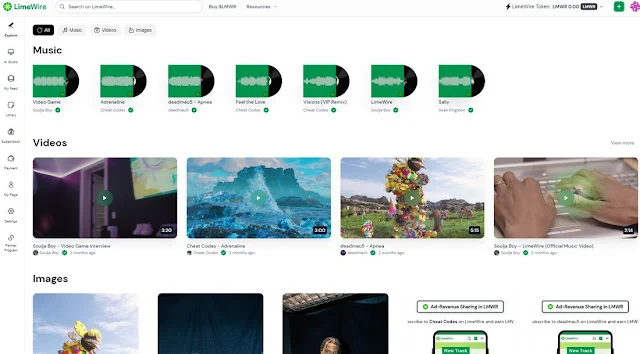
In a dramatic pivot that redefines its historical association with peer-to-peer file sharing, LimeWire has re-emerged as a formidable player in the burgeoning generative artificial intelligence (AI) landscape. The platform, once notorious for its role in music piracy during the early 2000s, has undergone a complete metamorphosis, transforming into a sophisticated AI content publishing platform. This evolution positions LimeWire not merely as a tool for AI-generated art but as a comprehensive ecosystem designed to empower creators, foster community engagement, and unlock new avenues for monetization through NFTs and tokenized economies.
The Genesis of a New Era: From File Sharing to AI Innovation
The original LimeWire, a dominant force in digital music distribution before the advent of legal streaming services, ceased operations in 2010 following a protracted legal battle with the Recording Industry Association of America (RIAA). The platform’s resurrection, however, marks a stark departure from its past. Launched as a cutting-edge AI content publishing platform, the new LimeWire aims to democratize digital creation by providing accessible tools and a robust marketplace for users to generate, share, and monetize their artistic endeavors. This strategic reinvention leverages the residual brand recognition of LimeWire while embracing the transformative potential of AI and blockchain technology.
The platform’s reintroduction as an AI-focused entity is a testament to the rapidly evolving digital creative economy. As generative AI tools become more sophisticated and accessible, the demand for platforms that can not only facilitate creation but also manage distribution and monetization has surged. LimeWire appears poised to fill this niche, offering a unified experience for creators and consumers alike.
LimeWire Studio: A Hub for AI-Powered Creativity
At the core of this new LimeWire ecosystem lies LimeWire Studio, a creative hub designed to be an all-in-one solution for AI content generation and publishing. The platform currently emphasizes AI image generation, offering users powerful tools to bring their visual concepts to life. This initial focus is supported by advanced AI models, including Stable Diffusion 2.1, Stable Diffusion XL, and DALL-E 2, providing a versatile toolkit for both novice and experienced creators.
Users can initiate the creative process with simple text prompts, gradually refining their requests for more intricate and specific outputs. The platform’s strength lies in its seamless integration of various AI models and design styles. Creators have the flexibility to effortlessly switch between different AI models and explore a wide array of artistic aesthetics, such as cinematic, digital art, pixel art, anime, and analog film. This adaptability ensures that users can tailor their creations to a broad spectrum of artistic visions and project requirements.
LimeWire’s commitment to innovation is further underscored by its development of a proprietary AI model. This in-house initiative signals a long-term vision to enhance its generative capabilities, potentially offering unique features and performance optimizations that distinguish it from competitors. Such a move aligns with the broader trend of AI platforms developing bespoke models to gain a competitive edge and provide specialized creative experiences.
Expanding Horizons: The Future of AI Music and Video Generation
While currently focused on image generation, LimeWire has ambitious plans to broaden its creative toolkit. The platform is set to introduce AI music and video generation tools in the near future. This strategic expansion is expected to transform LimeWire Studio into a comprehensive content creation powerhouse, offering creators even more avenues for expression and audience engagement. The prospect of integrated AI music and video generation could significantly lower the barrier to entry for aspiring musicians and filmmakers, enabling them to produce professional-quality content with unprecedented ease.
The anticipated integration of these new modalities is a critical step in establishing LimeWire as a holistic platform for digital artists. By encompassing visual, auditory, and motion-based content creation, LimeWire aims to capture a wider segment of the creator market and foster a more dynamic and interconnected creative community.
Monetization and Ownership: NFTs and Tokenized Economies
A defining feature of the revamped LimeWire is its innovative approach to monetization and digital ownership, deeply integrated with blockchain technology. Upon creating content, users have the option to publish it, with LimeWire automatically minting it as a Non-Fungible Token (NFT) on either the Polygon or Algorand blockchain. This process imbues digital creations with unique digital signatures, securing authenticity and ownership in a decentralized manner.
Creators can choose to make their NFT creations public, fostering community interaction and enabling enthusiasts to trade these digital assets. Alternatively, LimeWire acknowledges the value of exclusivity by allowing creators to share content solely with their premium subscribers. This tiered access model caters to diverse creator strategies, from broad community building to cultivating a loyal, paying fan base.
The economic model extends further through ad revenue sharing. When content is published on LimeWire, creators receive 70% of all ad revenue generated from other users viewing their images, music, and videos on the platform. This revenue-sharing model is designed to be particularly beneficial for visual artists and content creators, providing them with a tangible income stream from their AI-generated work.
The Role of LMWR Tokens
Earnings from ad revenue and NFT sales are disbursed in LMWR tokens, LimeWire’s native cryptocurrency. These tokens can be traded on prominent cryptocurrency exchanges such as Kraken, ByBit, and UniSwap, providing creators with liquidity and flexibility. Furthermore, LMWR tokens can be utilized within the LimeWire platform itself to pay for prompts when using its generative AI tools, creating a self-sustaining economic loop. This tokenization strategy not only incentivizes platform usage but also embeds LimeWire within the broader cryptocurrency ecosystem.
Pricing and Accessibility: Free Tier and Premium Plans
LimeWire adopts a tiered pricing strategy to cater to a wide range of users, from casual creators to professional artists. The platform offers a free tier that provides users with 10 credits, allowing for the generation of up to 20 AI images per day. Free tier users also receive 50% of the ad revenue share. This accessible entry point allows anyone to experiment with AI art generation and experience the platform’s capabilities without initial financial commitment.
For users seeking more robust features and higher generation limits, LimeWire offers several premium plans:
- $9.99 per month: Includes 1,000 credits per month, enabling up to 2,000 image generations, early access to new AI models, and a 50% ad revenue share.
- $29 per month: Provides 3,750 credits per month, allowing for up to 7,500 image generations, early access to new AI models, and a 60% ad revenue share.
- $49 per month: Offers 5,000 credits per month, supporting up to 10,000 image generations, early access to new AI models, and a 70% ad revenue share.
- $99 per month: Delivers 11,250 credits per month, facilitating up to 22,500 image generations, early access to new AI models, and a 70% ad revenue share.
All premium plans come with additional benefits such as a Pro profile badge, full creation history access, faster image generation speeds, and an ad-free experience. This tiered structure ensures that creators can scale their usage and benefits according to their needs and budget.
Broader Implications: Democratizing Creativity and the Future of Digital Art
LimeWire’s transformation signifies a broader trend in the digital creative landscape: the democratization of tools and ownership. By offering advanced AI generation capabilities alongside a clear path to monetization and verifiable digital ownership through NFTs, LimeWire is lowering traditional barriers to entry for artists, musicians, and content creators. The platform’s appeal is amplified by the involvement of established artists like Deadmau5, Soulja Boy, and Sean Kingston, who are leveraging LimeWire to publish their digital content, lending credibility and broader visibility to the platform.
The implications of such platforms are far-reaching. They could foster a new generation of independent creators who can build sustainable careers without relying on traditional gatekeepers. The integration of AI with blockchain technology also points towards a future where digital assets are not only created but are intrinsically linked to ownership, provenance, and economic value.
The inherent flexibility in content sharing – public versus subscriber-exclusive – allows creators to curate their audience and revenue streams strategically. This empowers them to build direct relationships with their fans, fostering a more engaged and supportive community. The 2.5% royalty earned by creators on every subsequent trade of their content further incentivizes the creation of valuable and sought-after digital assets, fostering a dynamic secondary market.
Conclusion: A New Chapter for a Familiar Name
LimeWire’s rebranding and re-entry into the digital space as an AI content publishing platform represent a significant reinvention. By leveraging cutting-edge AI technology, integrating robust NFT functionalities, and fostering a tokenized economy, the platform aims to empower a new wave of creators. The accessibility of its free tier, coupled with the comprehensive features of its premium plans, positions LimeWire as a compelling destination for anyone looking to explore the frontiers of AI-generated art, music, and video. As the platform continues to evolve, particularly with its upcoming expansion into music and video generation, LimeWire is poised to redefine the creator economy and offer endless possibilities for artistic exploration and entrepreneurial success in the digital age.
About the Author