Mattel, the global toy conglomerate and owner of iconic brands including Barbie, Hot Wheels, and Uno, has officially completed a significant restructuring of its digital gaming division. This strategic pivot, marked by the rebranding of its joint venture Mattel163 to Mattel Game Studios, signals the company’s intent to transition from a traditional toy manufacturer into a diversified intellectual property (IP) and brand management powerhouse. Central to this transformation is the objective of finding a mobile gaming "unicorn" that can rival the unprecedented success of Hasbro and Scopely’s Monopoly Go, which has generated billions of dollars in revenue since its launch.
The move follows a series of calculated corporate maneuvers throughout 2024. In February, Mattel bought out NetEase’s stake in their joint venture, Mattel163, a partnership that had existed since 2017. By August, the entity was rebranded as Mattel Game Studios, reflecting a new era of internal control and creative autonomy. To lead this ambitious expansion, Mattel recruited Devin Nambiar as Chief Operating Officer. Nambiar, a veteran of the gaming industry with a decade-long tenure at Electronic Arts (EA), now oversees a robust global team of approximately 300 employees stationed across Los Angeles, California, and Hangzhou, China.
The Evolution of Mattel’s Digital Strategy
The history of Mattel’s involvement in the digital space has transitioned through several distinct phases. For decades, the company primarily relied on a licensing model, allowing third-party developers to utilize its IP for a fee. While this minimized risk, it also limited Mattel’s share of the massive profits generated by high-performing mobile titles. The formation of Mattel163 in 2017 represented a middle ground—a joint venture with the Chinese internet giant NetEase intended to bring Mattel’s classic card games to the mobile market.
During its early years, Mattel163 focused on translating established physical games like Uno, Phase 10, and Skip-Bo into digital formats. According to Nambiar, the operation initially existed at a scale that did not significantly impact Mattel’s broader corporate strategy. However, the trajectory changed as these titles reached "escape velocity," demonstrating consistent organic growth and high levels of player engagement. The success of the mobile version of Uno, in particular, has become a cornerstone of the company’s digital portfolio, serving as a proof of concept for the potential of Mattel’s legacy brands in the mobile ecosystem.
The decision to buy out NetEase was described by Nambiar as a "win-win" for both organizations. For NetEase, the divestment aligns with a broader strategic retraction from certain Western gaming ventures as the company refocuses its priorities. For Mattel, the acquisition provides full ownership of the technology, data, and revenue streams associated with its most popular digital titles, allowing for a more integrated approach to brand management.
Benchmarking Against the Monopoly Go Phenomenon
The urgency behind Mattel’s restructuring is underscored by the performance of its primary competitor, Hasbro. The 2023 release of Monopoly Go by Scopely, under license from Hasbro, became a global sensation, reportedly earning over $2 billion in its first year. This success demonstrated that classic board game IP, when paired with modern mobile "social casino" mechanics and aggressive live-ops, could generate revenue figures that rival the sales of physical toy lines.
Mattel is now looking to identify which of its own brands can achieve similar "unicorn" status. Nambiar pointed to the current Uno mobile game as a prime candidate, noting its high volume of organic downloads and sustained engagement. The goal is to elevate these titles from successful digital adaptations to company-defining platforms. By controlling Mattel Game Studios internally, the company can ensure that these games are not just standalone products but are deeply integrated into the broader marketing and product cycles of the parent company.
Synchronizing Games with Film and Television
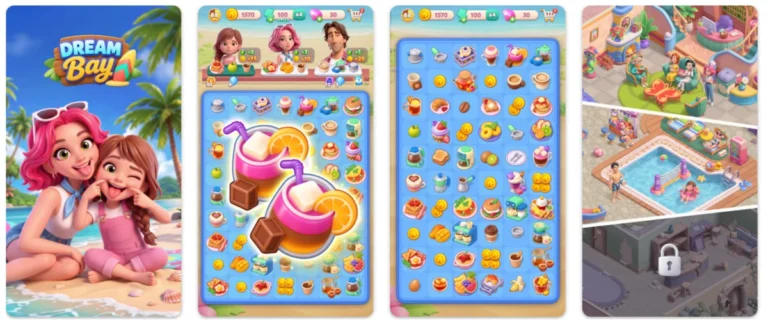
A key pillar of the new Mattel Game Studios strategy is the synchronization of digital releases with Mattel’s expanding cinematic and television universe. The success of the 2023 Barbie movie, which grossed over $1.4 billion at the global box office, highlighted a missed opportunity for a massive, high-fidelity mobile tie-in. While Mattel currently has licensed Barbie titles such as Budge’s Barbie Dreamhouse and Rollic’s Barbie Merge Mystery, the company aims for more ambitious, internally developed projects in the future.
This summer, the studio released Masters of the Universe: Until Next Time, an internally developed runner game that launched alongside the brand’s return to the cultural zeitgeist through new media projects. Nambiar stated that the ambition is to create an ecosystem where a mobile game launch is a standard component of every major Mattel film, TV show, or toy line launch. This "multi-platform synergy" is intended to maximize brand impressions and provide fans with a continuous experience across different media formats.
Portfolio Expansion and Genre Exploration
While card games like Uno remain the current revenue drivers, Mattel Game Studios is actively exploring a variety of genres to diversify its portfolio. Nambiar emphasized that the company needs to take "more shots on goal," particularly with the Barbie brand. The studio is investigating genres such as merge games, match-three puzzles, simulation games, and fashion-centric titles similar to Covet Fashion.
The strategy also extends beyond mobile. While mobile is viewed as the most authentic platform for brand expression and daily engagement, Mattel continues to see success in the PC and console markets. The Hot Wheels Unleashed series, licensed to Milestone, has successfully captured a segment of the arcade racing market. Mattel Game Studios intends to maintain these licensing partnerships for high-end console experiences while focusing its internal development efforts on the high-margin, high-reach mobile sector.
Chronology of Mattel’s Digital Transformation
- 2017: Mattel and NetEase form the Mattel163 joint venture to develop mobile games based on Mattel’s iconic brands.
- 2018–2022: Launch and scaling of Uno Mobile, Phase 10: World Tour, and Skip-Bo. The titles build a massive user base primarily through organic growth.
- Late 2023: Devin Nambiar joins Mattel163 as COO, bringing experience from EA to help scale the operation.
- February 2024: Mattel officially buys out NetEase’s stake in Mattel163, gaining full control of the studio and its IP portfolio.
- Summer 2024: Release of Masters of the Universe: Until Next Time, signaling a shift toward internally developed tie-ins for major IP.
- August 2024: Mattel163 is officially rebranded as Mattel Game Studios.
- 2024–2030: Mattel initiates a five-to-ten-year digital transformation plan aimed at making gaming a central pillar of the company’s business model.
Industry Context and Competitive Landscape
Mattel is not alone in its pursuit of digital dominance. The toy industry at large is facing a shifting landscape where physical play is increasingly supplemented or replaced by digital interaction. Just last week, the LEGO Group announced the acquisition of a mobile game development team, signaling its intent to bolster its "digital play" offerings.
For Mattel, the transition is also a financial necessity. Digital games offer recurring revenue through in-app purchases and advertisements, providing a hedge against the seasonal volatility of the physical toy market. Furthermore, digital games provide invaluable data on consumer behavior, allowing Mattel to refine its product development and marketing strategies for its physical toys.
Nambiar noted that the leadership at Mattel, including the executive suite, now views gaming as a high priority. The transition from a "toy company" to an "IP and brand management company" is the guiding philosophy behind this investment. However, the company is cautious about over-saturation. Nambiar clarified that Mattel does not intend to rush the process by releasing numerous low-quality games annually. Instead, the focus is on high-quality, sustainable titles that can live for years as "live-service" platforms.
Future Implications and Analysis
The rebranding to Mattel Game Studios marks the "first salvo" in what Mattel describes as a decade-long digital transformation. If successful, this move could significantly re-rate Mattel’s stock by shifting its revenue mix toward higher-margin digital software. The primary challenge will be the hyper-competitive nature of the mobile gaming market, where user acquisition costs are rising and player retention is notoriously difficult.
By leveraging its world-class IP, Mattel has a distinct advantage in organic user acquisition—a "moat" that few other developers possess. If Mattel Game Studios can successfully marry its iconic brands with sophisticated game design and monetization strategies, it may well find its own Monopoly Go. The next few years will be critical as the studio begins to roll out its new wave of Barbie and Hot Wheels titles, testing whether the company can truly replicate its physical-world dominance in the digital palm of the consumer’s hand.
About the Author