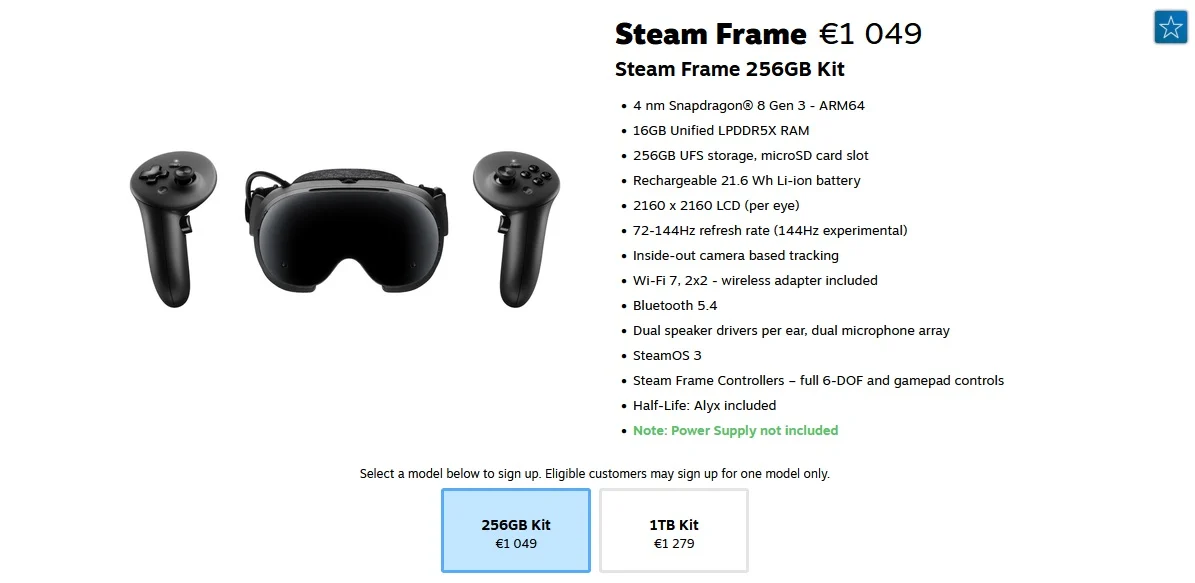
Valve Corporation has officially announced the launch details and pricing for the Steam Frame, its highly anticipated entry into the standalone virtual reality (VR) hardware market. Positioned as a premium successor to the Valve Index, the Steam Frame represents a significant strategic pivot for the company, moving away from PC-tethered requirements toward a mobile, high-performance computing architecture. The device will be offered in two primary configurations: a standard 256GB model priced at $1,059 (€1,049) and a high-capacity 1TB version retailing for $1,299 (€1,279). According to Valve, the two versions are internally identical regarding processing power and display technology, with the price delta attributed solely to the integrated solid-state storage.
A New Benchmark for Standalone Performance
The centerpiece of the Steam Frame’s value proposition is the inclusion of Half-Life: Alyx with every purchase. While the title has long been the gold standard for PC-based VR, its appearance on the Steam Frame marks a major technical milestone. Industry analysts have confirmed that this is not a streamed version of the game, but rather a native 64-bit ARM build of Half-Life: Alyx.
The port has been extensively optimized to run on the headset’s mobile chipset without the need for an external PC. This development suggests that Valve has achieved a level of optimization previously thought difficult for such a graphically intensive title on mobile hardware. By successfully porting the Source 2 engine to a standalone ARM environment, Valve is signaling a new era for its software library, potentially paving the way for other high-fidelity titles to transition to mobile VR platforms.

Modular Design and the Arcturus Vision Integration
In a departure from the "all-in-one" philosophy adopted by competitors, Valve has designed the Steam Frame with modularity in mind. The headset launches alongside a suite of official and third-party accessories intended to customize the user experience.
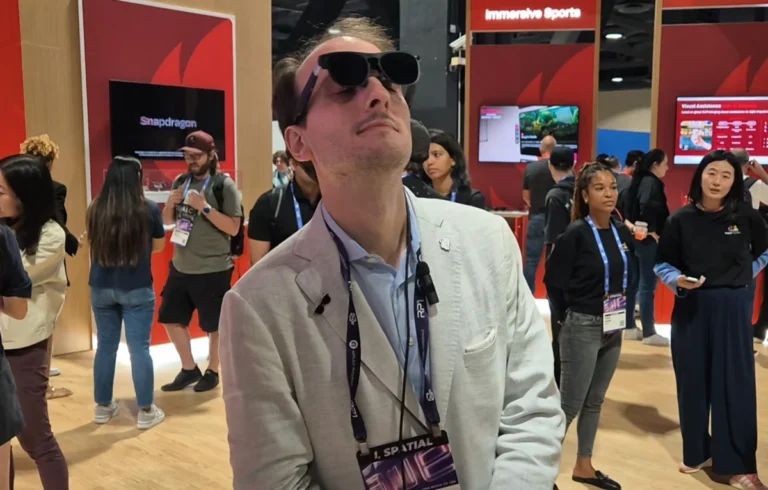
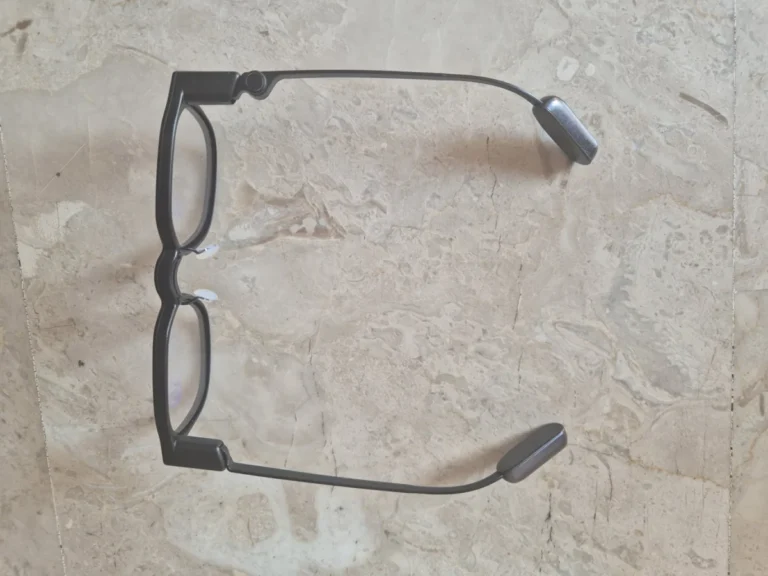
The most notable of these additions is the high-quality color passthrough camera developed by Arcturus Vision. Priced at approximately €157, this peripheral attaches to the front of the Steam Frame to enable advanced mixed reality (MR) capabilities. While the base headset provides standard VR functionality, the Arcturus module is designed for "prosumers" and developers who require high-fidelity, low-latency video see-through for MR applications.
Early technical demonstrations indicate that the Arcturus camera significantly reduces the "warping" and graininess often associated with standard passthrough solutions. Several popular VR titles, including Cubism, Puzzling Places, and Table Space, have already been updated to support the Arcturus module, allowing players to blend digital objects into their physical environments with high visual fidelity.
Technical Specifications and Hardware Chronology
The announcement of the Steam Frame follows years of industry speculation and internal leaks, often referred to under the codename "Deckard." The final product reflects a refined version of the technologies Valve has been patenting since 2021.

Key Hardware Features:
- Processor: Custom-designed ARM-based SoC optimized for the SteamOS environment.
- Display: High-resolution dual LCDs with specialized optics intended to minimize the "screen door effect."
- Tracking: Integrated inside-out tracking, removing the need for external Base Stations, though reports suggest compatibility with existing SteamVR peripherals.
- Audio: Evolution of the off-ear BMR (Balanced Mode Radiator) speakers originally featured on the Valve Index.
- Storage: 256GB or 1TB NVMe options.
The timeline of the Steam Frame’s development suggests a deliberate effort by Valve to wait for mobile processing power to reach a threshold where it could reasonably replicate the experience of a dedicated gaming PC. By choosing a price point above $1,000, Valve is clearly targeting the enthusiast and professional market rather than attempting to compete directly with entry-level consumer headsets.
Market Positioning: The Prosumer Niche
The $1,059 starting price places the Steam Frame in a unique market position. It sits significantly higher than the Meta Quest 3, which targets the mass market, yet remains more accessible than the enterprise-focused Apple Vision Pro. Valve appears to be doubling down on its existing community of "hard gamers" and VR enthusiasts who prioritize high-fidelity experiences and open ecosystems over low-cost hardware.
Industry analysts suggest that the Steam Frame is intended to revitalize a market that has recently experienced a cooling period, often referred to as the "VR Winter." By providing a high-end standalone alternative to the PCVR ecosystem, Valve is attempting to bridge the gap between the convenience of mobile VR and the power of desktop gaming.
"Valve is not chasing the same volume as Meta," says one industry consultant. "They are building a reference device for the next generation of SteamVR. The goal is to prove that high-end gaming can exist without a cable, and by including Half-Life: Alyx as a native port, they are providing the ‘killer app’ necessary to justify the four-figure price tag."

Industry Implications and Future Outlook
The launch of the Steam Frame is expected to have a ripple effect across the VR industry. First, the existence of a native ARM build of the Source 2 engine may encourage other developers to port their high-end PCVR titles to standalone platforms. Second, the modular approach to the passthrough camera could signal a trend toward "customizable" headsets where users only pay for the features they intend to use.
Furthermore, the Steam Frame’s reliance on an optimized version of SteamOS suggests that Valve is continuing its push toward a Linux-based gaming future. This move lessens the industry’s dependence on Windows-based architectures and provides a more controlled, efficient environment for VR rendering.
While the high entry price may limit the Steam Frame to a smaller user base compared to subsidized consumer headsets, its impact on the technological standards of the industry is likely to be substantial. Reservations for the headset have opened immediately following the announcement, with shipping expected to commence in the coming months. As Valve prepares to ship the first units, the VR community remains focused on whether the Steam Frame can truly deliver a "PC-quality" experience in a standalone form factor, potentially ending the hardware limitations that have constrained high-end VR growth for years.
The Steam Frame is more than just a new product; it is Valve’s definitive statement on the future of immersive computing. By combining modular hardware, a proven software library, and a native ARM ecosystem, Valve is attempting to reclaim its position as the leader of the high-end VR market.
About the Author