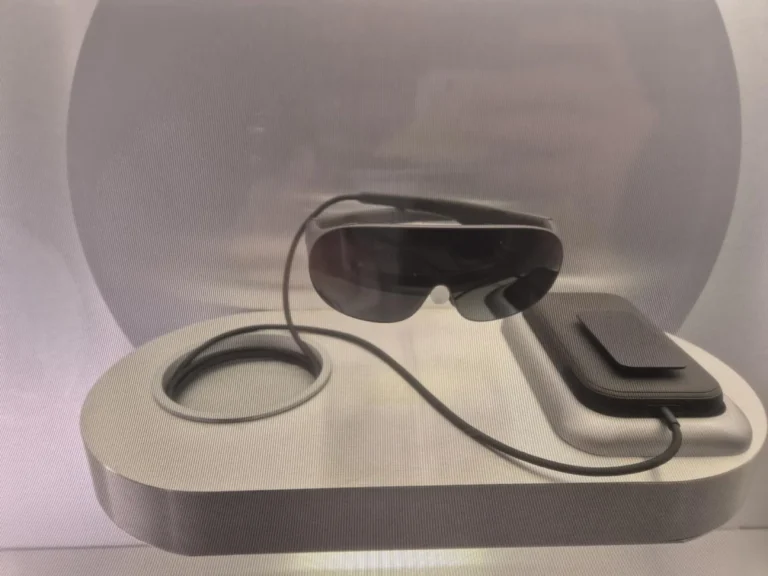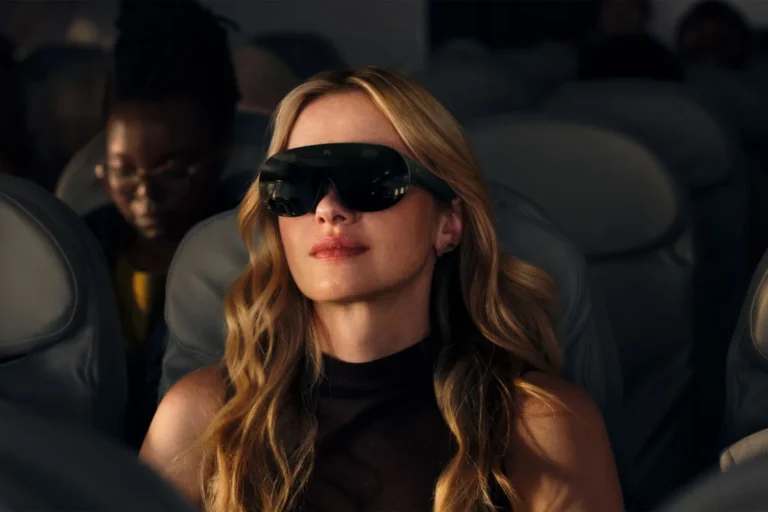
Meta Platforms Inc., in collaboration with eyewear giant EssilorLuxottica, appears to be in the final stages of preparing a new iteration of its successful smartglasses line. Recent filings with the Federal Communications Commission (FCC), first identified by industry analyst Janko Roettgers, reveal two new hardware devices currently designated under the internal codenames "Ray-Ban Meta Scriber" and "Ray-Ban Meta Blazer." These filings, carrying model numbers RW7001 and RW7002, indicate a significant hardware refresh for the product line, which has recently emerged as a cornerstone of Meta’s consumer hardware strategy following the commercial success of the second-generation Ray-Ban Meta smartglasses.
While the FCC documentation remains heavily redacted to protect proprietary trade secrets, the timing of these filings suggests an imminent market release. Historically, FCC certification represents one of the final regulatory hurdles before a consumer electronics product enters the retail phase. Industry analysts suggest an announcement could arrive as early as late spring 2026, potentially preempting the company’s annual Meta Connect conference typically held in the autumn. This accelerated timeline underscores Meta’s commitment to "ambient computing"—wearable technology that integrates artificial intelligence and sensors into daily life without the bulk of traditional virtual reality (VR) headsets.
The Evolving Narrative of the Metaverse and Virtual Reality
The news of Meta’s hardware expansion arrives at a tumultuous time for the broader XR (Extended Reality) industry. Recent editorial shifts in major media outlets and statements from high-profile industry figures have reignited debates regarding the viability of the "metaverse." Following Meta’s strategic decision to expand its Horizon Worlds platform beyond VR to mobile and web interfaces, several mainstream publications, including the New York Times, have characterized the move as a retreat from the company’s original immersive vision.

Adding to this discourse, Neal Stephenson, the novelist who coined the term "metaverse" in his 1992 book Snow Crash, recently expressed skepticism regarding the future of VR-centric platforms. Stephenson noted that while massive online ecosystems like Roblox continue to thrive, the friction associated with VR hardware remains a significant barrier to mainstream adoption. This sentiment reflects a broader market shift where investors and developers are increasingly prioritizing "vibe coding" and AI-integrated wearables over fully immersive, isolated VR environments.
However, industry data suggests that while the narrative has turned "bearish," the ecosystem remains active. The recent VR Games Showcase highlighted a robust pipeline of content, most notably the announcement of "Payday: Aces High" by Fast Travel Games. This cooperative heist title represents the continued migration of established gaming intellectual properties into the VR space, signaling that software development remains steady despite hardware-related skepticism.
A Decade of Consumer VR: The Oculus Rift CV1 Anniversary
March 28, 2026, marked the tenth anniversary of the release of the Oculus Rift CV1, the device widely credited with launching the modern era of consumer virtual reality. In 2016, the industry operated under the assumption that high-end PC-based VR would achieve rapid mass-market penetration. A retrospective analysis of the last decade reveals a more complex trajectory:
- 2012–2014: The crowdfunding era, led by the original Oculus Kickstarter and subsequent $2 billion acquisition by Facebook.
- 2016: The "Year One" of consumer VR, featuring the launches of the Oculus Rift CV1, HTC Vive, and PlayStation VR.
- 2019–2020: The pivot to standalone hardware with the Oculus Quest, which decoupled VR from the PC and significantly expanded the user base.
- 2023–2024: The entry of Apple into the market with the Vision Pro, shifting the focus toward "Spatial Computing."
- 2025–2026: The current era of consolidation, where companies are balancing high-end immersive hardware with lightweight, AI-driven smartglasses.
While the initial 2016 projections for a VR-dominated world were arguably over-optimistic, the technology has found sustainable niches in professional training, simulation, and enthusiast gaming.

Apple and Google: Strategic Maneuvers in Spatial Computing
As Meta focuses on smartglasses, its primary competitors are advancing their own XR frameworks. Apple has officially announced that its Worldwide Developers Conference (WWDC) 2026 will commence on June 8. The event is expected to serve as the platform for the unveiling of visionOS 27, the next major update for the Apple Vision Pro ecosystem. Current iterations, such as the recently released visionOS 26.4, have introduced technical refinements like foveated streaming, which optimizes visual fidelity based on the user’s eye position to reduce processing load.
Simultaneously, Google is leveraging its advancements in artificial intelligence to simplify XR development. The company recently unveiled "Vibe Coding XR," a research project that utilizes the Gemini AI model in conjunction with the open-source XR Blocks framework. This system allows developers to generate interactive, physics-aware WebXR applications through natural language prompts. By lowering the barrier to entry for content creation, Google aims to democratize the development of AR and VR experiences, potentially solving the content "bottleneck" that has plagued the industry since its inception.
Infrastructure and Open Standards: The Role of Monado
Behind the high-profile hardware launches, the underlying software infrastructure of the XR industry is becoming increasingly standardized. Collabora’s Monado, an open-source OpenXR runtime, has emerged as a foundational component for several major platforms. Recent reports indicate that Monado serves as the basis for Google’s AndroidXR, Qualcomm’s Snapdragon Spaces, and NVIDIA’s CloudXR.
This reliance on open standards is critical for the industry’s long-term health. It ensures interoperability between different hardware manufacturers and allows developers to build applications that can run across multiple devices without extensive porting. The success of Monado highlights a shift away from "walled garden" ecosystems toward a more collaborative, cross-platform technical landscape.

Market Headwinds and Commercial Challenges
Despite technical progress, the XR market faces significant economic and structural challenges. Sony Interactive Entertainment recently announced a price increase for the PlayStation 5 console in major markets, including the United Kingdom and the United States. This price hike, attributed to supply chain disruptions and global inflationary pressures, directly impacts the affordability of the PSVR 2 ecosystem, which requires the console to operate.
Furthermore, a growing disparity has been observed between "cultural" XR applications and commercial success. Many immersive experiences that receive critical acclaim at prestigious film festivals like Venice or Tribeca struggle to find an audience on commercial platforms like the Quest Store. Analysts suggest this is due to a "context gap"; experiences designed for curated, social festival environments often fail to translate to the solitary, at-home consumption model of most VR users.
Future Outlook: Toward a Hybrid Reality
As the industry moves into the second half of 2026, the focus appears to be shifting toward a hybrid model of reality. The upcoming Meta smartglasses represent a move toward technology that is "always on" and socially acceptable, while high-end headsets like the Apple Vision Pro continue to push the boundaries of what is possible in dedicated spatial environments.
The narrative of the "dead metaverse" may be premature, but the original vision of a singular, VR-only digital world is clearly being replaced by a more fragmented and varied landscape of augmented reality, AI wearables, and mobile-integrated virtual spaces. The next twelve months, beginning with the anticipated launch of the Meta "Scriber" and "Blazer" models and the updates at Apple’s WWDC, will be instrumental in defining whether these technologies can finally move beyond the enthusiast market and into the daily lives of the general public.
About the Author