The extended reality (XR) industry is undergoing a period of significant structural realignment as major players respond to shifting macroeconomic conditions, supply chain constraints, and internal leadership transitions. Meta Platforms Inc. has officially implemented a price increase for its Quest lineup of virtual reality (VR) headsets, citing rising component costs. Simultaneously, Apple Inc. has announced a definitive timeline for its next chief executive officer, while Huawei has entered the smartglasses market with a competitive AI-driven wearable. These developments, alongside advancements in professional-grade immersive capture and neural research, indicate an industry transitioning from early-market subsidization to a more sustainable, hardware-focused ecosystem.
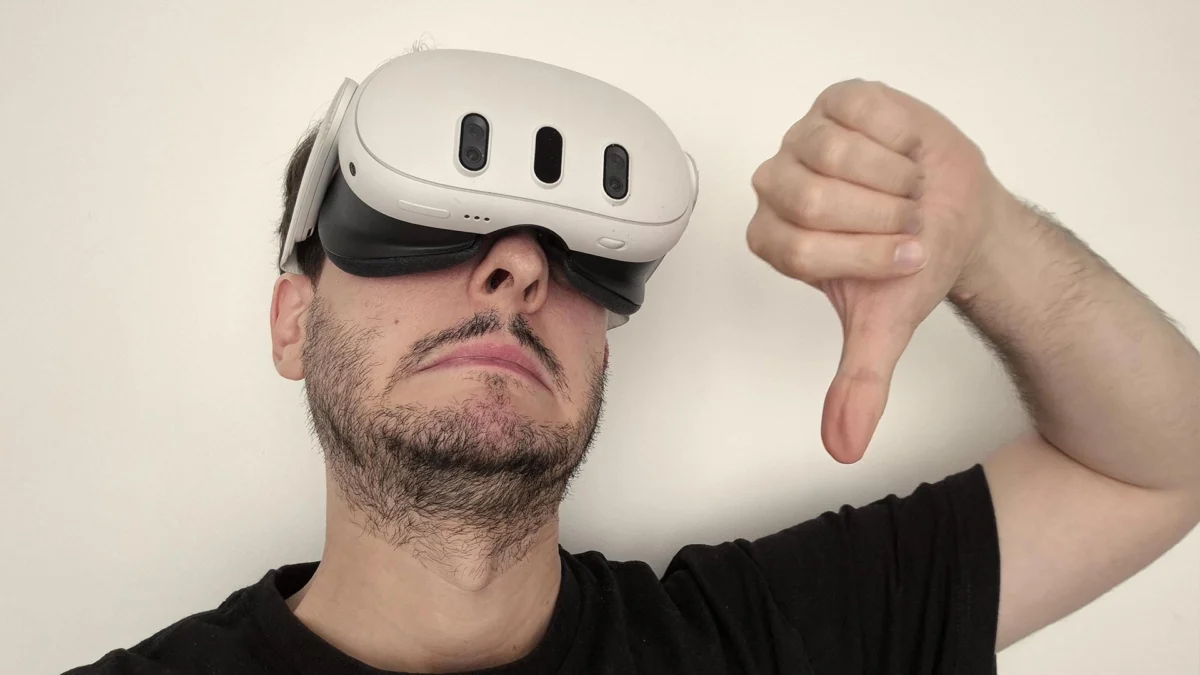
Meta Implements Price Hikes Amid Global Memory Shortage
Meta has adjusted the retail pricing for its flagship VR headsets, the Quest 3 and Quest 3S. The Meta Quest 3S has seen a price increase of $50, while the higher-end Meta Quest 3 has been adjusted upward by $100. This move marks a departure from Meta’s historical strategy of aggressive hardware subsidization to drive user adoption.
Industry analysts point to the global semiconductor market as the primary catalyst for this decision. The rapid expansion of artificial intelligence (AI) infrastructure has led to an unprecedented demand for high-performance memory chips, specifically High Bandwidth Memory (HBM) and standard DRAM. As AI data centers consume the lion’s share of available supply, the "bill of materials" (BoM) for consumer electronics featuring significant internal storage and RAM has increased.
Ironically, Meta’s own multi-billion-dollar investment in AI data centers has contributed to the very supply chain tightening that necessitated the Quest price hike. By prioritizing AI development, Meta has inadvertently driven up the costs of the components required for its Reality Labs division. This price adjustment suggests that Meta is no longer willing or able to absorb these losses as it refocuses its capital expenditures toward artificial intelligence.
Implications for VR Adoption
Historical data indicates that the adoption of VR technology is highly price-sensitive. When Meta previously raised the price of the Quest 2 in 2022, the market saw a cooling of consumer interest. While the current price hike is relatively modest compared to the total cost of the hardware, it creates a higher barrier to entry for the "prosumer" and casual gaming segments during a period of global inflation.

Apple Announces Leadership Transition for 2026
In a move that will shape the future of the spatial computing era, Apple Inc. has announced that John Ternus, currently the Senior Vice President of Hardware Engineering, will succeed Tim Cook as CEO in September 2026. Under the transition plan, Cook will move to the role of Executive Chairman of the Board.
Ternus has been a central figure in Apple’s hardware evolution, overseeing the transition to Apple Silicon and the development of the iPhone and Mac lineups. Crucially, his tenure in hardware engineering has overlapped with the development and launch of the Apple Vision Pro. His appointment is seen by many as a signal that Apple remains committed to the physical engineering challenges of XR, including the anticipated launch of lightweight AR glasses and a more affordable version of the Vision Pro.
The two-year transition period is intended to provide stability for Apple’s long-term product roadmap. For the XR ecosystem, Ternus’s leadership suggests a "hardware-first" approach, focusing on miniaturization, thermal efficiency, and display technology—the three primary hurdles currently facing the mass adoption of head-mounted displays (HMDs).
Huawei Enters the AI Smartglasses Market
While Western markets remain focused on HMDs, the Chinese XR ecosystem is rapidly expanding into AI-integrated wearables. Huawei has officially launched its AI smartglasses in China, priced at approximately 2,499 yuan (roughly $367).
The device features a 12-megapixel front-facing camera, integrated speakers, and "Xiaoyi," Huawei’s proprietary AI assistant. The glasses are designed for "all-day" use, featuring a modular frame design that allows users to swap between different styles and prescription lenses. This modularity addresses a significant pain point in the current market leader’s design, the Ray-Ban Meta glasses, which are fixed to specific frames.
Technical Specifications and Market Positioning
- Camera: 12MP capable of high-definition photography and video.
- AI Integration: Real-time translation, voice-activated assistance, and object recognition.
- Operating System: HarmonyOS, ensuring seamless integration with the Huawei hardware ecosystem.
- Price Point: Positioned competitively against the $299–$379 price range of Western alternatives.
Huawei’s entry into this space highlights a growing trend where "smart" glasses are prioritizing AI utility over immersive visual overlays. By omitting a display, Huawei has achieved a form factor that is indistinguishable from traditional eyewear, a key factor for social acceptance.

Professional and Enterprise XR Developments
The professional sector is seeing a surge in specialized hardware designed to feed the content requirements of high-end headsets like the Apple Vision Pro and the Bigscreen Beyond.
Blackmagic Design’s Immersive Capture
Blackmagic Design has unveiled the URSA Cine Immersive 100G, a camera system specifically engineered for live immersive broadcasts. Scheduled for release in Q3 2026 with a price tag of $26,495, the camera features dual 8K sensors and a 100G Ethernet interface. This high-bandwidth connectivity is essential for the low-latency streaming of 180-degree stereoscopic video, a format that Apple has championed for its "Apple Immersive Video" content.
Bigscreen Beyond Hardware Refinements
Bigscreen has announced a significant redesign of its "halo" headstrap for the Bigscreen Beyond, the world’s smallest VR headset. The new strap, priced at $180, is designed to improve weight distribution and comfort for long-term use. Shipping is expected to begin in June 2024, addressing previous ergonomic criticisms from the enthusiast community.
NVIDIA and the Infrastructure of XR
NVIDIA continues to solidify its role as the backbone of XR infrastructure. During the recent GTC conference, the company announced that NVIDIA CloudXR is now compatible with JavaScript. This development allows XR experiences to be streamed directly to a web browser via WebXR, eliminating the need for dedicated client applications.
Additionally, NVIDIA introduced "XR AI," a platform designed to connect lightweight AR glasses to enterprise-grade computational power. By offloading AI processing to the cloud or local edge servers, NVIDIA enables "intelligent agents" to operate on devices that lack the onboard processing power for complex spatial reasoning.
Breakthroughs in Neural and Sensory Research
The boundaries of how humans—and animals—interact with virtual environments continue to expand through academic and private research.

Ultrasound-Induced Olfaction
A research team has successfully demonstrated a device capable of inducing the sensation of smell using ultrasound waves. By targeting the olfactory bulb with precise ultrasonic frequencies, the device can trigger "phantom" smells such as burnt wood or fresh air without the need for liquid chemical cartridges. If commercialized, this would solve the primary logistical hurdle of haptic smell: the need for refills and the risk of chemical irritation.
Brain-Computer Interface (BCI) Navigation
In a recent study, researchers successfully trained monkeys to navigate a virtual world using only brainwaves. This BCI research has profound implications for the future of "hands-free" XR control and the development of assistive technologies for individuals with motor impairments. It suggests a future where the interface between the user and the virtual world is entirely seamless, bypassing physical controllers or even gesture tracking.
Industry Conflict and Legal Precedents
The week was not without controversy and legal resolution. Pimax, a manufacturer known for high-specification enthusiast headsets, faced community backlash regarding the Pimax Crystal Super. A change in the pin connector for the headset’s modular optical engines has rendered early modules incompatible with newer units. While the company has offered mitigation strategies, the incident highlights the volatility of small-scale hardware manufacturing.
On the legal front, Niantic, the developer of Pokémon GO, successfully saw several ImagineAR patents invalidated. The court ruled that the concept of GPS-based augmented reality was an abstract idea rather than a patentable invention. This decision is a landmark for the industry, as it prevents a single entity from monopolizing the foundational technology required for location-based AR gaming and utility apps.
Conclusion
The XR industry is currently characterized by a "flight to quality" and a move toward sustainable business models. Meta’s price adjustments reflect the reality of hardware costs in an AI-dominated economy, while Apple’s leadership transition ensures a focus on the engineering excellence required for the next generation of spatial computing. With the entry of Huawei and the advancement of professional tools from Blackmagic and NVIDIA, the ecosystem is maturing from a niche hobbyist market into a robust pillar of global technology.
About the Author