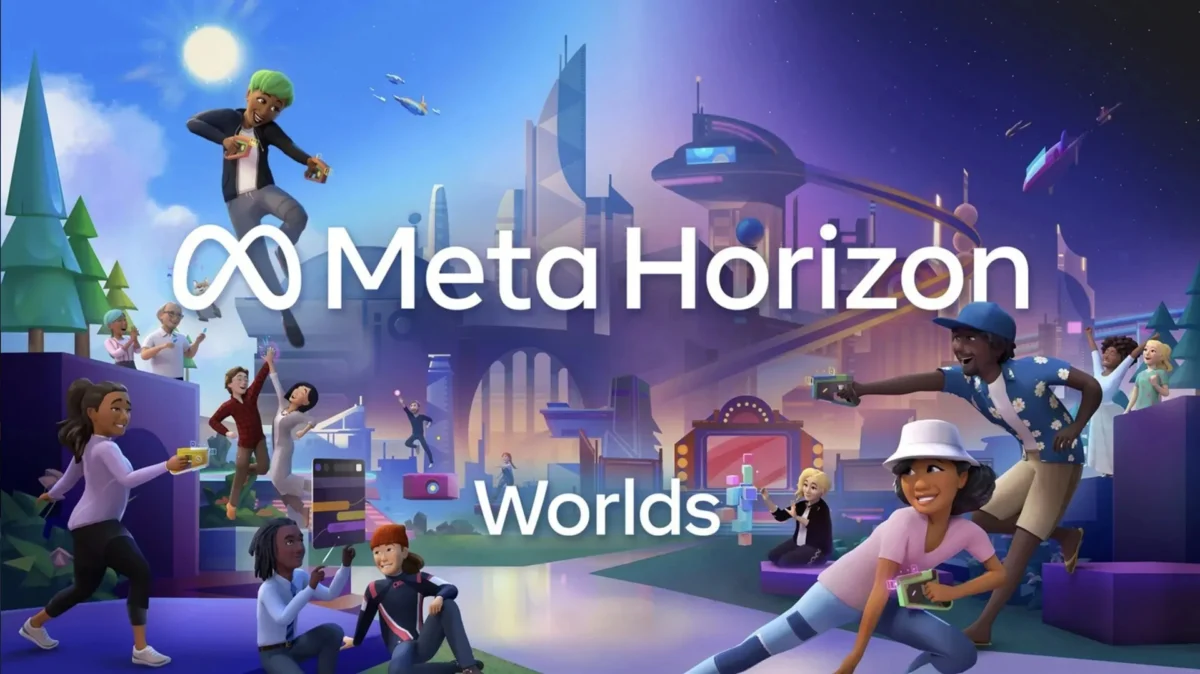
Meta Platforms Inc. has signaled a significant shift in its social virtual reality strategy, oscillating between a full pivot toward mobile platforms and the maintenance of its legacy VR infrastructure. The recent series of announcements regarding Horizon Worlds, Meta’s flagship metaverse application, has created a period of uncertainty for the platform’s core user base. Initially, the company indicated a plan to discontinue the VR version of Horizon Worlds entirely, with a scheduled removal from the Quest Store set for June 15. However, following immediate feedback from the creator community, Meta revised its stance, opting to keep existing VR environments accessible while transitioning the platform’s primary development focus toward mobile and web-based interfaces.
This strategic volatility comes at a time when the broader extended reality (XR) industry is navigating a complex landscape defined by high-performance hardware releases, such as the Apple Vision Pro, and a simultaneous contraction in specialized software development studios. While hardware capabilities continue to advance, the software ecosystem remains in a state of flux, characterized by both ambitious technical breakthroughs and notable project cancellations.
The Evolution of Horizon Worlds and the Mobile Pivot
The trajectory of Horizon Worlds over the past twelve months reflects Meta’s broader organizational shift toward cross-platform accessibility. Historically positioned as the cornerstone of Meta’s VR-first "Metaverse" vision, Horizon Worlds has struggled to maintain the daily active user (DAU) counts seen by competitors like Roblox or Rec Room. In an effort to broaden its reach, Meta began rolling out mobile and web versions of the application in late 2023.

The confusion regarding the VR version’s future began with a notification that certain worlds would become inaccessible in March, followed by the planned June 15 decommissioning of the Quest application. The subsequent reversal, which allows VR worlds created with the Unity editor to remain active, suggests a "life support" phase for the VR-native community. Despite this reprieve, Meta has proceeded with removing Horizon Worlds from the primary user interface of the Quest operating system. This move is intended to prioritize third-party indie game visibility, addressing long-standing complaints from developers that Meta’s first-party applications occupied disproportionate "digital real estate."
Industry analysts suggest that the pivot to mobile is a defensive maneuver against Roblox, which recently launched on Meta Quest headsets. By moving Horizon Worlds to smartphones, Meta aims to capture a younger demographic that primarily interacts with 3D spaces via 2D screens. However, the long-term viability of this strategy remains unproven, as the platform must now compete directly with established mobile giants in the user-generated content (UGC) space.
NVIDIA GTC 2026: The Intersection of AI and Spatial Computing
While Meta recalibrates its social strategy, NVIDIA has solidified its position as the foundational infrastructure provider for the next generation of XR. At the GTC 2026 conference, CEO Jensen Huang delivered a keynote that underscored the company’s transition from a graphics-focused entity to an "AI-first" corporation. The implications for the XR sector are profound, particularly in the realms of digital twins and autonomous agent integration.
Key highlights from the conference included:

- NVIDIA ACE (Avatar Cloud Engine): The introduction of generative AI-powered non-player characters (NPCs) that can engage in natural language conversations, potentially transforming social VR and gaming by providing more lifelike interactions.
- Omniverse Expansion: The continued development of "digital twins," allowing industrial sectors to simulate real-world environments with high fidelity before physical implementation.
- CloudXR for Apple Vision Pro: NVIDIA confirmed the expansion of its CloudXR streaming solution to the Apple Vision Pro, enabling high-end PC-tethered experiences to be streamed wirelessly to Apple’s standalone headset. This development has already seen adoption in professional sectors, with Autodesk VRED and flight simulators like X-Plane utilizing the technology to bypass local mobile processing limitations.
The State of XR Development: Market Data and Studio Volatility
New data from the Unity Game Development Report provides a statistical snapshot of the current XR landscape. According to the report, approximately 3% of developers using the Unity engine are currently working on shipping an XR application. While this figure highlights the niche status of virtual reality compared to mobile or traditional console gaming, it represents a stable core of thousands of developers committed to the medium.
However, this stability is contrasted by recent studio closures and project cancellations that have sent ripples through the industry. Sony-owned Firesprite reportedly shuttered a high-profile Breaking Bad VR project following a wave of layoffs within PlayStation’s VR division. Additionally, Ubisoft’s Red Storm Entertainment, known for its contributions to the Assassin’s Creed VR franchise, has faced significant restructuring. First Contact Entertainment also announced the shutdown of Firewall Ultra, a blow to the tactical shooter genre on the PSVR 2 platform.
These closures highlight the high financial risk associated with AAA VR development. As a counterweight, the indie sector remains active, with the upcoming VR Games Showcase on March 24 expected to feature over ten new titles, including The Boys: Trigger Warning and Wrath: Aeon of Ruin VR. This suggests a shift in the ecosystem where smaller, more agile studios are becoming the primary drivers of content innovation.
Technical Milestones: Haptics, Hacks, and Volumetric Video
On the technical front, several breakthroughs are expanding the boundaries of how users interact with virtual spaces.

- PSVR 2 PC Integration: A hardware hacker group has successfully "jailbroken" the PlayStation VR 2 for use on PC, enabling features previously restricted by Sony’s official drivers, such as HMD vibration and raw eye-tracking data feeds. This community-led effort seeks to unlock the full potential of the headset’s hardware for the PC VR enthusiast market.
- Galvanic Vestibular Stimulation (GVS): The startup VMOCION has announced VFORCE, a wearable device utilizing GVS technology. By sending low-level electrical impulses to the inner ear, the device can simulate the physical sensation of motion, potentially mitigating motion sickness—a primary barrier to VR adoption—by aligning visual input with vestibular perception.
- 4D Gaussian Splatting (4DGS): The emergence of animated Gaussian Splatting is revolutionizing volumetric video. Unlike traditional 3D models, Gaussian Splatting allows for the capture of highly realistic, photo-consistent environments and people. While initial applications have appeared in high-end cinematic experiences, the adult entertainment industry has become an early adopter of the technology, utilizing streamable 4DGS to deliver photorealistic immersive content without the need for high-bandwidth local storage.
Regulatory and Economic Shifts
The XR ecosystem is also seeing a tightening of intellectual property enforcement. Meta’s legal team recently succeeded in shutting down VRPirates, the most prominent platform for pirated Quest software. This move is seen as a necessary step to protect the revenue streams of independent developers during a volatile economic period.
Furthermore, the Metaverse Standards Forum and RP1 have launched the Open Metaverse Browser Initiative. This project aims to establish interoperability standards, ensuring that the "metaverse" does not become a series of disconnected "walled gardens" but rather a cohesive network of navigable 3D spaces.
As the "Spring of XR" begins, the industry remains at a crossroads. The convergence of generative AI, high-fidelity cloud streaming, and standardized interoperability suggests a path toward maturity, even as the market corrects for the over-ambitious projections of previous years. The success of the medium now depends on whether software developers can leverage these new tools to create experiences that transcend the initial novelty of the hardware.
About the Author