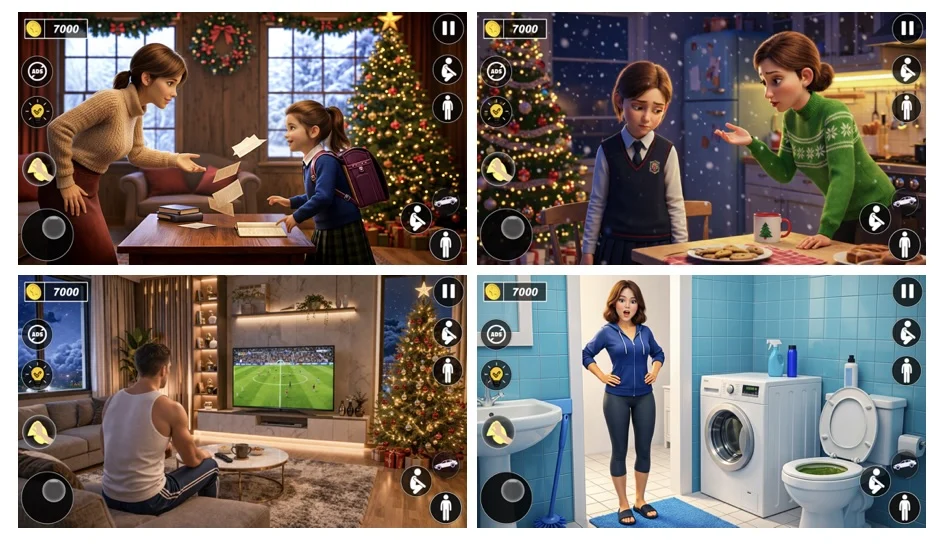
The mobile gaming industry has been alerted to a highly unusual development involving Dream Games, the Istanbul-based powerhouse behind the global phenomenon Royal Match. A new title, SchoolGirl House: Runaway Game, recently appeared on the Google Play Store, ostensibly under the official developer profile of Dream Games. The discovery, initially flagged via data tracking services such as Appmagic, has sparked a wave of speculation and technical scrutiny within the industry. While the listing carries the name of one of the world’s most successful mobile game developers, the quality and nature of the software have led analysts to believe the listing is the result of a platform error, account spoofing, or a technical glitch rather than a legitimate strategic pivot by the Turkish studio.
The listing, which remains in an "early access" state on the Google Play Store, presents a stark departure from the high-production values and polished match-three mechanics that defined Dream Games’ rise to a multi-billion dollar valuation. Early testers of the title report a rudimentary experience characterized by a high frequency of advertisements and unrefined gameplay mechanics. The game’s premise is described as a "thrilling stealth escape adventure" where players control a schoolgirl who has been grounded following a poor academic performance. The objective is to navigate a household environment, utilizing stealth and problem-solving skills to evade "smart AI parents" and escape the premises.
Chronology of the Discovery and Initial Assessment
The timeline of this incident began when data analysts monitoring developer profiles on Appmagic noticed a new entry under the Dream Games portfolio. Given that Dream Games has famously focused almost exclusively on the perfection and scaling of a single title—Royal Match—any new project from the studio is considered a major industry event. Upon the discovery of the SchoolGirl House: Runaway Game listing, industry observers immediately began investigating the build available for download.
By mid-April 2024, the Google Play Store listing was confirmed to be live in certain regions under the "early access" tag. However, the discrepancies between this new title and the established brand identity of Dream Games were immediate and numerous. On-the-ground testing of the Android version revealed a game that heavily mirrors the "stealth horror" genre popularized by titles like Hello Neighbor. Unlike the seamless, high-fidelity graphics of Royal Match, SchoolGirl House features assets that appear unoptimized and store screenshots that bear the hallmark distortions of generative artificial intelligence.
Following the discovery, inquiries were sent to Dream Games’ headquarters in Istanbul to clarify the legitimacy of the title. As of the current reporting, the studio has not issued an official statement, though the prevailing sentiment among mobile marketing experts is that the game’s presence on their profile is an error. Appmagic data further supports this theory, noting that the game has not been officially launched in any of the traditional test markets where Dream Games would typically conduct soft-launch procedures.
Background Context: The Rise of Dream Games and Royal Match
To understand why the appearance of SchoolGirl House: Runaway Game is so anomalous, one must look at the history and strategic philosophy of Dream Games. Founded in 2019 by former executives of Peak Games—the studio behind Toon Blast and Toy Blast—Dream Games sought to redefine the casual puzzle genre. Their flagship title, Royal Match, was launched in 2021 and quickly became a juggernaut in the mobile space.
Royal Match is noted for its "fast-to-play" mechanics, lack of intrusive ads, and a highly polished user interface. By late 2023, Royal Match had reportedly surpassed King’s Candy Crush Saga in monthly revenue, a feat once thought nearly impossible in the match-three category. Dream Games reached a valuation of $2.75 billion following a Series C funding round in 2022, backed by major investors such as Index Ventures, Makers Fund, and BlackRock.
The studio’s philosophy has consistently been "quality over quantity." Unlike many mobile publishers that "churn and burn" dozens of hyper-casual titles to see what sticks, Dream Games has dedicated hundreds of employees and hundreds of millions of dollars in marketing spend to a single, high-performing asset. The sudden release of a low-budget, ad-heavy stealth game like SchoolGirl House would represent a complete reversal of a multi-year corporate strategy that has made Dream Games one of the most profitable startups in the world.
Technical Analysis of the SchoolGirl House Listing
An objective analysis of the SchoolGirl House: Runaway Game listing reveals several "red flags" that point toward a technical error or a malicious attempt to leverage the Dream Games name.
1. Visual Assets and AI Generation
The promotional images used on the Google Play Store for SchoolGirl House appear to be generated by AI. This is evidenced by inconsistent lighting, distorted textures, and anatomical irregularities in the character models—errors that a studio with the resources of Dream Games would never permit in a public-facing product.
2. Monetization Strategy
The game is reportedly "chock-full" of ads, including interstitial videos and rewarded ads that interrupt the gameplay flow. Dream Games built its reputation on a premium casual experience where monetization is driven primarily by in-app purchases (IAP) for boosters and lives, rather than aggressive ad placements.

3. Gameplay Mechanics and Genre
The "stealth escape" genre is fundamentally different from the puzzle-solving mechanics of the "Match-3" or "Match-3D" categories that Dream Games specializes in. While it is not uncommon for studios to experiment with new genres, the technical execution of SchoolGirl House—described as "very, very rough"—does not align with the technical standards of a studio that employs some of the top engineering talent in the industry.
4. Metadata and Developer IDs
In the Google Play ecosystem, apps are linked to developer accounts via unique package names and developer IDs. While the game appears under the Dream Games profile, there have been historical instances where Google Play’s indexing system has misattributed titles due to package name similarities or backend glitches. There is also the possibility of a "copycat" developer using a similar name or exploiting a vulnerability to appear under a verified profile.
Supporting Data and Market Comparison
The data surrounding Dream Games’ performance highlights the massive gap between their official operations and the SchoolGirl House title. According to industry reports, Royal Match generates upwards of $100 million in monthly gross revenue and maintains a consistent presence in the top five highest-grossing apps globally.
In contrast, the "Early Access" data for SchoolGirl House shows negligible download numbers and zero revenue generation. The title does not appear in any of the "Top Charts" for the regions where it is available. Furthermore, the game’s description uses generic marketing language: "intelligence, stealth skills, and problem-solving abilities to break free." This lacks the specific branding and "King Robert" narrative focus that characterizes Dream Games’ marketing efforts.
The mobile gaming market in Turkey has become a global hub for "casual" and "mid-core" games. Studios like Dream Games, Spyke Games, and Peak Games have established a "Turkish School" of game design that prioritizes high retention and deep monetization through polished puzzle mechanics. A shift into the "stealth horror" or "escape" genre, which is typically dominated by independent developers or hyper-casual publishers like SayGames or Voodoo, would be a statistical outlier for the region’s top-tier studios.
Potential Implications and Official Responses
While Dream Games has yet to provide a formal statement, the implications of this event are twofold. First, if this is indeed a platform error, it raises questions about the security and integrity of the Google Play Store’s developer attribution system. For a multi-billion dollar company, having a low-quality, potentially brand-damaging title linked to their official profile is a significant PR risk.
Second, if this were a legitimate "skunkworks" project being tested by a small team within Dream Games, it would signal a radical shift in how the company approaches Research and Development (R&D). However, given the lack of polish, this remains the least likely scenario.
Industry analysts suggest that the most probable outcome is that the listing will be removed or corrected once Dream Games’ legal and technical teams coordinate with Google’s developer support. In the interim, the incident serves as a case study in the complexities of digital storefront management and the challenges of brand protection in an era of automated platform indexing.
Impact on Brand Reputation and Industry Standards
The mobile gaming industry relies heavily on brand trust. Players who download a game from a developer like Dream Games expect a certain level of performance and stability. The presence of a "broken" or "rough" game can lead to negative reviews and a loss of consumer confidence.
Furthermore, the use of AI-generated art in store listings is a growing point of contention in the gaming community. As platforms like Steam and the Apple App Store begin to implement stricter rules regarding AI disclosures, the appearance of such assets on a high-profile developer’s page could trigger regulatory or platform-level scrutiny.
In conclusion, SchoolGirl House: Runaway Game stands as a puzzling anomaly in the mobile gaming landscape of 2024. All available evidence—ranging from the game’s technical failings and AI-generated assets to its misalignment with Dream Games’ corporate strategy—suggests that the title’s association with the makers of Royal Match is a mistake. As the industry awaits a formal clarification, the event underscores the importance of rigorous account management and the potential for platform errors to create significant confusion in the global gaming market. For now, Dream Games remains focused on the continued dominance of Royal Match, while SchoolGirl House appears destined to be remembered as a strange, temporary glitch in the studio’s otherwise meticulous history.
About the Author