Meta Platforms Inc. has signaled a significant update to its hardware roadmap, with Chief Technology Officer Andrew Bosworth confirming that the company will unveil new virtual and mixed reality developments at the upcoming Meta Connect conference. During a recent interactive session on social media, Bosworth addressed inquiries regarding the company’s long-term commitment to the virtual reality (VR) sector, dismissing rumors of a retreat from the space. Instead, he emphasized a strategic pivot toward "economic sustainability," suggesting a departure from the heavily subsidized hardware models that defined the early Oculus and Quest eras. This announcement comes at a critical juncture for the extended reality (XR) industry, which is currently navigating a period of cooled consumer demand and high-profile hardware recalibrations from competitors.
Strategic Shift Toward High-End Mixed Reality
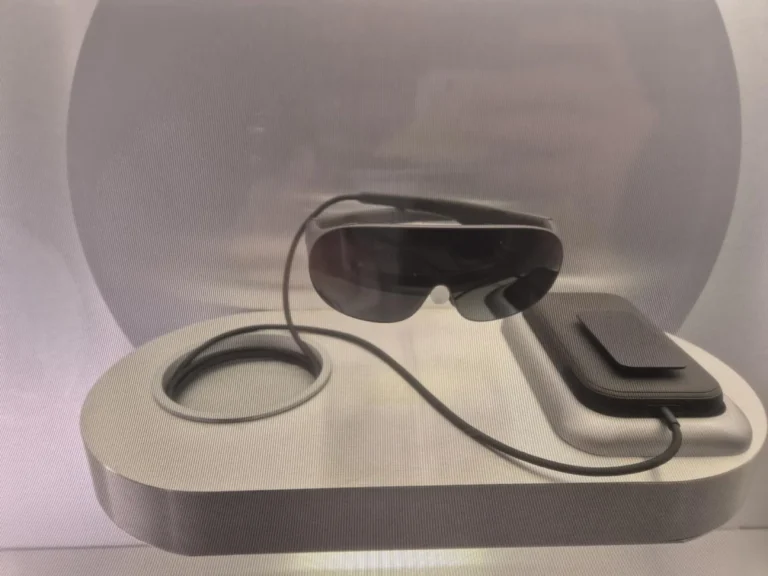
The forthcoming announcements at Meta Connect are expected to center on a new category of hardware that prioritizes form factor and passthrough capabilities over the traditional, bulkier VR headset design. Internal leaks and industry rumors have identified two primary projects currently under development within Meta’s Reality Labs division. The most prominent is a lightweight mixed reality (MR) device, frequently referred to by the codenames Phoenix, Puffin, or Loma. This device reportedly utilizes a distributed computing model, where the headset remains lightweight by offloading processing tasks to an external computational unit or "puck."

Unlike the Quest 3, which is designed as an all-in-one "shoebox" style headset, the Phoenix prototype is described as resembling oversized ski goggles. This design philosophy aligns with the industry’s broader move toward "spatial computing," a term popularized by Apple Inc. following the launch of the Vision Pro. By utilizing MicroOLED displays and advanced pancake optics, Meta aims to achieve a higher pixel density and a slimmer profile, potentially addressing the ergonomic fatigue that has hindered long-term adoption of existing VR headsets.
Chronology of Meta’s Hardware Evolution
Meta’s hardware journey has undergone several distinct phases since the acquisition of Oculus in 2014. The initial era focused on PC-tethered VR, culminating in the Oculus Rift S. The second phase, defined by the launch of the Oculus Quest in 2019 and the Quest 2 in 2020, successfully shifted the paradigm toward standalone mobile VR. The Quest 2, in particular, became the first "breakout" hit for the industry, selling over 20 million units by early 2023, largely due to its aggressive $299 entry price.
However, the third phase—the transition to mixed reality—has proven more challenging. The 2022 launch of the Quest Pro at a $1,499 price point was met with lukewarm reviews and rapid price cuts, signaling that the "prosumer" market was not yet ready for high-end MR at that cost. The subsequent release of the Quest 3 in 2023 offered a middle ground at $499, featuring improved passthrough and processing power. Despite its technical superiority, market data suggests the Quest 3 has not matched the viral sales velocity of the Quest 2, partly due to the absence of a definitive "killer app" and the cessation of the pandemic-era surge in home entertainment spending.

Economic Sustainability and the End of Hardware Subsidies
A pivotal element of Bosworth’s recent communications is the emphasis on economic sustainability. For years, Meta’s Reality Labs has operated at a significant loss, often exceeding $10 billion annually, to build an ecosystem from the ground up. The strategy involved selling hardware at or below cost to maximize user acquisition. The shift toward sustainability indicates that future devices, particularly the Phoenix model, will likely be priced to sustain healthy margins.
Industry analysts estimate that a headset featuring MicroOLED technology, eye-tracking sensors (essential for the gaze-and-pinch interaction models recently introduced in Meta’s software updates), and the latest Qualcomm Snapdragon Elite chipsets cannot be produced for less than $1,000. When factoring in research, development, and marketing, the retail price for Meta’s next-gen MR headset is projected to fall between $1,500 and $2,000. This pricing strategy places Meta in direct competition with the Apple Vision Pro and high-end enterprise devices from manufacturers like Pico and XREAL.
Comparative Market Analysis: The "XR Winter"
The XR industry is currently grappling with what many analysts describe as a "market winter." This period is characterized by high hardware costs, stagnant user retention in social VR platforms, and a refocusing of venture capital toward artificial intelligence (AI). Supporting data from market intelligence firms indicates a plateau in consumer VR headset shipments in 2024, with growth primarily concentrated in the B2B and enterprise sectors.

Competitive pressure remains intense. Apple’s Vision Pro, despite its $3,499 price tag, has set a new standard for display fidelity and ecosystem integration. Snap Inc. recently unveiled its fifth-generation Spectacles, though they are currently restricted to a developer-only rental model at $99 per month, reflecting the difficulty of bringing affordable AR to the masses. Similarly, ByteDance-owned Pico has pivoted its "Swan" project toward the high-end market, with expected pricing in the $2,000 range. These data points suggest that the industry is retreating from the $300 mass-market dream in favor of more specialized, expensive hardware intended for professional and enterprise use.
Official Responses and Industry Sentiment
While Meta has not officially confirmed the technical specifications of Project Phoenix, Bosworth’s remarks serve as a strategic counter-narrative to the "VR is dead" sentiment prevalent in mainstream financial media. By teasing new hardware at Connect, Meta aims to reassure developers and investors that its $30 billion-plus investment in the metaverse is still active, albeit more focused on refined hardware rather than volume-based saturation.
Reaction from the developer community has been cautious. While a lighter headset is a welcome ergonomic improvement, the projected high price point raises concerns regarding the total addressable market (TAM). Historically, VR developers have struggled to find profitability outside of the Quest 2’s large install base. A shift toward $1,500+ devices may force developers to pivot their content strategies toward enterprise training, medical simulation, and high-end productivity tools rather than consumer gaming.

Broader Implications for the Future of Mixed Reality
The upcoming Meta Connect announcements are likely to define the next three to five years of the company’s XR strategy. If Meta successfully demonstrates a lightweight, high-performance MR device that integrates seamlessly with its existing software library, it could re-energize the sector. However, the transition from "VR for everyone" to "MR for professionals" represents a significant narrowing of the company’s original vision.
Furthermore, the convergence of XR with other emerging technologies is becoming increasingly apparent. Meta has recently integrated more AI features into its Ray-Ban Meta smart glasses, which have seen surprising commercial success compared to traditional headsets. This suggests that the future of the "metaverse" may not be a single device, but a spectrum of hardware ranging from simple AI-powered glasses for daily use to high-fidelity MR goggles for immersive work and play.
In conclusion, the XR industry remains in a state of flux. While the "winter" persists, Meta’s move toward a next-generation MR headset signifies a belief that the path to mass adoption lies in improving the user experience through superior ergonomics and display technology, even if it comes at a premium price. The success of this pivot will depend on whether Meta can provide a compelling utility for these devices that justifies the cost to both prosumers and the enterprise sector. For now, the keyword for the ecosystem remains "survival" through specialization and technological refinement.
About the Author