The global mobile gaming landscape in early 2026 continues to navigate a complex environment of shifting consumer spending, rising user acquisition costs, and a burgeoning interest in alternative distribution platforms. According to the latest industry data from Sensor Tower, global consumer spending across the Apple App Store and Google Play reached $6.55 billion in February 2026. While this figure represents a significant injection of capital into the ecosystem, it marks an 8% decline compared to January’s performance. Analysts attribute this month-over-month contraction to several factors, including the shorter duration of the month and a natural cooling period following the aggressive promotional cycles seen during the New Year and Lunar New Year holidays.
Global Revenue Distribution and Market Leaders
Geographically, the United States maintained its position as the primary driver of mobile gaming revenue, accounting for 30% of the total global spend. China followed as the second-largest market, contributing 17.2% of revenue through iOS platforms alone, while Japan secured the third spot with 12.1%. These figures underscore the continued dominance of the "Big Three" markets, though the slight dip in total spending suggests a maturation of the market where growth is increasingly driven by high-quality live operations rather than sheer volume of new downloads.

The top-grossing charts for February revealed the effectiveness of seasonal live operations. First Fun’s LastWar: Survival ascended to the summit of the revenue rankings, largely propelled by its Valentine’s Day themed events. By integrating social-emotional hooks with its core 4X strategy and casual mechanics, the title successfully converted high engagement into significant monetization.
Tencent’s Game for Peace—the localized version of PUBG Mobile in China—also enjoyed a robust month. The game benefited from a convergence of the Lunar New Year and Valentine’s Day, alongside a high-profile collaboration with the luxury automotive brand Ferrari. These "collabs" have become a staple of the Chinese mobile market, driving both player retention and high-value in-app purchases. Similarly, Niantic’s Pokémon GO saw a marked month-on-month increase in revenue, a surge credited to the success of the global "Go Tour" event and the continued adoption of the "Go Pass" subscription model, which offers players consistent rewards and exclusive encounter opportunities.
Venture Capital and the Rise of the Turkish Gaming Hub
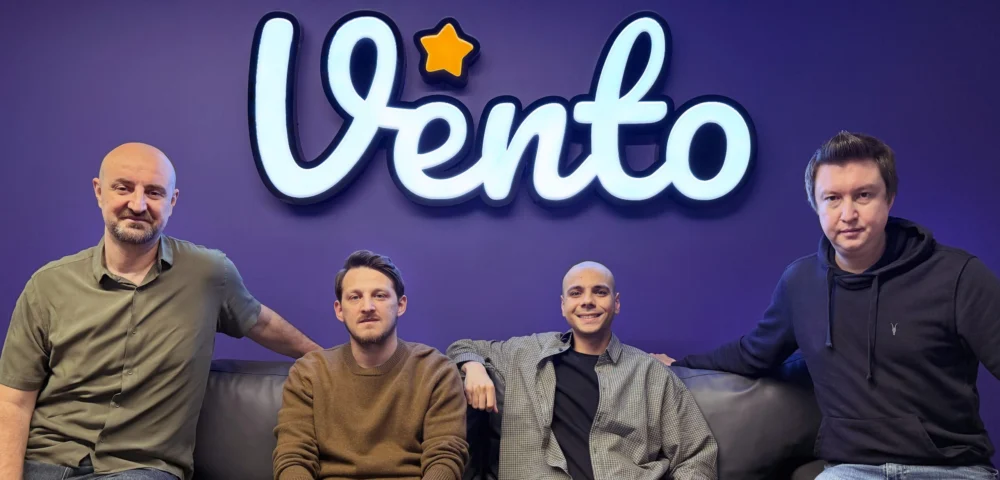
The investment climate for mobile gaming remains selective but active, with a clear focus on seasoned talent and proven genres. Vento Games, an Istanbul-based studio, recently announced the successful closing of a $4 million funding round co-led by Makers Fund and Arcadia Gaming Partners. This investment highlights the continued prominence of Turkey as a global hub for mobile puzzle and casual game development.

Founded in June 2024, Vento Games is composed of industry veterans from Peak Games, Fugo, and Zynga. The founding team, including CEO Mustafa Dağlı and CTO Onur Aydınay, previously contributed to global hits such as Words of Wonders and Okey Plus. The studio is currently focusing its resources on Blossom Word Search, a title designed to tap into the "brain-building" puzzle niche. The $4 million injection is expected to scale the studio’s development pipeline and enhance its marketing capabilities as it seeks to replicate the success of the "Turkish Puzzle Wave" that began nearly a decade ago.
Advertising Intelligence and the Cost of Visibility
As the traditional app stores become increasingly crowded, the cost of visibility has reached unprecedented levels. Data from SocialPeta, an advertising intelligence platform, indicates that Vita Mahjong remained the most heavily advertised game on both iOS and Android for the seventh consecutive month in January. Developed by Vita Studio, the tile-matching game has maintained a dominant presence in the puzzle category, outspending competitors such as Oakever Games’ Zen Word and Nexon’s MapleStory: Idle RPG.
However, the most striking data point regarding user acquisition (UA) comes from Arknights: Endfield. In January 2026 alone, the title deployed over 16,000 unique ad creatives across both major platforms. The total expenditure for this single-month blitz exceeded $174 million. This level of spending reflects a "winner-takes-all" mentality in the mid-core and hard-core segments, where developers must invest hundreds of millions of dollars just to secure a foothold in the global rankings.

On the Android side, the competition is equally fierce. While Vita Mahjong led the charts, other titles like Mahjong Blast: Wonders and Block Blast occupied significant ad share. The saturation of the puzzle genre in the ad charts suggests that while the genre is lucrative, the barrier to entry for new developers is increasingly defined by the size of their marketing budget rather than the novelty of their mechanics.
Disrupting the Distribution Model: The Messaging Game Frontier
In response to the "outdated" app store model, new players are attempting to bypass traditional gatekeepers. Jest Games recently secured $7 million in seed funding, led by Innovation Endeavors, to build a dedicated marketplace for messaging games. These games are designed for "frictionless, no-download gameplay," hosted directly within messaging threads like those found on WhatsApp, Telegram, or iMessage.
Deyan Vitanov, CEO and co-founder of Jest, argues that the current app store business model is failing developers. With soaring acquisition costs and declining organic discovery, Vitanov believes that meeting players where they already spend their time—in text conversations—reshapes the retention curve. To incentivize development, the company has launched the Jest Games Fund, which offers up to $1 million in publishing support per game. This move signals a potential shift toward "Instant Games" or "Mini-Programs," a model that has already seen massive success in Asia through WeChat but has yet to be fully realized in Western markets.

Roblox: A Self-Sustained Ecosystem
The internal economy of the Roblox platform continues to rival that of independent app stores. According to data from Creator Games, the top-grossing title on the platform in 2025 was Grow a Garden, which reportedly generated over $150 million in earnings. This was followed by Steal a Brainrot ($90 million), Blox Fruits ($68.4 million), and Rivals ($67.7 million).
The data reveals a fascinating dynamic within the Roblox ecosystem: 50% of the platform’s total earnings in 2025 went to games that were released that same year. This indicates a high level of churn and a constant demand for new content among the platform’s younger demographic. However, the presence of 63 legacy titles in the top 100 suggests that while the "new" is always welcomed, established franchises can maintain long-term profitability through consistent updates and community management. The success of titles like Steal a Brainrot also highlights how internet meme culture directly translates into financial success within user-generated content (UGC) platforms.
Regional Highlights: China’s Record-Breaking Lunar New Year
In the Chinese market, Tencent’s Peacekeeper Elite demonstrated the immense scale of the region’s player base. On Lunar New Year’s Eve, the game hit a staggering 90 million Daily Active Users (DAU). A significant portion of this engagement was driven by the "World of Wonder" mode, a UGC-focused creative sandbox within the game that recorded 58 million DAU.

This represents a nearly 75% increase in UGC engagement compared to the National Day holiday in October 2025. The spike was supported by the 2026 Spring Festival update, which integrated Silk Road motifs and traditional cultural elements into the gameplay. The success of World of Wonder suggests that even established battle royale titles are evolving into platforms for creative expression, mirroring the trends seen in Roblox and Fortnite.
Cross-Platform Expansion: Sega’s Strategic Success
Outside of the casual and battle royale genres, the sports management category has seen a notable resurgence. Sega’s Football Club Champions 2026, a westernized adaptation of the Let’s Make A Soccer Team series, surpassed 2 million downloads within five weeks of its January 22 release.
Available across mobile, PlayStation, and PC, the game represents Sega’s strategy of cross-platform accessibility. By allowing players to manage their teams seamlessly across devices, Sega is tapping into a more dedicated, "core" audience that values depth and persistence. The 2-million-download milestone is particularly impressive for a management sim, suggesting that there is still significant room for growth in specialized niches when backed by a recognized brand.

Broader Industry Implications and Future Outlook
The data from the first two months of 2026 points toward a mobile gaming industry in transition. The 8% dip in monthly revenue is not necessarily a sign of decline, but rather a correction toward a more sustainable, live-ops-driven model. The massive UA spends by titles like Arknights: Endfield suggest that the "traditional" path to success is becoming prohibitively expensive for all but the largest publishers.
Consequently, the industry is likely to see two diverging paths. The first is the continued consolidation of the "Big Three" markets under the rule of high-budget, live-service giants. The second is the emergence of alternative distribution channels, such as Jest’s messaging marketplace or the internal economies of UGC platforms like Roblox. For developers, the challenge of 2026 will be deciding whether to compete in the high-stakes arena of the App Store or to seek refuge in the emerging frontiers of frictionless, social-first gaming. As the year progresses, the success of these new models will determine if the "outdated" app store model is truly at its breaking point or if it remains the indispensable backbone of the global gaming economy.
About the Author