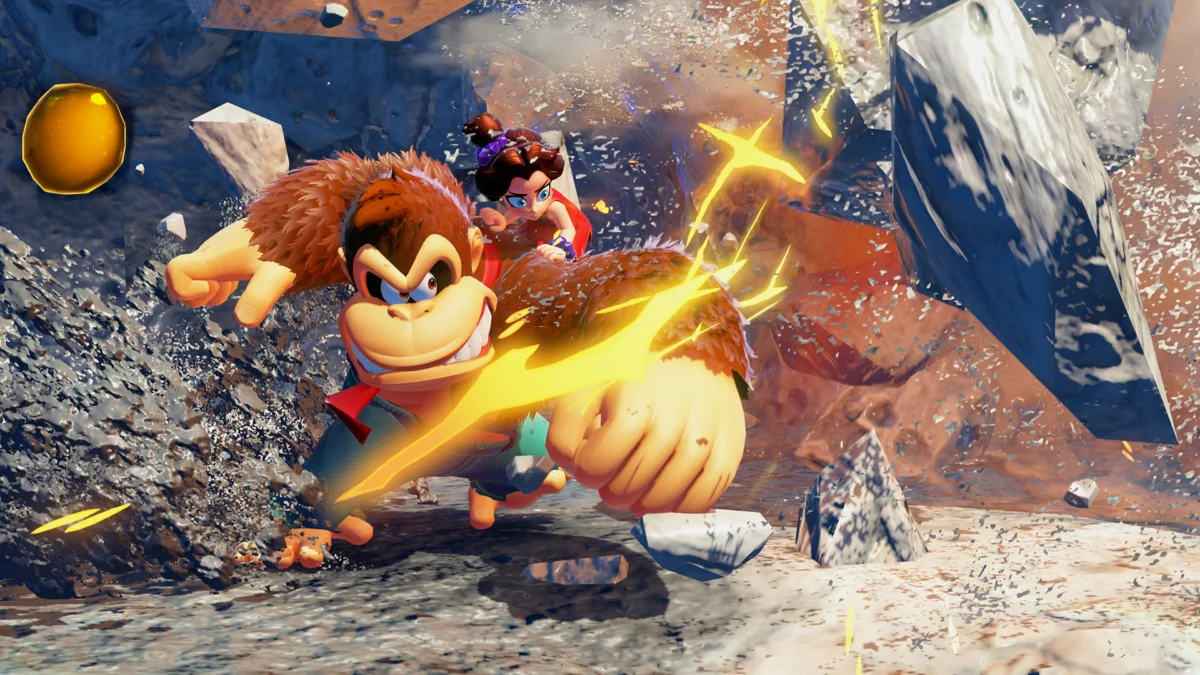
The perennial question of how advancements in video game technology genuinely translate into novel gameplay experiences often sparks debate within the industry. While the popular imagination frequently conjures up images of ever-more powerful GPUs rendering increasingly photorealistic and expansive 3D worlds, such brute-force graphical enhancements do not automatically guarantee "fun" or innovation. Indeed, history is replete with technological trends in gaming that promised to redefine interaction but ultimately struggled to justify their existence beyond superficial appeal. However, a recent presentation at the 2026 GDC Festival of Gaming by Nintendo has provided a compelling case study, demonstrating how targeted technological investment can unlock truly transformative game design possibilities, epitomized by their upcoming title, Donkey Kong: Bananza.
The Genesis of Innovation: Nintendo’s Voxel Journey
At the heart of this revelation lies Donkey Kong: Bananza‘s groundbreaking implementation of destructible voxel-based environments. This technology, a significant evolution from its initial integration in select portions of 2017’s critically acclaimed Super Mario Odyssey, was the subject of a technical deep-dive presented by Nintendo producer Kenta Motokura and programmer Tatsuya Kurihara. The duo traveled across the Pacific to share their insights, drawing a packed audience eager to understand Nintendo’s latest leap in interactive design. Their presentation underscored a critical philosophy: technology should serve gameplay, not merely enhance visuals.
Voxel technology, which constructs 3D environments from tiny, cubic "volume pixels," has a storied, albeit often challenging, history in video games. Early pioneers like NovaLogic’s Comanche series in the early 1990s showcased volumetric terrain, and later titles like Outcast (1999) experimented with voxel-based characters and worlds. The concept gained widespread recognition with games like Minecraft, which popularized block-based construction and destruction on a massive scale. Perhaps most relevant to Bananza‘s destructible environments is Volition’s Geo-Mod technology in the Red Faction series, which allowed players to dynamically alter game environments, albeit typically with pre-defined destruction patterns rather than truly volumetric, granular destruction.
Nintendo’s approach, as detailed by Motokura and Kurihara, represents a refined application of this technology, meticulously engineered to serve specific gameplay goals. Unlike many predecessors that treated destructibility as a mere visual spectacle or a puzzle mechanic, Bananza weaves environmental destruction into the very fabric of its core gameplay loop, creating a symbiotic relationship between player action and world interaction. This strategic investment in a technology often overlooked for its performance demands aligns with Nintendo’s historical pattern of leveraging unique technical solutions—from the rumble pack to motion controls and dual screens—to create distinctive and engaging experiences that differentiate them from competitors focused primarily on graphical horsepower.
"Destruction. Destruction. Destruction.": A New Gameplay Mandate
Motokura emphatically summarized the game’s core theme: "Destruction. Destruction. Destruction." This mantra, however, is not a call for mindless chaos but a design philosophy that redefines the interplay between combat and exploration in a 3D action platformer. Skeptics might initially question the novelty, pointing to The Legend of Zelda: Tears of the Kingdom‘s breakable rocks or the aforementioned Red Faction series. Yet, Bananza‘s innovation lies not just in having destructible environments, but in how this destruction is intrinsically linked to the player’s progression, power, and perception of the game world.
In traditional 3D action platformers, players often experience combat and exploration as distinct phases or activities. You might clear an area of enemies, then proceed to search for hidden items or pathways. Donkey Kong: Bananza, leveraging its advanced voxel technology, blurs these boundaries. Motokura and Kurihara elaborated on how this tech enables a dynamic gameplay loop that pivots seamlessly between these two experiences, creating a continuous and reinforcing cycle.
The game’s environments, some boasting an astonishing scale of up to 347,070,464 individual voxels, are not merely backdrops but active participants in the gameplay. They are "stuffed to the gills with hidden areas and secret items," according to the developers. For the "obsessive player," this immediately suggests an invitation to systematically dismantle the terrain in search of every nook and cranny. However, for a "less-experienced player" – perhaps a child, a key demographic for Nintendo – the sheer openness of such a destructible world could be overwhelming. This is where "Destruction. Destruction. Destruction." transforms into a pedagogical tool for navigation.
The Chain of Destruction: Blurring Combat and Exploration
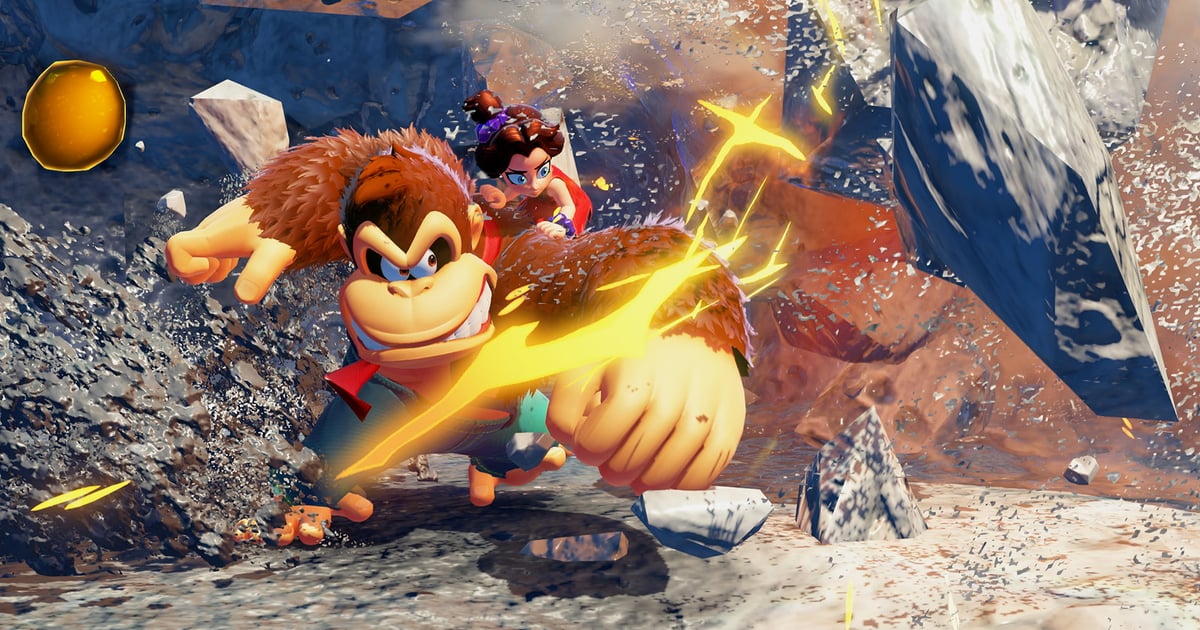
Nintendo generically defines an "action platformer" as a game where the player character transitions between an "unpowered state" and a "powered-up state." Motokura illustrated this with the classic Super Mario Bros. loop: Mario starts small, acquires a Fire Flower or Mushroom, becomes powered up, and loses that power upon taking a hit. In 3D Mario games, this concept translates into broader combat scenarios and less emphasis on pixel-perfect jumping precision.
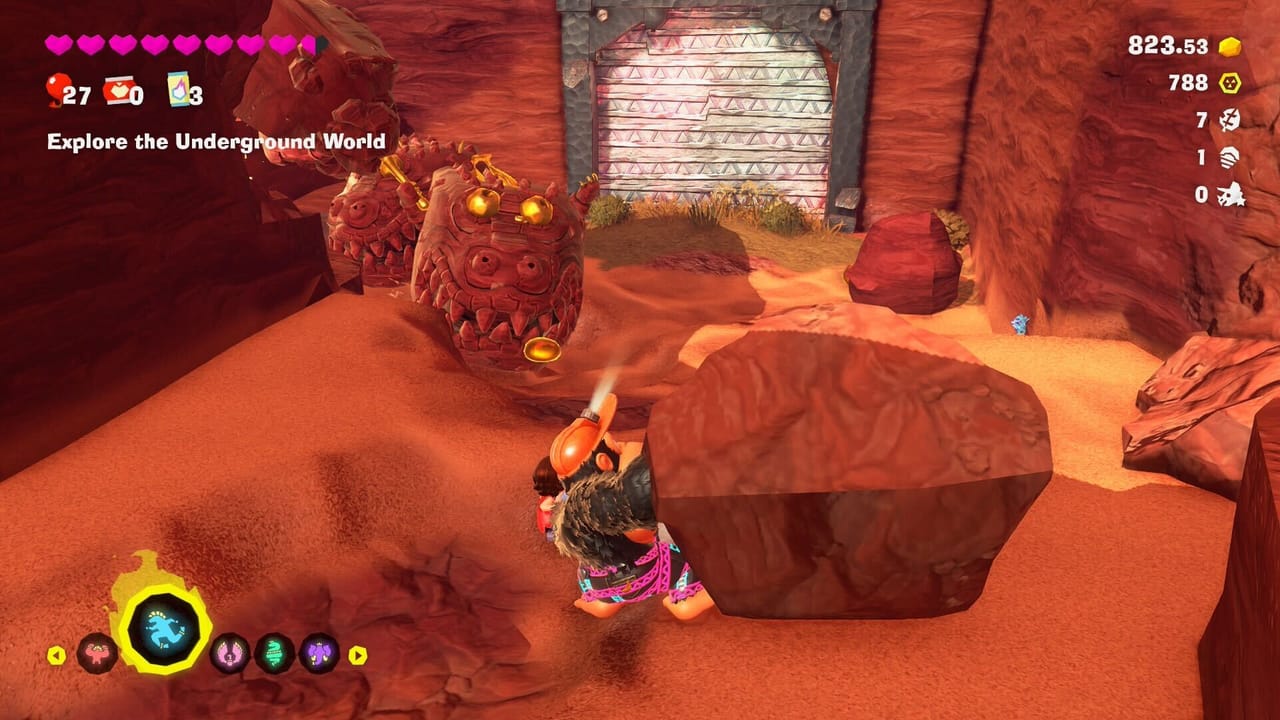
Crucially, Bananza‘s "powered-up" state deviates significantly from merely activating a special ability like "Bananza Mode" where Donkey Kong might morph into other animal forms. Instead, Donkey Kong’s power-up is directly tied to the environment: the player enters a powered state by picking up a piece of terrain, thereby destroying a small segment of the voxel-made world. This act of destruction is not just a means to an end; it is the power-up.
Once Donkey Kong grasps a boulder or chunk of earth, he possesses a weapon capable of dealing extra damage and, in some instances, is the only effective weapon against specific foes. This transformation immediately propels the player into combat. The "powered-up" state is therefore defined not by an inherent, time-limited ability, but by the player’s active engagement in seeking out environmental upgrades, utilizing them, and then hunting for another to continue the cycle.
Motokura described the emergent "chain of destruction" that forms the backbone of Bananza‘s level design and player engagement:
- Combat Encounter: The player faces enemies or obstacles.
- Environmental Interaction: The player picks up a piece of the destructible environment (entering "powered-up" state).
- Destructive Combat: The player uses the environmental piece as a weapon, smashing enemies and often destroying more of the environment in the process.
- Exploration & Revelation: The destruction reveals hidden paths, secret items, or new pieces of terrain to pick up.
- Cycle Repeats: This discovery leads to further combat or the acquisition of another "power-up," restarting the chain.
This dynamic loop ensures that combat is never just about defeating foes; it’s also about actively shaping and exploring the immediate surroundings. Conversely, exploration is not passive; it’s often initiated or facilitated by destructive combat. This seamless blending, a direct consequence of the advanced voxel engine, is what Motokura referred to as the "magic" of Bananza‘s design.
Technical Nuances and Pragmatic Design Choices
The ambition of Bananza‘s destructible environments naturally presents significant technical hurdles. Kurihara elaborated on one such challenge: collision detection. Unlike traditional polygonal environments where collisions can be precisely calculated, "voxel to voxel" interaction for every object and character would be prohibitively expensive computationally. To overcome this, objects and characters in Bananza utilize collision meshes that match the shape of the voxels, but for impact detection, all moving objects are assigned a "primitive shape" (e.g., sphere, cube, capsule).
This pragmatic solution ensures consistent hit detection for players, even as enemy bodies change shape due to destruction, and allows destroyed environmental pieces to realistically impact other terrain when sent flying. However, it also introduces moments where characters or weapons might "clip" unrealistically through walls. The development team, after careful consideration, deemed these instances "acceptable."
Motokura expanded on this decision-making process, highlighting Nintendo’s player-centric approach. Such compromises are weighed against whether they result in a "benefit" or a "loss" for the player experience. "If there is something that happens to the player’s benefit, like it’s fun or it’s a happy experience for them, then in my mind, some of that artifice is okay," he stated. Conversely, if a technical limitation narrows the player’s gameplay opportunities or creates frustration, it is prioritized for adjustment. This philosophy underscores that technological fidelity is secondary to player enjoyment and empowerment, a hallmark of Nintendo’s design ethos.
Evolving the Action Platformer: A Nintendo Legacy Continues
The shift in Bananza‘s gameplay philosophy also reflects a broader evolution within Nintendo’s action-platformer lineage, akin to the differences between 2D and 3D Mario titles. Motokura noted that 2D Mario games often demand "specific timing of jumps for a fun game experience," emphasizing precision. In contrast, 3D Mario games "open it up a little bit more," favoring broader exploration and more forgiving mechanics.
This analogy extends to Donkey Kong: Bananza. While previous 2D Donkey Kong titles, particularly those developed by Rare and Retro Studios, are renowned for their exceptionally precise timing and challenging difficulty, Bananza leans towards a more "easygoing" experience. The voxel technology enables this shift by expanding the "play horizons," allowing for emergent, player-driven problem-solving through destruction rather than rigid, pre-defined platforming challenges. The game becomes less about mastering a fixed path and more about creatively interacting with a malleable world.
Motokura observed, "If you look at the historic trend over time of how gameplay experiences change, I think some of that comes along with how much more you can do now. We’re doing entirely new gameplay experiences using voxel technology, and overall we’ve seen that trend of play horizons broadening over time." This perspective encapsulates Nintendo’s enduring commitment to innovation, not just for the sake of novelty, but to continuously expand the expressive potential of interactive entertainment.
Broader Implications for the Gaming Industry
The insights from Nintendo’s Donkey Kong: Bananza presentation at the GDC Festival of Gaming 2026 carry significant implications for the wider video game industry. In an era where development costs continue to soar and technological arms races often prioritize photorealism over inventive mechanics, Bananza serves as a powerful reminder that true innovation often stems from a thoughtful integration of technology with core gameplay design.
Industry analysts are already speculating on the potential ripple effect. "Nintendo’s consistent ability to leverage technology for unique gameplay experiences, rather than just visual spectacle, sets a benchmark," noted Sarah Chen, a senior analyst at Global Game Insights. "Their approach with Bananza could inspire other developers to revisit technologies like voxels, not just for environmental detail, but as fundamental gameplay pillars. It reinforces the idea that game technology should create ‘opportunities’ for players and developers alike, a principle that has historically led to groundbreaking titles and new genres."
This philosophy of creating "opportunities" is central to Nintendo’s design ethos. As Motokura articulated, "for us, we always approach this as a problem of, ‘are we giving the player enough opportunities as opposed to frustrating them from what they would like to do?’" This focus on player agency and emergent gameplay, facilitated by robust technological underpinnings, positions Donkey Kong: Bananza not just as another entry in a beloved franchise, but as a potential blueprint for future interactive experiences.
Moreover, the success of Bananza‘s voxel implementation could catalyze further investment and research into volumetric rendering and dynamic environment systems across the industry. While performance demands remain a hurdle, continued advancements in hardware and optimization techniques could make such richly interactive worlds more accessible for a broader range of developers. Nintendo’s demonstration highlights that the effort is worthwhile when it fundamentally alters how players engage with a game, moving beyond passive observation to active, creative participation in shaping the play space.
Conclusion: Pushing the Boundaries of Interactive Entertainment
Donkey Kong: Bananza stands poised to become a landmark title, not merely for its association with a beloved character, but for its pioneering use of destructible voxel technology to redefine core gameplay. The GDC Festival of Gaming 2026 presentation by Kenta Motokura and Tatsuya Kurihara offered a rare glimpse into the meticulous design and technical innovation that underpins Nintendo’s creative process. By seamlessly blending combat and exploration through a dynamic "chain of destruction," Bananza illustrates how strategic technological investment can unlock entirely new dimensions of player interaction and engagement. In an industry often fixated on iterative improvements, Nintendo continues to demonstrate a unique ability to push the boundaries of interactive entertainment, proving that the most profound advancements are those that empower players and broaden the very horizons of play.
About the Author