Oxford Optical Labs (OOL), a specialist in adaptive optics based in the United Kingdom, recently demonstrated its latest advancements in fluid-filled lens technology at the Augmented World Expo (AWE) in Long Beach, California. The company’s presentation focused on a proprietary optical system capable of altering focal length and prescription parameters on demand. Developed over two decades of research and development, the technology aims to solve one of the most persistent hurdles in the extended reality (XR) industry: the vergence-accommodation conflict (VAC), while simultaneously providing a universal solution for users with varying vision correction needs.
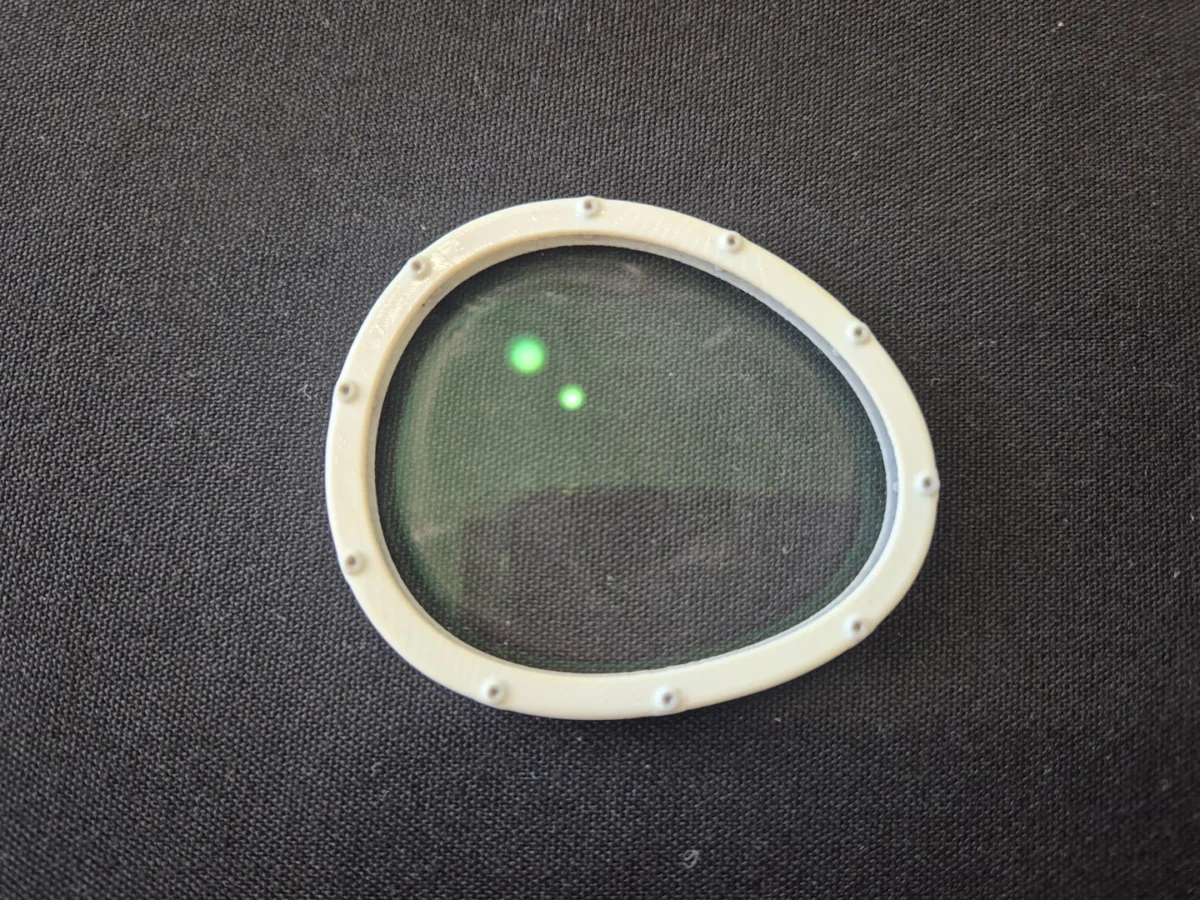
Unlike traditional optics made from fixed glass or plastic, OOL’s lenses utilize a transparent fluid encapsulated within a flexible membrane. The optical properties of these lenses are adjusted not through electrical stimulation—a common misconception in previous reports—but through the application of precise mechanical pressure at specific points on the lens surface. By manipulating these pressure points, a single lens can be reconfigured to correct for myopia (nearsightedness), presbyopia (age-related farsightedness), and astigmatism.

Mechanics of the Pressure-Adjustable Fluid Lens
The structural integrity of the OOL fluid lens relies on a hybrid design featuring a rigid rear element and a soft, pliable front membrane. The internal fluid provides the refractive medium necessary for optical adjustment. During demonstrations at AWE, OOL representatives emphasized the durability of the membrane, noting that laboratory samples have maintained their integrity and performance for over 15 years. The company further clarified that the internal fluid is non-toxic, ensuring safety in the event of a mechanical failure or rupture.
A key feature of the OOL system is the "deformer" mechanism. This component acts as a mechanical interface that snaps onto the lens housing using a magnetic ring. The deformer contains a specific physical profile—an extrusion that, when engaged, applies a pre-calculated pressure pattern to the lens membrane. This deformation alters the curvature of the lens, instantly changing its focal properties to match a specific user’s prescription. This modular approach allows a base lens to be customized for different optical requirements simply by swapping the mechanical deformer.
Addressing the Resolution Gap: The Impact of Uncorrected Astigmatism
One of the most significant data points highlighted by OOL during the event concerns the impact of uncorrected astigmatism on the virtual reality (VR) experience. Current high-end headsets, such as the Meta Quest 3, offer a resolution of approximately 25 pixels per degree (PPD). However, OOL’s research indicates that even a mild astigmatism of 0.5 diopters can degrade the user’s perceived resolution to as low as 13 PPD.

This 50% reduction in visual clarity suggests that without precise prescription correction, the benefits of high-resolution displays in modern XR hardware are largely lost on a significant portion of the population. By integrating adjustable fluid lenses, hardware manufacturers could theoretically restore full visual fidelity to users who would otherwise experience blurring or distortion, regardless of their access to external prescription inserts.
A Three-Phase Integration Strategy for the XR Market
Oxford Optical Labs has outlined a strategic roadmap for the deployment of its technology, beginning with immediate applications in location-based entertainment (LBE) and progressing toward consumer-grade varifocal hardware.
-
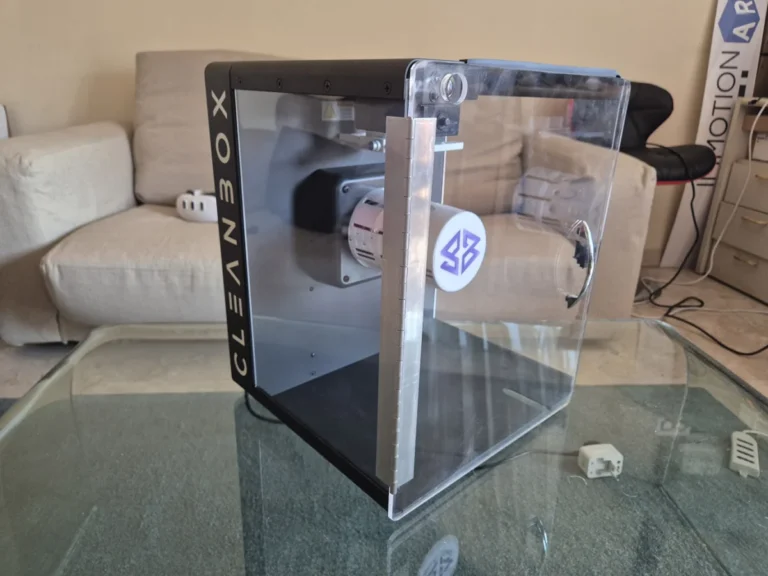
Customized Location-Based Solutions: The first phase targets museums, theme parks, and location-based VR (LBVR) centers. Currently, these venues struggle to accommodate users with glasses, often requiring a vast inventory of fixed prescription inserts. OOL proposes a universal add-on system where a "reading" machine analyzes a visitor’s glasses and automatically adjusts a set of fluid lenses to match their prescription via automated mechanical actuators.

-
OEM Integration for Prescription Adjustment: The second phase involves partnering with original equipment manufacturers (OEMs) like Meta, Sony, or Pico to integrate fluid lenses directly into the headset assembly. This would allow users to calibrate the headset to their specific vision needs during the initial setup process, eliminating the need for third-party prescription lenses or wearing glasses inside the headset.
-
Full Varifocal Capability: The final and most ambitious phase is the development of true varifocal headsets. These devices would use OOL lenses to dynamically adjust focus in real-time based on the distance of virtual objects the user is viewing. This would effectively eliminate the vergence-accommodation conflict, where the eyes converge on a virtual object but the focal distance remains fixed on the display panel, often leading to eye strain and nausea.
Overcoming the Vergence-Accommodation Conflict via Saccadic Masking
The technical challenge of implementing a varifocal system lies in the speed and subtlety of the focal transition. If the lens changes focus while the user is staring at an object, the brain perceives the "pumping" of the focus, which can be disorienting. To counter this, OOL proposes leveraging saccadic masking—a neurological phenomenon where the brain temporarily suspends visual processing during rapid eye movements (saccades).

Research suggests that saccades typically last over 100 milliseconds. Oxford Optical Labs claims its fluid lenses can complete a focal adjustment in approximately 70 milliseconds. By synchronizing the lens adjustment with eye-tracking data, the system can change the focal state of the lens during the "blank" period of a saccade. When the eye reaches its new fixation point, the lens is already set to the correct focal depth, providing a seamless and natural visual experience.
Prototype Performance and the Future of Varifocal AR Displays
At AWE, OOL provided a hands-on demonstration of a prototype varifocal augmented reality (AR) display. The experimental rig utilized a dual-lens configuration per eye, positioned on either side of a transparent waveguide. This "push-pull" optical design is necessary for AR; the first lens adjusts the focus of the digital overlay, while the second lens compensates for the distortion caused by the first, ensuring the user’s view of the physical world remains clear and undistorted.
In laboratory tests, the prototype successfully demonstrated the ability to shift focus between virtual labels placed at varying depths—near, medium, and far. When the focus was set to a "near" label, both the digital text and the corresponding physical object at that distance were sharp, while objects in the background were naturally blurred.

However, the transition from lab prototype to consumer product remains a significant undertaking. Observers noted that the current prototype produces audible mechanical noise during focal shifts and requires a bulky external housing for the actuators. OOL engineers acknowledged these challenges, stating that future iterations will focus on miniaturizing the pressure-application mechanism and reducing the acoustic profile of the system.
Industry Implications and Technical Challenges
The emergence of Oxford Optical Labs’ fluid lenses comes at a time when the XR industry is seeking new ways to improve visual comfort for long-term wear. While other technologies, such as liquid crystal lenses and holographic optical elements, are also being explored for varifocal applications, OOL’s mechanical fluid approach offers a unique combination of high durability and a wide range of diopter correction.
Industry analysts suggest that the success of OOL will depend on its ability to form strategic partnerships with eye-tracking providers and major hardware vendors. The requirement for sub-100ms eye-tracking latency and high-precision mechanical deformation means that varifocal technology is likely to remain in the premium or enterprise segment before trickling down to mass-market consumer devices. Nevertheless, the demonstration at AWE 2026 confirms that the fundamental physics of adjustable fluid optics are now mature enough to be considered a viable contender for the next generation of spatial computing hardware.
About the Author