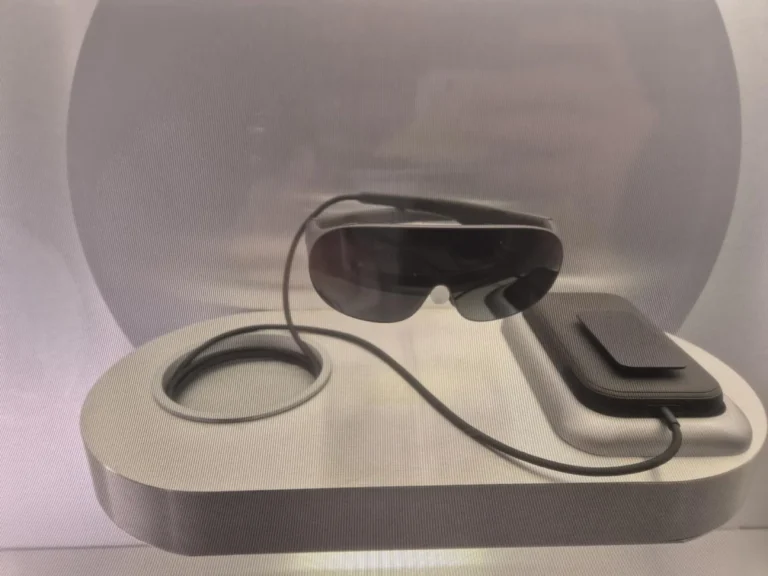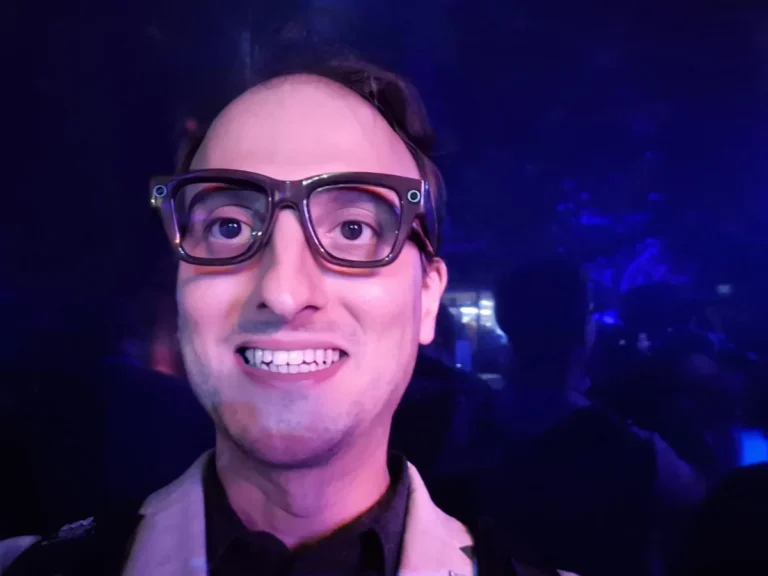
Oxford Optical Labs (OOL) has introduced a transformative fluid-based lens system designed to address the most persistent optical challenges in the extended reality (XR) industry, including the vergence-accommodation conflict and the necessity for customized prescription inserts. During a series of technical demonstrations at the Augmented World Expo (AWE) in Long Beach, the United Kingdom-based startup showcased lenses capable of altering their focal length and optical properties on demand. This development represents a significant shift from traditional fixed-optics systems, potentially paving the way for the mass adoption of varifocal headsets that can dynamically adjust to the user’s vision requirements and the depth of virtual objects.
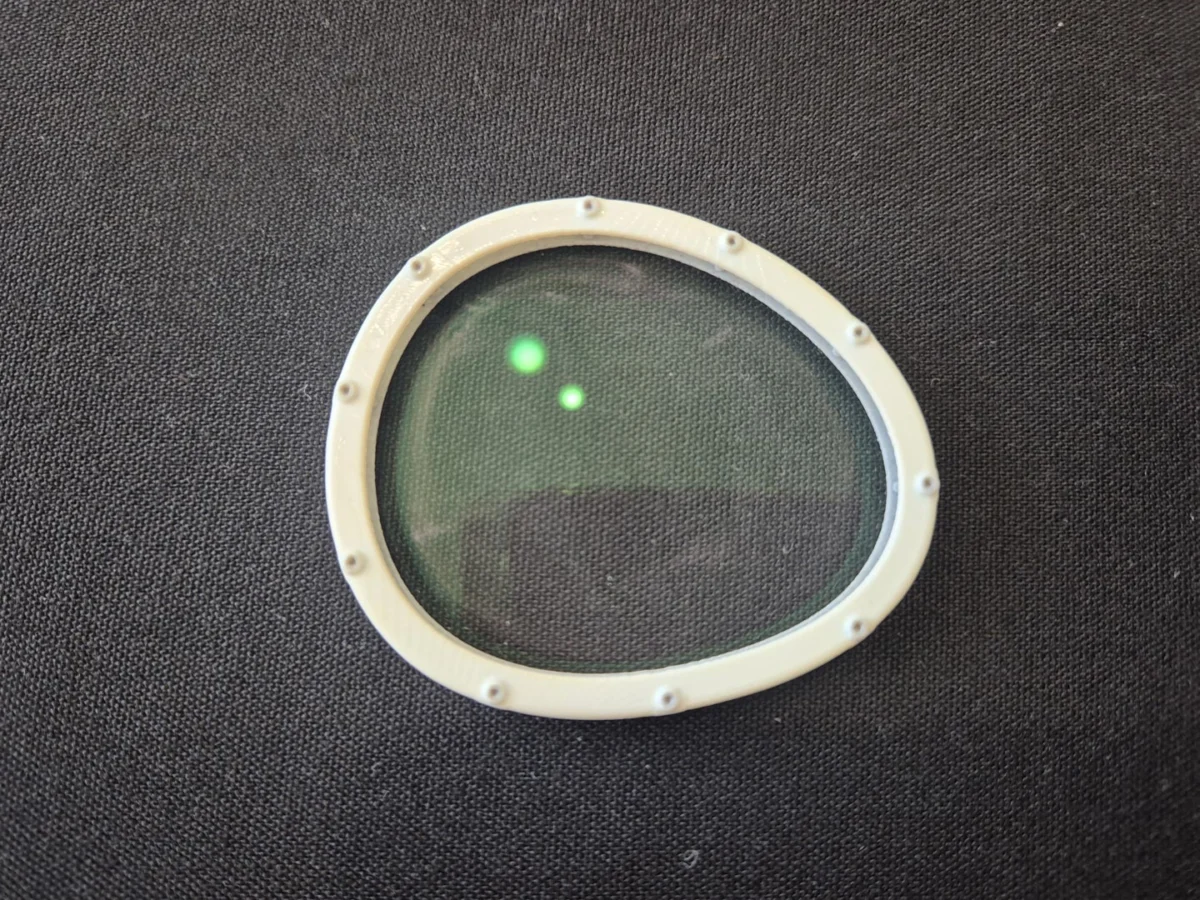
The core of the Oxford Optical Labs innovation lies in a specialized membrane containing a non-toxic optical fluid. Unlike traditional glass lenses or emerging liquid crystal technologies that rely on electrical stimulation to alter refractive indices, OOL’s lenses are adjusted through precise mechanical pressure. By applying pressure at specific points along the lens periphery, the system can deform the membrane to correct for myopia (nearsightedness), presbyopia (age-related farsightedness), and astigmatism. This mechanical approach is the result of over 20 years of research and development, yielding a solution that the company claims is as durable as standard eyewear, with test units maintaining integrity for over 15 years.

Technical Specifications and the Resolution Gap
One of the most critical data points highlighted by Oxford Optical Labs involves the impact of uncorrected vision on perceived resolution in virtual reality. Industry standards, such as those found in the Meta Quest 3, offer a resolution of approximately 25 pixels per degree (PPD). However, OOL’s research indicates that even a mild, uncorrected astigmatism of 0.5 diopters can degrade the user’s perceived resolution to as low as 13 PPD. This effectively nullifies the hardware advancements of high-end headsets, as the user remains unable to perceive the intended clarity.
The fluid lens system aims to bridge this gap by providing high-precision correction without the need for external "lens inserts" or permanent prescriptions. The "deformer" mechanism—a magnetic ring that snaps onto the lens—applies a specific pressure profile to the membrane, instantly reconfiguring the lens to the user’s prescription. In laboratory settings, OOL utilizes professional-grade metrology equipment to confirm that these deformations meet American National Standards Institute (ANSI) requirements for optical quality, ensuring that the fluid lenses perform with the same reliability as medical-grade spectacles.
A Three-Phase Roadmap for Industry Integration
Oxford Optical Labs has outlined a strategic chronology for the deployment of its technology, moving from specialized professional applications to consumer-grade varifocal integration.

Phase 1: Location-Based VR (LBVR) and Public Exhibits
The immediate application for OOL’s technology is in the location-based entertainment and educational sectors. Museums, theme parks, and LBVR centers currently struggle to accommodate visitors who wear glasses. The standard solution—providing a variety of prescription inserts—is logistically cumbersome and costly. OOL proposes an add-on system where a steward can "read" a visitor’s glasses using a specialized scanner and then adjust a universal OOL fluid lens to match that prescription via a series of automated micro-screws. This allows a single headset to be reconfigured for any user in seconds.
Phase 2: OEM Partnership and Configuration Docks
The second stage involves the direct integration of fluid lenses into the manufacturing process of major headset producers such as Meta, Pico, or Sony. Under this model, headsets would ship with fluid lenses pre-installed. Users would calibrate their prescription once using a home-based dock or a software-guided manual adjustment tool, eliminating the secondary market for prescription lens inserts and making headsets more accessible to the estimated 60% of the global population that requires vision correction.
Phase 3: The Transition to Dynamic Varifocal Systems
The final and most ambitious phase is the development of fully varifocal XR headsets. Current VR technology uses a fixed focal plane, meaning that while an object may appear to be centimeters away, the user’s eyes remain focused at a distance of approximately two meters. This discrepancy, known as the vergence-accommodation conflict (VAC), is a primary cause of eye strain and nausea. OOL’s fluid lenses can theoretically solve this by changing focus in real-time based on where the user is looking.

Overcoming Physiological and Mechanical Barriers
The transition to dynamic varifocal vision requires a sophisticated interplay between hardware and human physiology. Oxford Optical Labs has designed its system to operate within the window of "saccadic masking." When the human eye moves rapidly between two points—a movement known as a saccade—the brain momentarily ceases to process visual input to prevent motion blur.
To achieve a seamless varifocal experience, the headset must:
- Use high-speed eye-tracking to identify the target of the user’s gaze.
- Calculate the required focal depth of the virtual object.
- Trigger the mechanical adjustment of the fluid lens.
- Complete the adjustment before the saccade ends.
OOL reports that its lenses can change focal parameters in approximately 70 milliseconds. Given that typical human saccades last 100 milliseconds or longer, the technology is theoretically capable of updating the focus "in the dark," ensuring the user always perceives a sharp image without noticing the mechanical transition.

Industry Implications and Future Outlook
While the prototypes demonstrated at AWE 2026 were functional, they highlighted the engineering challenges that remain. Early iterations of the varifocal machine are bulky and produce audible mechanical noise during the adjustment phase. Furthermore, the synchronization between eye-tracking software and the physical deformation of the lens requires a level of low-latency integration that is currently at the bleeding edge of XR development.
Market analysts suggest that the success of Oxford Optical Labs will depend on its ability to miniaturize the actuation system. If the "squirrel army" of micro-actuators required to deform the lens can be condensed into the frame of a standard pair of AR glasses, the company could hold the key to the next generation of wearable computing.
Industry reactions to the OOL demonstration have been cautiously optimistic. Representatives from major eye-tracking firms noted that the 70ms switching speed is a significant milestone, though they emphasized that the software stack for predicting gaze intent must improve to fully utilize such hardware. As the XR industry moves toward "all-day wearable" devices, the ability to solve vision correction and focal comfort simultaneously via fluid optics may become a standard requirement rather than a luxury feature. For now, Oxford Optical Labs continues to refine its prototypes, seeking the partnerships necessary to bring fluid-membrane optics to the global consumer market.
About the Author