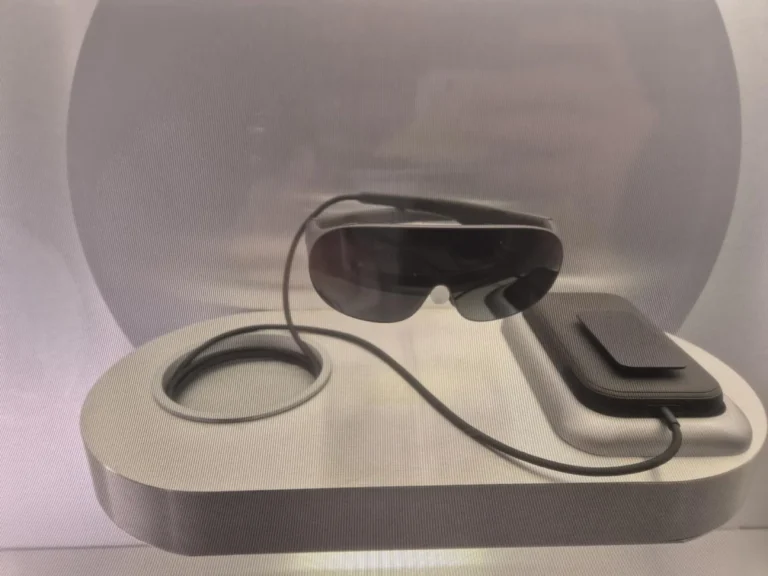
The extended reality (XR) landscape has entered a pivotal phase as of early 2026, marked by significant hardware teases from Pico, growing privacy concerns regarding wearable AI, and a strategic shift toward open-source development in the WebAR sector. Pico, the XR subsidiary of ByteDance, recently provided a comprehensive preview of its next-generation hardware, codenamed "Project Swan," alongside a redesigned operating system, Pico OS 6. This announcement comes as data-miners have uncovered evidence of Meta’s upcoming lightweight headset in recent firmware updates, signaling an intensified race for dominance in the high-end spatial computing market. Simultaneously, investigative reports from Europe have raised alarms over the handling of private data captured by smartglasses, highlighting the ethical complexities of human-reviewed AI training.
Pico Project Swan and the Evolution of Dual-Chip Architecture
During a recent premiere event, Pico detailed the technical specifications for Project Swan, a device positioned to compete directly with the Apple Vision Pro in the prosumer and enterprise markets. The headset utilizes a sophisticated dual-chip architecture designed to balance low-latency environmental tracking with high-performance application rendering. According to technical briefings, the system includes a proprietary "Pico Silicon" chip dedicated exclusively to sensor fusion, SLAM (Simultaneous Localization and Mapping), and environmental understanding.
The primary processing unit is a "Flagship SoC," widely speculated by industry analysts to be the Qualcomm Snapdragon XR2 Gen 3. Pico claims this new silicon provides twice the computational power of the previous XR2 Gen 2 found in current-generation headsets. This hardware leap supports dual 4K displays with a peak angular resolution of 45 pixels per degree (PPD) and an average of 40 PPD. For context, such pixel density is critical for professional productivity, as it crosses the threshold required for sustained reading of fine text and complex 3D modeling.

The accompanying Pico OS 6 introduces a spatial computing paradigm that mirrors the multitasking capabilities of modern desktop environments. The OS supports the simultaneous execution of 2D and 3D applications, utilizing a gaze-and-pinch interaction model supplemented by traditional controllers for high-precision tasks. To bolster its ecosystem, Pico has released new developer tools compatible with Android Studio and Kotlin, lowering the barrier to entry for standard mobile developers to transition into spatial application development.
Privacy Implications of Human-in-the-Loop AI Review
As hardware capabilities expand, the methods used to train the AI driving these devices have come under intense scrutiny. An investigative report by the Swedish publication Svenska Dagbladet has revealed that images and videos captured by Ray-Ban Meta smartglasses are being reviewed by human contractors in low-wage regions, including Kenya. These reviewers are reportedly tasked with verifying AI performance by watching footage that often contains sensitive personal information, including financial details, private residences, and intimate moments.
The investigation found that while Meta’s privacy policy discloses that AI interactions may undergo manual review to improve system accuracy, users are often unaware of the extent to which their daily lives are visible to third-party operators. This "human-in-the-loop" process is a common industry practice, previously documented in the development of voice assistants like Amazon’s Alexa and automated vacuum systems like Roomba. However, the always-on nature of head-worn cameras introduces a new dimension of privacy risk. Legal experts suggest these findings may trigger regulatory inquiries under the General Data Protection Regulation (GDPR), particularly regarding the transparency of consent for human-monitored data processing.
The Open-Source Transition of The8thWall WebAR
In a move that has surprised the developer community, Niantic’s The8thWall has announced the open-sourcing of its WebAR engine framework. Previously a highly guarded proprietary solution, the core architecture and major AR feature modules—including Face Effects, Image Targets, and Sky Effects—are now available under an MIT license. This transition follows rumors of a potential shutdown of the service, suggesting a strategic pivot to allow the community to maintain and evolve the platform.

While the SLAM components remain within closed-source binaries to protect trade secrets, the open-sourcing of the framework allows enterprises to build customized WebAR engines without starting from basic principles. Industry analysts view this as a significant contribution to the "Open Metaverse," potentially standardizing how augmented reality content is delivered through web browsers without the need for dedicated app installations.
Competitive Intelligence: Meta’s "Puffin" and the Move to Lightweight Frames
While Pico has been vocal about its roadmap, Meta appears to be preparing a response in the form of a lightweight headset codenamed "Puffin" (also referred to in various leaks as "Loma" or "Phoenix"). Data-miners investigating the Horizon OS firmware discovered low-resolution graphical assets depicting a remarkably thin, glasses-like form factor.
Technical analysis of the firmware suggests that the Puffin device will lack traditional bulky controllers, instead relying on eye-tracking and hand-gesture recognition—a "gaze and pinch" system similar to both the Vision Pro and Pico’s Project Swan. This move indicates a broader industry shift toward "spatial computing" as a lifestyle and productivity category, moving away from the heavy, gaming-centric designs that have defined the VR market for the past decade.
Standardizing Design: Google’s Glimmer Language and Handheld VR
The diversification of hardware has necessitated new standards in user interface (UI) design. Google has introduced "Glimmer," a dedicated design language for augmented reality glasses and heads-up displays (HUDs). Glimmer addresses the unique challenges of AR, such as variable lighting conditions, transparent backgrounds, and limited fields of view. The guidelines emphasize high-contrast elements and minimal screen real estate usage to ensure information remains legible without obstructing the user’s physical environment.

In a separate development at the CP+ 2026 show in Japan, Canon demonstrated an unconventional approach to XR hardware with a handheld VR viewer. Rather than a wearable headset, the device features a handle, allowing users to quickly lift it to their eyes for short-duration immersive viewing. This form factor is designed for public exhibitions and retail environments, where the friction of donning a full head-mounted display often discourages casual users.
Strategic Impact and Industry Chronology
The events of early 2026 represent a consolidation of several years of R&D in the XR sector. The timeline of these developments shows a clear trajectory:
- 2023-2024: Market entry of high-end spatial computers (Apple Vision Pro) and the refinement of passthrough technology.
- 2025: Emergence of AI-integrated smartglasses (Ray-Ban Meta) and the development of next-generation mobile chipsets.
- 2026 (Present): The shift toward lightweight "glasses-first" hardware, the open-sourcing of core software tools, and the inevitable clash between rapid AI deployment and global privacy standards.
The implications of these shifts are twofold. For consumers, the upcoming release of Project Swan and Meta’s lightweight alternatives promises more comfortable, higher-resolution devices for both work and play. However, for the industry, the revelation of human review practices for smartglasses data serves as a warning that the "social acceptance" of wearable cameras remains fragile. As Pico, Meta, and Google continue to push the boundaries of spatial computing, the success of the medium may depend as much on ethical data governance as it does on pixel density and processing power.
About the Author