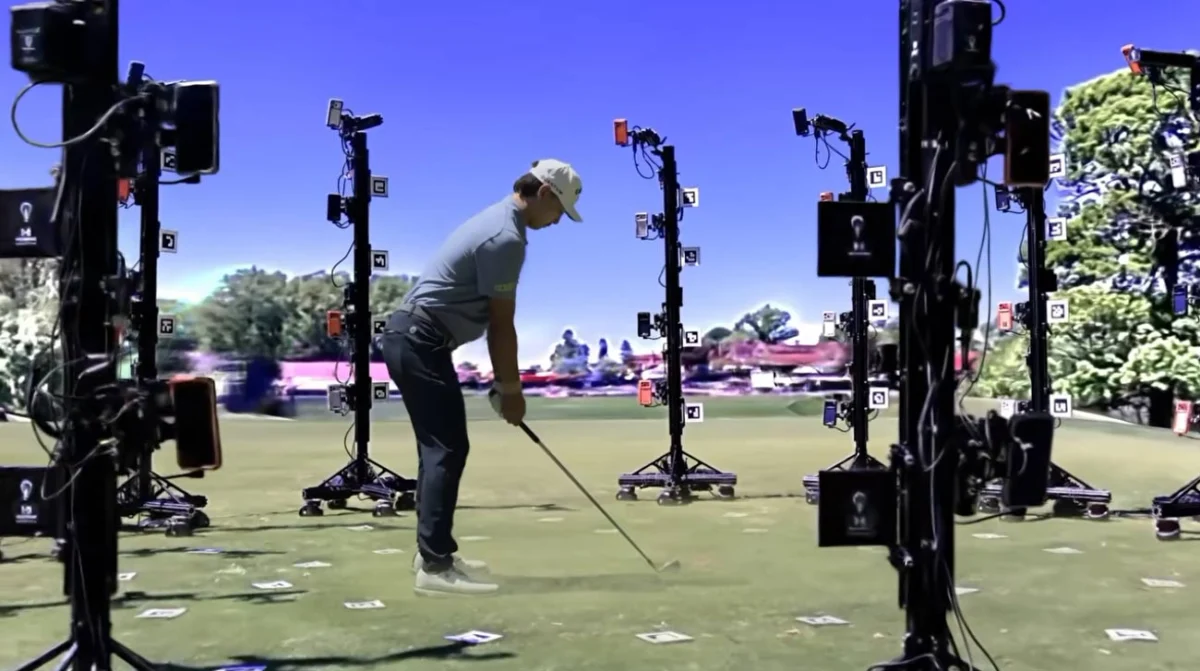
Radiant Images has introduced a significant advancement in the field of immersive media with the debut of its modular, portable volumetric capture system. Showcased at the recent Augmented World Expo (AWE), the technology aims to simplify the complex process of recording three-dimensional human performances, specifically optimized for Gaussian Splatting. By transitioning away from the traditional, fixed-location studio model, Radiant Images provides a flexible alternative that allows professional production teams to capture high-fidelity volumetric data in virtually any environment. This development comes at a pivotal time for the extended reality (XR) industry, as the demand for photorealistic digital humans and spatial content continues to grow alongside the adoption of high-end mixed reality headsets.
The Evolution of Volumetric Capture Technology
Volumetric video, also known as 3D video, involves capturing a moving subject from multiple angles simultaneously to create a digital representation that can be viewed from any perspective. Historically, this has been an arduous and prohibitively expensive endeavor. Recording volumetric videos—whether utilizing traditional polygonal meshes or modern Gaussian Splats—typically requires specialized capture rigs comprising dozens, if not hundreds, of synchronized cameras.
The industry standard for years was defined by massive installations such as the Microsoft Mixed Reality Capture Studios. These facilities required dedicated warehouses to house large geodesic domes equipped with sophisticated sensor arrays. Actors and performers were required to travel to these specific locations, incurring significant logistical costs. Furthermore, the maintenance of such spaces, including the calibration of cameras and the management of massive data throughput, limited volumetric capture to high-budget cinematic productions or experimental corporate projects. Radiant Images’ new system seeks to dismantle these barriers by decentralizing the capture process.
Modular Design and Technical Specifications
The core innovation of the Radiant Images solution lies in its modularity. Rather than a singular, static structure, the system is composed of independent "columns" or "towers." Each unit serves as a self-contained recording module, allowing production teams to scale the setup based on the specific requirements of a project.
Independent Recording Units
Each column functions as a standalone capture station. This independence allows for a high degree of customization; a production can utilize a few towers for a basic 180-degree capture or deploy a full circle of towers for a comprehensive 360-degree volumetric recording. This flexibility directly impacts the cost-to-quality ratio, enabling enterprise clients to adjust the density of the camera array to fit their budgetary constraints.
Power and Connectivity
A critical feature of the system is its reliance on internal battery power. Every unit is equipped with a high-capacity battery that powers both the capture devices and the integrated lighting systems. This design eliminates the need for complex cabling and local power infrastructure, which has historically been a major point of failure and a logistical hurdle in volumetric setups. With a battery life spanning several hours, the towers can be moved and repositioned independently, facilitating rapid set changes and allowing for recordings in remote or outdoor locations where electricity is unavailable.
Portability and Global Logistics
Radiant Images has engineered the system for extreme portability. The components are designed to fit within standard checked baggage for air travel. This "studio-in-a-box" approach means that instead of flying a high-profile actor or athlete to a specialized facility in Los Angeles or London, the capture rig can be shipped directly to the talent. This shift significantly reduces overhead costs related to travel, lodging, and talent availability.
The Strategic Integration of iPhone Hardware
In a departure from custom-built industrial cameras, Radiant Images utilizes the Apple iPhone as the primary capture device for its towers. This choice offers several technical and economic advantages that enhance the overall efficiency of the volumetric workflow.
Advanced Sensor Arrays and LiDAR
Modern iPhones are equipped with sophisticated camera systems capable of recording 4K video at 60 frames per second. More importantly, the integration of LiDAR (Light Detection and Ranging) sensors provides high-accuracy depth data. When multiple iPhones are synchronized, their combined video and depth data provide a rich foundation for generating 4D Gaussian Splats.
Edge Computing and Local Pre-processing
The iPhone’s internal A-series chips act as powerful edge computers. Each device in the Radiant Images array can perform local pre-processing of the captured data. This includes tasks such as color grading, noise reduction, and "masking"—the process of isolating the subject from the background. By performing these computations locally on the device, the system reduces the volume of raw data that must be transferred to a central server. This distributed processing model accelerates the post-production timeline and minimizes the computational load during the final reconstruction phase.
Future-Proofing through Hardware Cycles
By utilizing consumer-grade professional hardware, Radiant Images ensures its infrastructure remains current. As Apple releases new iPhone models with improved sensors and processing capabilities, the system can be upgraded simply by swapping the handsets. This avoids the rapid obsolescence often associated with proprietary industrial camera rigs.
Gaussian Splatting and the Partnership with Gracia
While Radiant Images focuses on the high-quality acquisition of data, the final output is often handled by specialized software partners. A key collaborator in this ecosystem is Gracia, a company at the forefront of Gaussian Splatting technology.
Gaussian Splatting (3DGS) is a rasterization technique that represents 3D scenes as a collection of millions of semi-transparent, colored "splats" or Gaussians. Unlike traditional meshes, which can struggle with complex textures like hair or translucent fabrics, Gaussian Splats offer a more photorealistic and "fluid" representation of human subjects. When applied to moving video, this becomes 4D Gaussian Splatting (4DGS).
The workflow involves Radiant Images capturing the multi-view video and depth data, which is then processed by Gracia’s algorithms to create a volumetric "hologram." These recordings are particularly effective for mixed reality applications, where the goal is to make a digital person appear as if they are physically present in the user’s real-world environment.
Market Positioning and Economic Impact
The pricing for the Radiant Images system remains within the enterprise tier, reflecting its position as a professional production tool rather than a consumer product. However, industry analysts suggest that the long-term economic impact of such portable systems will be profound.
By reducing the "per-minute" cost of volumetric capture and eliminating the need for permanent studio space, Radiant Images is making 3D video accessible to a broader range of industries. Potential applications include:
- Sports Media: Capturing legendary athletes for immersive training or fan experiences.
- Corporate Training: Creating realistic digital twins of instructors for global VR training modules.
- Entertainment: Enabling musicians and actors to provide "private" performances in a user’s home via AR glasses.
- Heritage Preservation: Recording historical figures or cultural experts in their natural environments.
Broader Implications for the XR Industry
The introduction of modular volumetric capture marks a transition from the "experimental" phase of spatial computing to a "production-ready" phase. As hardware like the Apple Vision Pro and Meta Quest 3 gains market share, the bottleneck has shifted from display technology to content creation. High-quality, lifelike human representations are essential for the "killer apps" of the spatial era—telepresence, immersive storytelling, and social XR.
Radiant Images’ history, spanning over two decades in the cinema and technology sectors, provides the company with a unique perspective on the longevity of these formats. By focusing on high-quality data acquisition that is independent of the final rendering method, the company ensures that its captures will remain valuable even as Gaussian Splatting is eventually superseded by newer technologies.
The successful demonstration of the system at AWE, including real-time field tests, confirms that the logistical hurdles of 3D video are being overcome. As these portable rigs become more common, the barrier between the physical and digital worlds will continue to thin, driven by the ability to capture the human form with unprecedented ease and fidelity.
About the Author