The global mobile gaming industry experienced a week of significant volatility and record-breaking performance as of mid-September 2026, headlined by a double-digit surge in Roblox Corporation’s valuation and a transformative outlook for the simulation and "coin looter" genres. On Monday, September 14, 2026, shares of Roblox (RBLX) jumped by more than 11%, a direct reaction to a suite of ambitious developer tools and player-centric features unveiled during the annual Roblox Developers Conference (RDC) held on September 11. The market’s bullish response underscores a growing investor confidence in the platform’s transition from a closed ecosystem to a more versatile development engine.
Among the most significant revelations at RDC was the announcement that Roblox will soon allow creators to ship their experiences as standalone applications. This move represents a fundamental shift in the company’s business model, potentially allowing developers to market their games independently while still leveraging the Roblox backend and social graph. Analysts suggest this strategy is designed to attract high-end development studios that were previously hesitant to build within a "walled garden" environment. By allowing standalone distribution, Roblox aims to compete more directly with established game engines like Unity and Unreal Engine, particularly in the mobile and mid-core sectors.

Roblox Performance and the 20th Anniversary Milestone
The stock rally coincides with Roblox’s 20th anniversary, celebrated on September 1, 2026. Despite its age, the platform continues to demonstrate robust growth in key international markets. Data from Sensor Tower indicates that Roblox was the only non-Asian publisher to secure a spot in the top 10 growth charts for August 2026. The platform saw a month-on-month revenue increase of $8.9 million, representing a 12% jump.
This growth was geographically diverse: the United States contributed a $2.0 million increase (up 11%), while South Korea and the United Kingdom saw surges of 39% ($1.2 million) and 32% ($842,000), respectively. The platform’s ability to maintain momentum two decades after its founding is attributed to its aggressive expansion into older demographics and its ongoing integration of generative AI tools, which have lowered the barrier to entry for content creation.
Global Market Forecast: Revenue Growth Amidst Download Decline
While individual platforms like Roblox are thriving, the broader market is navigating a complex period of transition. According to Newzoo’s 2026 Global Games Market Report, total mobile revenue is projected to reach $121.1 billion by the end of the year, a 6.8% year-on-year increase. This growth is particularly notable as it accounts for 56.6% of the total $213.9 billion global games market, firmly establishing mobile as the dominant platform over console and PC.

However, the report highlights a growing paradox in the industry: revenue is rising while organic discovery is collapsing. Global game downloads fell by a staggering 25% year-on-year in the first half of 2026. This trend suggests that the market has reached a state of extreme maturity where revenue is increasingly driven by a small number of established live-service titles rather than a steady stream of new users.
The cost of user acquisition (UA) has reached historic highs, with the average cost per install (CPI) rising 30% to $0.56 globally. Furthermore, the paid-to-organic download ratio has increased by 61%, indicating that it is nearly impossible for new titles to gain traction without significant marketing spend. Industry analysts observe that "whale" retention—the practice of keeping high-spending players engaged in existing ecosystems—has become the primary driver of fiscal health for major publishers, overshadowing the traditional "top-of-funnel" growth strategies of the previous decade.
Asian Publishers Maintain Dominance in IAP Growth
The August 2026 growth charts from Sensor Tower reveal that Asian firms continue to dominate the mobile landscape through masterful live-ops and IP management. Sony topped the charts for In-App Purchase (IAP) revenue growth, recording a $26.7 million increase (an 84% jump). This was largely driven by the 11th-anniversary celebrations of Fate/Grand Order and a series of highly successful "Summer 2026" in-game events.

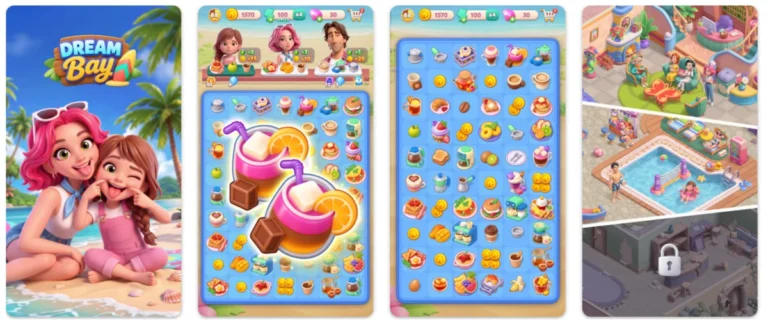
Century Games also maintained its upward trajectory, posting a $12.3 million revenue increase (up 3.9%). The publisher’s success was bolstered by the global rollout of two new titles, Lordrush and Hotel Legacy, which capitalized on the trend of blending casual mechanics with mid-core progression systems. Similarly, Nexon and Devsisters reported strong performance by leveraging existing intellectual properties, proving that brand recognition remains one of the few effective hedges against rising UA costs.
Heartopia and the Evolution of the Simulation Genre
In the simulation category, XD Network’s Heartopia has set a new industry benchmark. According to AppMagic data, the life simulation title has reached $20 million in monthly IAP revenue. This figure shatters the previous genre record held by Aobi Island, which peaked at $7.7 million per month.
Since its launch in January 2026, Heartopia has generated over $130 million in lifetime revenue from approximately 37 million downloads. The game’s success is attributed to its high-fidelity social features and a monetization model that emphasizes aesthetic customization and community interaction over competitive mechanics. Analysts view Heartopia as a "Gen Z" successor to legacy titles like The Sims, filling a void in the market for polished, mobile-native social simulators.

Disrupting the "Coin Looter" Hierarchy
The "coin looter" genre, long dominated by titles using slot-machine or dice-roll mechanics, has seen a significant shake-up with the rise of Farlight Games’ Clash of Critters. In June 2026, the game broke into the top five grossing titles within its category, earning $5.5 million. By August, monthly revenue had climbed to $8.9 million, securing the fourth position in the genre’s global rankings.
Clash of Critters distinguishes itself from competitors like Coin Master by utilizing "plinko-style" physics mechanics for its core gameplay loop. This innovation has proven particularly popular in the United States, which accounts for 40% of its revenue, followed by Japan (13%) and Singapore (5%). Since its global launch in May 2026, the game has amassed 12.5 million installs and $24 million in revenue, suggesting that players are increasingly receptive to mechanical variety within casual gambling-adjacent genres.
Consolidation in the Social World Sector
The social avatar and "metaverse" sector continues to see consolidation as mid-sized players look to scale their user bases. Pocket Worlds, the developer behind Highrise and Everskies, recently announced the acquisition of Hotel Hideaway from the Finnish studio Sulake.

Hotel Hideaway, a 3D social world that launched in 2018, brought with it a legacy of 32 million registered users and a consistent monthly active player base of 300,000. While the financial terms of the deal were not disclosed, the acquisition brings Pocket Worlds’ total registered user count to over 80 million. This move is seen as a strategic play to unify fragmented social audiences, providing a larger data set for ad-targeting and cross-promotion in an era where new user acquisition is prohibitively expensive.
Steady Gains in Edutainment and RPG Long-Ops
In the niche but lucrative "edutainment" sector, Everplay Group’s StoryToys division reported stellar half-year results. The arm responsible for licensed hits such as Lego Bluey and Disney Coloring World saw revenue grow by 43% to £15.9 million in the first half of 2026. The division’s subscriber base also grew by 22%, reaching 408,000 active users. With over 18 million downloads and a peak of 9.3 million monthly active users during the period, StoryToys demonstrates the enduring power of premium, brand-safe content for younger audiences.
Finally, the RPG sector showcased the importance of long-term "live-ops" with Playkot’s Age of Magic. On its eighth anniversary, the title surpassed $120 million in lifetime revenue and 20 million global installs. The game’s longevity serves as a case study for the industry at large: in a market where new hits are increasingly rare and expensive to launch, the ability to maintain and monetize a loyal player base over nearly a decade is perhaps the most valuable asset a publisher can possess.

As 2026 progresses, the mobile gaming landscape appears to be bifurcating. On one side, massive platforms like Roblox are evolving into infrastructure providers. On the other, specialized publishers are finding success by doubling down on proven IPs and innovating within established genres. For all players in the space, the "gold rush" of easy organic growth has ended, replaced by a sophisticated, data-driven battle for player retention and brand loyalty.
About the Author